


More news on this day
Hundreds of travelers were left stranded at Brussels Airport this month after a sudden work stoppage among Belgian air traffic controllers triggered widespread flight cancellations and severe delays across the country’s busiest hub.
Get the latest news straight to your inbox!
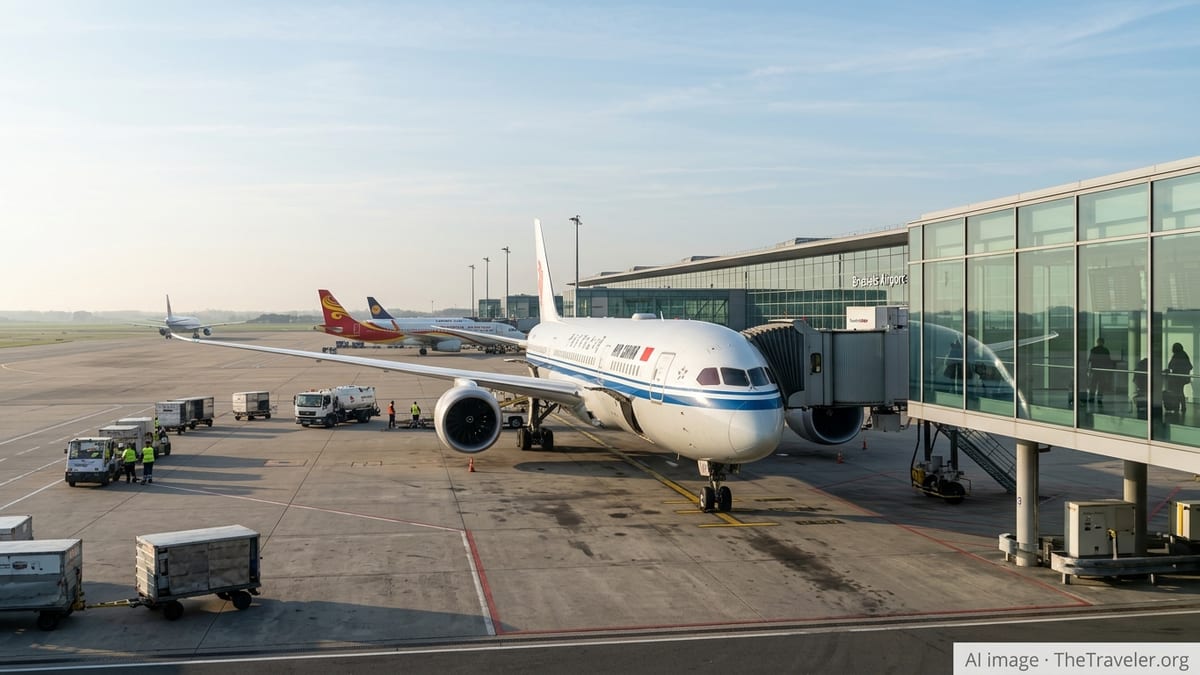
Sudden Walkout Halts Flights Across Belgian Airspace
According to published coverage, a wildcat strike by air traffic controllers on 2 June led to a temporary suspension of most flights to and from Belgium, forcing airlines to ground services at Brussels Airport for several hours. Publicly available information shows that the country’s airspace was largely closed during the peak of the disruption, creating a rapid backlog of delayed and diverted aircraft.
Reports indicate that the work stoppage affected hundreds of flights nationwide, with Brussels Airport bearing a significant share of the impact as Belgium’s primary international gateway. Airlines operating short-haul services to neighboring European hubs, as well as long-haul connections, were forced to cancel or postpone departures at short notice.
As operations ground to a halt, passengers already inside the terminal faced mounting delays, often receiving updates in small increments as airlines attempted to reorganize schedules around the evolving situation. With runways still and departure boards filling with red “canceled” notices, travelers quickly realized that many journeys would not resume the same day.
Stranded Passengers Scramble for Alternatives
Travel industry reports describe scenes of crowded check-in halls and departure gates at Brussels Airport as passengers tried to rebook flights, arrange hotel rooms, or shift to rail and road transport. Families at the start of summer trips, business travelers on tight itineraries, and transfer passengers relying on onward connections all faced extended waits and uncertain timelines.
With hundreds of flights removed from the schedule during the strike window, re-accommodating stranded travelers became a complex logistical puzzle. Airlines worked through backlogs case by case, placing passengers on later departures from Brussels, rerouting them via other European hubs, or advising them to postpone trips altogether.
Accommodation around the airport and in central Brussels saw increased demand as travelers realized they would be spending the night in Belgium. Some passengers, according to press accounts, opted to self-organize transport by train or car to nearby cities such as Amsterdam, Paris, or Düsseldorf in an effort to salvage connections from other airports.
Ripple Effects From Earlier Industrial Actions
The June air traffic control walkout came on the heels of other recent disruptions affecting Belgian aviation, intensifying the strain on travelers using Brussels Airport. Earlier in the month, published coverage highlighted a separate national strike that had already led to widespread cancellations at both Brussels and Charleroi, adding to a sense of uncertainty for passengers planning early summer trips.
In addition, a recent wildcat action by staff at a major ground handling company serving Brussels Airport contributed to delays and operational challenges for airlines relying on outsourced check-in, boarding, and baggage services. While each incident stemmed from different labor disputes, the cumulative effect has been an elevated risk of disruption for flights into and out of Belgium’s capital.
These overlapping events have underscored how quickly normal operations at a major European hub can unravel when multiple segments of the aviation system face industrial tension at the same time. For travelers, the result has been a series of sudden schedule changes, long queues, and a heightened need to monitor flight information closely.
Operational Recovery and Ongoing Congestion
Once Belgian airspace gradually reopened following the air traffic control walkout, airlines began the slow process of restarting services and repositioning aircraft. Publicly available data on punctuality in the days that followed indicates that knock-on delays continued to affect Brussels Airport even after the immediate crisis had passed.
Rebuilding a disrupted schedule required carriers to juggle aircraft availability, crew duty limits, and slot allocations while also accommodating passengers whose trips had been canceled. As a result, some flights operated with delays well into the next day, while others were consolidated or rerouted to relieve pressure on limited resources.
Travel analytics for early June already pointed to congested European skies at the start of the peak season, and Brussels featured among the airports experiencing notable air traffic flow management delays. The sudden shutdown of Belgian airspace briefly amplified that broader pattern, illustrating how local labor disputes can quickly ripple across regional networks.
What Travelers Through Brussels Airport Should Expect Next
With the main phase of the disruption now past, Brussels Airport is operating closer to its normal schedule, but the recent turmoil has prompted renewed attention to travel planning through the hub. Passenger-focused guidance from consumer groups and travel rights organizations encourages flyers transiting Belgium in the coming weeks to build in extra connection time and to stay alert to possible timetable changes.
For upcoming trips, travelers are being advised to check flight status frequently on the day of departure, arrive at the airport earlier than usual where feasible, and keep essential items such as medications, chargers, and a change of clothes in carry-on bags in case checked luggage is delayed. Those with tightly timed self-made connections, such as separate tickets onward from another European city, may wish to consider more generous layovers.
Industry observers note that June and July typically bring sharp increases in passenger volumes across European airports, making any industrial action or severe weather event more disruptive than it might be in quieter months. The recent delays and strandings at Brussels Airport have become a reminder to travelers that even well-connected hubs can experience sudden, large-scale breakdowns when key parts of the aviation system stop working without warning.