


More news on this day
East Midlands Railway is entering one of its most turbulent periods in years, balancing a high-profile safety dispute and fresh strike dates with the long-awaited arrival of its new Aurora intercity fleet across the Midland Main Line.
Get the latest news straight to your inbox!
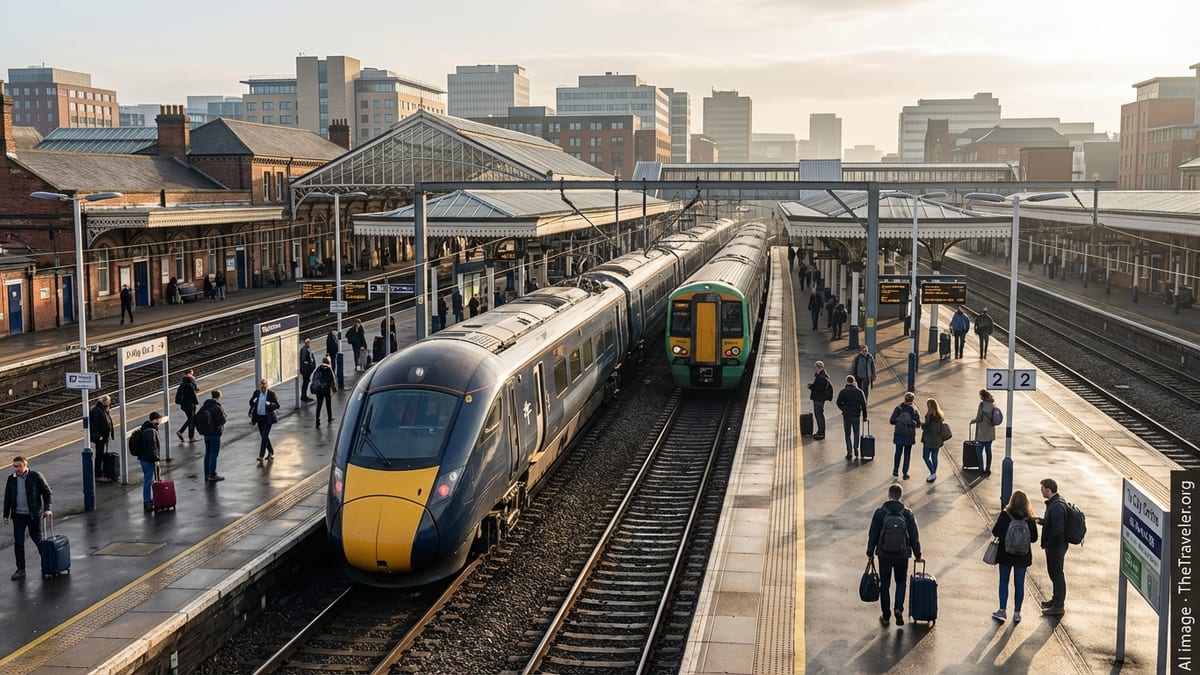
Summer Strikes Threaten Key East Midlands Rail Links
Passengers across the East Midlands face further disruption in August as industrial action continues to hit East Midlands Railway services at the height of the holiday season. Public information from the operator indicates that strike days on 1, 8 and 15 August 2026 are expected to significantly curtail services on main intercity and regional routes, including links between London St Pancras, Leicester, Nottingham, Derby and Sheffield.
Service plans published ahead of each strike show that some lines are likely to see only limited trains during core hours, while others may have no service at all. Travellers heading to airports, seaside destinations and major events in cities served by EMR are being urged by the operator’s public notices to check timetables carefully and consider alternative travel where possible.
The latest round of walkouts adds to a pattern of intermittent disruption for EMR customers over recent years tied to national pay disputes and overtime bans. For leisure travellers and commuters alike, the cumulative effect has been a more unpredictable railway at a time when government policy is seeking to rebuild confidence in rail as a reliable alternative to driving.
For EMR, the strikes are landing just as the company tries to promote service upgrades and new trains, complicating its efforts to shift the public narrative from cancellations and delays toward investment and modernization.
Safety Concerns Intensify After Fatal Midland Main Line Crash
The latest strikes are closely linked to safety concerns raised by staff following a fatal crash involving two EMR-operated services near Bedford in June 2026. Public reports on the collision describe a high-speed impact that killed the driver of one train and left more than 150 people injured, drawing national attention to the design and operation of rolling stock used on the Midland Main Line.
In the weeks after the incident, a rail union representing EMR staff publicly announced plans for strike action, citing what it described as growing safety concerns and alleging that issues highlighted by the crash had not been fully addressed. Subsequent walkouts, including those planned for August, are framed by the union as an effort to secure changes to working practices and equipment before services return to a normal pattern.
Formal investigations into the Bedford crash are under way through the established rail safety bodies, but their findings are likely to take many months to conclude. In the meantime, EMR has faced online criticism and intense scrutiny from rail commentators and enthusiasts, many of whom have used social media and specialist forums to debate the implications of the accident for train design, route speeds and driver protection.
The incident has also sparked wider questions about the pace of change on the Midland Main Line. With older diesel units due to give way to new bi-mode trains, there is growing discussion among passengers and campaigners about how safety lessons will be applied to both existing fleets and incoming rolling stock that is central to EMR’s future operations.
Aurora Fleet Marks Step Change for Intercity Passengers
Set against this challenging backdrop, EMR is in the midst of introducing its new Aurora intercity fleet, a £400 million order of British-built Class 810 bi-mode trains designed to replace its long-serving Class 222 Meridian units. The fleet, developed by Hitachi on its AT300 platform, is intended to become the backbone of long-distance services between London St Pancras and cities across the East Midlands and South Yorkshire.
According to EMR and government publications, 33 five-car Aurora sets will operate using electric power where overhead wires are available and switch to diesel power north of the current electrified sections. Officials have described the trains in earlier announcements as significantly more energy efficient than the diesel-only fleet they replace, with the bi-mode capability expected to cut carbon emissions on intercity journeys.
Passenger-focused features are a central part of EMR’s message around the new fleet. The operator’s promotional material highlights upgraded seating, power sockets at more seats, modern lighting, improved accessibility and a new multi-signal Wi-Fi system designed to provide more reliable connectivity on longer journeys. The trains are also expected to offer more luggage space and redesigned interiors that respond to feedback from business and leisure travellers.
The rollout of the fleet has been delayed several times, prompting questions in Parliament and frustration among regular passengers. However, specialist rail coverage earlier this year reported that the first Aurora unit entered passenger service on core Midland Main Line routes in December, marking the beginning of a phased transition that is expected to continue into 2027.
Timetable Changes and Depot Upgrades Reshape the Network
The introduction of Aurora trains is tied to a broader reshaping of EMR’s timetable and infrastructure. A recent customer report from the company trails what it calls a significant timetable change, reflecting both the capabilities of the new rolling stock and the ongoing Midland Main Line upgrade works funded by the Department for Transport.
Official documents show that Etches Park depot in Derby has undergone a substantial extension to handle the maintenance demands of the new fleet. The upgraded facility is equipped for both electric and diesel systems, supporting the bi-mode operation that underpins EMR’s future intercity services. Government reporting describes the depot work as a key milestone in preparing the network for higher frequencies and more consistent performance once the full fleet is in traffic.
Regional services are also set for gradual change. Public planning documents and regional rail strategies indicate that EMR’s Connect and regional fleets are going through a multi-year refurbishment program, with investment targeted at interiors, accessibility and reliability improvements. While these trains will not match the specification of Aurora on intercity routes, the aim is to deliver a more consistent experience across the wider EMR network that links smaller towns to major hubs.
For passengers, the timetable adjustments that accompany new trains and upgraded depots can bring both benefits and short-term inconvenience. Faster timings on electrified stretches may be offset by altered stopping patterns or changes to traditional through services, requiring regular users to reassess familiar journeys as the new schedules bed in.
Franchise Future and Public Expectations
Behind the day-to-day operational challenges, EMR is operating under a national rail contract that is currently due to run to at least late 2026, with options to extend further into the decade. Government contract papers outline performance and investment commitments in areas such as rolling stock upgrades, customer service and collaboration with local authorities across the East Midlands.
Regional bodies and transport partnerships have identified EMR’s services as critical to plans for economic growth, particularly for cities such as Nottingham, Derby, Leicester and Sheffield, as well as coastal destinations like Skegness that depend heavily on seasonal tourism. Reports from these organisations argue that more reliable and higher-capacity rail links are essential to unlocking jobs, housing and business investment across the wider region.
Public debate around EMR in recent months illustrates how expectations of the operator have evolved. Rail passengers are increasingly vocal about punctuality, crowding and value for money, while also pushing for lower emissions and modern onboard facilities. The combination of a fatal accident, safety-related strikes and the complex introduction of new trains has brought those expectations into sharp focus.
As the company moves through this difficult period, the way it manages industrial relations, embeds safety improvements and delivers on its promises for the Aurora fleet is likely to shape perceptions of rail in the East Midlands for years to come. For travellers, the coming months will test whether the promised step change in service quality can outweigh the short-term disruption and uncertainty that currently dominate the headlines.