


More news on this day
Strong thunderstorms rolling across the Charlotte region have led to widespread flight delays and cancellations at Charlotte Douglas International Airport, disrupting travel through one of the United States’ busiest airline hubs.
Get the latest news straight to your inbox!
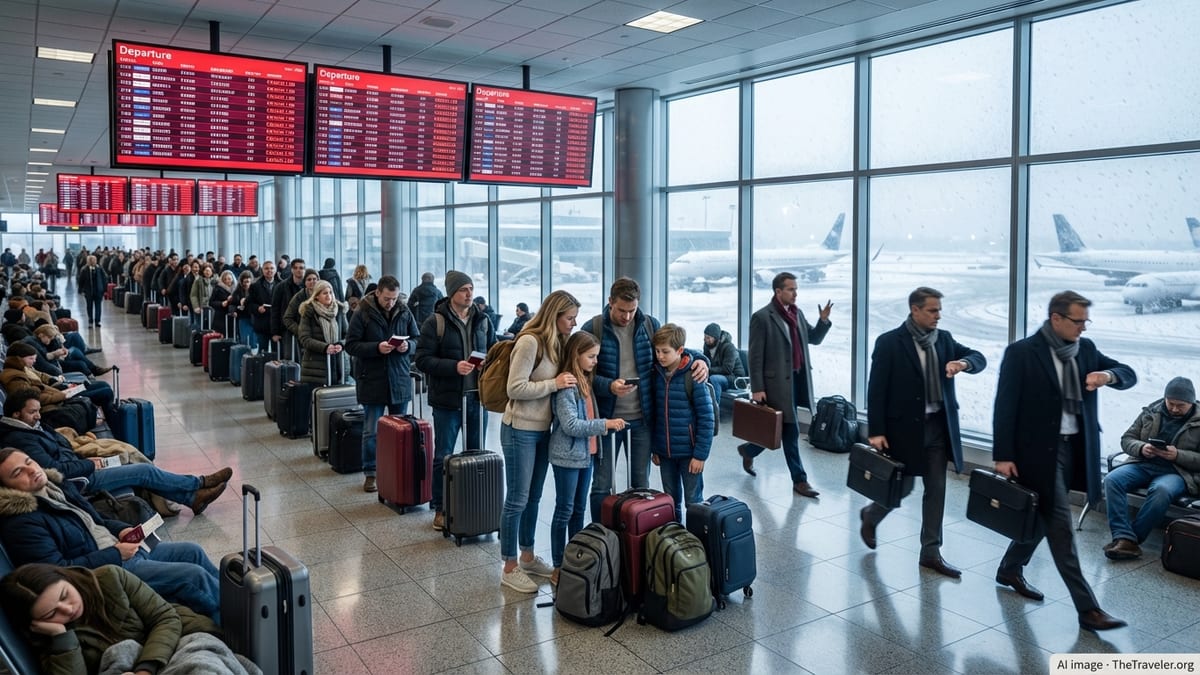
Thunderstorms stall operations at major Southeast hub
Publicly available flight-tracking data on Friday showed significant disruptions at Charlotte Douglas, with departures and arrivals facing extended ground delays as storms moved through the area. Airlines trimmed schedules and slowed operations as low clouds, lightning, and periods of heavy rain reduced the airport’s ability to move aircraft efficiently.
Charlotte Douglas International Airport, located about six miles west of uptown Charlotte, is a key connecting point in the Southeast and a primary hub for American Airlines. When strong storms form over or near the field, the combination of reduced visibility, wind shear risk, and lightning in the vicinity typically forces slower arrival rates and temporary pauses in ground operations.
The latest round of storms hit during a busy early-summer travel period, compounding the impact on flyers. Connections through Charlotte are especially vulnerable because many flights operate in tightly timed banks; when one wave of flights is delayed, late arriving aircraft and crews can quickly ripple through the rest of the schedule.
Travelers connecting through the airport reported extended waits on the tarmac and in gate areas as airlines reassessed departure times in response to the evolving weather picture. Some routes saw multiple rolling departure estimates while storm cells redeveloped near the airfield.
Dozens of cancellations and rolling delays reported
Flight-status boards on Friday showed clusters of cancellations alongside long delays on both domestic and regional routes. Weather-related disruptions at a hub such as Charlotte typically affect shorter flights first, as carriers prioritize long-haul operations that are more difficult to re-accommodate if grounded.
Industry data from similar severe-weather episodes this year indicate that when thunderstorms park over a major hub, it is not unusual for dozens of flights to be canceled outright and many more to run hours behind schedule. At Charlotte, a single strong storm line can quickly exceed the airport’s available runway capacity, leading to extended arrival spacing and fewer departures per hour.
Regional jets serving nearby cities are particularly prone to cancellation when convective weather develops along their routes. Short sectors offer less flexibility to wait out storms en route, and crews operating multiple legs in a day can quickly reach duty-time limits when early flights are held on the ground.
Passengers whose flights were canceled were generally being rebooked on later departures where seats were available, though tight loads during the summer season reduce the number of open seats across the network. In some cases, travelers faced overnight stays or lengthy reroutes through other hubs.
Storms add to broader summer weather pattern
The latest disruptions in Charlotte come amid an active early summer weather pattern across the southern and eastern United States. A surge of tropical moisture over the Gulf and Southeast has produced repeated rounds of heavy thunderstorms, with forecasters highlighting the potential for localized flash flooding, intense lightning, and strong wind gusts across several states.
Recent analyses by meteorologists describe an environment primed for daily storm development, especially during the afternoon and evening hours when peak heating combines with high humidity. In such patterns, airports in the storm corridor face frequent ground stops, shifting runway configurations, and rapidly changing wind directions that can complicate air traffic management.
Charlotte’s position as a major Southeastern hub means that it both generates and absorbs delays. When storms affect nearby airports in the region, rerouted flights and holding patterns can push congestion into Charlotte’s airspace. Conversely, when severe weather sits directly over Charlotte, its status as a megahub means delays can cascade across the national network as missed connections ripple outward.
Apart from the immediate weather threat, long-running construction and infrastructure projects at large airports can limit flexibility during disruption periods. Federal aviation reports show that Charlotte has been undergoing airfield and roadway work in recent years, and even modest reductions in capacity can become more challenging when combined with convective weather.
Impact on airlines and passengers at Charlotte Douglas
American Airlines, which operates the majority of flights at Charlotte Douglas, typically bears the brunt of weather-related disruption at the airport. When storms move in, the carrier must adjust arrival and departure banks, reposition aircraft, and manage crew schedules to remain within safety and regulatory limits, all while handling a high volume of connecting passengers.
Operational data and previous storm events indicate that ground stops and arrival-rate reductions can quickly translate into crowded terminals. Lines for customer service, food, and restrooms often lengthen as travelers wait out storms and monitor shifting departure times. For those with tight connections, even short ground holds can lead to missed onward flights, especially when gates are spread across multiple concourses.
Travelers booked through Charlotte during stormy periods are generally advised, in public-facing airline guidance, to monitor their flight status frequently and to make use of mobile rebooking tools when possible. Same-day changes, standby lists, and alternate routings through other hubs are common strategies airlines present to help passengers navigate severe-weather disruptions.
For airlines, recovering from a storm event can take many hours after the last thunderstorm clears. Aircraft and crews are often out of position, leading to additional delays even under clear skies. At connecting hubs such as Charlotte, the first full day of normal operations after a major storm can still show signs of strain as carriers work to realign their schedules and move displaced customers.
What travelers can expect as storms continue
Forecasts for the Carolinas point to the potential for more showers and thunderstorms in the coming days, meaning additional periods of disruption at Charlotte Douglas cannot be ruled out. Even when severe weather is scattered rather than widespread, a single slow-moving cell over the airport can cause outsized delays due to the need for safety buffers around lightning and strong wind gusts.
Travel planning resources suggest that passengers with flexible schedules consider booking earlier flights in the day, when the atmosphere is generally less unstable and storms are less likely to have already triggered rolling delays. For those already ticketed on peak-afternoon departures, monitoring airline apps and airport messaging is important to stay ahead of any schedule changes.
As summer progresses, strong thunderstorms are expected to remain a recurring challenge for major hubs across the country, including Charlotte. The recent disruptions highlight how quickly weather can upend even routine travel days at a busy connecting airport, underscoring the importance for travelers of building extra time into itineraries and preparing for potential changes.
While Friday’s storms gradually moved away from the Charlotte area, residual delays continued into the evening as airlines worked through backlogs of departures and repositioned aircraft. For many passengers, the experience served as a reminder that in peak travel season, a single line of strong storms can reverberate far beyond the local radar scope.