


Few waterfronts in Europe are as instantly recognizable as Boulevard de la Croisette in Cannes. With its palm-lined promenade, grand hotels and ranks of private beach clubs, this three-kilometer strip has become shorthand for Riviera glamour. But if you are planning a visit to the south of France, is La Croisette genuinely worth carving out time for, or is it an overrated catwalk of designer boutiques and velvet ropes? The answer depends very much on what you are looking for from Cannes, and how you choose to experience this famous boulevard.
Get the latest updates straight to your inbox!
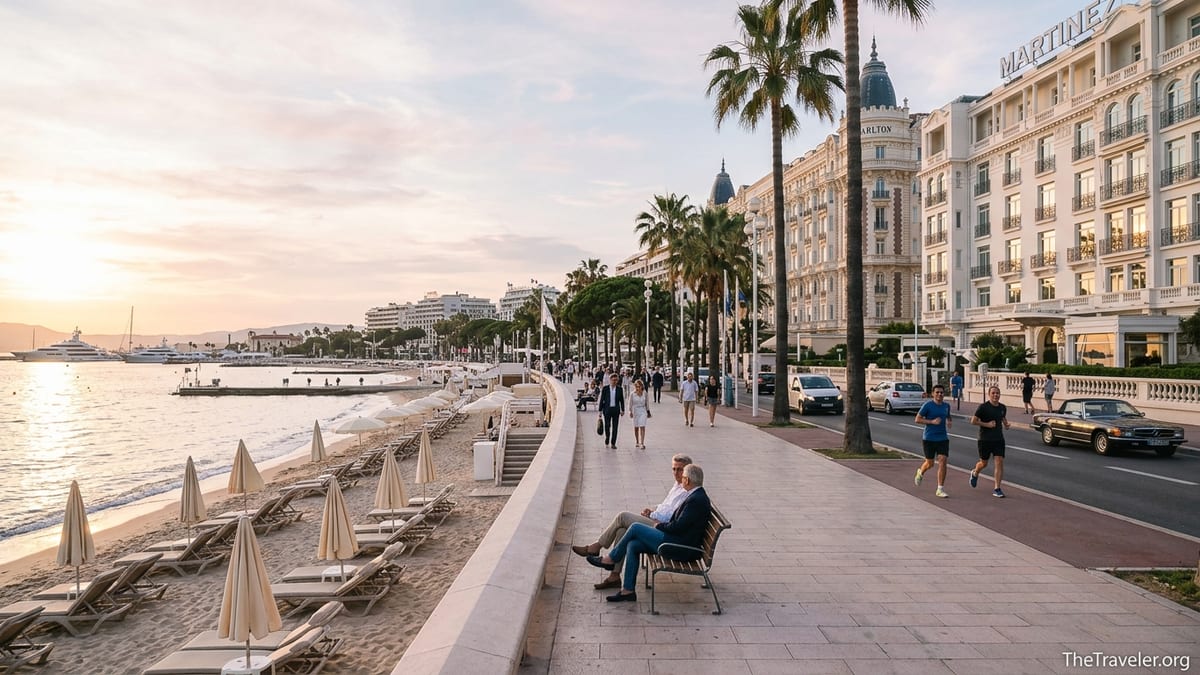
What Exactly Is Boulevard de la Croisette?
Boulevard de la Croisette, often simply called “La Croisette,” is Cannes’ signature seafront road, curving for roughly three kilometers along the Bay of Cannes from the Palais des Festivals et des Congrès near the old port to the Palm Beach headland and Port Canto at the eastern end. On one side you have soft, city-maintained sand and a string of public and private beaches. On the other, a continuous wall of grand hotels, luxury boutiques and terrace restaurants forms an unmistakably Riviera skyline. The boulevard is wide, with separate lanes for traffic, cyclists and pedestrians, and is lined with meticulously maintained palms and gardens.
This promenade is also the stage set for some of the world’s highest-profile events. The Cannes Film Festival is anchored at the Palais des Festivals at 1 Boulevard de la Croisette, where the famous red carpet climbs towards the main theaters. During those May dates, La Croisette becomes the backdrop for everything from paparazzi scrums to brand-sponsored beach parties. The same convention center hosts trade fairs and festivals throughout the year, so even outside film season you may encounter delegates in lanyards streaming along the pavement or gathering on temporary terraces.
Even when there is no major event, La Croisette functions as Cannes’ shop window. Supercars creep along the road in the evening, hotel concierges usher arrivals through revolving doors and cruise-ship passengers disembark to stroll the promenade before heading back on board. For visitors, it is less a single “sight” and more a linear neighborhood: a place to walk, people-watch, swim, shop and linger over long lunches with the bay in full view.
The Glamour Factor: Hotels, Film History and Pop Culture
If you are drawn to the mythology of the French Riviera, La Croisette is where you feel it most strongly. Historic five-star hotels like the Hôtel Martinez, the Carlton Cannes and the JW Marriott face the sea with ornate facades and striped awnings. The Martinez, a 1930s Art Deco landmark with its own private beach club, has become synonymous with Festival-era glamour, a place where luxury cars idle along the curb and guests in black-tie attire slip through the lobby for premieres and parties. Even if you are not staying there, stepping into the lobby for a drink at the bar can be an experience in itself.
The Palais des Festivals further west on the boulevard is where the official red carpet is rolled out for the Cannes Film Festival each year. Outside festival dates you can climb the steps, photograph the handprints of actors and directors set in the pavement and look back towards La Croisette and the marina. For film fans, this is a rare chance to stand on a stage that usually belongs to cinema royalty. During the festival itself, the boulevard is dense with camera crews, fans posting up by barricades and industry insiders hurrying between screenings, giving the area a buzzing, occasionally chaotic energy.
Pop culture continues to feed La Croisette’s allure. Fashion magazines frequently shoot campaigns here, and the boulevard has appeared in everything from Riviera-set thrillers to glossy series that trade on images of yachts, hotel terraces and late-night strolls under streetlights. Recently, major television productions have used the stretch between the Palais des Festivals and iconic hotels like the Martinez as a real-world set, reinforcing Cannes’ image as a place where everyday street life and screen fantasy blur into one another.
Beaches on La Croisette: Public vs Private in Real Life
One of the main reasons travelers gravitate to La Croisette is its sandy shoreline. Cannes is known for having softer, sandier beaches than nearby Nice, and that is immediately felt when you step onto the main Croisette strip. However, you quickly discover that most of the waterfront is occupied by private beach clubs linked to hotels and independent operators. These clubs line a long central section from roughly the Palais des Festivals to the mid-point of the boulevard and are set up with tightly spaced loungers, parasols, restaurants and bars.
For a visitor considering whether La Croisette is worth it, the key question is how you feel about paying for a beach day. At typical private clubs on this boulevard, a basic sun lounger and umbrella can cost in the region of 40 to 70 euros per person in high summer, with front-row spots near the water sometimes more. Many clubs require advance reservations in July and August or during major conferences. On the upside, you get waiter service, proper restrooms, freshwater showers and often an all-day DJ soundtrack and cocktail menu. For some travelers, a single “splurge day” at a Croisette beach club becomes the highlight of their time in Cannes.
Free options do exist along or just off La Croisette. Public beaches such as Plage du Palais des Festivals and sections at the eastern end near Port Canto are open to anyone, with soft sand and views across to the Lérins Islands. Further east again, municipal beaches around Port Canto and Bijou Plage offer lower-cost chair and umbrella rentals run by the city, which can be significantly cheaper than the private clubs but still provide some services. If your budget is limited, using public stretches for most days and reserving one private-club experience gives you a more balanced sense of what Croisette life is actually like.
Walking, Shopping and People-Watching Along the Promenade
Even if you never set foot on the sand, La Croisette can easily fill an afternoon as a walking and people-watching route. The seafront promenade has a broad, flat pavement that runs the length of the bay, punctuated by benches and small gardens. Locals jog here at sunrise, while in the late afternoon families push strollers, seniors claim benches with views of the yachts and fashion-conscious visitors saunter between hotel terraces. The light over the bay, especially in the golden hour before sunset, is a significant part of the boulevard’s appeal.
On the city side of the boulevard you find a concentration of luxury retail that rivals high-end districts in Paris or Milan. Flagship boutiques for major fashion houses sit shoulder to shoulder with jewelers, watchmakers and beauty brands. Window shopping here is an experience in itself even if you are not planning to buy. Prices match the clientele, so a simple coffee at a terrace on this side of the street can cost noticeably more than a few blocks inland. That said, there are pockets of more accessible options, particularly around the side streets near Rue d’Antibes, where mid-range shops and smaller cafes cater to a broader mix of visitors.
For many travelers, the greatest pleasure of La Croisette is simply sitting with a drink or ice cream and watching the show unfold. On a typical summer evening, you might see classic cars cruising the boulevard, street performers setting up near the gardens, children chasing each other around the merry-go-round by the port and groups of friends dressed for a night out at beach clubs. If your idea of a successful travel day includes inhaling the atmosphere of a place, La Croisette rewards an unhurried pace.
When La Croisette May Not Match Your Travel Style
Despite its global fame, La Croisette is not universally loved. Some visitors describe Cannes as feeling like an outdoor mall, with a focus on luxury branding and status rather than local culture. If you spend all your time along the main boulevard, you may come away with the impression that the city is primarily a showroom of expensive cars, designer bags and roped-off terraces. Travelers looking for village-like charm, artisan markets or historic architecture may find this stretch polished to the point of sterility.
The cost factor is another common criticism. Restaurant menus on La Croisette are priced for an international clientele accustomed to Riviera markups. A simple lunch of salad and a glass of wine at a seafront terrace can easily exceed what you might pay for a fuller meal a few streets inland. Similarly, the prevalence of private beaches along this strip means that a spontaneous swim directly in front of the main hotels can be difficult unless you are willing to pay club fees or seek out the smaller public sections between concessions.
If you are traveling outside peak months such as July and August or outside the festival calendar, you might also find the energy more subdued than expected. On a gray weekday in November, the promenade can feel quiet and somewhat formal, with closed parasols and shuttered beach restaurants awaiting the next season. In shoulder months like April or October, the mix can be pleasant for travelers who prefer mild weather and fewer crowds, but it will not resemble the crowded, high-gloss scenes you see in festival coverage.
How to Experience La Croisette Without Blowing Your Budget
Adding La Croisette to your Cannes itinerary does not have to mean adopting a celebrity-level spending pattern. With a bit of planning, you can enjoy the atmosphere and views at a reasonable cost. One simple strategy is to time your main Croisette visit for early morning or late evening. An early walk just after sunrise lets you see city workers raking the sand, joggers making their daily loop and hotel staff setting out breakfast on terraces. The light is soft, the temperature comfortable in summer, and you can grab a takeaway coffee from a bakery tucked just behind the boulevard instead of sitting at a premium seafront cafe.
For beach time, consider combining public and paid options. You might spend a relaxed morning on a free section of sand near the Palais des Festivals, then book a half-day lounger at one of the more moderately priced clubs towards Port Canto where rates can dip compared to the central hotel-affiliated beaches. Bringing your own towel and umbrella for part of your stay allows you to save money for one special lunch or sunset drink at a beachfront restaurant, where you can sample local seafood and watch the sky shift colors across the bay.
Food and drink costs can be managed by treating La Croisette as the setting for one or two carefully chosen indulgences rather than every meal. For instance, you might plan an afternoon stroll followed by a single aperitif at a terrace bar in front of one of the classic hotels. Ordering a glass of local rosé or a spritz gives you access to the elevated vantage point and people-watching without committing to a full, expensive dinner. Later, you can head inland to the streets around Rue d’Antibes or the old quarter of Le Suquet for more reasonably priced bistros and family-run restaurants.
Who Will Get the Most Out of Adding La Croisette?
Ultimately, whether La Croisette deserves a dedicated spot on your Cannes itinerary depends on your interests. Travelers who love fashion, film and contemporary luxury will almost certainly find it compelling. For them, walking past the Carlton’s colonnades or seeing the Palais des Festivals in person feels like stepping into a world they already know from magazines and movies. A day that includes shopping for resort wear, lounging at a beach club and dressing up for a cocktail on a hotel terrace can feel like excellent value, because the experience aligns with their expectations of the Riviera.
Photographers and casual sightseers also tend to appreciate the boulevard. The gentle curve of the bay, framed by palm trees and the distant Lérins Islands, offers classic postcard views in almost any light. Sunset from the eastern end near Port Canto, looking back towards the old port and the hills of Le Suquet, is particularly picturesque. Even solo travelers can feel comfortable lingering here, as the promenade is busy and well-lit into the evening during the main season.
On the other hand, if your primary travel joys come from exploring historic streets, local markets and hidden viewpoints, you may want to treat La Croisette as a brief pass-through rather than a full-day focus. In that case, a smart compromise is to allocate one morning or evening for a walk along the boulevard, perhaps combined with a coffee stop or a quick dip at a public beach, then spend the rest of your time in Cannes wandering the old town, visiting the market or taking a boat to the Lérins Islands.
The Takeaway
Boulevard de la Croisette is less a single attraction and more a concentrated expression of what Cannes represents to the world: glamour, sunshine, carefully curated public spaces and an unapologetic embrace of luxury. It can feel thrilling or alienating depending on your tastes and budget. For many travelers it is worth experiencing at least once, even if only for a leisurely walk from the Palais des Festivals to Port Canto, stopping now and then to watch the light on the water and the swirl of life on the promenade.
If you are planning a short stay in Cannes, consider giving La Croisette a half day in your itinerary, timed to either early morning calm or the golden buzz of late afternoon. Decide in advance whether you want to invest in a private beach club or simply enjoy the public sand and viewpoints, and adjust your expectations accordingly. Paired with time in the older, quieter parts of the city and perhaps a boat trip offshore, La Croisette becomes a vivid chapter in your Riviera story rather than the entire book.
In the end, the boulevard earns its fame not only through luxury brands and film stars but through the simple pleasure of walking beside a beautiful bay with the sea on one side and a living movie set on the other. If you arrive curious rather than starstruck, you are more likely to find a version of La Croisette that feels worth your time.
FAQ
Q1. How much time should I plan to spend on Boulevard de la Croisette? For most visitors, two to four hours is enough for a relaxed walk, a coffee or drink stop and a short swim. If you book a full day at a private beach club, you can easily spend most of the day on or just off the boulevard.
Q2. Is it worth paying for a private beach club on La Croisette? It is worth it if you value comfort, services like waiter-delivered food and drinks and guaranteed loungers with shade. Many travelers choose to splurge on one day at a Croisette club and use public or municipal beaches for the rest of their stay.
Q3. Can I enjoy La Croisette on a tight budget? Yes, provided you manage expectations. Stick to public beaches, buy snacks and drinks from supermarkets or bakeries on side streets and treat a seafront bar or cafe as an occasional treat rather than your default dining spot.
Q4. When is the best time of year to visit La Croisette? June through early September offers the warmest beach weather and the liveliest scene, but it is also the most crowded and expensive. Late spring and early autumn can be more comfortable for strolling, with milder temperatures and fewer visitors.
Q5. What is La Croisette like during the Cannes Film Festival? During the festival, usually held in May, the boulevard is busy with security barriers, press crews, industry guests and celebrity watchers. The atmosphere is electric but hectic, and prices for hotels and restaurants rise significantly.
Q6. Are there free public beaches directly on La Croisette? There are a few public stretches along and near La Croisette where anyone can lay down a towel without paying. These sections can be crowded in high season but remain a practical way to enjoy the same bay without club fees.
Q7. Is La Croisette suitable for families with children? Families often enjoy the wide promenade, playgrounds and gentle, sandy beaches. Renting a lounger at a family-friendly beach club or choosing a spacious public beach near Port Canto can make the day easier with young kids.
Q8. What should I wear when visiting La Croisette? Daytime is relaxed, with typical beachwear and casual summer clothes the norm. In the evening, many people dress a bit smarter for hotel bars and restaurants, so light resort wear, sundresses and shirts with trousers or smart shorts fit in well.
Q9. Do I need restaurant or beach club reservations on La Croisette? In peak months and during major events, reservations are highly recommended for popular beach clubs and seafront restaurants, especially for lunch and dinner. At quieter times, you can often walk in, but booking ahead removes a layer of stress.
Q10. Is it safe to walk along La Croisette at night? La Croisette is generally busy and well-lit at night, especially in summer, and most visitors feel comfortable walking there. As in any popular tourist area, normal precautions with valuables and late-night alcohol consumption still apply.