


More news on this day
Germany’s controversial Stuttgart 21 rail project has been delayed once more, with a new timetable indicating a phased opening from late 2027 and full completion not expected before the early 2030s.
Get the latest news straight to your inbox!
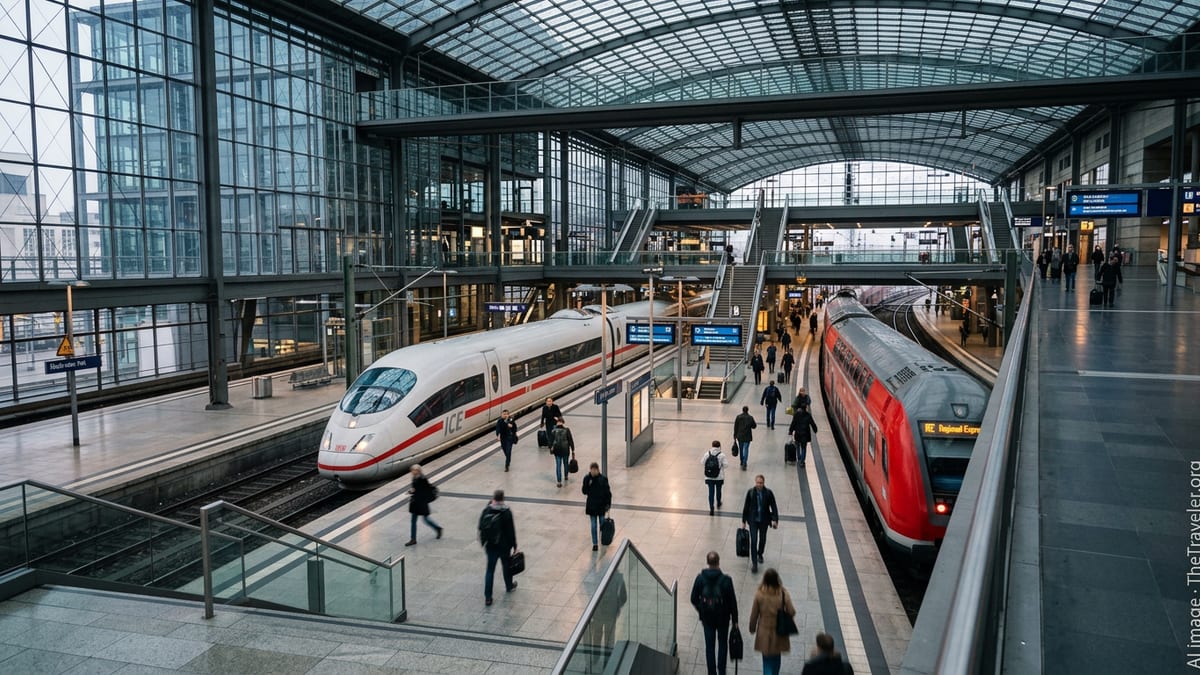
New timetable pushes opening into the 2030s
According to recent information from the city of Stuttgart and rail industry reporting, Stuttgart 21 will no longer enter full service in December 2026 as previously announced. A revised staging plan now foresees initial operations beginning in December 2027, followed by several expansion phases that stretch into the next decade.
The updated concept breaks the project into five major stages, running from 2027 to around 2033. This phased approach is intended to reduce operational risk during the transition from the existing terminus station to the new underground through-station and associated tunnels. However, it also confirms that the complex reconfiguration of Stuttgart’s rail hub will take significantly longer than once planned.
Some media reports now point to the end of 2031 as the likely moment when the new underground station could be largely complete, underlining how far the schedule has slipped from earlier projections that targeted 2019 and then successive dates in the mid‑2020s.
Cost estimate climbs to around 14.5 billion euros
The latest delay is accompanied by another substantial cost increase. Publicly available figures from project partners and specialist rail publications indicate that projected expenditure for Stuttgart 21 has risen by roughly 3 billion euros, bringing the current overall estimate to approximately 14.5 billion euros.
This marks a sharp escalation compared with the early 2000s, when the project was presented with significantly lower cost assumptions. Analysts following European infrastructure megaprojects note that Stuttgart 21 has become a textbook example of how complex underground construction, evolving technical standards and extended timelines can drive budgets far beyond initial forecasts.
Reports highlight several contributing factors, including challenging geology around Stuttgart, extensive tunnelling requirements, and adjustments linked to digital signalling and capacity upgrades in the wider rail node. The latest technical reviews have also examined issues such as cable routing and station systems integration, adding further risk buffers to the budget and schedule.
Political pressure and public criticism intensify
The renewed delay has sparked strong reactions within Baden-Württemberg and across Germany. According to recent national coverage, state transport leaders have expressed sharp criticism of the project’s management and expressed concern about the reputational impact on one of Europe’s key industrial regions.
Local and regional media describe growing political pressure on the project consortium, with calls for greater transparency on risk management and clearer accountability for previous schedule promises. Commentaries in major German newspapers and broadcasters frame Stuttgart 21 as part of a broader debate about the performance of the national rail system and the reliability of large public infrastructure ventures.
For residents of Stuttgart and frequent rail travelers, the latest postponement reinforces a sense of fatigue around a construction site that has reshaped the city centre for more than a decade. Opposition groups, which have long criticized the project’s environmental footprint, urban design choices and cost overruns, are using the new figures and dates to renew their arguments.
Travel implications for passengers and regional connectivity
For travelers, the extended timeline means that Stuttgart’s existing surface terminus and temporary arrangements will remain in place for several more years. Rail passengers passing through the city can expect ongoing construction works around the current Hauptbahnhof area, as well as periodic service adjustments tied to tunnel and track upgrades.
Once complete, Stuttgart 21 is designed to transform the node into an underground through-station, connecting high‑speed lines towards Ulm and beyond while freeing up surface land for new urban development. Proponents argue that the long‑term benefits will include faster journey times, more direct services and a more compact urban core with better pedestrian connections.
In the short and medium term, however, regional and long‑distance services must continue to navigate around construction phases. Travelers planning rail itineraries through southwestern Germany over the next several years are likely to see occasional timetable changes, platform alterations and replacement services as work progresses in stages.
A landmark megaproject under scrutiny
Stuttgart 21 was conceived as a flagship infrastructure project for a modernized, high‑capacity German rail network, with symbolic architecture and extensive underground engineering. After years of protests, legal challenges and design revisions, the latest delay reinforces its status as a high‑profile case study in the risks facing transport megaprojects.
Research on such large schemes frequently cites optimism in early planning, complex approval procedures, and shifting technical requirements as reasons why projects slip on time and budget. Commentators increasingly place Stuttgart 21 alongside other major European rail ventures that have required repeated resets and political interventions.
For travelers and observers alike, the emerging picture is of a project gradually moving forward, but at a higher financial cost and over a much longer horizon than originally envisaged. As the new 2027-to-2030s staging plan takes shape, attention is likely to focus on whether the revised schedule can finally deliver a stable path to opening Germany’s most debated new station.