


More news on this day
Operations at Charlotte Douglas International Airport have been hit by a sharp wave of cancellations and delays affecting American Airlines and its regional partners PSA Airlines and Piedmont Airlines, with 108 flights reportedly grounded and at least 24 more delayed, disrupting connections across North Carolina, Florida, Texas, New York and Georgia.
Get the latest news straight to your inbox!
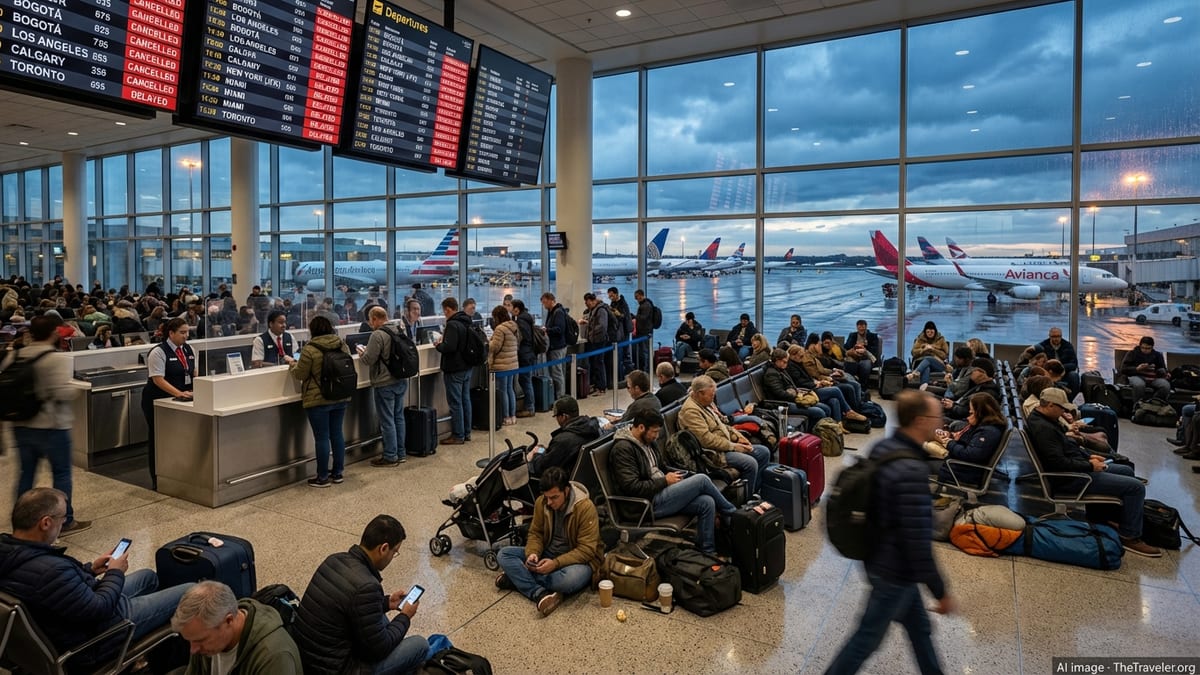
Hub Under Strain at One of America’s Busiest Airports
Charlotte Douglas International Airport functions as one of American Airlines’ largest hubs, handling tens of millions of passengers a year and serving as a key connection point for the Southeast and East Coast. Publicly available airport and airline data describe a tightly scheduled operation in which American and its regional affiliates run high volumes of short haul services through Charlotte each day.
According to published coverage and real time flight boards, the latest wave of disruption centers primarily on American branded operations and flights operated under the American Eagle banner by PSA Airlines and Piedmont Airlines. These carriers provide much of the regional feed into Charlotte, meaning that interruptions to their schedules have an outsized impact on overall connectivity.
Historic airport reports and current schedules show that American and its regional partners account for the majority of movements at Charlotte, with concourses and gate assignments heavily concentrated around the American network. That concentration creates efficiency in normal conditions but can magnify the impact when a specific group of flights is grounded or delayed on a large scale.
As a result, even a single day marked by more than one hundred grounded departures and two dozen delays can echo across the airport’s operation, from congested gates and tarmac bottlenecks to extended lines at customer service counters.
Network Effects Across North Carolina, Florida, Texas, New York and Georgia
The disruption at Charlotte is being felt far beyond North Carolina. American and its regional affiliates use the airport as a central hub for flights that connect mid sized and smaller markets to major destinations in Florida, Texas, New York and Georgia. When those flights are canceled in large numbers, travelers at both ends of the route face missed connections and extended waits for rebooking.
Real time route maps and timetables indicate that many American Eagle flights operated by PSA and Piedmont are short segments that rely on tight connection windows at Charlotte. When inbound aircraft do not arrive or outbound flights are grounded, passengers continuing to cities such as Miami, Dallas, New York and Atlanta may lose access to same day options, especially on less frequent routes.
Travel tools that track flight status show a pattern common in hub disruptions, in which early cancellations of regional services cascade into later delays as crews and aircraft fall out of their planned rotations. Once a critical mass of flights is removed from the schedule, it can take multiple operating days for the system to absorb stranded passengers and reposition aircraft.
These network effects are particularly acute along the busy North Carolina corridor, where Charlotte acts as the primary link between smaller airports and the wider American system. Even travelers not originally scheduled to pass through Charlotte can be affected when rebooking pushes additional demand onto alternate hubs or competing carriers.
Regional Carriers PSA and Piedmont at the Center of the Disruption
PSA Airlines and Piedmont Airlines, both wholly owned subsidiaries of American Airlines Group, sit at the center of the current disruption because of their role in operating American Eagle branded flights into and out of Charlotte. Descriptions of their operations in public filings and reference materials show that these carriers focus on regional jets and shorter stage lengths that are especially sensitive to schedule changes at major hubs.
Information published about PSA Airlines notes that the company is headquartered at Charlotte Douglas International Airport and maintains a significant presence there as part of American’s regional strategy. Piedmont Airlines likewise provides critical feeder service and maintenance functions at Charlotte and other East Coast airports, reinforcing how dependent American’s hub structure is on these regional partners.
When irregular operations strike, regional flights are often among the first to be cut because they serve as flexible pressure valves in a tightly packed schedule. Industry analyses frequently point out that airlines prioritize long haul and international services when capacity is constrained, meaning that cancellations can cluster around shorter domestic segments such as those typically flown by PSA and Piedmont.
In the current situation, the figure of 108 grounded flights suggests that large portions of certain regional banks have been removed from the schedule, sharply reducing options for travelers relying on Charlotte as a same day connection point.
Passenger Impact and Limited Same Day Alternatives
For passengers, the immediate impact of such widespread disruption is measured in missed trips, extended airport waits and last minute changes to onward plans. Reports from traveler facing tracking tools show that cancellations and delays can leave customers facing long lines at rebooking counters and limited availability on remaining flights, particularly during peak travel periods.
Because Charlotte serves as a critical connection point between smaller communities and major destinations, the loss of multiple frequencies on the same route can leave travelers without same day alternatives. Some passengers may be rebooked through other hubs or onto overnight services, while others may need to shift plans to the following day if remaining seats are already taken.
Travel advisories and consumer guides consistently recommend that passengers in these circumstances monitor their booking details frequently, use airline apps to explore rebooking options and consider alternative airports within driving distance when a primary hub is heavily constrained. The extent of the current disruption at Charlotte, with more than one hundred flights grounded, highlights how essential those contingency plans can be.
Indirect impacts can also ripple out to rental car availability, hotel occupancy near the airport and local ground transport services, as stranded travelers seek last minute accommodation or alternative ways to reach their destinations.
What Travelers Should Watch in the Coming Days
In the days following a large scale disruption at a major hub, recovery typically depends on aircraft availability, crew scheduling and the broader operating environment, including weather and air traffic constraints across the network. Publicly available operational data suggest that airlines often need several rotations to reposition equipment and normalize schedules.
For travelers with upcoming itineraries involving Charlotte, industry guidance suggests paying close attention to departure times, connection windows and aircraft type. Flights operated by regional affiliates such as PSA and Piedmont may remain vulnerable to further adjustments while schedules are being balanced.
Travel planning resources recommend arriving at the airport early, traveling with essential items in carry on luggage in case of overnight disruptions and preparing for potential schedule changes even after check in. The current situation at Charlotte illustrates how quickly conditions can change at a busy hub when a cluster of flights is grounded at once.
While operations historically return to normal after such disruptions, the combination of 108 grounded flights and 24 delays has underlined the importance of resilience in travel plans for passengers moving through one of the busiest airports in the United States.