


More news on this day
The United Kingdom has downgraded its travel warning for the United Arab Emirates, with updated Foreign, Commonwealth and Development Office guidance signaling a softer stance on visits to Dubai and Abu Dhabi after months of heightened regional tension.
Get the latest news straight to your inbox!
From blanket warning to more targeted guidance
According to publicly available Foreign Office travel advice, the previous blanket caution against all but essential travel to the UAE has been replaced with more nuanced wording that reflects reduced immediate threat levels while still highlighting ongoing regional risks. The shift follows a period of intense concern over missile and drone activity across the Gulf, which had prompted tighter advisories and disrupted itineraries for British travelers.
The revised guidance no longer frames the entire country under the strongest warning category, instead distinguishing between general conditions in major hubs such as Dubai and Abu Dhabi and the broader regional security picture. The change indicates that the UK government now assesses the likelihood of direct impact on visitors in those cities as lower than during the peak of recent tensions.
While the downgraded warning is being interpreted as a vote of confidence in Emirati security measures, the advisory still stresses that the regional situation can change quickly. Travelers are encouraged to stay alert to local developments, monitor official updates and remain aware that a renewed spike in tensions could lead to further changes in advice at short notice.
Travel industry observers note that the recalibration of language is designed to balance public safety with the reality that Dubai and Abu Dhabi remain important global aviation and tourism hubs. Rather than discouraging all non-essential journeys, the UK preference now appears to be clearer information about the specific nature of residual risks.
What the downgrade means for UK holidaymakers
For British travelers planning winter sun breaks or short city stays, the updated Foreign Office position removes a major psychological barrier. Many tour operators and booking platforms treat formal warnings against all but essential travel as a trigger for cancellations, credits or complex insurance disputes. The softer advice is expected to make it easier for packaged trips and independent itineraries to go ahead.
Travel insurers commonly use government advisories when deciding whether policies remain valid. When a destination is under a strict warning, some standard policies limit cover for new bookings or exclude disruption linked to security events. With the UAE no longer in the highest risk category in UK guidance, industry specialists anticipate fewer exclusions and disputes, though the fine print of each policy remains critical.
For those already holding bookings that were thrown into doubt by earlier warnings, the downgrade offers clearer grounds to proceed if they still wish to travel. However, consumer advocates underline that individual risk tolerance will differ, and some travelers may choose to postpone until there has been a longer period of stability.
There is also a procedural effect for consular support. While a downgrade does not guarantee assistance in all circumstances, the absence of a broad “do not travel” style warning may simplify certain aspects of crisis response planning for British nationals in the UAE, particularly in Dubai and Abu Dhabi where large expatriate and tourist communities are present year-round.
Airlines and airports move to reassure passengers
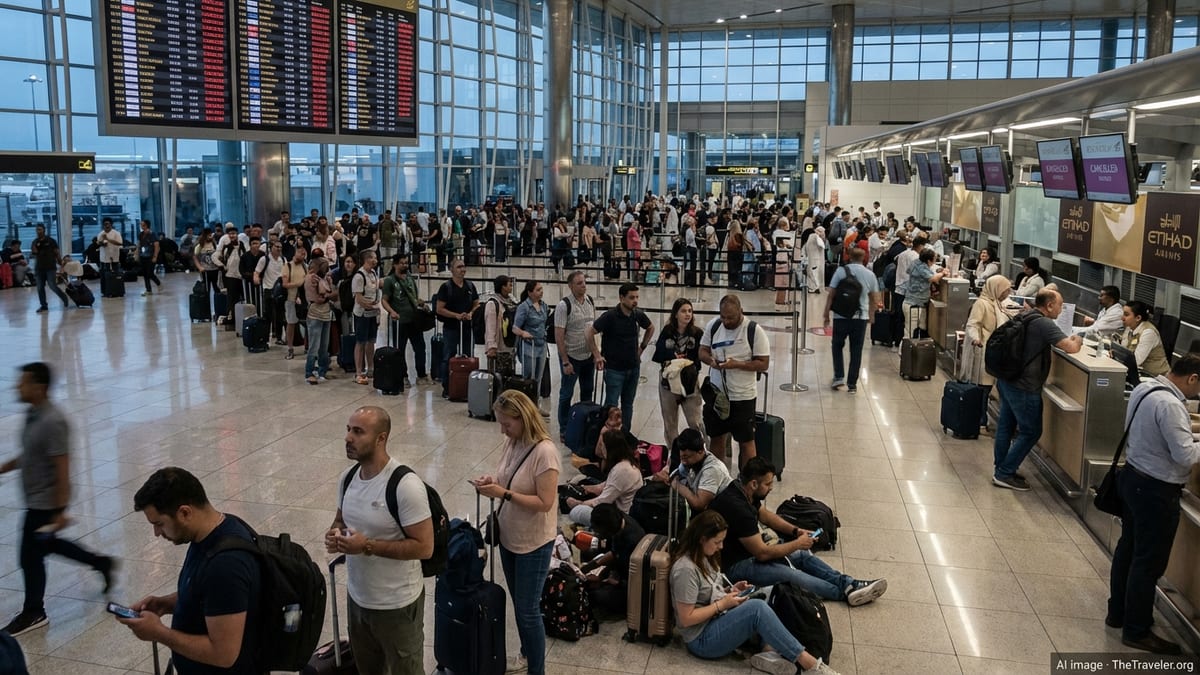
The shift in UK advice comes as Gulf carriers and airports work to restore normal travel patterns following months of uncertainty. Reports from aviation industry outlets describe strong demand for flights into Dubai and Abu Dhabi as connecting hubs for Europe, Asia and Africa, even during periods when government advisories had been at their strictest.
Emirates and Etihad have introduced a series of passenger assurance measures, including enhanced travel insurance and flexible ticketing options, which are being promoted as a way to rebuild confidence. Publicly available information from airline announcements shows that certain policies remain valid regardless of changes in government travel warnings, offering cover for medical emergencies and some disruption scenarios.
At Dubai International and Abu Dhabi International airports, operations have generally remained robust, with temporary adjustments during spikes in regional tension. Aviation analysts note that the UK downgrade aligns with a broader picture in which Gulf hubs are operating closer to pre-crisis capacity, even as some European carriers continue to review routings and schedules into the wider region.
For passengers, the combination of more moderate official advice and airline-backed guarantees may reduce the perceived risk of transiting through or staying in the UAE. Travel experts suggest that clearer communication from both governments and airlines about what is and is not covered in the event of renewed instability will be crucial in the coming months.
Regional security backdrop still shapes advice
The Foreign Office’s updated UAE guidance sits against a continuing backdrop of volatility elsewhere in the Middle East. Recent analysis from risk consultancies and regional news outlets continues to highlight missile and drone incidents affecting nearby territories, as well as shifting maritime security assessments in strategic waterways.
Published reporting on the UAE notes that local air defence systems have intercepted incoming projectiles during previous flare-ups, and that authorities maintain strict controls around critical infrastructure. The new UK wording appears to take into account both these mitigation measures and a period of relative calm compared with earlier in the year.
However, the advisory still points to the possibility of sudden changes in the security environment. Travelers are reminded that any escalation involving regional powers could have knock-on effects for flight paths, airport operations or local movement within Gulf states, even if Dubai and Abu Dhabi remain largely unaffected on the ground.
Security analysts comment that the UK downgrade is less an all-clear and more a recalibration to reflect current conditions. In practice, this means that while everyday life and tourism in the UAE’s main cities continue largely as normal, visitors are encouraged to maintain a degree of situational awareness that might not be necessary in less sensitive regions.
Practical advice for travelers heading to Dubai and Abu Dhabi
The latest change in UK Foreign Office advice is expected to prompt many would-be visitors to revisit plans that were postponed or cancelled over recent months. Travel specialists recommend that anyone booking trips to Dubai or Abu Dhabi checks official guidance both at the time of purchase and again shortly before departure, in case of fresh updates.
Prospective travelers are also urged to speak with their insurers to confirm that policies fully reflect their intended plans. In some cases, add-on cover for security-related disruption or missed departures may be advisable, particularly for itineraries involving multiple regional stops or tight connections.
On the ground, standard safety recommendations continue to apply. Visitors are encouraged to follow local regulations, respect photography restrictions near government buildings and critical infrastructure, and avoid sharing images of any security incidents on social media, as local laws in the UAE are strict on such matters.
For now, the downgrade in the UK travel warning signals a cautiously optimistic outlook for tourism flows between Britain and the UAE. If the regional security situation remains relatively stable, analysts expect to see a steady recovery in leisure and business travel to Dubai and Abu Dhabi over the coming seasons.