

More news on this day
Swindon Member of Parliament Heidi Alexander has issued an update following a two-train collision near Bedford on 19 June 2026, as rail investigators, emergency services and operators continue efforts to clarify the circumstances of the incident and its impact on passengers.
Get the latest news straight to your inbox!
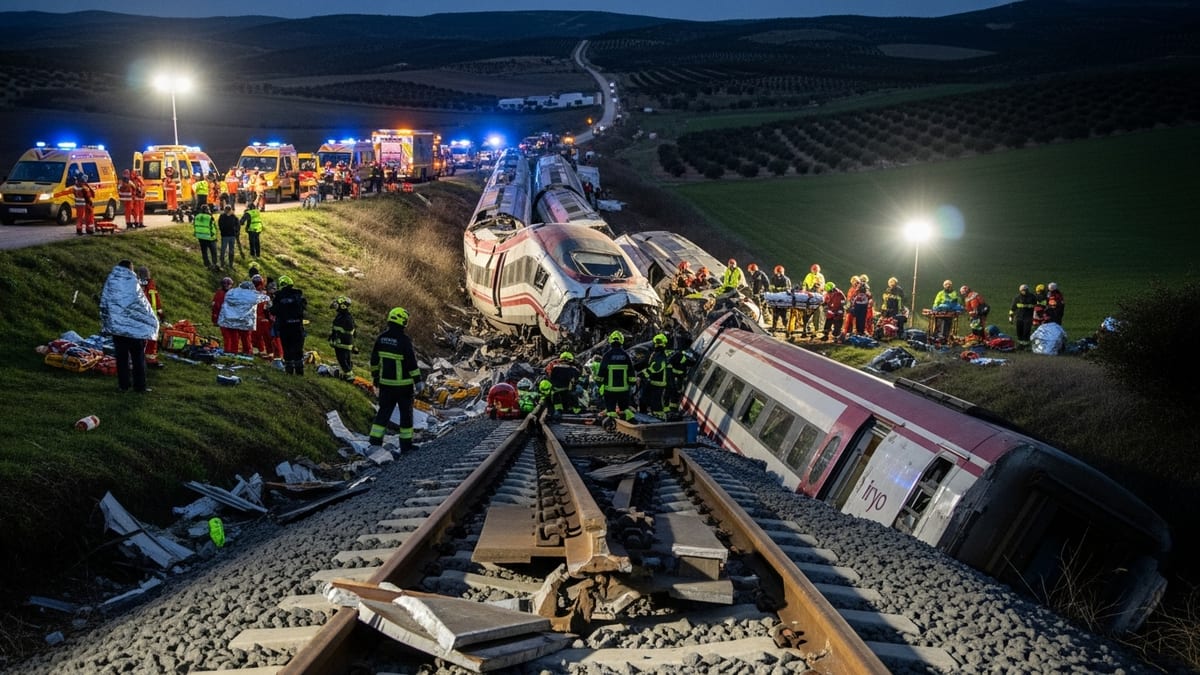
MP highlights concern for passengers and rail staff
Publicly available statements indicate that Heidi Alexander, who represents Swindon and has previously served in transport-related roles, moved quickly to acknowledge the seriousness of the collision on the busy Midland Main Line south of Bedford. Her update focused on the welfare of passengers and rail staff caught up in the incident, reflecting growing national attention on rail safety and network resilience.
Reports suggest that the Swindon MP referenced initial information pointing to significant disruption along the north–south corridor into London, a route heavily used by commuters from the Midlands and beyond. By addressing the incident, she aligned herself with wider calls from parliamentarians for clear, timely information about injuries, the condition of those on board and the restoration of normal services.
Commentary shared in regional and national coverage notes that Alexander’s intervention is part of a broader pattern of lawmakers responding to high-profile transport incidents, even when they occur outside their own constituencies. The focus on Bedford reflects the strategic importance of the line for communities across central and southern England, including passengers from Swindon who regularly interchange with northbound services.
Early political reaction has so far centred on reassurance for the travelling public and support for ongoing investigations rather than speculation about the underlying technical or operational causes. Observers note that Alexander’s message reflects that cautious tone, emphasising monitoring of developments and a commitment to scrutinising findings once they are available.
What is known so far about the Bedford collision
According to multiple news and social media reports compiled on 19 June, two passenger trains collided near Elstow, just south of Bedford, affecting services on the Midland Main Line that links towns and cities such as Nottingham, Corby and Bedford with London St Pancras. Early accounts indicate that the trains were travelling in the same direction when one struck the rear of the other, leading to damage to several carriages and substantial disruption.
Passenger descriptions shared with broadcasters and online platforms suggest a sudden impact that caused some derailment and interior damage but stopped short of the kind of catastrophic destruction seen in historic high-speed crashes. Nonetheless, images from the scene show at least one train jackknifed against the track and extensive emergency activity, underlining the seriousness of the event.
Reports indicate that at least one air ambulance attended the scene, with rail passengers and staff understood to have sustained injuries of varying severity. As of the latest available updates, exact casualty numbers and detailed medical information have not been formally consolidated, and coverage stresses that this remains a developing situation.
Rail industry tracking services and timetable data point to an East Midlands Railway service and a commuter train operating on the same corridor being involved. Detailed confirmation of unit types, speeds and signalling conditions at the time of impact is expected to form part of the formal accident investigation, which is already gathering evidence from on-board systems, infrastructure records and eyewitness accounts.
Investigations focus on signalling, speed and braking
Published coverage notes that the Rail Accident Investigation Branch has dispatched inspectors to the site in order to establish how two trains came to occupy the same section of line, in the same direction, at the same time. Commentators with knowledge of UK main line operations suggest that potential lines of inquiry include signalling performance, train protection systems, driver response and any communication issues in the minutes leading up to the collision.
Discussion among rail specialists highlights the role of systems such as the Train Protection & Warning System and associated safety equipment designed to prevent trains from passing signals at danger or closing too quickly on a stationary service ahead. Investigators are expected to analyse whether these systems operated as intended, whether any technical failures occurred or whether a combination of factors created a rare but serious vulnerability.
Attention is also turning to braking distances and line speeds on the approach to Bedford from the north, where multiple services share a busy stretch of track. Observers point out that even a relatively low-speed rear-end collision can cause significant injury, particularly to those standing in vestibules or near luggage racks, and can lead to derailment if couplings and bogies are forced off the rails.
According to background material on previous UK rail investigations, the process is likely to involve a staged release of information, beginning with an initial bulletin describing the basic facts, followed by a more detailed interim report and, eventually, a full set of safety recommendations. Lawmakers including Alexander are expected to scrutinise these findings in parliament once they are published.
Impact on passengers and wider rail services
In the hours following the collision, passengers on the affected trains and on others held further up the line reported long delays, crowded carriages and diverted journeys across the Midlands and into London. Social media posts and journey-planning data show that services were suspended through the immediate area south of Bedford, with replacement options limited while the line remained blocked for emergency access and initial recovery operations.
Travellers heading between the East Midlands and the capital encountered cancellations and significant re-routing, with some operators directing passengers to alternative lines via other corridors where capacity allowed. For many regular commuters, the incident raised fresh questions about the resilience of key routes that have already experienced disruption from infrastructure work and unplanned faults earlier in the year.
Observers note that incidents of this kind also have a psychological impact on rail users far from the crash site. Swindon, a major hub on the Great Western Main Line, lies on a different intercity corridor, but passenger commentary there and elsewhere reflects renewed anxiety about main line safety, train crowding and emergency response procedures.
Public statements issued by operators and rail infrastructure managers are stressing their support for those affected and their cooperation with investigators. Timetables are expected to remain subject to short-notice changes while damaged rolling stock is recovered, track is inspected and signalling systems are checked and, where necessary, repaired or recalibrated.
Political and safety implications for the UK rail network
The Bedford collision comes at a time of heightened scrutiny of UK rail performance, with passengers frequently expressing concern about reliability, crowding and value for money. Lawmakers such as Heidi Alexander have consistently engaged with debates on how to maintain and upgrade ageing infrastructure while ensuring that day-to-day operations remain safe and dependable.
According to political commentary, the latest crash is likely to feature in forthcoming parliamentary discussions on transport funding, regulation and the pace of safety technology roll-out. Issues expected to draw attention include the capacity of existing lines, the integration of different operators on shared corridors and whether current oversight arrangements provide sufficient resilience against rare but high-impact failures.
Rail unions, passenger groups and industry experts are also expected to contribute evidence once more facts are known, placing the Bedford incident in the context of the sector’s overall safety record, which remains comparatively strong by international standards. Nonetheless, the visual impact of a two-train collision on a key intercity route is likely to reinforce calls for accelerated investment in signalling upgrades and train protection systems.
For now, public information indicates that the priority remains on caring for those injured, restoring services and securing a clear factual account of what happened south of Bedford on 19 June. As that picture emerges, attention will shift to how quickly lessons can be implemented across the wider network, including busy hubs such as Swindon that depend on passenger confidence in the safety and reliability of intercity rail.