


More news on this day
Across the Alps, Switzerland, Italy and France are reshaping autumn and winter tourism around the rails, as new cross-border timetables, revived tunnels and expanded night services shift demand away from the summer skies and onto cooler-season trains.
Get the latest news straight to your inbox!
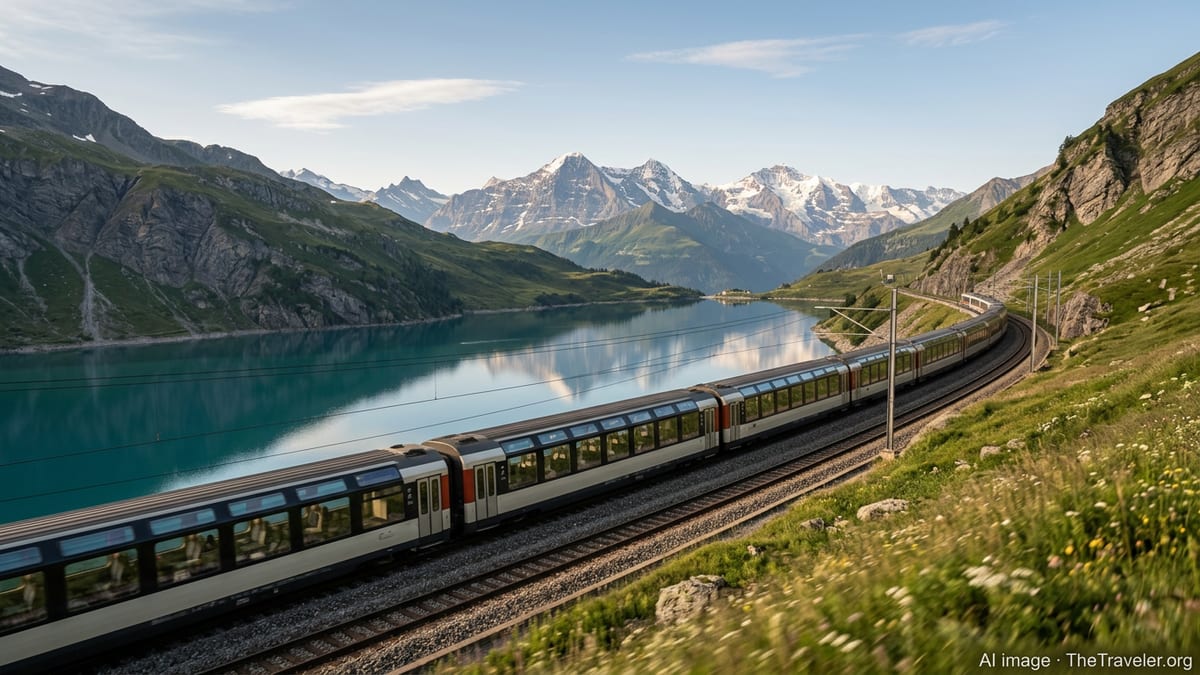
Alpine Neighbours Move in Step on Cross-Border Rail
Travel data and operator announcements for the 2024 and 2025 winter seasons indicate that the three Alpine neighbours are increasingly treating their rail networks as a single, interlinked system for tourism. Swiss Federal Railways has confirmed that the Gotthard Base Tunnel returned to full operation for passenger and freight traffic in September 2024, restoring one of Europe’s key north–south rail arteries between German-speaking Switzerland and northern Italy. This allows up to 70 passenger trains per day to cross under the Alps, reinforcing Switzerland’s role as a rail bridge between Italy and the wider continent.
On the western side of the Alps, France and Italy are also reinforcing their rail ties, even after several difficult years of disruption. Italian and French operators have restructured cross-border high-speed services, with Paris–Milan connections gradually restored following infrastructure works and landslides in the Alps. According to publicly available timetables, direct high-speed links between the French capital and northern Italy, supplemented by bus-bridging where necessary, are scheduled to play a central role in the 2024 and 2025 winter holiday periods as services scale back up.
Passenger guidance from Italy’s infrastructure manager and national operator shows that cooperation agreements with neighbouring networks, including Switzerland and France, are being embedded in access contracts and contingency planning. This technical alignment is largely invisible to leisure travellers, but it underpins the smoother cross-border journeys that rail promoters hope will tempt more visitors to choose trains for autumn city breaks and winter ski weeks.
Switzerland Expands Its Night and Late-Evening Offer
In Switzerland, rail is increasingly positioned as a round-the-clock travel option rather than a daytime-only mode. Timetable information for winter 2024–2025 highlights new and expanded late-evening and weekend night services on core domestic routes such as Bern–Zurich–Winterthur and in French-speaking Switzerland. These upgrades are designed to mesh with international arrivals and departures, allowing travellers from Italy and France to continue their journeys deeper into the night across the Swiss network.
International overnight rail is also regaining prominence. Information published by Swiss Federal Railways and Austrian Federal Railways shows a rolling introduction of a new generation of Nightjet carriages on routes serving Switzerland, including lines to Germany, the Netherlands and Austria. While the first of these new trains entered service on the Zurich–Hamburg route, the broader Nightjet network is scheduled to expand through the mid-2020s, strengthening the night-train web that links Swiss hubs with northern Europe.
For leisure travellers, the effect is a quieter redistribution of travel time. Instead of sprinting through Switzerland on daytime high-speed trains alone, visitors can increasingly arrive at dawn on overnight services, connect to regional and mountain lines, and stay on rails late into the evening when returning from resorts or Christmas markets. This is particularly relevant in the shoulder and winter seasons, when daylight hours are short and flexible departure times become more valuable.
Italy and France Reframe Rail as a Climate-Smart Seasonal Choice
In Italy and France, rail developments are being framed against a backdrop of changing travel seasons and climate considerations. Research from European institutions on tourism and climate projects that southern coastal regions could lose a share of peak summer visitors as extreme heat becomes more frequent, with partial compensation through increased demand in spring, autumn and winter. That pattern aligns with operators’ decisions to prioritise rail connectivity for cooler months, notably towards mountain destinations.
French operator communications for winter 2024–2025 emphasise rail as the backbone for ski traffic from major cities and neighbouring countries. Marketing materials for the season focus on high-speed services from Paris and other hubs towards the Alps, complemented by cross-border operations such as TGV Lyria linking France and Switzerland. Italy mirrors this approach with long-distance EuroCity services operated jointly with Swiss Federal Railways and Deutsche Bahn, advertising up to several dozen trains daily between major Italian cities and Swiss destinations.
Policy documents and operator statements across the three countries repeatedly highlight rail’s lower carbon footprint compared with aviation and private cars. Trials and pilots are focusing on seamless ticketing, journey-continuation agreements and capacity improvements on key corridors, particularly through Alpine tunnels. These measures are presented as critical to capturing a growing cohort of climate-conscious travellers who are willing to adjust timings and routes if the rail alternative is reliable and competitive.
Timetable Changes Reshape Autumn and Winter Itineraries
Behind the scenes, European timetable compilers report a dense series of adjustments to cross-border services that directly affect how visitors plan cool-season trips. The winter 2024–2025 European Rail Timetable notes that there are no major structural changes on most Switzerland–Italy routes, but highlights additional EuroCity services between Zurich and Milan from the subsequent winter period, lifting the number of daily train pairs on this key corridor. This incremental capacity helps absorb both regular commuter flows and a rising volume of leisure traffic bound for Italy and the Swiss Alps.
At the same time, the same specialist reports point out that some overnight services elsewhere in Europe are temporarily curtailed due to tunnel works, concentrating demand on remaining night-train axes that still traverse Switzerland, France and northern Italy. This reinforces the strategic importance of routes through the Gotthard Base Tunnel and across western Alpine passes, especially during the December timetable change when many travellers switch from summer to winter patterns.
Public notices from Swiss and Italian operators also reference ongoing construction on certain cross-border lines, particularly via Domodossola, resulting in daytime reductions or altered schedules at specific periods. For travellers, the message is that autumn and winter rail journeys across the Alps are becoming richer in options but also more sensitive to timetable nuances, making advance checking via official channels more important than in the past.
Rail-Centric Tourism Corridors Emerge Across the Alps
Together, these developments are beginning to shape distinct rail-centric tourism corridors that bind Switzerland, Italy and France more tightly during the colder months. In the west, TGV Lyria links Paris and key French cities with Geneva, Lausanne and Zurich, where travellers can continue on Swiss intercity and regional services into ski regions or lake districts. In the south, the restored power of the Gotthard axis offers frequent connections between Zurich, Lucerne and Lugano and onward EuroCity services into Milan, Florence and other Italian cities.
To the north and east, night trains extend these corridors beyond the three countries themselves, delivering passengers from Germany, Austria, the Netherlands and Denmark directly into Swiss hubs before they disperse towards French and Italian destinations. Draft Swiss timetables for 2026 indicate plans for further northbound night services, reflecting expectations of sustained demand for long-distance rail over the coming winters.
For destinations marketing autumn foliage, Advent markets or snow-sure slopes, the strategic bet is that better-aligned rail will make multi-country itineraries more practical. A traveller might now piece together a journey that begins with a high-speed train from Paris to Lausanne, continues via scenic Swiss routes into Ticino, and finishes with a EuroCity connection to Milan, all within a single cool-season trip. The emerging alignment between Switzerland, Italy and France suggests that rail, rather than air, is set to structure how many of those journeys unfold in the years ahead.