


More news on this day
American travelers heading to Europe’s most popular vacation spots are being urged to prepare for tougher checks at the border, as new data and official guidance highlight a growing number of entry refusals linked to documentation problems, overstays and stricter enforcement of Schengen rules.
Get the latest news straight to your inbox!
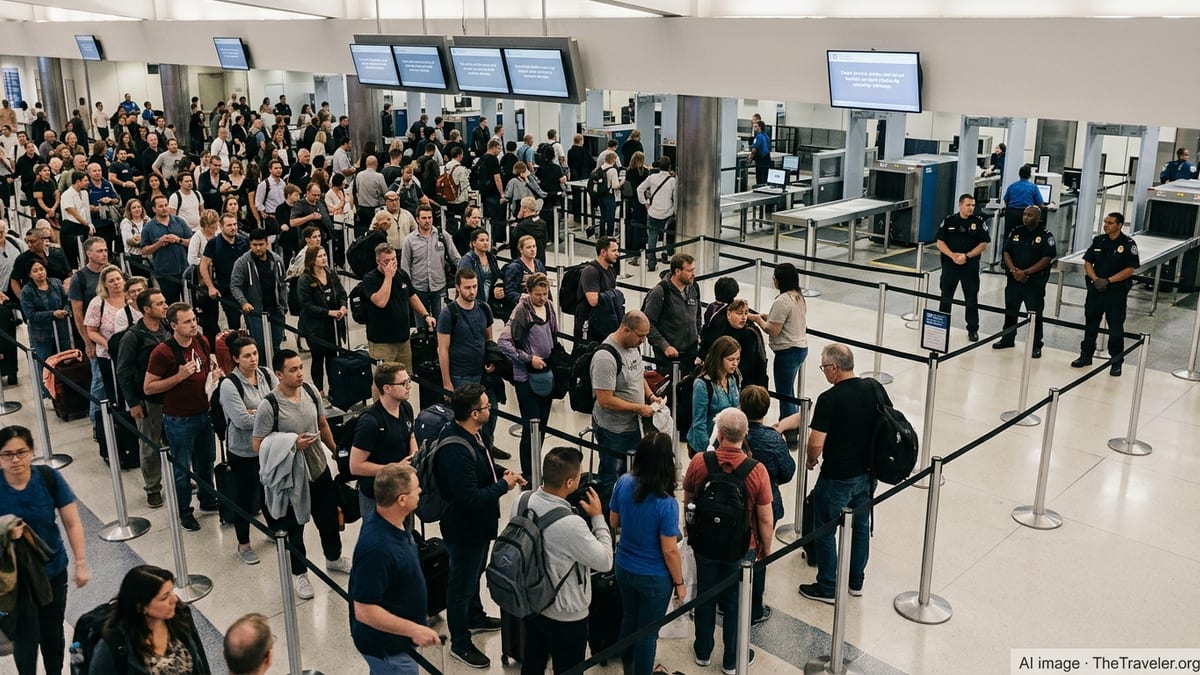
Stricter border checks meet surging U.S. demand for Europe
Published travel advisories and recent European border data indicate that several of the most visited Schengen destinations for Americans, including Portugal, Spain, Italy and France, are now applying entry rules more rigorously at airports and other external borders. The shift coincides with record transatlantic demand and the full roll out of the European Union’s Entry/Exit System, which electronically records the entry, exit and refusal of entry for non EU visitors.
The Entry/Exit System, introduced in phases from late 2025 and fully deployed in April 2026, logs biometric and biographic details of third country nationals staying in the Schengen Area for short periods. The system tracks how long visitors remain in the zone and automatically flags those who have exceeded the 90 days in any 180 day limit that applies to U.S. tourists. European officials report that it has also made refusals at the border more visible in official statistics.
Alongside this, the U.S. State Department’s country specific pages for major European destinations reiterate that foreigners arriving without valid passports, or those who cannot demonstrate the purpose and conditions of their stay, may be refused entry and returned to their point of origin. The guidance stresses that U.S. embassies cannot intervene to overrule decisions taken by local immigration officers.
Why travelers are being turned away
Recent reporting from European agencies points to a cluster of recurring reasons for refusals at Schengen borders. Across the bloc, the most common grounds include an inability to sufficiently justify the purpose and conditions of the visit, a lack of proof of accommodation or onward travel, insufficient funds for the intended stay, and cases where the traveler has already used up the maximum period allowed under short stay rules.
Data from the first quarter of 2026 show that the category “purpose and conditions of the planned stay not sufficiently justified” accounted for thousands of refusal decisions in Schengen. A further significant share involved travelers who had already reached the maximum permitted stay in the zone. Additional refusals stemmed from missing or invalid visas where required, or alerts in shared European information systems indicating that a person should not be admitted.
Although the highest refusal numbers in the latest figures are associated with nationals of neighboring non EU countries, the same legal grounds can apply to American tourists. U.S. citizens do not need a visa for short tourism or business visits to the Schengen Area, but they must still meet all entry conditions at the border, including holding a valid passport, respecting prior stay limits and being able to explain and document their travel plans.
European statistics for early 2026 also highlight that travelers in their twenties and thirties account for the largest share of refusals. This aligns with demographic trends in leisure travel, where younger visitors are more likely to engage in extended multi country itineraries that bring them close to the edge of their allowed time in the Schengen zone.
Favorite destinations under closer scrutiny
Several of the European countries that consistently rank among Americans’ top vacation choices are directly affected by these developments. Portugal, which has enjoyed sustained popularity with U.S. tourists, is listed at the lowest State Department advisory level but carries detailed instructions on entry, exit and documentation standards. Publicly available guidance emphasizes that foreigners who arrive without a valid passport are not permitted to enter and are generally returned on the next available flight.
Portugal’s national information for visitors underscores that, even within the Schengen Area, travelers should carry identification and be prepared to show it when flying or during police checks. Separate Portuguese guidance on short stay visas restates the 90 day limit and the requirement for proof of accommodation and sufficient means of subsistence for the full period of the visit.
Elsewhere in the Schengen Area, a series of temporary internal border controls notified by member states has created additional checkpoints on some previously friction free land routes. Countries including Austria and Sweden currently apply temporary controls at selected internal borders in response to security and migration pressures. While these measures do not change the basic rights of short stay visitors, they can result in more frequent document checks for travelers arriving from neighboring states.
For Americans linking several destinations in a single trip, these layers of external and internal checks mean that entry decisions may be taken at different points along the journey, and that failure to meet formal requirements at any one of them can still result in a refusal.
State Department signals heightened vigilance
The U.S. State Department’s worldwide caution notice, updated in May 2026, advises American citizens to exercise increased care when traveling internationally, reflecting a broader security environment shaped by regional conflicts and concerns about terrorism and organized crime. Within that framework, Europe remains one of the most traveled regions for U.S. tourists, but the department’s country pages emphasize the importance of compliance with local immigration laws.
Travel advisories for Schengen countries commonly remind U.S. citizens that border authorities maintain full discretion over admission decisions, even for travelers who appear to meet standard criteria. The guidance notes that visitors may be asked to show a return or onward ticket, confirm accommodation bookings, demonstrate access to sufficient funds, or clarify prior time spent in the Schengen Area.
Americans planning extended European stays, especially digital nomads and repeat visitors splitting time between several countries, are being urged through publicly available information to monitor their days in the Schengen zone more closely. Overstays recorded in the Entry/Exit System can lead not only to refusal of entry on a subsequent trip, but also to fines or entry bans depending on national practice.
The State Department also points travelers toward local immigration and border websites for the most detailed and up to date rules, reflecting that requirements and enforcement practices can shift quickly in response to domestic pressures within European states.
How Americans can reduce the risk of refusal
Travel experts and official guidance converge on several practical steps that can reduce the risk of refusal at the border for U.S. tourists heading to Europe. A key recommendation is to travel with a passport that has ample validity remaining beyond the planned departure date, as Schengen rules require at least three months of validity and some airlines apply even stricter policies at check in.
Authorities also recommend that visitors carry printed or easily accessible electronic copies of hotel reservations, rental agreements or host invitations, as well as a return or onward flight ticket. Being able to show that sufficient funds are available to cover the stay, whether through bank statements, credit limits or prepaid arrangements, can help satisfy questions about financial means.
For travelers planning multiple entries into the Schengen Area within a six month window, tracking cumulative days in the zone has become essential. The Entry/Exit System now provides border officers with an immediate overview of previous entries and exits, leaving little room for approximate calculations by visitors who move frequently between Schengen and nearby non Schengen destinations.
As the combination of digital monitoring, temporary internal border checks and heightened global security vigilance takes hold, U.S. travelers headed for Europe’s favorite destinations are being encouraged to treat formalities at the border as a central part of their trip planning, rather than an afterthought at the end of a long flight.