


If you have a flight through Sydney and your confirmation simply says “Sydney (SYD)”, it can be surprisingly hard to tell which of the three terminals you actually need. Pick the wrong one and you could find yourself on the wrong side of a runway with a tight connection ticking away. This practical guide walks you through Sydney Airport’s Terminal 1, Terminal 2 and Terminal 3 so you know exactly where to go for international and domestic flights, how transfers work, what to expect with baggage claim, and how to fix things fast if you turn up at the wrong terminal.
Get the latest updates straight to your inbox!
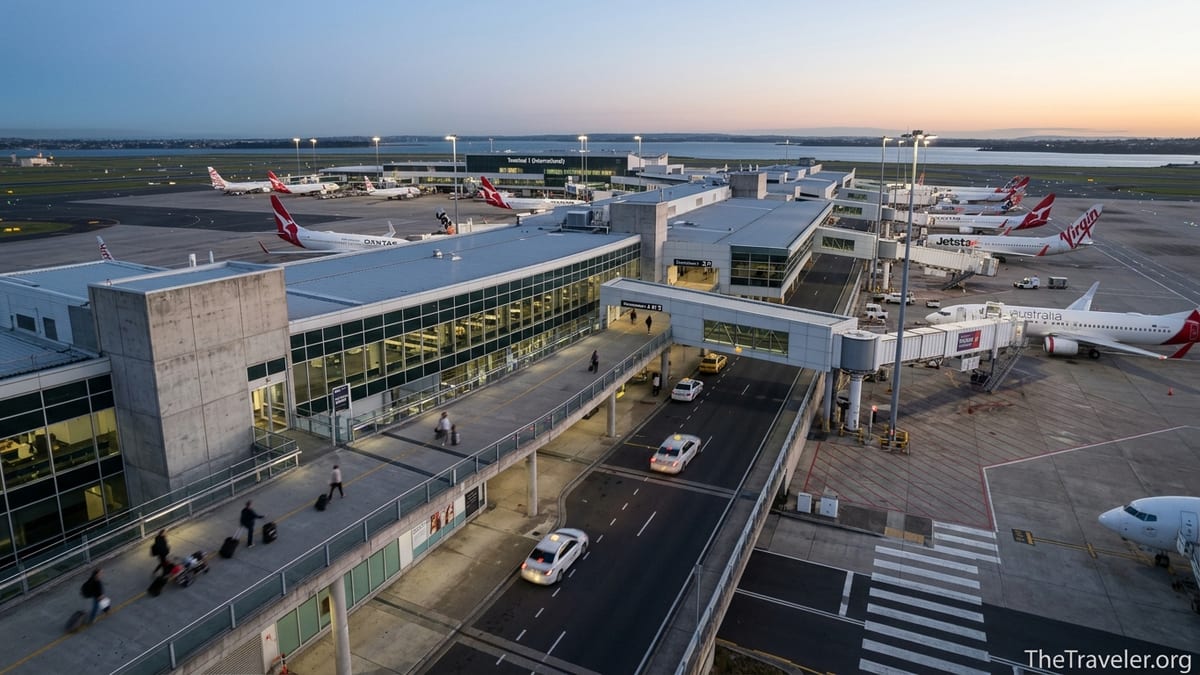
Understanding Sydney Airport’s Layout: T1 vs T2 vs T3
Sydney Kingsford Smith Airport has three passenger terminals: Terminal 1 (T1) for almost all international flights, and Terminals 2 and 3 (T2 and T3) for domestic and regional services. T1 sits on one side of the main north–south runway, while T2 and T3 share the other side. That means you cannot simply walk between international and domestic terminals; you need a bus, train or vehicle transfer across the airfield.
T1 International handles long-haul and international regional services for airlines such as Qantas, Emirates, Singapore Airlines, Qatar Airways, American Airlines and most other foreign carriers. If you are flying overseas from Sydney, there is a very high chance you are departing from T1. Exceptions are rare and usually involve special charter or government operations.
Across the runway, T2 is the larger of the two domestic terminals and is used by Virgin Australia, Jetstar, Rex and many regional airlines. T3 is Qantas’ own domestic terminal, used mainly by Qantas and QantasLink for routes such as Sydney to Melbourne, Brisbane, Adelaide and Canberra. In practice, if your domestic ticket is on Qantas or QantasLink you almost always use T3, while Virgin Australia or Jetstar tickets will send you to T2.
Because the terminals are separated, planning which one you need is not just a matter of convenience. During peak hours it can easily take 30 to 60 minutes from stepping off an aircraft in one terminal to reaching a check in counter in another, once you factor in waiting for baggage, walking to transport, and security queues. Leaving at least two to three hours between an international and domestic connection booked on separate tickets is a realistic buffer.
Which Terminal Do You Need? International vs Domestic in Practice
The simplest rule is: international flights use T1, domestic flights use T2 or T3. If your itinerary shows a non-Australian city such as Los Angeles, Singapore, Tokyo or London, expect to depart or arrive at T1. If it shows another Australian city such as Melbourne, Brisbane, Hobart or Cairns, you will be flying into or out of T2 or T3 instead.
As a concrete example, a Qantas flight from Sydney to Los Angeles (QF11 or QF11x variations) departs from T1, while a Qantas flight from Sydney to Melbourne (such as QF419) uses T3. A Virgin Australia flight from Sydney to Brisbane (for instance VA938) operates from T2. A Jetstar service from Sydney to the Gold Coast also uses T2. Meanwhile, a QantasLink turboprop to Canberra or a regional New South Wales destination such as Wagga Wagga generally uses T3.
Your booking confirmation or airline app should show the terminal once the schedule is finalised, usually within 24 hours of departure. If it does not, look at the airline and the route: Qantas domestic almost always equals T3, while Virgin Australia, Jetstar, Rex and most independent regional carriers use T2; any international flight almost always means T1. When in doubt, the departures board on the Sydney Airport website allows you to search by flight number or city to confirm the terminal on the day of travel.
If you are connecting internationally to internationally, such as Bangkok to Sydney to Los Angeles on Qantas and American Airlines, both flights will usually operate from T1. In that case you remain in the same building, following the international transfers signs to a separate transit security checkpoint without exiting to landside. This is much easier than mixing international with domestic and is one reason many travellers prefer through itineraries that keep both legs in T1.
Baggage Claim, Check In and Security: What To Expect In Each Terminal
On arrival at T1 International, you disembark into the arrivals corridor, proceed through passport control and then reach a large baggage hall with multiple carousels. After collecting your bags you pass through customs and biosecurity inspection. Only once you exit into the public arrivals area can you access the trains, buses, rideshare pick up zones and transfer options to the domestic terminals. If you are connecting to a domestic flight on the same ticket, your bags may be checked through, but you often still need to pick them up at T1 before re-dropping them at a domestic transfer desk, so always check the tags at your origin airport.
In T2 and T3 domestic, baggage claim is directly behind the security screening area on the arrivals level. For example, if you land on a Virgin Australia flight into T2, you walk from the gate down to the baggage hall, collect your luggage, then step outside to the taxi, rideshare or train station entrances. Qantas arrivals in T3 work similarly, with baggage belts grouped near the exits toward the train station and car parks. Baggage delivery times vary, but 15 to 30 minutes from arrival gate to carousel delivery is common during busy periods.
For departures, T1 security can be significantly slower than the domestic terminals, especially in the early morning bank of long haul flights to Asia and the Pacific. Travellers are funnelled through passport control and then centralised security screening before reaching a large airside retail and dining area. Terminal 2 and 3 have their own central security zones directly after check in. Many regular travellers report being airside in under 15 minutes in T2 and T3 during off peak, but queues can still build around Monday morning and Friday evening peaks when business routes to Melbourne and Brisbane are busy.
If you are connecting, factor in that you will need to clear security again when switching between T1 and the domestic terminals, even if you stay on airport property. For instance, an international arrival in T1 connecting to a Qantas domestic departure from T3 will involve passport control, baggage collection if required, customs, then either a transfer bus or train, followed by domestic security screening at T3. Missing one of these steps, such as underestimating the security queue, is a common cause of missed connections.
How to Transfer Between Terminals Without Losing Your Flight
Because T1 and T2/T3 are separated by the runway, you cannot walk between them. The quickest options are the official Terminal Transfer Bus, the Airport Link train, taxis or rideshare, and, for eligible passengers, airline-operated shuttle services. The airport’s own Terminal Transfer Bus is a free shuttle that runs approximately every 15 minutes between T1 and the domestic precinct from early morning until late evening. The ride itself only takes a few minutes, but you should allow extra time for waiting and walking from the stop to your check in area.
The Airport Link train connects International Airport station (for T1) with Domestic Airport station (for T2 and T3). The ride between the two stations takes about two minutes. A dedicated terminal transfer ticket costs a small single-journey fee per person, while using an Opal card or contactless payment adds the regular station access surcharge on top of the standard suburban fare. This makes the train a relatively expensive option for a short hop, but it is fast, frequent and avoids surface traffic if the roads around the terminals are congested.
Taxis and rideshare services like Uber, Ola and DiDi can also be used to transfer between terminals. In light traffic, the drive can be under 10 minutes door to door, but at peak times such as weekday mornings or Friday afternoons, queues at the taxi rank and congestion near the terminal entrances can stretch the journey towards 30 minutes or more. This is still a reasonable backup if you have bulky luggage or mobility issues and prefer a point to point vehicle over buses or trains.
Some airlines provide their own transfer services for passengers on through tickets. Qantas, for example, offers a free domestic to international shuttle in some circumstances, typically for Qantas or Qantas partner passengers connecting between T3 and T1 on a single itinerary. This service usually operates airside or semi-airside from a designated transfer desk and can save you from re-checking bags landside, but eligibility criteria and operating hours can change, so confirm with Qantas before travel. Virgin Australia has at times offered guided transfers for eligible passengers, although most of its customers now use the general T-Bus or train.
Getting To and From Each Terminal: Trains, Buses and Road Access
All three terminals are connected to Sydney’s suburban rail network via the Airport Link. International Airport station is directly underneath T1, accessed by lifts and escalators from the arrivals and departures levels. Domestic Airport station is positioned between T2 and T3, with escalators and lifts leading directly into the shared domestic precinct near baggage carousels and the food court. Trains run every few minutes in peak periods and typically every 10 to 15 minutes in off peak, connecting to the city centre and key suburban hubs.
The main downside of the train is cost, particularly the privately operated station access surcharge applied at both airport stations. For a family of four heading into central Sydney, the combined fares can quickly exceed the cost of a pre-booked rideshare or taxi in off peak traffic. On the other hand, solo travellers or business passengers coming from the CBD during peak road congestion often find the 15-minute train ride more predictable than a potentially 40-minute taxi trip stuck on the motorway.
Public bus services also link the airport to surrounding suburbs. For example, a local bus route runs between the domestic and international terminals and nearby suburbs like Burwood and Rockdale, and charges only standard metropolitan fares when using an Opal card. The downside is that these buses are designed for commuters rather than airport passengers, so they lack luggage racks, can be crowded during peak school and work travel times, and are slower than the direct train or a taxi.
By road, T1 has its own multi-level parking structures and dedicated pick up and drop off zones. Hotels such as the Rydges Sydney Airport are located directly opposite the T1 terminal, offering park, stay and fly packages and a one-minute walk to check in. T2 and T3 share car parks and road access on the domestic side, with several airport hotels, including new-generation properties like Moxy Sydney Airport, offering shuttle services that pick up from a shared area between the terminals on the arrivals level. If you are being collected by friends or family, make sure they know whether you are coming out of T1 or the domestic side; driving to the wrong precinct can add 20 to 30 minutes as they circle back through airport roads.
Common Wrong-Terminal Mistakes and How To Fix Them Fast
One of the most common Sydney stories is the traveller who arrives bright and early at T1 International for a transcontinental flight, only to realise their domestic hop to Melbourne leaves from T3 on the other side of the runway. Another frequent error is assuming all Qantas flights use the Qantas-branded T3 terminal, when in fact Qantas international departures and arrivals use T1 like every other overseas service. Travellers also occasionally show up at T2 for a Jetstar international service via another Australian city, not realising their first leg is domestic.
If you do find yourself at the wrong terminal, the key is not to panic but to move quickly. Check your boarding pass or airline app to confirm the correct terminal, then head straight for the transfer options. If you are at T1 but need T2 or T3, follow signs for the T-Bus shuttle or Airport Link station. If you are at T2 or T3 but actually depart from T1, look for the same options in reverse. In off peak hours you can often correct a wrong-terminal mistake in around 30 minutes door to door, but during morning and evening peaks it is safer to assume 45 to 60 minutes and call your airline if your departure is less than an hour away.
If your flights are on a single through ticket, airlines are sometimes more flexible about rebooking if a wrong-terminal error contributes to a missed connection, especially when compounded by delays. If you purchased separate tickets, you carry more risk and may face change fees or full fare differences. This is one of the reasons many frequent travellers recommend booking domestic and international legs together on one itinerary when connecting through Sydney, even if it costs slightly more upfront.
Putting this into a real-world scenario: imagine you land from Singapore at 7:00 am into T1 with a separate 9:00 am Jetstar flight from T2. You need to clear immigration, wait for your bag, pass customs, catch the T-Bus or train, and go through domestic security at T2. Any delay in the arrivals hall or on the road can eat into your buffer. In practice, many experienced travellers would be more comfortable with a 10:00 am or later domestic connection when tickets are separate, or would pay extra to keep both legs on a single ticket with checked-through baggage.
The Takeaway
Choosing the right Sydney Airport terminal comes down to three simple checks: are you flying international or domestic, which airline are you on, and are your flights on one ticket or separate bookings. International almost always equals T1, while domestic flights with Virgin Australia, Jetstar, Rex and most regional carriers use T2, and Qantas or QantasLink domestic flights primarily use T3. Knowing this in advance lets you plan realistic transfer times and avoid last-minute dashes across the runway.
Transfers between T1 and the domestic terminals require a vehicle of some kind. The free Terminal Transfer Bus and Airport Link train make the hop in just a few minutes, but you must still allow for waiting, walking and clearing security again at your next terminal. Taxis, rideshare and airline shuttles fill in the gaps and are useful if you are carrying bulky luggage or travelling with family. When planning domestic to international or international to domestic connections, especially on separate tickets, building in a generous buffer of at least two to three hours is a practical way to protect yourself against delays and wrong-terminal mistakes.
Ultimately, Sydney Airport works smoothly when you know its basic layout and where your airline sits within it. Take a moment to confirm your terminal on your e-ticket before you leave home, share the correct terminal with anyone dropping you off or picking you up, and keep an eye on signage as you move through the airport. A little preparation turns what can be a confusing three-terminal maze into a straightforward gateway to the rest of Australia and the world.
FAQ
Q1. How do I know which terminal I am flying from at Sydney Airport?
You can usually see the terminal on your booking confirmation or airline app once your flight is confirmed. As a rule, international flights use T1, Qantas and QantasLink domestic flights use T3, and Virgin Australia, Jetstar, Rex and most regional carriers use T2.
Q2. Can I walk between Sydney’s international and domestic terminals?
No. T1 International and the domestic terminals T2 and T3 are separated by a runway, so you must use the Terminal Transfer Bus, Airport Link train, taxi, rideshare or an eligible airline shuttle.
Q3. How long should I allow to transfer from T1 to T2 or T3?
In normal conditions, allow at least 90 minutes between a flight arrival time and your next departure, and two to three hours if you are changing from international to domestic on separate tickets to cover immigration, baggage, customs, transfer and security.
Q4. Is there a free shuttle between T1 and the domestic terminals?
Yes. Sydney Airport runs a complimentary Terminal Transfer Bus between T1 and T2/T3 during the day and evening. It usually runs every 15 minutes, but you should still allow extra time for waiting and walking.
Q5. Is the train between T1 and T2/T3 included in my flight ticket?
No. The Airport Link train is a separate public transport service. A short transfer ticket between the international and domestic stations costs a small fee per person, and normal suburban fares plus an airport station surcharge apply if you are continuing into the city.
Q6. I arrived at the wrong terminal. What should I do first?
Confirm your correct terminal on your boarding pass or the airport departures board, then go straight to the T-Bus stop, train station or taxi rank to transfer. If your departure is within an hour, contact your airline as you move, so they know you are on your way.
Q7. Do I need to collect my baggage when transferring from international to domestic in Sydney?
It depends on your ticket. On many through itineraries your bags are tagged to your final destination, but you may still need to collect them at T1 to clear customs before re-dropping them at a transfer desk. Always check your bag tags and ask at check in at your origin airport.
Q8. Which terminal does Qantas use in Sydney?
Qantas and QantasLink domestic flights use T3, while Qantas international flights use T1. If you are flying overseas on Qantas, you will depart from T1, even though Qantas also has its own domestic terminal.
Q9. Are there train stations at both the international and domestic terminals?
Yes. International Airport station serves T1, and Domestic Airport station serves T2 and T3. Both are part of the Airport Link and are accessed directly from the terminal buildings by lifts and escalators.
Q10. Is it safe to book a two-hour connection between domestic and international flights at Sydney?
A two-hour connection can work, especially on a single ticket with checked-through bags and access to airline transfer services, but it leaves limited room for delays. If your tickets are separate or you are unfamiliar with the airport, a longer buffer is safer.