


Staying at or near Sydney Airport can turn a stressful early departure or late-night arrival into a manageable, even comfortable, part of your trip. With one hotel inside the international terminal, several properties just steps from check-in, and a cluster of options a short shuttle ride away, choosing the right place to sleep can save you sleep, money and time. This guide focuses on real hotel choices around Sydney Kingsford Smith Airport in 2026 and how they work in practice for different types of flights and travellers.
Get the latest updates straight to your inbox!
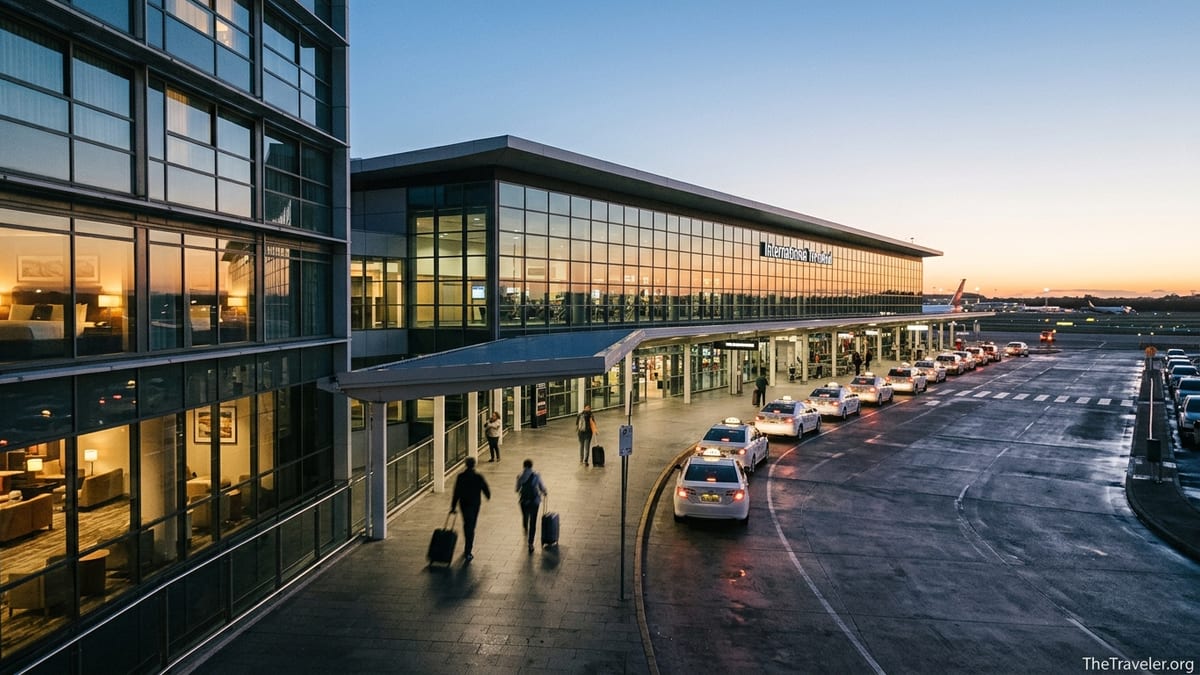
Understanding Sydney Airport’s Layout Before You Book
Sydney Airport has one international terminal (T1) and two domestic terminals (T2 and T3) that are separate and not realistically walkable between. The airport itself advises travellers to use the Terminal Transfer Bus, an inter-terminal shuttle running roughly every 15 minutes between T1 and the domestic terminals during the day, or to use rail, taxi or rideshare if you are connecting outside those hours. This physical separation matters when you are choosing where to sleep, especially if you have an early flight or a tight connection.
International flights depart from T1 on the western side of the airfield, with its own train station, International Airport. Most domestic flights on Qantas and Jetstar use T3 and T2 respectively, while Virgin Australia and many smaller carriers use T2. Domestic terminals have a separate train station, Domestic Airport, on the Airport Link line. You cannot simply roll your bag from one terminal to the other, so if you are flying into one and out of the other, factor transfer time into your hotel decision.
For an early morning international departure, it often makes sense to prioritise being as close as possible to T1. For a pre-dawn domestic flight, such as a 6:00 or 7:00 departure to Melbourne or Brisbane, a hotel you can walk to from T2 or T3 can be worth paying a little more. Travellers with a domestic to international connection overnight might choose to sleep near their morning departure terminal, then use the transfer bus or train in the morning rather than crossing the airport late at night.
Another practical detail is that the international terminal has more limited overnight activity. While parts of T1 open in the early hours for 6:00 flights, many shops and food outlets are closed in the small hours of the morning. If you are landing after 22:00 and flying out very early next day, a nearby hotel with 24-hour reception and at least some food options can be more comfortable than trying to spend the night in the terminal itself.
The Only In-Terminal Hotel: Aerotel Sydney at T1
Aerotel Sydney is currently the only hotel located inside the international terminal building at Sydney Airport. It sits landside in the T1 arrivals hall, which means you still clear immigration and customs before walking to the hotel, but you remain within the terminal complex. This setup is ideal for passengers arriving late in the evening, those with very early departures, or anyone facing an awkwardly long layover who wants to rest without leaving the airport precinct.
Rooms at Aerotel are typically compact, with windowless cabins as well as standard rooms, designed for rest rather than extended stays. Many bookings are sold in flexible time blocks such as 6 or 12 hours as well as overnight, which can be particularly useful if you are landing mid-afternoon and flying out just after midnight, or arriving at 23:00 and departing at 06:00. On major booking platforms in mid-2026, typical overnight prices tend to sit in the mid-range bracket for Sydney, often similar to or slightly above nearby full-service hotels, reflecting the premium for location inside the terminal.
Because Aerotel is landside, you can freely access check-in counters, ATM machines, convenience stores and ground transport in T1 during your stay. For an early morning international flight, you can simply take the lift down from your room, walk a few minutes to your airline’s check-in area once the desks open, and be among the first in line for bag drop and security. For late arrivals into T1, particularly after 22:00 when public transport frequency drops and taxi queues may lengthen, the ability to simply walk to your room without leaving the building can be a major advantage.
Aerotel is less convenient if your next flight departs from the domestic terminals. You will still need to transfer to T2 or T3 by bus, train or road vehicle the next morning. For travellers who prefer a more traditional hotel room with natural light, a larger bed and amenities such as a full restaurant and bar, one of the near-terminal properties like Rydges or Novotel can be a better fit, even if that means a short walk outside the terminal.
Rydges Sydney Airport: Steps from International Check-in
Rydges Sydney Airport is located directly opposite the international terminal, on the forecourt facing the main T1 entrance. The hotel markets itself as being 181 steps from check-in, and in practice most travellers find that with luggage it is a walk of only a few minutes along a covered pathway. This makes Rydges the closest full-service hotel to the international terminal, combining near-terminal convenience with more space and amenities than an in-terminal transit hotel.
The property offers standard and superior rooms, many with runway or city views, plus a restaurant, bar and room service. Typical nightly rates in 2026 vary with demand but often fall into the mid to upper-mid range for Sydney airport hotels. The hotel also sells daytime use rooms, which can suit passengers on long daytime layovers who want to rest, shower or work in a quiet space without paying for an entire night. For example, a traveller landing from Asia at 09:00 and departing to North America at 20:00 might book a day room from late morning to late afternoon.
For early morning international flights, Rydges allows you to minimise the unknowns of Sydney traffic and rail schedules. Instead of worrying about catching the first train from the city around 04:30 or hoping a taxi is available, you can simply set an alarm, walk out of the lobby and be at your check-in counter in minutes. This is particularly attractive in winter when early mornings can be cold and wet, and any delay getting to the airport could cause real stress.
Rydges also works well for late-night arrivals or overnight connections. A passenger landing into T1 around 23:00 can clear immigration, collect bags, walk across to the hotel and be in a room before midnight. If they have a domestic flight the following morning, they can either take the airport train from International Airport station to Domestic Airport station or use the airport’s transfer bus. The combination of ease and familiar full-service hotel facilities makes Rydges a frequent recommendation from seasoned travellers who have overnight transits in Sydney.
Best Hotels for Domestic Terminals: Short Walk, Early Starts
If your flights are entirely domestic, or your critical early morning leg leaves from T2 or T3, staying near the domestic terminals can be more convenient than basing yourself at T1. The most practical options for walking access to T2 and T3 are Ibis Budget Sydney Airport and Mantra Sydney Airport, both located in the Mascot airport precinct a short walk from the domestic buildings. Regular visitors often report walk times of around 7 to 10 minutes with luggage, depending on pace and the route across Ross Smith Avenue.
Ibis Budget Sydney Airport is one of the cheapest true airport hotels in the area. Rooms are basic and compact, with simple furnishings aimed at a one-night stay before or after a flight. Typical nightly rates are usually at the lower end of the market for the airport precinct, making it attractive to solo travellers or backpackers who care more about price and walkability than amenities. Many guests value the ability to walk to the terminal for an early morning flight rather than relying on a shuttle.
Mantra Sydney Airport sits nearby and generally offers slightly more upscale rooms and a quieter feel than the budget properties, often at a moderate price premium. It still counts as a short walk to T2 and T3 and works well for couples or business travellers who want a little more comfort and soundproofing but still need to be close to an early flight. Frequent domestic fliers sometimes choose Mantra for a pre-dawn departure to Perth or Darwin, allowing them to roll out of bed just after 04:00, walk to the terminal and clear security without worrying about morning city traffic.
Further afield but still focused on domestic travellers are properties such as Citadines Connect Sydney Airport and Travelodge Hotel Sydney Airport. These hotels typically require a short shuttle or rideshare to the terminals rather than a practical walk, but they can offer good value on many dates. For example, on certain weeknights in the shoulder seasons, Citadines may price competitively with Ibis or Mantra while offering larger rooms, a rooftop bar area and a slightly more boutique feel. For families of three or four, the extra space can justify the slightly less convenient transfer.
Nearby Alternatives: Novotel, Pullman and Mascot Area Hotels
Beyond the immediate terminal area, a ring of hotels in Mascot and the surrounding suburbs serves Sydney Airport passengers who do not need to be directly across the road from check-in. These can be especially useful for travellers arriving earlier in the evening who want more dining options, better value, or a more traditional hotel feel while still being within a short shuttle or taxi ride of their terminal the next day.
Novotel Sydney International Airport, located in Wolli Creek near the Cooks River, is one of the better-known alternatives for international travellers. It is not walkable with luggage for most people, but it is only a short ride to T1 by taxi or rideshare, and some travellers appreciate being slightly removed from the immediate airport noise. Nearby properties such as Silkari Suites or other hotels in Wolli Creek also serve passengers who are comfortable taking a short transfer and want access to local cafes and supermarkets.
On the domestic side, Pullman Sydney Airport offers an upscale option in Mascot. Guests typically reach the terminals via shuttle, taxi or rideshare. For business travellers who value a quieter room, quality bedding and full-service dining, Pullman can be a better fit than the closest budget options. Shuttle timetables are updated periodically, but as of 2026 services like the Sydney Super Shuttle link Pullman and other nearby hotels with both domestic and international terminals across most of the day, making it a workable base even for relatively early departures.
Staying in Mascot itself, around the domestic stations and local streets, can also be a tactic for travellers who want to reduce their time at the airport on departure day without paying an in-terminal premium. A couple flying out domestically at 09:00 might choose a Mascot hotel that is a five-minute shuttle ride from T2, dine at a local restaurant, sleep in a larger room, and still comfortably reach bag drop two hours before departure.
Shuttles, Trains and Walking: How You Will Actually Get to the Gate
Choosing an airport hotel is as much about the transfer as it is about the room. At Sydney Airport, the key questions are whether you can walk to your terminal, whether the hotel offers a shuttle, and whether you are comfortable relying on trains, rideshares or taxis at your departure or arrival time. The answers can differ depending on whether your flight leaves at 06:00, 10:00 or late afternoon.
If you are staying at Aerotel or Rydges, walking is your primary mode: you will either remain in the T1 building or cross the road from the hotel to international check-in. From Ibis Budget or Mantra, most travellers walk to T2 or T3 for domestic flights, although some with heavy luggage or mobility issues still prefer to use a taxi or a paid shuttle. Citadines Connect, Travelodge, Pullman and other Mascot-area hotels usually rely on hotel shuttles or rideshares. Shuttle fees and timetables change over time, and services may start later or end earlier than you expect, so it is wise to confirm the latest schedule with your hotel a few days before you travel.
Public transport remains a popular back-up option. The Airport Link train connects the city with International Airport and Domestic Airport stations, with early morning services starting around 04:30 from central city stops. This makes it possible, for example, to stay in central Sydney and still reach a 07:00 international departure, though you will be sharing the train with commuters and paying an airport station surcharge. Some savvy travellers save money by staying near Mascot or Wolli Creek stations and walking to the terminals, but the 1.5 to 1.8 kilometre walk with luggage is not appealing to everyone, especially in bad weather or after a long-haul flight.
For many airport hotel guests, rideshare services such as Uber and Ola or traditional taxis fill the gaps. A pre-dawn ride from a Mascot hotel to T1 or T2 typically takes around 5 to 10 minutes in light traffic. Combined with staying a short drive from the terminal, this approach can be a good compromise between cost and convenience, especially if you split the fare between two or three travellers. Just remember that during peak travel seasons or major events, both shuttles and rideshares can be busier than usual, so build in extra buffer time for your transfer.
Matching Hotels to Different Flight Scenarios
Different itineraries call for different hotel choices. For a late-night international arrival into T1 followed by a domestic flight the next morning, staying at Rydges or Aerotel can maximise rest. A traveller landing from North America at 21:30 might walk across to Rydges, sleep, then take the train or shuttle to T2 for a mid-morning domestic flight. The extra cost over a cheaper Mascot hotel is often justified by the ease of avoiding additional late-night transfers.
For a very early international departure, such as a 06:00 flight to Asia, the combination of Aerotel or Rydges and a short walk to check-in can be hard to beat. You could check in to Aerotel the night before, sleep until around 03:00 or 03:30, then head straight to the airline counters as soon as they open. Similarly, a couple flying domestically at 07:00 might choose Ibis Budget or Mantra, waking at 04:45, grabbing a quick coffee and walking to T2 by 05:15 without ever facing city traffic or worrying about whether the first train is on time.
For travellers with more generous schedules, nearby hotels and even the city centre become viable. Someone arriving at 15:00 and departing next day at 11:00 could easily stay in Sydney’s CBD, enjoy dinner at Circular Quay, then catch a mid-morning train back to the airport. However, if that same traveller was nervous about disruptions on the rail line or wanted to avoid carrying large suitcases across the city, a mid-range Mascot or Wolli Creek hotel with a 10-minute shuttle back to the airport could offer a comfortable middle ground.
Families and groups may balance room size and budget against distance. A family of four with an 08:00 domestic flight might find that two connecting rooms at a slightly farther hotel like Citadines Connect offer more space and sometimes better value than cramming into one small room at an ultra-close budget property. The trade-off is a short shuttle ride instead of a walk, which many groups consider acceptable if it means a better night’s sleep for everyone.
Planning for Delays, Cancellations and Long Layovers
Delays and missed connections are an unfortunate reality of modern air travel, and Sydney is no exception. Having a rough mental shortlist of airport hotels before you fly can make life significantly easier if your arrival is pushed back several hours or you are rebooked overnight. The closest options such as Aerotel and Rydges can book out quickly in irregular operations, so it is useful to know at least one or two backup properties in Mascot or Wolli Creek.
During disruptions, airline staff may provide hotel vouchers, but availability will depend on how many passengers are affected and existing bookings. In such cases, many travellers are assigned to nearby chain hotels rather than the most convenient properties across from the terminal. For example, in a large weather disruption, passengers might be distributed between several Mascot hotels connected by shuttles instead of all being placed at Rydges. Keeping expectations flexible and focusing on rest rather than exact location can help manage the situation.
Long layovers during the day are another situation where the right airport hotel can transform your experience. If you have eight hours between flights at T1, booking a daytime room at Rydges or Aerotel allows you to shower, nap and work in privacy rather than spending all day in the departure lounge. Similarly, a long domestic layover might justify a day room at a Mascot hotel with easy access to both the terminal and local cafes, letting you step outside and reset before your next leg.
Most airport hotels near Sydney offer flexible check-in and check-out options for an extra fee, and some specifically advertise day-use rates. Because details change often, it is wise to check directly with the hotel or through your booking platform on the day you make the reservation. When timing is tight or you are recovering from a long-haul journey, spending a little extra on guaranteed early access to a room can be more valuable than upgrading to a slightly nicer room type.
The Takeaway
Sydney Airport’s split-terminal layout means that choosing a hotel is about more than just price and star rating. The single in-terminal Aerotel at T1 and the Rydges directly opposite international check-in offer unmatched convenience for early departures and late arrivals on overseas flights. For domestic travellers, Ibis Budget and Mantra at Sydney Airport allow a straightforward walk to T2 and T3, while a ring of Mascot and Wolli Creek hotels provides a spectrum of comfort levels, room sizes and price points a short shuttle or train ride away.
When deciding where to stay, start with your most time-critical flight segment, whether that is a pre-dawn departure, a tight morning connection or a late-night arrival when public transport options are thin. Then match that scenario to the level of convenience and comfort you need: pure proximity at any price, a balanced mid-range option with a short walk, or a better-value hotel slightly farther out with reliable shuttle access. Building an extra 15 to 30 minutes of buffer time into your plan and confirming shuttle or train options a few days before departure can help you avoid rushed transfers and enjoy a more relaxed start or end to your journey.
With a bit of advance thought and realistic expectations about distances and transfers, the right Sydney Airport hotel can turn a potentially exhausting travel day into a manageable, even restful, experience. Whether you choose to sleep inside the terminal, across the road from check-in, or in a nearby suburb, the key is picking a stay that fits your itinerary rather than fighting it.
FAQ
Q1. What is the closest hotel to Sydney Airport’s international terminal?
Aerotel Sydney is inside the T1 international terminal building, while Rydges Sydney Airport sits directly opposite the terminal entrance and is only a few minutes’ walk from check-in.
Q2. Can I walk between the international and domestic terminals at Sydney Airport?
No, the terminals are separated by roads and airfield infrastructure, and the airport advises using the terminal transfer bus, train, taxi or rideshare rather than walking between T1 and the domestic terminals.
Q3. Which hotels are within walking distance of the domestic terminals?
Ibis Budget Sydney Airport and Mantra Sydney Airport are commonly used by domestic travellers because they are roughly a 7 to 10 minute walk from T2 and T3 for most people with light to moderate luggage.
Q4. Is it worth paying extra to stay at Rydges or Aerotel for an early international flight?
For very early departures, many travellers find the convenience worthwhile, as staying across from or inside T1 removes the risk of traffic or public transport delays and lets you walk to check-in in minutes.
Q5. Do Sydney Airport hotels offer free shuttle buses?
Some nearby hotels operate paid or occasionally complimentary shuttles, but services, routes and prices change regularly, so it is important to check the latest details with your chosen property before travel.
Q6. Can I stay overnight inside Sydney Airport without booking a hotel?
While parts of T1 remain open overnight, seating can be limited, many shops close, and sleeping in public areas is uncomfortable, so most travellers with overnight layovers prefer booking a nearby hotel room.
Q7. How early should I arrive at Sydney Airport if I stay at an airport hotel?
General advice is still to arrive around three hours before international flights and about 90 minutes to two hours before domestic flights, even if you are staying very close to the terminal.
Q8. Are there family-friendly options near Sydney Airport?
Many nearby hotels, including Rydges, Novotel and several Mascot-area properties, offer family rooms or interconnecting rooms, which can be more comfortable for parents traveling with children than smaller budget rooms.
Q9. Is it cheaper to stay in central Sydney and take a train to the airport?
Often it can be cheaper to stay in the city, but you must factor in the cost of the airport train surcharge or a taxi, as well as the extra travel time, especially if you have an early morning departure.
Q10. What should I do if my flight is delayed and I need a last-minute hotel near Sydney Airport?
In disruption situations, start by asking airline staff about any available vouchers, then check availability at the closest options such as Aerotel and Rydges before expanding your search to Mascot and Wolli Creek hotels accessible by shuttle or taxi.