


More news on this day
Sydney Airport’s increasingly diverse route network is helping to sustain international traffic growth even as conflict in the Middle East disrupts traditional transit corridors between Australia and Europe.
Get the latest news straight to your inbox!
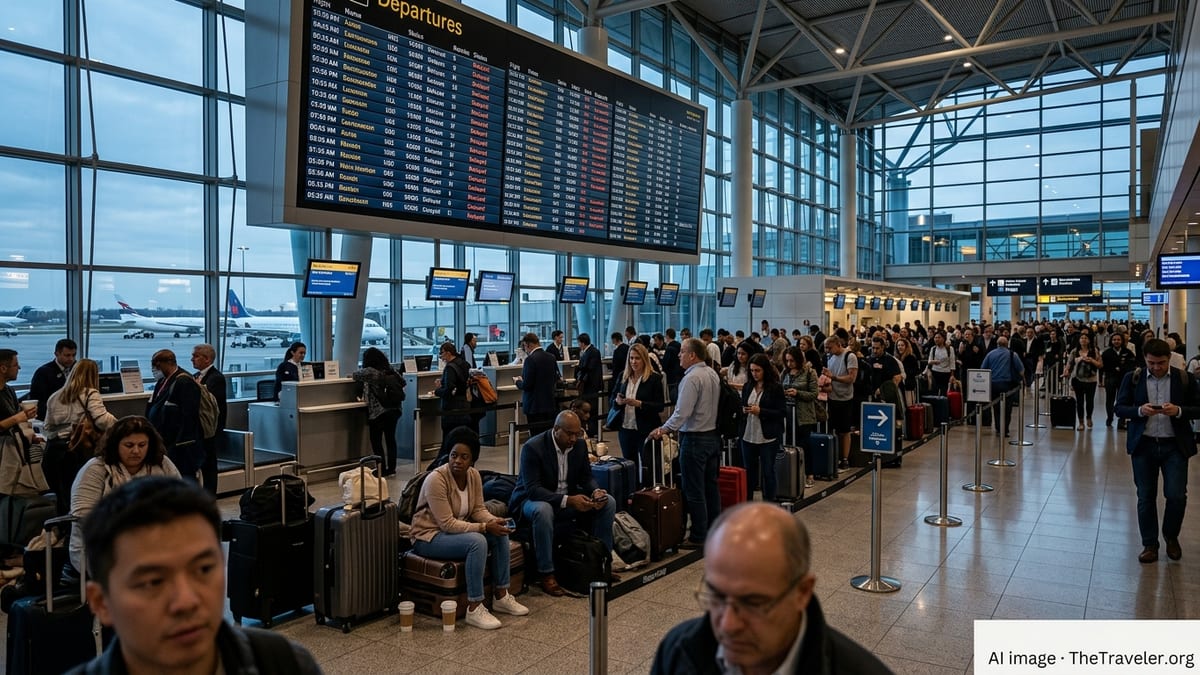
Middle East conflict reshapes long-haul flying
Airspace closures and damage to major Gulf hubs since late February 2026 have upended some of the world’s busiest long-haul corridors, including key routes between Australia and Europe that typically rely on stopovers in the United Arab Emirates and Qatar. Publicly available data on the conflict shows that airports in Dubai and Abu Dhabi have experienced extended operational disruption, while large sections of airspace over Iran and neighboring states have periodically been unavailable to civilian traffic.
European and international aviation monitors report steep falls in flights to and from the broader Middle East as airlines reroute or suspend services. The changes have added hours to some journeys and pushed fuel and operating costs higher, creating an uneven impact on global traffic flows and exposing the dependence of many networks on a small number of hub airports in the Gulf.
Australian travellers heading to Europe have been among those most affected. Local media coverage in March documented stranded passengers at Sydney Airport and warned that it could take weeks for suspended Middle East services to resume. In the meantime, demand has shifted to alternative routings through Asia and North America, lifting load factors on carriers with the flexibility and fleet depth to pivot away from conflict-affected corridors.
International growth holds up at Sydney
Against that backdrop, Sydney Airport’s own traffic figures for early 2026 depict a more resilient picture than many might have expected. Publicly available information from the airport’s first quarter operational update shows overall passenger numbers rising compared with the same period a year earlier, with international traffic the main driver of growth.
The airport reports that demand on many Asia Pacific and North Asian routes has continued to build as airlines restore capacity and Australian outbound tourism rebounds. New Zealand, China and key Southeast Asian markets remain among Sydney’s busiest international destinations, while recovery on routes to Hong Kong, Guangzhou and Kuala Lumpur has been particularly strong.
Analysts note that this pattern matters, because it means Sydney is less exposed to the immediate shock of the Middle East conflict than airports whose long haul growth has been heavily concentrated on Gulf partnerships. While Middle East flows have softened, additional capacity and demand across Asia, as well as on transpacific links to North America, are helping to offset the lost connectivity.
Diverse destinations spread the risk
Sydney Airport’s route map has evolved significantly over the past decade, reflecting a strategy of courting a wider mix of carriers and destinations. The latest traffic breakdowns show that the airport’s top international routes are spread across Oceania, Northeast Asia, Southeast Asia and North America, with only a modest share of overall volumes directly linked to the Gulf.
China’s rapid return to the Australian market is a central part of this diversification story. Capacity to major Chinese cities has increased materially over the past year, supported by both Chinese and Australian carriers. Growth on routes to Hong Kong and other Asian hubs has also been notable, giving travellers more one-stop options to Europe that do not depend on flying through the Middle East.
Industry commentary suggests that long haul networks built around multiple alliance and geographic partners are proving more resilient in the current environment. For Sydney, having strong links to Singapore, Kuala Lumpur, Hong Kong, Tokyo and Seoul, alongside still-important but temporarily constrained Gulf connections, has allowed airlines to re-accommodate passengers and rework schedules with fewer cancellations than might otherwise have occurred.
Regulatory settings and capacity flexibility support resilience
Australia’s aviation policy framework has also had a role in how the disruption has played out. The federal demand management regime at Sydney Airport, which caps hourly runway movements but includes special provisions to recover after major disruption events, is designed to help the airport clear backlogs once conditions stabilize. Government documents outlining the regime describe recovery periods that allow airlines a degree of flexibility to catch up on delayed or rerouted services.
At the same time, competitive dynamics in the broader Australian market are influencing how capacity is redeployed. Monitoring reports from the national competition regulator indicate that airlines have been steadily lifting seat capacity as new aircraft arrive and fleets are rebalanced across domestic and international networks. This gives carriers more scope to shift widebody aircraft onto high-demand Asia and North America routes when services via the Middle East are curtailed.
Consultancy and industry analyses of the Iran conflict highlight the knock-on effects of longer routings and higher fuel prices, but they also point to pockets of opportunity for airports and airlines able to absorb these shocks. For Sydney, the combination of a wide route mix, regulatory recovery tools and growing competition for international passengers is helping to mitigate some of the worst impacts seen elsewhere.
Longer-term implications for Australia–Europe travel
The immediate priority for many travellers remains simply getting to and from Europe, regardless of which hubs they pass through. Travel media and consumer reports from recent months describe Australians booking back-up tickets via Asian hubs, choosing more flexible itineraries and spreading journeys across multiple carriers rather than relying on a single through-ticket via the Gulf.
In this environment, Sydney Airport’s connectivity through Asia appears increasingly important. Strong schedules to Singapore, Bangkok, Kuala Lumpur, Hong Kong, Tokyo and Seoul provide airlines and passengers with alternative one-stop options into Europe, even if journey times are longer and fares higher than they were when Middle East hubs were operating normally.
Industry observers suggest that if Middle East instability persists, the current shift in flows could harden into a more structural rebalancing of how Australians reach Europe. That could encourage further investment in Asian and transpacific services from Sydney, deepen competition across multiple corridors and reinforce the value of a diversified route network as a buffer against regional shocks.