


More news on this day
Royal Caribbean’s latest round of pre-cruise emails, packed with “first day” advice for new passengers, is being questioned by veteran cruisers who believe at least one of the line’s highlighted “pro tips” contradicts basic safety practices at sea.
Get the latest news straight to your inbox!
Email Campaign Targets First-Time Royal Caribbean Guests
In the weeks before embarkation, Royal Caribbean uses email campaigns and app notifications to guide passengers through check in, boarding and the first day on board. These messages typically promote the cruise line’s app, online check in, dining reservations and shore excursions, aiming to reduce confusion once guests reach the terminal.
Recent reports indicate that some of these communications now feature a prominent list of “first day pro tips” positioned as expert guidance for getting the most out of embarkation day. The tips are designed for first time guests who may be unfamiliar with ship layouts, cabin access times and onboard policies.
Cruise message boards and social media discussions suggest that the general advice in these emails largely aligns with standard embarkation information, such as packing a carry on with medications and essentials, completing online check in in advance and using the cruise line’s app to view daily schedules. However, one particular “pro tip” has started to draw criticism from experienced travelers.
Controversy Centers On Balcony Drying “Pro Tip”
The disputed guidance, as described in passenger discussions, encourages guests staying in balcony cabins to pack towel clips or clothespins and use balcony furniture to dry swimsuits and light clothing. The tip is framed as a way to free up space in compact bathrooms and help items dry faster in the sea breeze on day one.
While many seasoned cruisers acknowledge that hanging damp swimwear on balcony chairs has been a long standing informal habit among some guests, they argue that presenting it as a cruise line endorsed “pro tip” crosses an important safety line. Publicly available cruise line policies typically instruct guests not to hang clothing or towels on balconies, citing potential fire risk and wind related hazards.
Travel forums frequently reference a well documented past balcony fire on another major cruise brand, which investigators linked to a cigarette landing on towels and clothing left on a balcony. Safety advocates say that incident reshaped industry wide balcony guidance and led to stricter written policies about keeping combustible items away from open decks.
Cruisers reacting to the Royal Caribbean email say that, in light of those policies, encouraging balcony clothes drying as an official tip is at odds with the safety focused language found in ticket contracts, on board signage and muster drill videos.
Safety Policies Emphasize Clear Balconies and Fire Prevention
Across the industry, publicly available safety information for guests stresses the importance of fire prevention in private cabins and on balconies. Standard guidance includes restrictions on open flames, smoking rules and warnings about leaving personal belongings where wind or embers could reach them.
Balconies, in particular, are treated as vulnerable areas because of wind patterns that can carry smoke and ash between decks. Cruise safety materials point out that items such as towels, clothing and paper products can act as fuel if exposed to a stray spark, especially when left unattended.
Although enforcement can vary by sailing, printed policies and cabin literature commonly advise guests not to leave anything hanging on balcony railings or furniture when they are not present. Critics argue that an email promoting balcony drying as a convenient first day strategy risks normalizing behavior that ship safety guidelines are designed to discourage.
Maritime safety specialists also note that high winds at sea can cause unsecured items to blow overboard or into adjoining spaces. What appears to be a simple convenience tip for drying a swimsuit, they say, can create unnecessary risks both for the ship and for the marine environment.
Passenger Reaction Highlights Gap Between Marketing and Practice
The emerging backlash to the “pro tip” reflects a wider tension between marketing driven cruise communications and the more cautious, rule focused guidance emphasized by safety teams once guests are on board. Pre cruise emails are often written to feel friendly, casual and aspirational, highlighting views from balconies, poolside relaxation and spontaneous fun.
By contrast, embarkation day safety briefings focus on procedures, restrictions and compliance with international maritime regulations. When a casual marketing phrase suggests behavior that appears to bend or contradict those rules, attentive passengers quickly notice and share their concerns in online communities.
Discussion threads about the Royal Caribbean email show many repeat guests advising first timers to treat the balcony drying suggestion as a mistake and to follow the written safety rules instead. Some point out that there are alternative ways to cope with limited drying space, such as using retractable clotheslines in showers, packing quick dry fabrics and rotating swimwear so items have time to dry indoors.
Others say the episode is a reminder to read official policy documents carefully and not rely solely on promotional copy or informal advice when it comes to safety related behavior on board.
What First-Time Cruisers Should Do On Day One Instead
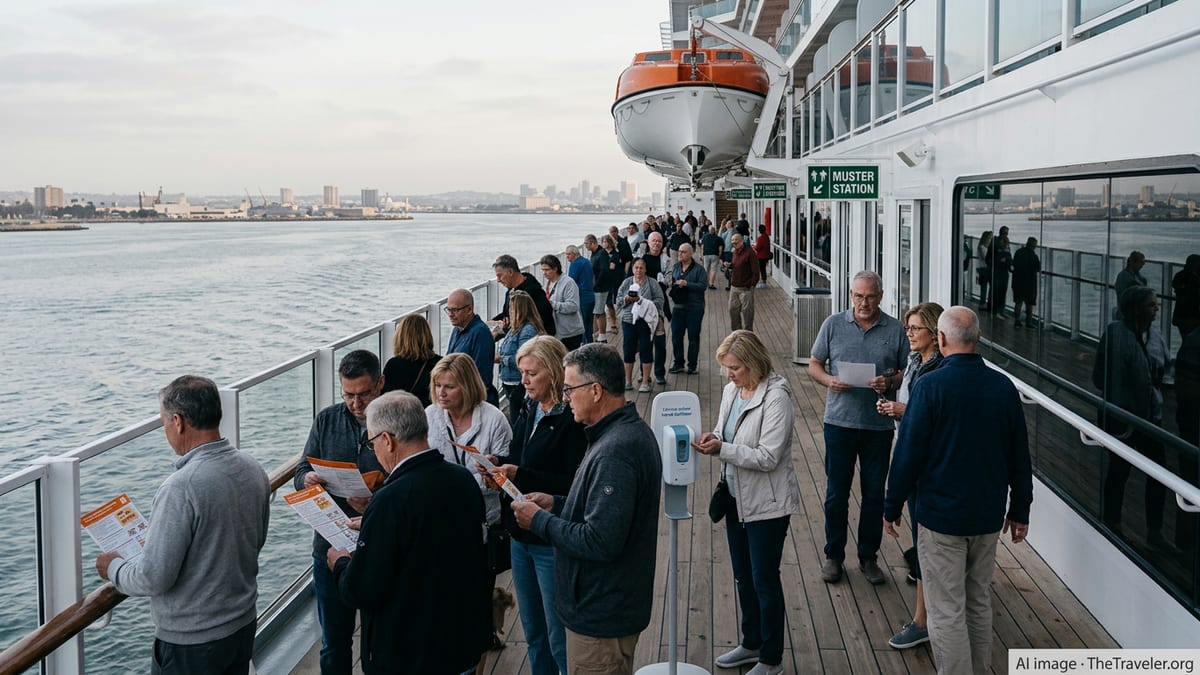
For travelers boarding a Royal Caribbean ship for the first time, cruise specialists generally recommend sticking to straightforward, policy aligned habits on embarkation day. That includes carrying important documents and medications in a small bag, verifying muster station information as soon as they reach their cabin and taking a few minutes to read the safety card placed near the cabin door.
New passengers are also encouraged to walk a loop of the ship shortly after boarding to become familiar with stairwells, main venues and open deck areas before crowds build up. This simple step can make it easier to navigate during busy evening hours and in the unlikely event of an emergency.
When it comes to wet clothing, public information suggests using in cabin solutions that do not involve the balcony. Many cabins include a retractable clothesline over the shower or bathroom space, and portable travel clotheslines and over the door hooks can help maximize limited square footage without creating outdoor hazards.
The pushback to the balcony “pro tip” indicates that first day guidance is most useful when it complements, rather than complicates, the safety framework that underpins modern cruise operations. For first time guests, treating any conflicting advice with caution and defaulting to the most conservative, clearly stated policy remains the simplest way to start a cruise on the right foot.