


More news on this day
As Hungary’s third-largest city refines its transport network and public spaces, Szeged’s city map is shifting from a simple street plan into a layered guide that blends tram lines, riverfront paths and curated walking routes for visitors and residents alike.
Get the latest news straight to your inbox!
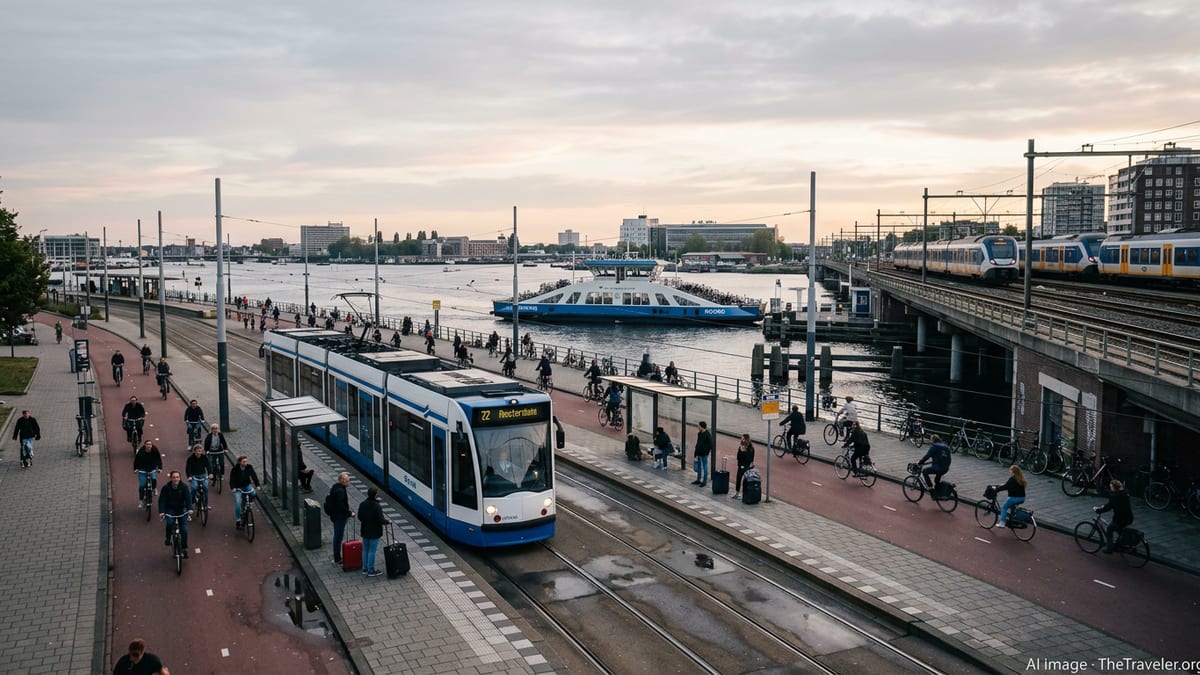
Historic Grid Meets Riverfront Upgrades
Szeged sits on the banks of the Tisza River in Hungary’s Southern Great Plain, with a compact historic core framed by the river on one side and a ring of boulevards on the other. Traditional city maps have long highlighted this grid of streets around Széchenyi Square and the Votive Church, where most major civic buildings, restaurants and hotels cluster within easy walking distance.
In recent years, the geography familiar from tourist maps has begun to change along the waterfront. Local news coverage indicates that a complex renovation of the Tisza riverbank is scheduled to begin, with plans that include new green zones and reshaped embankments. Although the works focus on flood protection and landscaping, they are expected to alter paths, stairs and public spaces that appear on printed and digital city plans.
Urban planning documents and traffic reports describe Szeged as a key regional transport hub, with the M5 and M43 motorways feeding traffic around the city rather than through its heart. This ring-road structure means that city-center maps can focus on pedestrians, cyclists and transit users, while separate regional charts capture the highway junctions and long-distance approach routes.
For visitors arriving by car, the evolving map of the riverfront and nearby bridges is increasingly important. Changes in parking rules, event closures along the embankment and planned works on key approach streets are influencing where drivers can leave vehicles and how they transition onto the pedestrian-friendly network in the core.
Trams, Trolleybuses and a New Tram Train Spine
Beyond the street grid, modern maps of Szeged place heavy emphasis on public transport. According to publicly available summaries of the network, the city operates five tram lines, six trolleybus lines and several dozen bus routes, forming a dense web across the urban area. Dedicated network maps show these routes in bright colors over a simplified street background, helping visitors orient themselves from the railway station to the central squares.
A major change to Szeged’s mobility map came with the introduction of a tram train linking the city with nearby Hódmezővásárhely. Industry reports on the Stadler Citylink vehicles used on the line describe how they run on urban tram tracks before continuing on regional rail infrastructure, creating a continuous corridor between the two settlements. For cartographers and app designers, this hybrid system has required an update to both city and regional maps so passengers can see where the service behaves like a tram and where it functions as a train.
University guidance for international students and visitors emphasizes that Szeged is largely walkable but supplemented by trams, trolleybuses and buses. These materials often refer readers to official network diagrams that show stops at key points such as the main railway station, the riverfront and campus areas. As a result, even general tourist maps increasingly include symbols for tram lines and stops, blurring the line between a classical city map and a full transport schematic.
Recent traffic and budget reports from the municipality highlight ongoing investment in route reconstruction, including repair works on tram tracks and upgrades to major junctions. Temporary closures and replacement bus services interrupt established lines, which in turn leads to frequent updates in digital mapping services, on-street diagrams and printed leaflets at tourist information points.
Pedestrian Streets and Curated Walking Routes
Alongside rails and roads, Szeged’s city map is being reimagined around walking. Tourism materials published in the past season promote themed urban walks, including a so-called cinnamon roll shaped route that spirals outward from the city center. These itineraries are presented in guide-style maps that highlight not only streets and squares but also viewpoints, cafes and heritage buildings along the way.
Ongoing pedestrianization projects have reinforced this focus. Oskola Street, described in recent tourism coverage as a historic second pedestrian street, connects the riverfront with the cathedral district and forms a spine through the old town. On paper and screen, it now appears as part of a wider pedestrian zone that includes Kárász Street and the surrounding lanes, giving city maps a distinctly car-light core.
Academic research from the University of Szeged notes that tourism activity remains heavily concentrated in the inner city, particularly along pedestrian corridors that run from the main square to riverside promenades. Cartographic products, from pocket maps to smartphone apps, have reacted by enlarging the central area, labelling smaller squares and listing sightseeing clusters rather than individual isolated landmarks.
At the same time, local guides now routinely include quieter quarters such as Alsóváros, presented as a calmer extension beyond the busy core. On contemporary city maps, this is reflected in insets or shaded areas that show monastery complexes, traditional streets and small parks, encouraging visitors to explore beyond the most crowded axes without losing their bearings.
Construction Zones Redraw Traffic Patterns
The picture of Szeged on paper does not always match day-to-day experience. Local media reports over the last year describe a series of road and track works that have temporarily turned key corridors into dead ends, especially during peak summer construction periods. One widely discussed example has been the reconstruction of the Gogol Street corridor, which is planned to run into 2026 and has already required full lane closures.
Further works on the tram alignment at the Bem Street and Gőz Street junction have brought parking bans, diversions and tram replacement buses. According to published traffic notices, these projects are scheduled over several months, effectively redrawing the usable street network for drivers and transit users. Static maps quickly become outdated in such conditions, making dynamic online mapping and on-street signage more important for visitors navigating the city.
City budget documents for 2026 indicate that Szeged has earmarked several billion forints for transport improvements, a figure that covers not only road repairs but also intersection redesigns, bus facility upgrades and cycling infrastructure. Each scheme has implications for the city map, whether by shifting bus termini, modifying one way systems or adding new crossings that shorten walking routes.
For tourists, these temporary changes most often appear in the form of adjusted route diagrams at stops, taped-over stops on printed maps and updated notifications in transit apps. Traditional foldout maps sold in previous seasons may not reflect the latest detours, so visitors increasingly rely on layered information from tourism offices, online platforms and bilingual notices installed at affected locations.
Tourist Information, Guides and Themed Overlays
As Szeged’s urban form grows more complex, the city’s official tourism channels have shifted from a single static city plan to a family of specialized maps. The Tourinform office in the center provides printed guides that combine street mapping with icons for museums, baths, festivals and architectural highlights. These often include English and other foreign-language legends, recognizing the growing number of international visitors.
A 2024 experience guide produced for visitors features a compact overview map positioning key sights within walking distance of the main square, as well as diagrams for tram and trolleybus access. The same guide promotes seasonal themed walks that overlay stories of Art Nouveau facades, river culture and café traditions onto the street network, encouraging users to see the map as a narrative tool rather than simply a navigation aid.
Digital offerings add further layers. Public transport information from the University of Szeged and municipal operators points users to online network maps, while local enthusiasts have created custom maps for hiking routes, cycling trips and nature trails around the city. These overlays extend the idea of a Szeged city map well beyond the administrative boundary, connecting downtown promenades with forest paths, river meanders and regional bike corridors.
Together, these developments mean that anyone opening a map of Szeged in 2026 is likely to see not just streets and squares but a tapestry of walking circuits, tram lines, riverfront promenades and construction alerts. For a medium-sized regional center, the city is increasingly presented as a place where movement, public space and storytelling are all mapped onto the same compact canvas.