


More news on this day
Taiwan is preparing new travel guidance for people heading to mainland China as published coverage points to expanding entry and exit checks that can extend into travelers’ digital lives, including potential inspection of mobile phones and other electronic devices under broader national security and cybersecurity enforcement.
Get the latest news straight to your inbox!
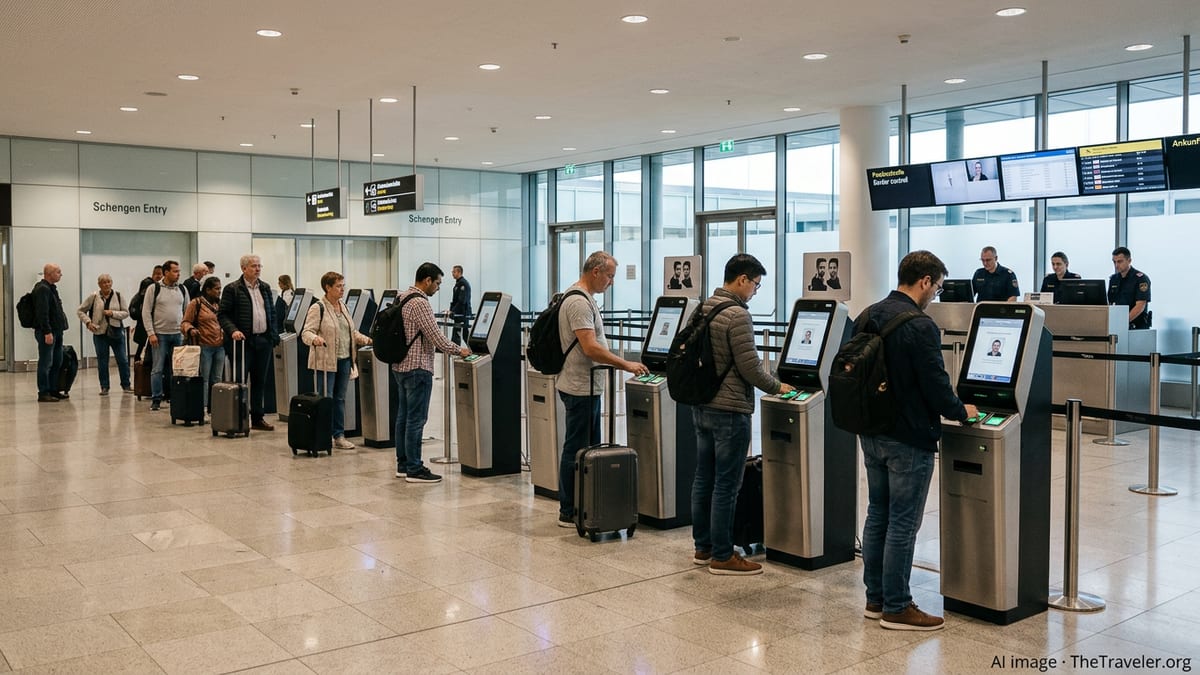
What’s changing at China’s border, and why Taiwan is reacting now
Published coverage in Taiwan has tied the renewed warnings to mainland China’s updated exit and entry administration framework scheduled to take effect on September 15, 2026. Reports describe language that elevates national security considerations and grants wide latitude in how checks are applied, a dynamic that Taiwan’s cross-strait agencies have highlighted as a risk for travelers who may have limited recourse if detained, questioned, or restricted from leaving.
Recent reporting in the Taipei Times described preparations for traveler-facing guidelines as Beijing readies border rules that could extend inspections beyond travel documents to mobile phones and other electronic devices. The same coverage framed the effort as a risk-mitigation move rather than a ban, aimed at helping travelers reduce exposure and avoid situations that could lead to prolonged questioning or device retention.
Separately, U.S. public travel guidance for China has continued to note that Chinese border officials can deny entry without explanation and that travelers should expect heightened surveillance and security checks. While that guidance is not Taiwan-specific, it reinforces the practical reality that entry decisions and inspection intensity can be discretionary at ports of entry.
Digital device inspections and data exposure: what travelers should plan for
Taiwan’s digital and cybersecurity agencies have already been building a public narrative around “travel cybersecurity,” especially for trips to China. Earlier in 2026, Taiwan’s Administration for Cyber Security under the Ministry of Digital Affairs published a seven-point warning that focused on reducing personal data exposure and limiting the chance that a phone or laptop becomes a conduit for monitoring or malicious software.
A core theme in that guidance is connectivity choice. The advisory emphasized that mainland China SIM cards and some eSIM arrangements operate under real-name registration, which can link identity, location, and network activity to a specific person. As a practical mitigation, Taiwan’s guidance has favored using a Taiwanese carrier’s roaming plan rather than purchasing a local SIM or eSIM in mainland China, particularly for travelers carrying sensitive work or personal data.
The same cybersecurity messaging has warned against public Wi-Fi networks and public USB charging points, where risk can range from data interception to device compromise. Another element frequently included in Taiwan coverage is “device hygiene” on return: if a phone is searched, seized, or out of the owner’s control for any period, resetting the device after coming home is presented as a way to reduce lingering risk from unwanted configuration changes or software installation.
Who Taiwan considers most exposed on cross-strait trips
Coverage of Taiwan’s forthcoming guidance has suggested it will be tailored to traveler profiles rather than treating all trips as equal-risk. Reporting has pointed to heightened caution for people whose work, affiliations, or public footprint could be misinterpreted under broad national security concepts, including civil society involvement, journalism, research, or activities related to cross-border political issues.
Taiwan’s Mainland Affairs Council has also used recent statements to underscore that a growing body of mainland national security and cybersecurity rules can be applied extraterritorially in effect, by scrutinizing speech, messages, or contacts that occurred outside China once a traveler is at the border or inside the country. The practical travel implication is that what is stored on a device, synced in a cloud account, or visible through social apps can become part of questioning even if it is unrelated to the immediate trip.
For travelers who must go, the risk-management approach described in Taiwan’s cybersecurity materials aligns with a “data-minimization” mindset: carry fewer accounts, reduce stored messages and files, and avoid mixing personal travel with sensitive work access. For some travelers, that can mean traveling with a secondary phone that does not contain a long history of chats, photos, contacts, and saved documents.
Practical cybersecurity protocols for travelers: before departure, in transit, and after return
Before departure, travelers can reduce exposure by updating operating systems, turning on full-disk encryption, and reviewing app permissions for access to contacts, microphone, camera, and location. Taiwan’s cybersecurity guidance has also advised against installing certain China-made apps on devices that hold sensitive information, due to the breadth of permissions some apps request and the difficulty of verifying how data is handled once granted.
During travel, the most actionable steps are about connectivity and separation. Using roaming from a trusted home carrier, avoiding public Wi-Fi, and using personal hotspotting where possible can reduce the opportunities for interception. Travelers should also plan around the possibility that a device could be inspected or temporarily held; keeping essential trip documents accessible without exposing broader personal archives can be a useful balance.
After returning, the “assume exposure” approach is increasingly common in official and corporate travel playbooks for higher-risk destinations. Taiwan’s public guidance has included the recommendation to reset devices if they were searched or detained. Travelers who used the same device to access email, banking, or work services can also consider changing passwords, rotating authentication tokens, and reviewing account login histories once back on a trusted network.
Travel mechanics still matter: documentation, permits, and trip registration
Even as attention shifts to digital checks, traditional border compliance remains the first filter. Travelers entering mainland China need the correct travel document for their status and route, and published guidance continues to emphasize that entry decisions can be made at the border without warning. Travelers should also build extra time into itineraries for screening, especially when moving through major hubs or crossing on tight onward connections.
Taiwan’s Mainland Affairs Council has continued to encourage travelers to register their itinerary and contact details before departure so help can be coordinated in emergencies. That step is not a guarantee of assistance if a traveler is detained or barred from exit, but it can shorten response time if family members lose contact or need help locating the traveler through available channels.
For travelers balancing necessity against uncertainty, Taiwan’s evolving message is less about panic and more about preparation: understand the date and direction of policy changes, assume discretion at the border, and travel with a cybersecurity posture that treats personal devices as inspectable items rather than private diaries.