


More news on this day
The UK government has announced a new passenger-protection scheme designed to speed up journeys after cancellations, allowing eligible rail travelers to take alternative services free of charge across 17 participating operators from September 20, 2026.
Get the latest news straight to your inbox!
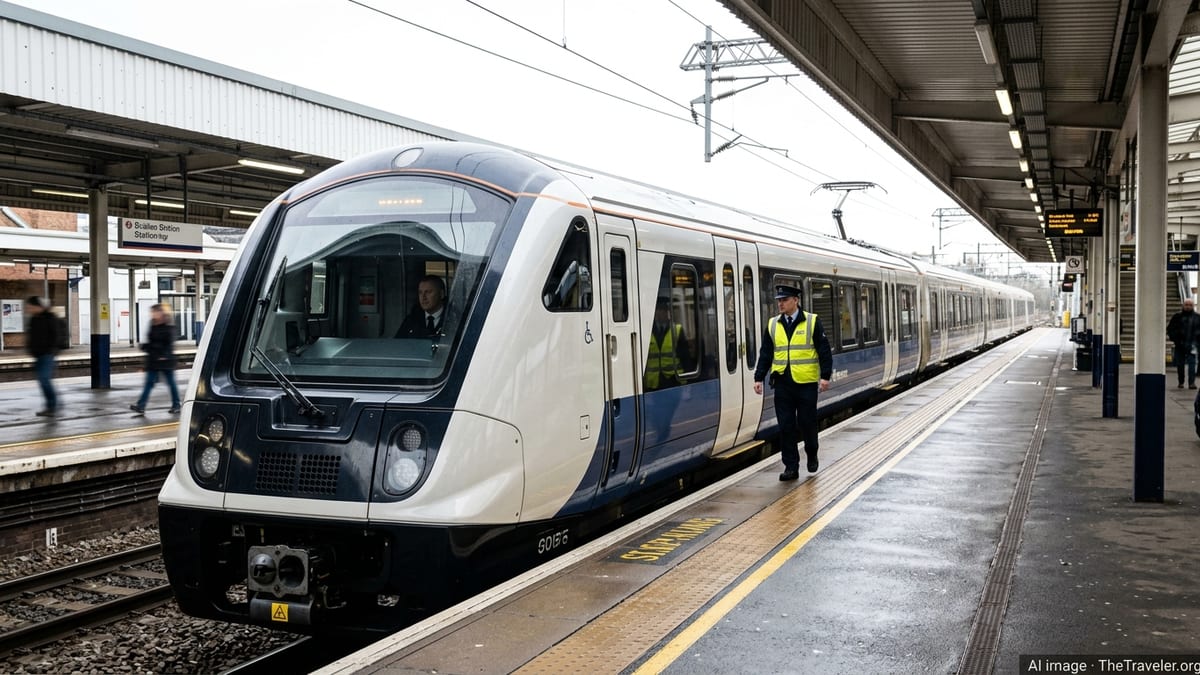
What the new scheme changes for passengers
Published coverage and government information describe the policy as an expansion of cross-operator ticket acceptance: when a passenger’s booked train is cancelled, they can transfer onto another operator’s service to complete the journey immediately without paying an additional fare.
The change is aimed at a common pain point in Britain’s fragmented rail market, where tickets are often restricted to a specific operator or route. Under the new approach, the emphasis shifts to getting passengers moving again first, then sorting out the behind-the-scenes revenue allocation between companies later.
While ad-hoc ticket acceptance has long existed during major disruption, the announcement frames this as a standardized scheme intended to be more predictable for customers and easier to apply during day-to-day cancellations.
When it starts and which operators are included
The start date set out in publicly available government material is Sunday, September 20, 2026. From that date, passengers impacted by a cancellation can use another participating operator’s service to continue their journey at no additional cost, subject to the scheme’s conditions.
The announcement indicates that cross-operator acceptance already applies across publicly owned operators, and that the new step expands coverage to additional intercity and long-distance brands, including CrossCountry, Great Western Railway, Avanti West Coast, and Chiltern Railways. These additions are presented as bringing more of the country’s key intercity corridors into the same approach.
The government describes the overall participating group as 17 operators, positioning the scheme as broad enough to matter on major flows while still limited to a defined set of companies, rather than an automatic all-operator entitlement in every situation.
How to use it during disruption
In practice, passengers should expect the scheme to apply when the original train is cancelled, rather than merely delayed. Standard operational controls still apply, meaning that acceptance may be directed to specific alternative services to manage crowding, train capacity, and safety constraints.
Travelers may still need to follow railway instructions at stations and on-board, including any temporary gates or checks put in place during disruption. Publicly available passenger-rights guidance also emphasizes that information should be updated through the journey, including at stations and via official channels, which matters when rules change quickly during incidents.
For passengers planning connections, the new scheme is intended to reduce “dead time” waiting for the next same-operator service, especially on routes where a competing operator departs sooner or offers a faster path to the same destination.
What it means alongside refunds and Delay Repay compensation
The new free-transfer scheme sits alongside the existing compensation landscape rather than replacing it. National Rail’s published guidance explains that passengers can claim refunds and compensation through established processes, including the Delay Repay framework used across operators.
Government research and published reports have highlighted efforts to make compensation easier, including moves toward more automated claims handling in parts of the system. However, the new scheme is aimed at immediate recovery after a cancellation, not the after-the-fact financial redress that comes later.
Because passenger entitlements can depend on ticket type, journey details, and the exact disruption scenario, travelers may still need to check the terms that apply to their ticket and operator, particularly where a journey includes multiple legs or where an alternative route changes the arrival time materially.
Why the policy is being rolled out now
The announcement is being framed as part of broader rail reform, including preparations for Great British Railways and a push to simplify a fares and ticketing system often criticized as complex. Publicly available government material links the direction of travel to integrating services and improving passenger outcomes during disruption.
The scheme also arrives as the balance between publicly owned operations and contracted private operators continues to shift under the public ownership program. Government documents describe a growing share of passenger services moving into public ownership in recent years, alongside other passenger-facing initiatives such as wider rollout of Pay As You Go and a fares freeze on regulated tickets.
For travelers, the practical implication is that disruption handling is becoming a more visible test of reform. If the policy is applied consistently, it could reduce the number of situations where passengers watch an empty or near-empty train depart on another operator while they wait for their own company’s next service.