


More news on this day
Passengers travelling through Manchester Airport on 8 September 2026 are facing disruption and lengthening queues after a UK-wide air traffic control technical issue began causing delays to departures across multiple airports.
Get the latest news straight to your inbox!
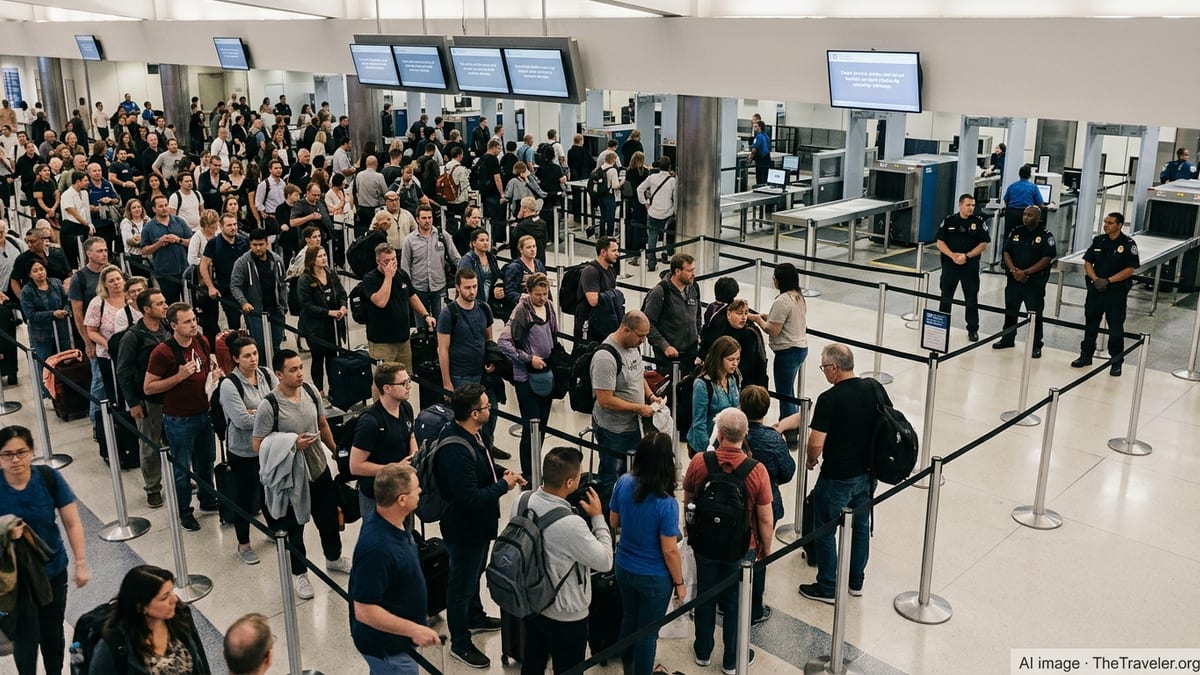
Manchester departures caught in wider UK disruption
Manchester Airport is one of several major UK hubs hit by delays after a technical problem affecting air traffic control systems disrupted flight departures across much of the country on Tuesday afternoon. Publicly available flight trackers and airport-delay dashboards show that services from Manchester, which typically handles around 380 daily flights to more than 200 destinations, were increasingly subject to extended departure times as the issue unfolded.
Live departure boards and independent aviation data indicate that, while many Manchester flights were still scheduled to operate, a growing number were pushed back by significant margins compared with their planned slots. The pattern points to a flow-control problem in the wider network rather than an airport-specific incident such as a runway closure or local power failure.
Recent performance data for Manchester Airport shows average departure delays had been running in the low double digits in the days leading up to 8 September, with moderate levels of disruption but relatively few cancellations. The sudden step-up in delays associated with the technical issue therefore marks a clear deterioration from the airport’s recent operating baseline.
Technical fault linked to air traffic control systems
According to published coverage from UK broadcasters and aviation bodies, the disruption on 8 September is rooted in a technical fault affecting air traffic control equipment serving the wider southern UK airspace, but with knock-on impacts spreading well beyond that region. The problem has already resulted in a ground stop for departures at Gatwick Airport, with reports describing ongoing work to restore normal operations to the network.
Discussion among passengers and pilots on public forums, alongside notices from air navigation services, points to an equipment failure within the systems used to manage and sequence departures. While the full nature of the fault had not been detailed at the time of writing, initial descriptions suggest that flight departures were being limited or temporarily halted while engineers worked to stabilise the system.
Because Manchester is tightly integrated into the national air traffic structure, any restriction on flows through key airspace sectors can quickly cascade into delays on routes to and from the North West. Publicly available data on current Manchester services shows that the airport was not isolated from the wider issue, with passengers reporting extended waits on aircraft already boarded and on the ground, even when local weather and runway conditions were normal.
Impact on passengers: long waits and missed connections
Travellers using Manchester Airport on Tuesday have reported a mix of experiences, with some departures still leaving close to schedule while others were delayed by several hours. Flight-tracking services show a number of short-haul European and domestic services assigned revised departure times substantially later than their original slots, often in tandem with similar delays at other UK airports sharing the same air traffic control network.
For connecting passengers, the timing of the disruption is particularly challenging. Late-afternoon and evening waves of short-haul flights feed into onward long-haul departures from Manchester and other hubs, and any prolonged ground restrictions can quickly lead to missed connections. Consumer guidance from independent travel organisations emphasises the importance of monitoring both the airport’s live information and direct airline updates, as schedules are being adjusted in near-real time.
As of mid-afternoon, publicly available cancellation figures for Manchester suggested that outright cancellations remained relatively limited compared with the number of delayed flights. That profile is consistent with earlier episodes of air traffic control disruption in the UK, where operators have often preferred to hold flights on the ground and re-sequence departures once capacity returns rather than cutting large portions of the schedule outright.
How today’s disruption compares to recent Manchester performance
In the week leading up to 8 September, Manchester Airport had been classified by several delay-monitoring tools as experiencing moderate but manageable disruption, with average departure delays typically around 10 to 15 minutes and a handful of daily cancellations. Coverage published on 2 September highlighted a pattern of spread-out delays across the day, rather than a single acute shutdown period, and underlined that conditions were challenging but not exceptional for a major UK hub in late summer.
By contrast, today’s technical issue has introduced a more concentrated spike in disruption. Airport analytics platforms that track hourly performance show that when similar air traffic control restrictions occur, departure delays can quickly climb into the 30 to 60 minute range, with some flights pushed back even further as airlines attempt to re-balance aircraft and crew across their networks.
Government statistics on short-notice cancellations at UK airports from earlier in the summer also underline how sensitive schedules can be to air traffic control reliability. While those figures cover a different period, they show that even relatively brief technical problems can trigger hundreds of short-notice cancellations across the country when combined with already tight airline timetables.
What passengers flying from Manchester should do now
Travel consumer advice generally recommends that anyone due to fly from Manchester Airport during an air traffic control disruption should first check their flight status on their airline’s official website or app, as this will usually show the most accurate departure time and whether rebooking options are available. Live airport information boards and third-party flight trackers can provide additional context, but the airline remains responsible for confirming whether a specific flight is running, delayed or cancelled.
Passengers already at the airport are being encouraged by independent travel guidance to allow extra time for queues at check-in, bag drop and security, particularly during peak afternoon and evening periods when re-timed flights can lead to overlapping passenger flows. Those yet to set off are advised to factor in that many flights may still operate, even if significantly delayed, so cancelling their own trip to the airport without checking with the airline may not be advisable.
For travellers whose journeys are heavily disrupted, compensation and care entitlements depend on the precise circumstances of the delay and whether it is classified as within the airline’s control. UK passenger rights regulations provide for compensation in some cases of long delays and cancellations, although technical issues in external systems such as national air traffic control may fall into complex grey areas. Specialist consumer websites advise keeping all receipts, boarding passes and written communications from the airline in case a claim is later possible.
Given the evolving nature of the technical problem and its UK-wide reach, passengers due to travel from Manchester Airport later on Tuesday and into the evening are likely to face a fluid situation. Monitoring official channels regularly and preparing for extended waiting times at the airport remain the most practical steps until normal air traffic control operations are fully restored.
ITV News coverage of UK air traffic control technical issue
Passenger reports on disruption to UK departures
Manchester Airport performance and delay statistics