


More news on this day
Passengers using Manchester Airport on 2 September are facing a mixed picture of minor and more pronounced flight delays, with disruption varying across terminals, airlines and key UK and European routes.
Get the latest news straight to your inbox!
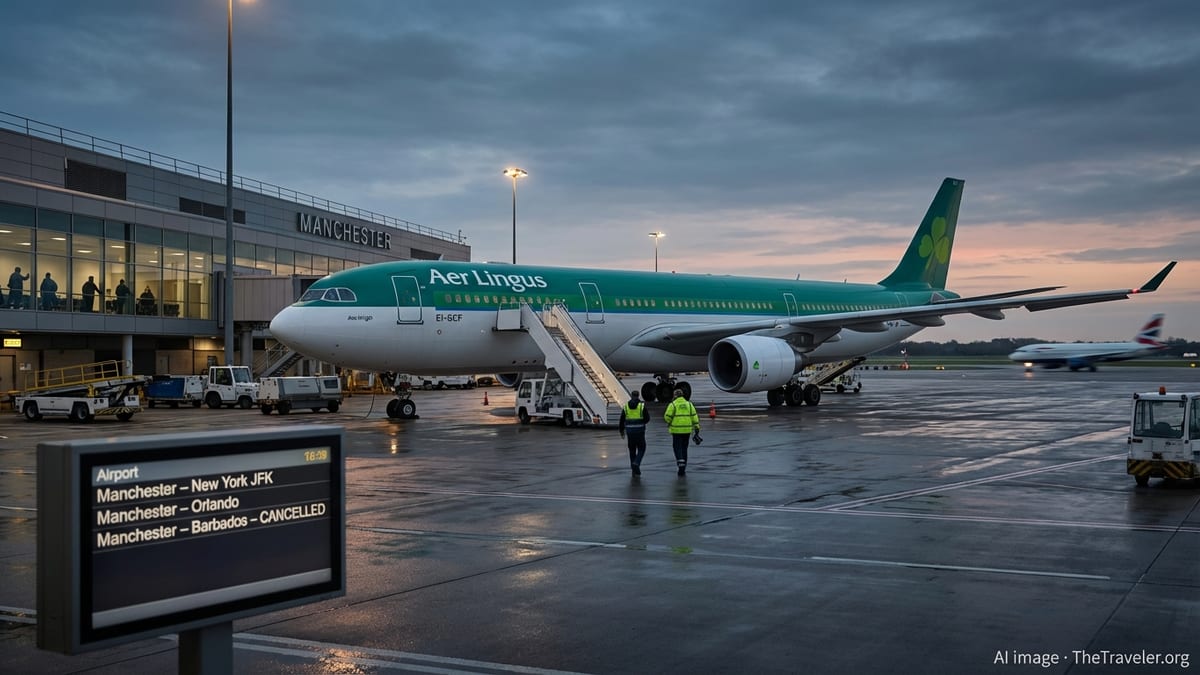
Live delay picture across departures and arrivals
Publicly available live boards for Manchester Airport on 2 September show a rolling pattern of delays rather than a single, prolonged shutdown. Early morning departures generally operated close to schedule, but delays began to build through the late morning and early afternoon peak, particularly on short haul leisure routes. The extent of disruption varies by flight, with some services pushed back by less than 30 minutes while others are running significantly late.
Departures from Terminals 1, 2 and 3 display a familiar mix of on time, delayed and a small number of cancelled services. Popular Mediterranean destinations, including Spanish islands and Greek resorts, feature prominently among delayed flights, reflecting high seasonal demand combined with tight aircraft utilisation. Some transatlantic and long haul flights are also showing revised departure times, but most long haul services are operating with moderate schedule changes rather than extreme delays.
On the arrivals side, inbound flights from European hubs and domestic UK airports are experiencing knock on delays that mirror the situation at origin airports. Where departures have left Manchester behind schedule earlier in the day, their return legs are arriving later into the evening period. For passengers waiting in the terminals, the pattern is one of intermittent clusters of delayed arrivals, followed by periods where flights land on or close to time.
The live data illustrates how even modest operational challenges can create a cascade effect throughout the day. Once an aircraft starts its first rotation late, subsequent flights may inherit that delay unless slack is built into the schedule, leading to a widening gap between planned and actual times by late afternoon and evening.
Key routes and airlines most affected
According to live status boards and airline tracking tools, delays at Manchester Airport on 2 September are concentrated on busy short haul services operated by low cost and holiday carriers. Flights to Spanish destinations such as Alicante, Palma de Mallorca and Malaga, as well as popular Greek and Turkish resorts, are among those showing extended waits at the gate. These routes typically rely on aircraft flying multiple sectors in a day, which leaves little margin to recover once an early rotation runs late.
Domestic services linking Manchester with London and other UK cities are also reporting schedule adjustments, though many of these remain within a 30 to 60 minute window. Because these routes operate frequently, airlines have slightly more flexibility to swap aircraft or adjust timings to limit the impact on later departures. Passengers may still experience late boarding or extended time on stand while ground handling teams work to turn aircraft around quickly between flights.
Long haul carriers serving destinations in North America, the Middle East and Asia show a smaller number of significant delays on 2 September, but the effects can be more noticeable for individual travellers given the length of the journeys involved. Revised departure times on these flights can be linked to late inbound aircraft, air traffic restrictions on key routes, or congestion at partner hubs. In many cases, boarding is delayed to align with updated slot times provided by air traffic control.
Because airlines publish real time status updates on their own websites and apps, the specific list of delayed flights is changing throughout the day. Travellers are therefore being advised by travel operators and consumer groups to rely on those live tools rather than printed itineraries or earlier confirmations, particularly for late afternoon and evening departures.
Underlying causes behind today’s disruption
While there is no single headline incident dominating operations at Manchester Airport on 2 September, today’s pattern of delays reflects a combination of weather, air traffic and resourcing pressures seen across the wider European aviation network. En route congestion over busy air corridors continues to generate flow control restrictions at certain times of day, which in turn can force airlines to operate flights later than scheduled even when aircraft and crews are ready to depart.
Operational reports and historical performance data for Manchester highlight how the airport’s on time performance can dip during periods of peak demand, especially in the summer season when schedules are densely packed. Previous seasons have shown that relatively modest issues, such as short lived weather fronts or runway works, can quickly translate into longer queues for take off or delays in handling arriving aircraft, compounding knock on effects for subsequent rotations.
Air traffic control capacity, both within UK airspace and across continental Europe, remains an important factor. Occasional staffing constraints or technical restrictions at control centres can lead to regulated departure slots, obliging aircraft to wait on stand or at the holding point before take off. When this happens across multiple airlines simultaneously, the timetable on the public boards begins to drift from its planned times, even though the airport infrastructure itself remains open and functioning.
Airlines also continue to balance fleet and crew availability after a sustained period of growth in post pandemic travel demand. Tight crew rostering or late arriving aircraft from previous days can limit the ability to reset schedules quickly. That context helps explain why some flights on 2 September are operating broadly on time, while others departing from the same terminal around the same period are facing appreciably longer waits.
How passengers can check the full list of delays
Because the status of individual flights is changing throughout the day, there is no single static list that can definitively capture every delayed service at Manchester Airport on 2 September. Instead, travellers are encouraged by airlines, airports and consumer advisers to use a combination of official digital tools to obtain the most accurate picture for their own journey.
The Manchester Airport website hosts a live departures and arrivals board that can be filtered by time window, destination, airline or flight number. This board updates throughout the day as airlines file new estimated departure and arrival times. Flight tracking platforms and travel apps provide a complementary view, often combining airport data with direct airline feeds to show gate information, turnaround progress and actual off block and landing times.
Airlines also operate their own status pages and mobile apps, which typically carry the most authoritative information on check in opening hours, boarding start times and any automated rebooking options when delays become extensive. For package holiday customers, travel companies and tour operators provide additional updates through email, text messages and app notifications, especially when coaches or transfers need to be rescheduled in line with revised flight times.
For friends and family collecting arriving passengers from Manchester Airport, these same tools can be used to track the progress of inbound flights. Monitoring the live boards before leaving for the airport can help avoid long waits in car parks or drop off areas if an arrival is running significantly behind schedule.
What delayed passengers should know about rights and assistance
Consumer guidance around UK and EU air passenger rights emphasises that travellers facing delays at Manchester Airport on 2 September may be entitled to care and assistance from their airline, and in some circumstances to financial compensation. The level of support depends on factors such as the length of the delay, the distance of the flight and the reason for the disruption. Airlines are generally expected to provide meals, refreshments and hotel accommodation when delays extend over key thresholds, as well as options for rebooking when flights are heavily disrupted.
Regulatory advice notes that airlines must keep customers informed about the evolving situation. When a delay becomes apparent, passengers should receive updated departure times as soon as they are available, along with clear instructions on whether to remain at the gate, return to the check in area or make alternative arrangements. Travellers are often advised to retain receipts for any essential purchases made while waiting, in case these costs can be reclaimed later under the airline’s policies.
Independent consumer organisations recommend that passengers check both the airport’s live information and their airline’s specific guidance before deciding how to respond to a delay. In some instances it may be preferable to remain airside and wait for an updated slot; in others, rebooking to a later flight may minimise disruption to onward travel plans. Documentation such as boarding passes, booking confirmations and any written notifications from the airline can be useful when pursuing claims afterwards.
As with all days of mixed disruption, the situation at Manchester Airport on 2 September is fluid, with some delays resolving quickly as capacity becomes available and others extending into longer waits. Anyone due to fly is therefore encouraged to treat their printed schedule as indicative and to rely on live digital information for the most accurate, flight specific picture.
Manchester Airport live departures
Manchester Airport live arrivals