


More news on this day
Terra Nova Expeditions’ ambitious Terra Nova Antarctica program is moving ahead with an experienced polar vessel at its core, following delays to plans involving the former mail ship St Helena and a wider reshaping of the company’s fledgling polar fleet.
Get the latest news straight to your inbox!
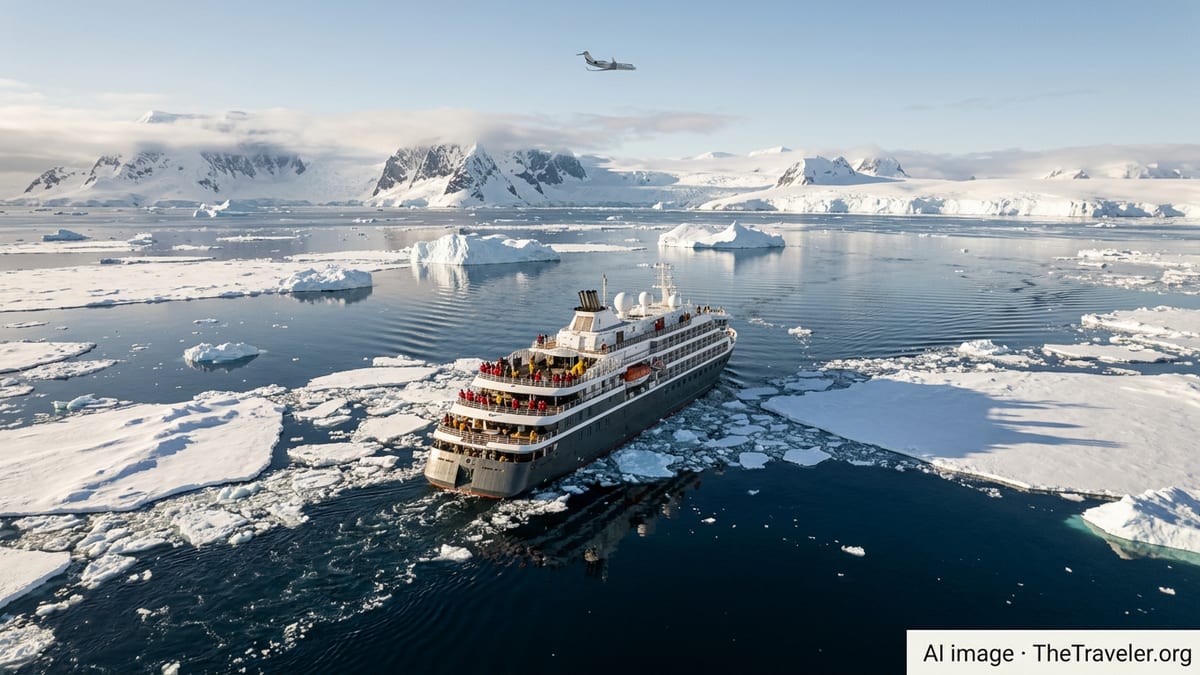
Hybrid cruise and sailing concept survives early disruption
Publicly available information shows that Terra Nova Expeditions is pressing on with a hybrid cruise and sailing model in Antarctica, even as timelines around the refit of St Helena slip. The operator has positioned its program around combining a conventional ice-strengthened expedition ship with the small expedition yacht Icebird, marketed as a world-first “cruise plus sail” approach that offers both comfort and deep-field access on a single itinerary.
Press material released in early 2026 outlines an “Ultimate Antarctic Adventure,” a roughly 20-day journey that links a full-length expedition cruise with several days of yacht-based exploration on Icebird. The format is designed to let guests experience the Drake Passage and core Antarctic Peninsula sites from a larger vessel, then transfer to the sailing yacht for close-in exploration in more remote coves and channels.
The hybrid strategy means Terra Nova’s season can proceed even when individual ships change. While the operator had originally highlighted St Helena as a flagship for its Antarctic launch, subsequent schedule adjustments indicate that a more traditional polar expedition vessel is now carrying the Terra Nova banner in the short term, with Icebird continuing to supply the sailing component.
St Helena’s Antarctic debut pushed back
Terra Nova Expeditions first drew attention in mid 2025 when it announced a long-term charter of the former Royal Mail Ship St Helena, better known for serving the remote South Atlantic island of the same name. Company statements at the time framed St Helena’s move into polar service as part of a broader attempt to revive workhorse-style expedition ships and keep guest numbers well below the 100-passenger threshold used by many Antarctic operators.
Subsequent discussion among polar-travel observers and in specialist forums, however, has highlighted practical challenges in preparing St Helena for ice conditions. Commenters have pointed to the vessel’s lack of dedicated polar-class certification and the extensive upgrades typically required to align older tonnage with evolving safety and environmental standards in Antarctica. Those realities appear to have contributed to a slower-than-expected pathway from charter announcement to active deployment.
As a result, St Helena has not yet joined the front line of Terra Nova’s Antarctic operations for the 2026–27 window. The company’s own communications now place greater emphasis on other hardware, including the ice-strengthened Terra Nova Adventurer and the ongoing collaboration with Icebird, while St Helena’s role is framed more as a future addition than an immediate cornerstone of the fleet.
Experienced polar vessel anchors current Terra Nova program
With St Helena delayed, Terra Nova has turned to an established expedition ship with a long polar track record to secure its early seasons. The ice-capable vessel now branded Terra Nova Adventurer has decades of experience in both the Arctic and Antarctic under previous operators, and has undergone recent refurbishment to refresh cabins and public areas while preserving its robust, workmanlike character.
Specifications published by the company describe Adventurer as an ice-strengthened, British-built ship originally designed for extended ocean voyages rather than short coastal hops. For Antarctic service, guest capacity is held below 100, placing the vessel in a favorable category under International Association of Antarctica Tour Operators (IAATO) guidelines that limit the number of people ashore at any one time. Expedition-focused facilities such as zodiac loading areas, lecture spaces and a science lab further align the ship with the requirements of modern polar tourism.
External references also connect Terra Nova Adventurer to the long-serving polar vessel Ocean Adventurer, which has operated in both polar regions under various brands. That heritage provides a level of operational reassurance at a time when new entrants to Antarctic cruising face close scrutiny of their safety credentials and environmental compliance.
Icebird yacht partnership maintains deep-field ambitions
While the core expedition ship underpins reliability, the small Icebird yacht remains central to Terra Nova’s effort to differentiate its product. Information from both Terra Nova Expeditions and Icebird Expeditions describes a program in which the yacht accompanies the larger ship along the Antarctic Peninsula on select departures, offering small-group sailing for a handful of guests at a time.
On certain itineraries, notably the longer “Ultimate Antarctic Adventure,” the yacht plays a more significant role, with guests spending several consecutive nights aboard Icebird as the primary platform while the main ship returns to port and later rejoins the voyage. This structure effectively creates a micro-expedition of six guests supported by a dedicated expedition team, allowing access to sheltered bays and narrow channels that are less practical for a 90-plus-passenger vessel.
Industry observers note that this type of two-vessel operation introduces logistical complexity, from coordinating rendezvous points to managing safety procedures and emergency contingencies across platforms. However, it also reflects a broader trend in high-end Antarctic travel toward more specialized, small-footprint experiences that go beyond standard shore landings and zodiac cruises.
Competitive Antarctic landscape sharpens focus on reliability
The evolution of Terra Nova’s Terra Nova Antarctica expedition comes against a backdrop of rapid growth and professionalization in the Antarctic tourism sector. Recent season summaries and planning documents submitted to Antarctic Treaty meetings show a continued rise in small-ship and yacht-based operations, as well as an expanding roster of operators offering air-bridge flights, fly-sail combinations and long-range itineraries that include South Georgia and the Falklands.
In this environment, delays involving a single vessel such as St Helena can have outsized implications for a new brand’s credibility. At the same time, the decision to proceed with a proven polar ship and maintain the Icebird partnership allows Terra Nova to keep its hybrid concept intact while addressing near-term operational constraints. The outcome is a program that leans more heavily on conventional expedition hardware in its initial seasons, without abandoning the sailing component that first set it apart.
For travelers, the latest publicly available information suggests that those booking Terra Nova’s early Antarctic departures are likely to sail aboard the experienced Terra Nova Adventurer or a comparable ice-strengthened vessel, with optional or integrated time on Icebird depending on the chosen itinerary. St Helena, once heralded as a symbol of the company’s unconventional approach, now looks more like a longer-term project whose eventual Antarctic role will depend on technical upgrades, regulatory approvals and the continuing maturation of the brand’s polar operations.
Terra Nova Expeditions cruise-sailing hybrid announcement
Terra Nova Expeditions vessels overview