


Fort Lauderdale is often called the Venice of America, and it earns the nickname with every sunlit canal and glittering yacht. Here, beach time blends with waterfront dining, museum-hopping, and lazy days spent cruising the Intracoastal on the Water Taxi. Whether you are planning a long weekend or a full week in the city, this guide walks you through the best things to do in Fort Lauderdale, with practical examples of where to go, how to get around, and what to expect on the ground.
Get the latest updates straight to your inbox!
Fort Lauderdale Beach: The Classic Oceanfront Experience
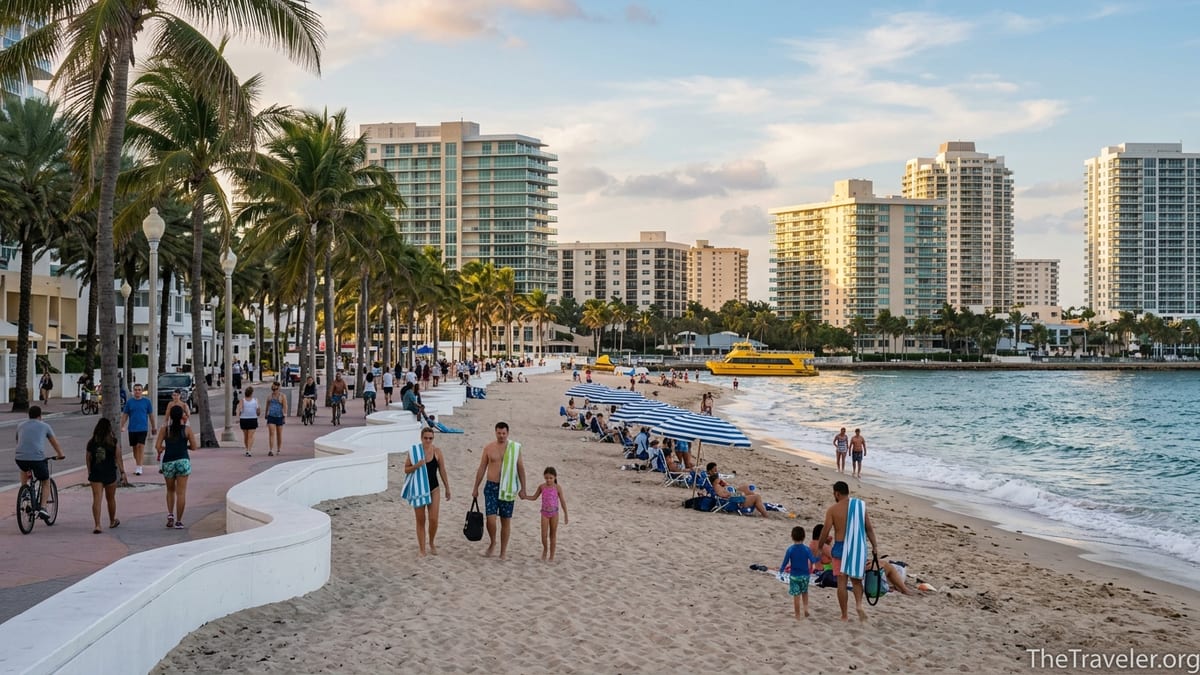
Start in the heart of the action at Fort Lauderdale Beach, the broad stretch of sand that runs south from Las Olas Boulevard. Fort Lauderdale Beach Park, near 700 Seabreeze Boulevard, is one of the most convenient access points, with lifeguard towers, restrooms, showers, picnic tables, and nearby playground areas. The sand here is wide and firm, so it is great for sunrise walks or a morning jog, while the Atlantic usually offers gentle to moderate surf suitable for casual swimmers on calm days.
For many visitors, a perfect beach day means renting a pair of loungers and an umbrella from one of the licensed vendors set up along the sand. Expect to pay a moderate fee for a full-day setup, with slightly higher prices on weekends and holidays. If you are on a budget, bring your own gear and use the metered parking at Fort Lauderdale Beach Park or the nearby Las Olas Garage off Las Olas Circle, which many locals use when they drive in for the day. The walk from the garage to the sand is short and includes ramps suitable for rolling coolers or beach carts.
Just across the road from the sand, the beachfront promenade and A1A are lined with hotels and casual eateries. You can grab a coffee and acai bowl at a sidewalk café before claiming a spot on the sand, or step off the beach later for a fish taco and a cold drink in your swimsuit and flip-flops. In the evening, this same promenade turns into a pleasant place for a sunset stroll, with the sky glowing over the water and the lights of the high-rise hotels flickering to life behind you.
If you prefer a quieter shoreline, push slightly north or south of the busiest central blocks. The sections near Hugh Taylor Birch State Park to the north and toward the southern end of the park near the Bahia Mar area are often a bit calmer, especially on weekdays, while still keeping you close to amenities and public facilities.
Las Olas Boulevard & Riverwalk: Shopping, Dining, and Downtown Vibes
Las Olas Boulevard is Fort Lauderdale’s signature street, stretching from the beach inland to downtown and the New River. The central stretch between the Intracoastal Waterway and SE 3rd Avenue is where you will find boutique shops, galleries, and a dense lineup of restaurants and bars. This is the place to wander in the late afternoon, ducking into air-conditioned boutiques for resort wear or home décor before settling into a sidewalk table for dinner.
Popular dining spots on Las Olas range from upscale steakhouses and Italian restaurants with white tablecloths to casual pizza joints and wine bars. Outdoor seating is common, and on busy nights you will see a steady parade of people, luxury cars, and the occasional small dog in a designer carrier. Many visitors plan at least one evening here, timing a pre-dinner stroll with the last light of the day and then lingering over dessert or a nightcap.
At the western end of Las Olas, the boulevard meets the Riverwalk, a landscaped promenade that traces the banks of the New River through downtown. Here you can walk under shady trees, watch watercraft glide past, and reach cultural venues such as the Broward Center for the Performing Arts and the Museum of Discovery and Science just a few blocks away. Esplanade Park and the surrounding Riverwalk area often host weekend events, from jazz brunches to outdoor markets, so it is worth checking what is on during your visit.
The connection between Las Olas and the Riverwalk also makes this area one of the best places to experience Fort Lauderdale on foot in the evening. A common pattern is to start with a relaxed walk along the Riverwalk, stop for a drink at a riverside bar where boats tie up just steps from the tables, then make your way back up Las Olas for dinner and late-night people-watching.
Exploring by Water: Water Taxi, Trolley, and Boat Tours
To understand Fort Lauderdale, you need to see it from the water. The city’s long Intracoastal Waterway, plus the New River and an intricate network of canals, make boats a way of life. The easiest way for visitors to join in is by using the Water Taxi, a hop-on, hop-off system that connects more than 20 stops along the Intracoastal and New River, including downtown Riverwalk, Las Olas, the beach, and popular waterfront restaurants. Tickets are typically sold as all-day passes, allowing you to treat the boats as both sightseeing cruise and transportation.
On board, captains usually offer a running commentary, pointing out mega yachts, waterfront mansions, and landmarks like the 17th Street Causeway Bridge. Typical stops include areas near Las Olas Boulevard, Shooters Waterfront, Galleria Mall, and hotel clusters around the beach. A full loop around the core Fort Lauderdale route can take a few hours, but many travelers break it up, disembarking for lunch, shopping, or a stroll before hopping back aboard. On busy weekends, especially around Las Olas and the central beach stops, expect to wait for a second boat if the first fills up.
The city also partners with the Water Taxi operator on the LauderGO! Water Trolley, a free service that runs a shorter loop along the New River in downtown. The trolley typically stops at a handful of docks near Riverwalk parks, residential towers, and Las Olas, making it a convenient, budget-friendly way to admire the skyline and waterfront without committing to a full-day pass. To ride, you usually wait at a signed dock and signal the captain as the trolley approaches.
If you prefer a more structured sightseeing experience, several private companies run narrated canal cruises and dinner cruises out of marinas near Seabreeze Boulevard and the New River. Options range from simple 90-minute mansion and yacht tours to evening outings with buffet dinners and live entertainment. These cruises can be a good fit for groups or first-time visitors who want to cover a lot of ground, or water, in a short window, and often depart in late afternoon to catch sunset light along the Intracoastal.
Museums, Culture, and Rainy-Day Highlights
Fort Lauderdale is often associated with beaches and boating, but its small cluster of museums and cultural venues adds welcome depth, especially on humid afternoons or rare rainy days. In the downtown core, the Museum of Discovery and Science is a favorite for families, with hands-on science exhibits, an aviation-themed area, and a large-format theater that shows nature documentaries and family-friendly films. It is the kind of place where you can easily spend several hours moving between interactive displays and short films.
A short drive or rideshare away in downtown, the NSU Art Museum Fort Lauderdale gives the city an anchor for modern and contemporary art. The museum is known for its focus on 20th and 21st century works, including exhibitions connected to Latin American and Caribbean art as well as American painters such as William Glackens. Temporary exhibitions rotate throughout the year, so you might encounter anything from photography surveys to shows built around a single influential artist.
On the barrier island just north of central Fort Lauderdale Beach, Bonnet House Museum & Gardens offers a different kind of cultural experience. This historic waterfront estate, set among dunes and subtropical gardens, preserves the home and studio spaces of artists Frederic and Evelyn Bartlett. A visit typically includes access to the main house, with its courtyards and art-filled rooms, as well as trails through the five distinct ecosystems on the property, from mangrove wetlands to maritime forest. Because much of the experience is outdoors, it is best visited in the morning or late afternoon, especially in warmer months.
Elsewhere in the region, smaller museums and heritage centers tell the story of Fort Lauderdale’s early settlers and diverse communities. Depending on your interests and schedule, you might add a visit to a local history center or African American heritage museum, often located in or near the downtown grid. Many of these sites participate in occasional free admission days or bank-sponsored museum programs, so budget-conscious travelers may want to time their visit accordingly.
Shopping, Food, and Nightlife Across the City
Between the beach, Las Olas, and downtown, Fort Lauderdale offers enough shopping and dining to fill multiple evenings. For serious shopping, Sawgrass Mills, located inland in Sunrise, is one of the largest outlet and value retail centers in the region, with hundreds of brand-name stores. Expect a substantial taxi or rideshare fare from the beach, but you can easily spend a full afternoon or evening here, combining outlet hunting with a casual meal at one of the many chain restaurants or food court options.
Closer to the sand, the Galleria at Fort Lauderdale, near Sunrise Boulevard and the Intracoastal, provides a more compact indoor mall experience with a mix of national retailers and sit-down restaurants. This mall is particularly convenient if you are staying near the central beach area and riding the Water Taxi, as one of the routes typically stops within walking distance. From here, you can pair a mall visit with a waterside lunch at nearby restaurants that line the Intracoastal.
Food in Fort Lauderdale leans heavily toward seafood, American classics, and Latin and Caribbean influences. On the beach and Las Olas, visitors gravitate toward places serving grilled mahi sandwiches, stone crab during season, ceviche, and tropical cocktails, while inland neighborhoods host a growing range of international cuisines, from Peruvian to Thai. Happy hours are common across the city, with discounted drinks and small plates in the late afternoon, which can help stretch your budget if you plan your meals around them.
Nightlife is concentrated along Las Olas Boulevard, the beachfront strip, and pockets of downtown near the Riverwalk. You will find everything from low-key wine bars and craft cocktail lounges to high-energy clubs with late-night DJs. If you prefer a lighter evening, consider a sunset drink at a rooftop bar attached to one of the beachfront hotels or a casual night listening to live music at a pub or hotel lounge. As in any busy coastal city, it is wise to use rideshares or taxis at night if you are staying farther from the main entertainment zones.
Easy Day Trips and Nature Escapes Near Fort Lauderdale
One of Fort Lauderdale’s strengths is how quickly you can escape the urban waterfront for quieter natural areas. Just north of the central beach, Hugh Taylor Birch State Park sits between the Intracoastal and the Atlantic, offering shaded trails, picnic spots, and a tranquil lagoon where visitors can rent kayaks or stand-up paddleboards. Many locals treat it as their backyard forest, heading in for morning walks under sea grape and oak trees before emerging to cool off in the ocean across the road.
To the south, Dr. Von D. Mizell-Eula Johnson State Park, near Dania Beach, preserves a stretch of largely undeveloped shoreline and coastal ecosystems. It is a popular spot for quieter beach time, shore diving near the offshore reef known as the Erojacks, and simple picnics under the pines. Because it is a state park, you will need to pay a vehicle entrance fee at the gate, but you are rewarded with thinner crowds than the central city beaches and a more natural feel.
Many visitors also use Fort Lauderdale as a base for Everglades excursions. Dozens of airboat tour operators in the region, including ones based around Sawgrass Recreation Park and further west in the Everglades, offer half-day trips that combine high-speed airboat rides with wildlife viewing and brief interpretive talks. Most hotels at the beach and around Las Olas can recommend tour companies that include transportation from your lodging, which is helpful if you are not renting a car.
For a change of scene without going too far, nearby coastal communities such as Lauderdale-by-the-Sea, Pompano Beach, and Hollywood Beach offer their own distinct atmospheres. Lauderdale-by-the-Sea has a walkable village center and a popular fishing pier, Hollywood Beach is known for its mile-long beach Broadwalk, and Pompano Beach combines revamped oceanfront public spaces with easy access to snorkeling and diving reefs. Many of these towns are reachable by a combination of the Water Taxi, ride-hailing services, or local transit, making them realistic day trips even for visitors without a car.
The Takeaway
Fort Lauderdale combines beach life, boating culture, and an increasingly polished downtown into one compact, easy-to-navigate destination. In a single long weekend, you can lounge on soft sand at Fort Lauderdale Beach, sip coffee on Las Olas Boulevard, explore an art museum, wander the Riverwalk, and end the day drifting down the Intracoastal on the Water Taxi as lights twinkle along the shore.
What sets the city apart is how naturally these experiences link together. You might start a morning at Hugh Taylor Birch State Park, cross to the beach for a swim, board a boat to downtown, and finish with dinner under the banyan trees in a Las Olas courtyard, all without feeling rushed. With thoughtful planning and a willingness to explore by both land and water, Fort Lauderdale reveals itself as far more than a simple beach town. It is a place where canals, culture, and coastal nature intersect, offering something compelling for first-time visitors and repeat travelers alike.
FAQ
Q1. When is the best time of year to visit Fort Lauderdale?
The most comfortable months are typically December through April, when humidity is lower and temperatures are warm but not oppressive. Summer and early fall can be hot and humid with a higher chance of afternoon thunderstorms, but prices are often lower and the ocean is at its warmest.
Q2. Do I need a car to get around Fort Lauderdale?
You can comfortably explore the main visitor areas without a car by combining walking, rideshares, the Water Taxi, and the free downtown Water Trolley. A car is helpful for longer day trips such as the Everglades or outlet shopping at Sawgrass Mills, but not strictly necessary if you plan to stay around the beach, Las Olas, and downtown.
Q3. How much time should I plan for a Water Taxi day?
A full loop on the primary Fort Lauderdale route can take several hours if you stay aboard the entire time. Many travelers devote at least half a day to the Water Taxi, hopping off at stops near Las Olas Boulevard, the beach, the Galleria area, and waterfront restaurants for meals or short walks before continuing on.
Q4. Is Fort Lauderdale Beach suitable for families with children?
Yes. Fort Lauderdale Beach Park offers lifeguard towers, restrooms, and nearby playground and picnic areas, which work well for families. The sand is broad and gently sloped, and there are plenty of casual eateries where children are welcome just across from the beach.
Q5. What should I wear when visiting Las Olas Boulevard in the evening?
Las Olas Boulevard is relaxed but stylish. Smart casual clothing is appropriate for most restaurants and bars, such as sundresses, polo shirts, and light trousers or neat shorts. Beachwear and swimwear are fine during the day but less appropriate for dinner at many of the more polished establishments.
Q6. Are there good options in Fort Lauderdale for a rainy day?
On rainy or very hot days, consider spending a few hours at the Museum of Discovery and Science, exploring exhibitions at the NSU Art Museum, or heading to indoor shopping centers such as the Galleria. Many waterfront restaurants have covered patios or indoor seating with water views, so you can still enjoy the city’s maritime atmosphere.
Q7. Can I swim in the ocean year-round?
The ocean in Fort Lauderdale is generally warm enough for swimming throughout the year, with the water at its coolest in mid-winter and warmest in late summer. Conditions vary day to day, so always check posted flags and heed lifeguard advice regarding rip currents, jellyfish, or strong surf.
Q8. What are some budget-friendly things to do in Fort Lauderdale?
Budget-minded travelers can enjoy free or low-cost activities such as walking and swimming at public beach access points, strolling the Riverwalk, riding the free downtown Water Trolley along the New River, and exploring Hugh Taylor Birch State Park for a modest entrance fee. Picnics, window-shopping on Las Olas, and self-guided neighborhood walks are also easy on the wallet.
Q9. How far is Fort Lauderdale from the Everglades?
The eastern edge of Everglades viewing areas and airboat tour operators is typically around a 30 to 45 minute drive west from central Fort Lauderdale, depending on traffic and exact location. Many tour companies offer packages with transportation from major hotels, simplifying logistics if you do not have a rental car.
Q10. Is Fort Lauderdale safe for solo travelers?
Fort Lauderdale is generally welcoming to solo travelers, including solo women, especially in busy areas such as the beach, Las Olas Boulevard, and the main downtown sections. As in any city, it is sensible to stick to well-lit, populated areas at night, use licensed taxis or rideshares, keep valuables secure, and follow local advice from hotel staff or hosts about places to avoid after dark.