


More news on this day
Thailand’s Civil Aviation Authority has approved new airport security procedures that will allow flagged checked baggage to be opened and inspected without the owner present, a move framed as a way to reduce flight delays while aligning the country with international aviation standards.
Get the latest news straight to your inbox!
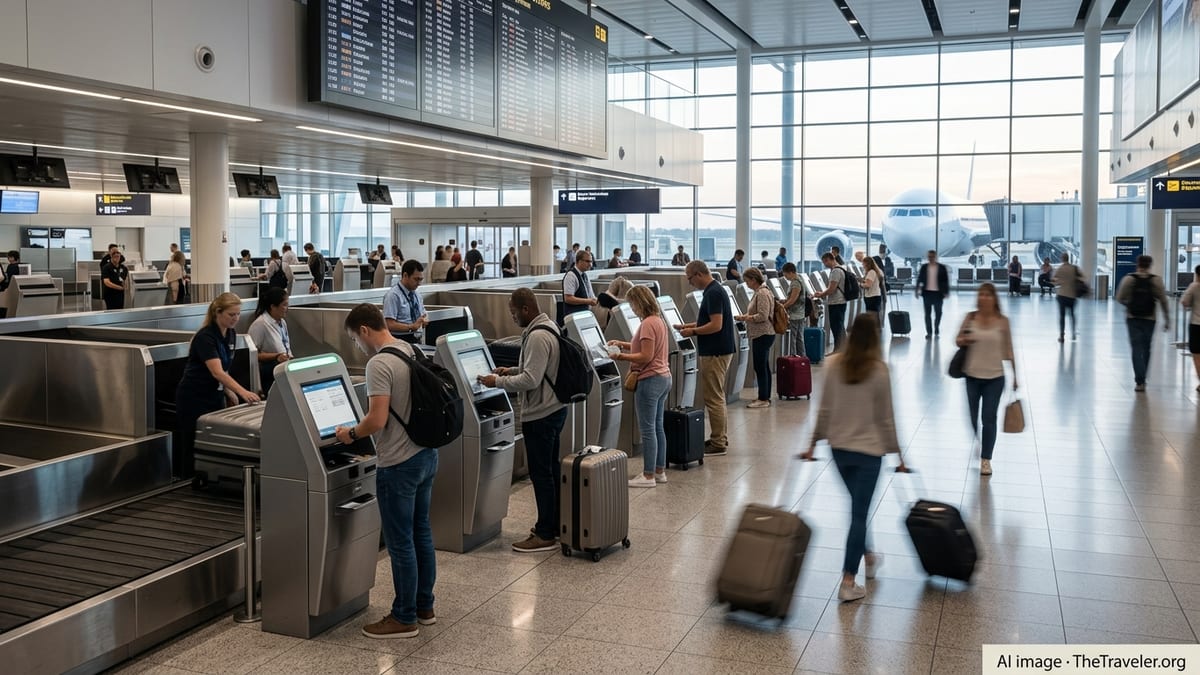
New security rule to start from 16 October
According to publicly available regulatory documents and local media coverage, the Civil Aviation Authority of Thailand (CAAT) has endorsed amendments to checked baggage screening procedures that are scheduled to take effect on 16 October 2026. From that date, security personnel at Thai airports will be permitted to open checked bags that trigger concern during X ray screening or other security checks, even if the passenger is not physically present.
Reports indicate that inspections will be limited to bags that are flagged by screening equipment or security staff, rather than all checked luggage. Current descriptions of the rule suggest that airports will be required to record the inspection process on video and leave a written notice inside any bag that has been opened, notifying the passenger that an additional security check took place.
Existing accounts from travelers show that some Thai airports already open checked luggage under specific circumstances, often requiring passengers to be called from the gate or public areas to unlock bags in person. The new framework is expected to formalize those practices and give airport operators clearer authority to proceed without summoning the owner, provided that documentation and recording requirements are met.
Airport operators are expected to update their internal procedures and staff training ahead of the October start date, with emphasis on handling locked luggage, documenting inspections and preserving any items that may be removed as prohibited articles.
Goal is to cut last minute delays at departure gates
Thai aviation planners have been under pressure to improve on time performance and reduce congestion at major airports, particularly Bangkok Suvarnabhumi, which serves as the country’s main international hub. Publicly available safety and performance reports from CAAT highlight flight delays linked to ground handling, baggage loading and security procedures.
In the current system, when a checked bag raises concern during screening, security staff in some airports escort the passenger back from the departure gate or waiting area to a separate room so the luggage can be opened in their presence. Travelers have reported being called out of boarding queues or asked to leave the aircraft before departure so that a potentially problematic item, such as a lighter or restricted aerosol, can be removed. Those interventions can slow the boarding process for an entire flight and create knock on delays further down the route network.
By allowing inspections without the owner present, regulators aim to keep boarding and departure timelines intact even when bags require secondary checks. Publicly available information indicates that the new rule is framed as a way to prevent avoidable disruption, especially during peak travel periods when any delay can create long backlogs at gates, on taxiways and at baggage belts on arrival.
Industry analyses of airport operations often cite baggage screening and late security interventions as contributors to missed departure slots and congested gate areas. The revised Thai procedures are being presented as one component of a broader effort to streamline ground operations while maintaining or raising security standards.
Alignment with international aviation security practices
Regulatory material released in recent years shows that CAAT has been working to bring Thailand’s aviation oversight and security procedures in line with standards recommended by the International Civil Aviation Organization and adopted by many other jurisdictions. In numerous countries, security agencies already have the authority to open checked luggage outside the passenger’s presence, with notification typically provided by a tag or document placed in the bag.
Thai officials have previously emphasized the importance of harmonizing local rules with international norms, both to support tourism and to reassure foreign carriers and partners about the robustness of the country’s aviation system. Allowing security staff to open suspicious checked luggage without delay is being positioned as consistent with that broader strategy.
Publicly available safety reports from CAAT describe a growing focus on risk based security and the use of technology such as advanced X ray systems and explosive trace detection to identify potential threats in baggage. The new policy effectively clarifies what happens when those systems indicate that a closer inspection is warranted and the passenger is not readily available at the checkpoint.
Analysts note that formalizing these powers in regulation, rather than relying on ad hoc practices, may also help Thai airports respond more clearly to international security audits and assessments, which often review how baggage screening exceptions and anomalies are handled.
Passenger rights, privacy and tampering concerns
The announcement has prompted discussion among travelers about privacy, property rights and the potential for theft or misconduct during inspections carried out without the owner present. Online travel forums show a mix of reactions, with some passengers expressing little concern and others worrying about valuables, medicines or electronics packed in checked bags.
Published summaries of the new rules indicate that inspections are to be conducted under camera surveillance, with video records retained to document how a bag was handled, what items were removed and who was present. The requirement to leave a written notice inside opened luggage is intended to give passengers a clear indication that an additional check occurred, reducing speculation about tampering during transit.
Consumer advocates generally advise travelers to avoid placing cash, jewelry, sensitive documents or high value electronics in checked baggage, regardless of the destination country. The Thai changes have renewed those reminders, with commentators suggesting that passengers treat checked bags primarily as a place for clothing and low risk personal items, especially during the adjustment period after the new rules come into effect.
Travel insurance policies and airline conditions of carriage typically set limits on compensation for lost or damaged items in checked luggage. Observers note that passengers who experience missing or damaged belongings after an inspection will likely need to follow existing airline or airport claims processes, using any notices left in the bag, baggage tags and boarding documents as supporting evidence.
What travelers should expect at Thai airports
For most passengers, the updated rules are unlikely to change the visible steps of check in and departure. Bags will still be tagged and loaded in the usual way, and routine security screening of carry on items and passengers will continue as before. The main difference will occur behind the scenes, where security staff will have explicit authority to open and search checked luggage that raises concerns without calling the owner to attend.
Travelers may notice new or clearer stickers and inserts in their suitcases stating that the bag was opened for security reasons. In some cases, items considered prohibited or unsafe for carriage in the aircraft hold may be removed and retained by airport authorities, with an explanation noted on the inspection slip. Reports suggest that airports are considering standardised multilingual notices so tourists can quickly understand why an item is missing.
Aviation observers expect that airports will monitor how often bags are opened, what types of items are most frequently removed, and whether the new procedures measurably reduce delays at departure gates. That data may inform future adjustments to screening thresholds, passenger communications and staff training.
Travel industry commentators advise visitors to Thailand to check airline restrictions on hazardous or restricted items, secure their luggage with locks that security staff can open without damage where possible, and keep essential items in carry on bags. As the new rules take effect from mid October, awareness of the possibility of out of sight bag inspections is expected to become part of routine travel planning for flights to, from and within Thailand.