


More news on this day
Thai cave rescue hero Dr Richard “Harry” Harris OAM is set to bring his unique blend of medical expertise and extreme diving experience to the polar frontier, joining Aurora Expeditions as a Special Guest on select Antarctic voyages in 2027 and 2028.
Get the latest news straight to your inbox!
From Thai Cave Rescue to the Polar South
Publicly available information shows that Dr Richard Harris, an Australian anaesthetist, aeromedical retrieval specialist and veteran cave diver, rose to global prominence in 2018 for his pivotal role in the rescue of 12 boys and their football coach from the flooded Tham Luang cave system in northern Thailand. Reports indicate that his combination of clinical skills and more than three decades of technical diving experience made him a central figure in planning and executing the complex underwater evacuation.
Biographical material notes that Harris assessed the trapped team’s condition inside the cave, helped devise the medical strategy and administered anaesthesia to each boy before they were guided out through narrow, water-filled passages. His actions during the multi‑day operation have since been credited with helping make one of the most challenging rescue missions in recent history a success.
Following the Thai cave mission, Harris received widespread recognition in Australia and abroad, including national honours and international awards for bravery and service. He has continued to work in anaesthesia and retrieval medicine while remaining active in exploration, underwater filmmaking and speaking engagements focused on risk, resilience and decision‑making under pressure.
According to background profiles, Harris has long combined his medical career with expeditions to remote environments, from deep cave systems to polar regions. His appointment as a Special Guest on Antarctic voyages is the latest chapter in a career that bridges adventure, science and emergency medicine.
New Role as Special Guest with Aurora Expeditions
Aurora Expeditions, an Australian‑based company specialising in small‑ship journeys to polar and other remote regions, lists Harris among the notable figures joining future sailings as Special Guests. The company highlights his Thai cave rescue involvement along with his long record of technical diving, exploration and work on underwater documentaries as key elements he will bring to its Antarctic program.
According to the operator’s published material, Harris is scheduled to sail on two itineraries in the 2026‑27 and 2027‑28 Antarctic seasons. He is listed as a Special Guest on the “Across the Antarctic Circle” voyage departing 28 February 2027 and on the “Antarctica Complete” voyage departing 1 February 2028. Both journeys are promoted as immersive expeditions that combine shore landings, Zodiac cruising and optional adventure activities in some of the continent’s most dramatic regions.
The Special Guest program is presented as a way for passengers to travel alongside explorers, scientists, photographers and other subject‑matter specialists. In Harris’s case, Aurora’s public information emphasises his experience operating in some of the world’s most demanding environments and his ability to communicate lessons from high‑stakes missions to a broad audience of travellers.
These Antarctic departures form part of a wider multi‑year expansion for Aurora Expeditions, which has introduced additional ships and itineraries across the Antarctic Peninsula, East Antarctica, the Ross Sea and the subantarctic islands. Industry coverage describes the seasons as increasingly focused on themed voyages that cater to specific interests such as science, photography and active adventure.
Diving Expertise Meets Antarctic Adventure
Aurora Expeditions promotes a range of optional activities in polar regions, including snorkelling and specialist diving on selected voyages, giving travellers the chance to experience the underwater environment beneath sea ice and icebergs. Publicly available information from the company indicates that Harris will contribute to these programs, sharing his technical knowledge and perspectives with participants.
His background includes complex cave and wreck dives, long‑range rebreather expeditions and involvement in challenging underwater filming projects. Profiles produced by professional and exploration organisations highlight his reputation for meticulous planning, risk assessment and calm decision‑making in confined and overhead environments, attributes that have direct relevance to polar diving where cold, ice and remoteness can significantly raise the stakes.
While Antarctic dive operations differ significantly from cave rescue work, industry observers note that the same emphasis on preparation, equipment redundancy and team communication underpins both. Harris’s presence on board is expected to reinforce messaging around safety, conservative planning and respect for environmental conditions during any in‑water activities.
Beyond the technical aspects, his participation is also positioned as an opportunity for expeditioners to gain a deeper appreciation of what it takes to operate responsibly in fragile and unforgiving environments, both above and below the surface.
Shaping the Experience On Board
According to Aurora Expeditions’ descriptions of its Special Guest program, visiting experts typically take part in lectures, informal talks and hosted activities that complement the work of the core expedition team, which usually includes naturalists, historians, guides and photographers. Harris’s contribution is expected to focus on themes such as exploration, resilience, leadership under pressure and the practical realities of remote medicine.
Travel trade reports on Aurora’s recent seasons point to strong demand for enrichment‑led voyages, with travellers seeking more in‑depth engagement with the destinations they visit. Figures like Harris are being integrated into itineraries to provide context around decision‑making in extreme environments, advances in exploration technology and the ethical responsibilities that come with visiting remote regions.
Harris’s background in aeromedical retrieval and emergency medicine is likely to resonate with passengers interested in how expedition teams prepare for and manage contingencies far from conventional infrastructure. Public information about his career notes that he has worked extensively in remote and resource‑limited settings, experiences that offer parallels with the logistical challenges of operating expedition vessels in polar waters.
The combination of on‑board presentations and time spent alongside guests in the field is promoted as a way to create a more participatory experience, where travellers can connect stories of high‑profile rescues and expeditions to the landscapes and seascapes unfolding around them in Antarctica.
Antarctica’s Growing Appeal for Explorers and Storytellers
The decision to feature Harris on future Antarctic sailings reflects a broader trend of adventure and expedition cruise operators partnering with high‑profile explorers, scientists and communicators. Recent announcements from Aurora Expeditions and other companies outline voyages tailored for photographers, science enthusiasts and women travellers, underlining the sector’s move toward more differentiated offerings.
Industry analyses describe Antarctica as one of the fastest‑growing segments of the expedition cruise market, with new vessels, expanded seasons and an increasing emphasis on education and environmental stewardship. Operators often position the presence of respected experts as a way to deepen passengers’ understanding of polar ecosystems and of the human stories linked to exploration and survival in harsh environments.
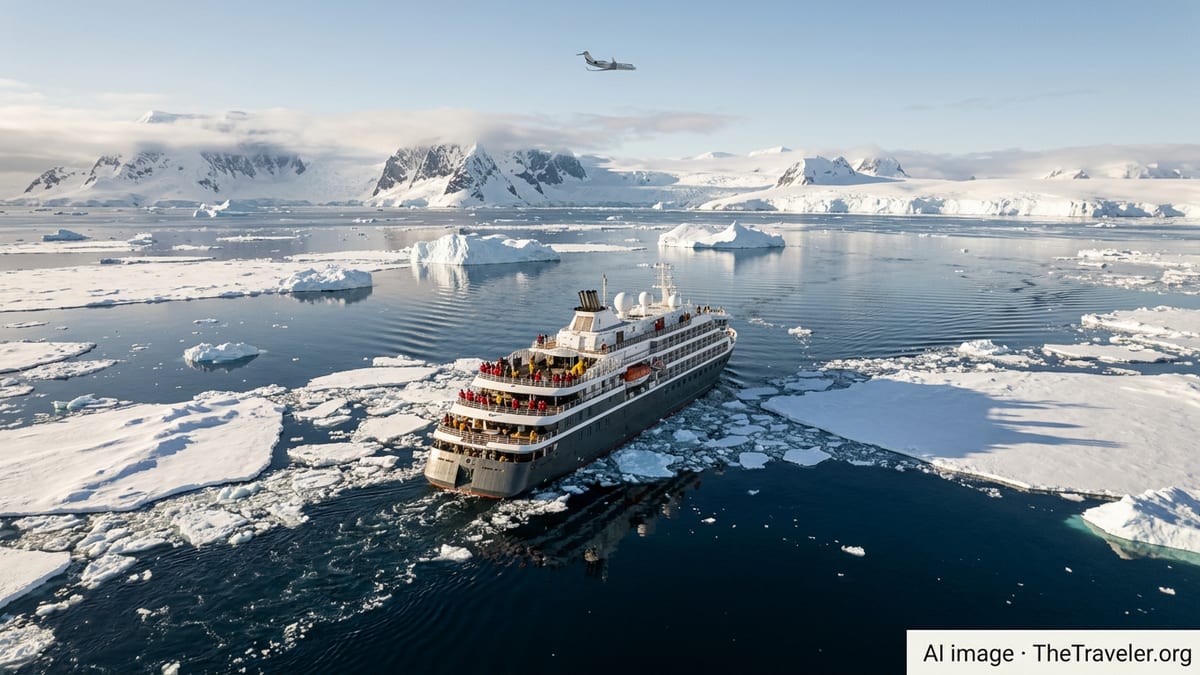
In this context, Harris’s involvement brings together two strands of modern adventure travel: a fascination with extraordinary rescue narratives and a growing appetite for first‑hand experiences in remote regions. His journey from a flooded cave in northern Thailand to the ice‑choked channels of the Antarctic Peninsula illustrates how skills forged in one extreme setting can find new expression on the opposite side of the planet.
For travellers booked on the voyages where he is scheduled to appear, the prospect of sharing a ship with one of the key figures from the Thai cave rescue adds a contemporary human dimension to journeys that already promise some of the most dramatic scenery on Earth.