


More news on this day
Thailand’s luxury travel sector is entering a new phase of growth, with high‑end openings from Bangkok’s historic riverfront to the country’s best‑known islands reshaping how affluent visitors experience the kingdom.
Get the latest news straight to your inbox!
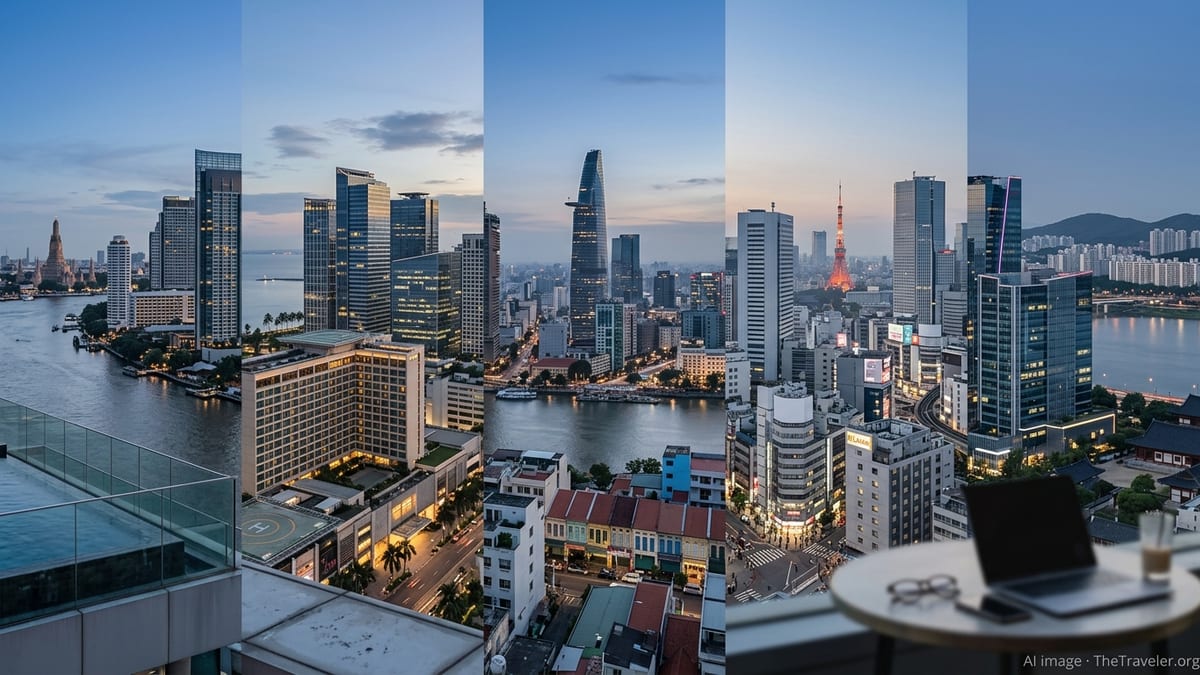
Bangkok’s Riverside Becomes a New Luxury Focal Point
Bangkok’s Chao Phraya riverfront is emerging as one of Southeast Asia’s most closely watched luxury corridors, as global brands extend their presence beyond the traditional downtown core. Recent market analysis highlights that new hotel supply in the Thai capital is increasingly concentrated in the luxury and upper‑upscale brackets, with the riverfront identified as a key submarket for investment.
Established flagship properties overlooking the water are being joined by high‑profile projects that blend heritage restoration with contemporary design. One closely followed development is The Langham, Custom House, Bangkok, which is set within the city’s 19th‑century customs building and scheduled to open in 2026. Industry observers point to the project as an example of how historic architecture is being repositioned as a premium asset for high‑spending travelers.
New riverside entrants are also targeting travelers who want a quieter, resort‑style stay without leaving the city. The Prince Akatoki Riverside Bangkok, planned as an urban sanctuary on the banks of the Chao Phraya, is one of several upcoming riverfront properties emphasizing wellness, minimalism and Japanese‑inspired calm in contrast to Bangkok’s dense urban core.
At the same time, recently opened premium hotels in central districts such as Surawong are giving visitors more choice in how they connect city stays with longer itineraries across Thailand. The overall impact, analysts suggest, is a capital that now acts as a fully fledged luxury gateway, rather than just a transit point en route to the country’s beaches.
Policy Shift Favors High‑Spending, Niche Segments
Thailand’s tourism strategy is evolving alongside this new infrastructure. Publicly available planning documents for 2025 show that national tourism authorities are prioritizing niche segments including wellness, luxury experiences, sports tourism and romance travel. The focus is on attracting visitors who stay longer, spend more per trip and seek curated, experience‑driven itineraries.
According to recent coverage of industry briefings, Bangkok, Phuket, Pattaya, Krabi and Surat Thani, the province that includes Koh Samui, are among the main destinations drawing luxury tourists. This aligns with a broader global trend in which affluent travelers select a smaller number of destinations but invest more heavily in accommodation, dining and tailored experiences while there.
Hotel sector research indicates that Thailand’s top‑tier properties have been able to lift room rates significantly while remaining competitive against other regional hubs. Average daily rates in the luxury segment have risen compared with both last year and pre‑pandemic levels, yet they generally remain below those in cities such as London and Singapore. Analysts describe this pricing gap as a key advantage that allows Thailand to position itself as offering strong value at the high end.
In parallel, reports on traveler behavior show growing appetite for privacy, wellness and multi‑generational trips. Villas and suites that can accommodate families or groups, often with private pools and dedicated outdoor spaces, are increasingly central to how Thailand markets itself to premium guests from Asia, Europe and the Middle East.
Island Retreats Elevate the Private‑Pool Villa Experience
On Thailand’s islands, luxury is increasingly defined by seclusion and personalized space rather than by size alone. Koh Samui and Phuket in particular have seen a proliferation of standalone villas and all‑pool‑suite resorts where every unit offers direct access to a private or semi‑private pool and expansive sea views.
Travel guides and booking data for Koh Samui highlight ultra‑luxury properties such as Four Seasons Resort Koh Samui and Banyan Tree Samui, where every villa operates as an independent residence with dedicated pools and outdoor living areas. Similar concepts are evident at W Koh Samui and newer boutique resorts that emphasize low‑rise architecture, lush landscaping and unobstructed Gulf of Thailand sunsets.
Smaller properties are also leaning into the villa model. On Samui’s quieter stretches of coastline, newer resorts promote beachfront pool villas, private residences and curated in‑villa dining as core selling points. Market observers note that this approach has been reinforced by global pop culture exposure, including television productions filmed at high‑end Thai resorts that showcase secluded villas and dramatic clifftop pools.
Phuket, long established as a luxury destination, is refining its offer with cliffside pool suites, wellness‑oriented beachfront resorts and expanded yacht charter options. Online travel forums show sustained demand from honeymooners and celebratory travelers seeking ocean‑view villas with private pools, often pairing a few days in Bangkok with several nights at a resort on the Andaman Sea or Gulf of Thailand.
Wellness, Culture and River‑to‑Island Itineraries
Current research into luxury traveler preferences indicates that high‑net‑worth visitors increasingly look for trips that combine relaxation with a sense of place. In Thailand, that has translated into itineraries that begin with cultural immersion along Bangkok’s riverfront before moving on to slower‑paced island stays centered on wellness and nature.
Riverside hotels have responded by integrating spa, culinary and cultural programming that can fit into a short city break at either the beginning or end of a longer holiday. Guests may take private long‑tail or sunset boat rides, visit contemporary art spaces near the river, or dine at tasting‑menu restaurants that reinterpret regional Thai cuisines in a fine‑dining setting.
On the islands, wellness offerings range from multi‑day spa programs and yoga retreats to detox menus and sleep‑focused packages. Several leading properties in Koh Samui and Phuket pair traditional Thai therapies with modern fitness and mindfulness activities, reflecting a broader shift in global luxury travel away from conspicuous consumption and toward holistic wellbeing.
Ultra‑luxury travelers are also showing interest in more complex journeys that connect multiple Thai regions. Cruise operators and hotel groups are exploring expanded river cruise options linked with stays at upcountry properties in Chiang Mai and beach resorts in the south, creating river‑to‑island circuits that can be marketed as single, high‑value packages.
Outlook: Strong Pipeline and Growing Global Visibility
The development pipeline suggests that Thailand’s luxury travel offering will continue to deepen over the next several years. International hotel groups have announced plans for additional high‑end properties in Bangkok, Chiang Mai and key coastal provinces, with several projects scheduled through to the end of the decade. Some Japanese and European brands are also preparing to add capacity and launch river cruise products tailored to premium guests.
Industry reports emphasize that this growth is taking place alongside efforts to promote sustainability and manage visitor flows. Many new resorts are adopting lower‑density layouts, investing in energy‑efficient infrastructure and highlighting support for local communities as part of their appeal to environmentally conscious travelers.
Thailand’s visibility within the luxury segment is further boosted by large‑scale events and media exposure. International productions filmed in Bangkok, Phuket and Koh Samui have drawn attention to the country’s most photogenic properties, while global travel companies continue to list Thai destinations among their top recommendations for immersive, high‑end holidays.
With riverfront redevelopment in the capital, a maturing villa market on the islands and a strategic policy focus on high‑spending niches, Thailand is positioned to remain one of Asia’s most dynamic luxury travel markets, offering itineraries that link urban energy with secluded coastal retreats.