


Armenia rewards curiosity. From monasteries cut into cliffs to smoky barbecue yards and Soviet metro stations, it is a country that feels far bigger than it looks on the map. Yet many trips underdeliver not because Armenia disappoints, but because visitors repeat the same planning mistakes. Routes are rushed, seasons are misunderstood, and border politics are ignored. The result is often a blur of day trips from Yerevan and a lingering sense of “I wish I had known.” This guide looks at the most common pitfalls, backed by recent on-the-ground information, and explains how to avoid them with practical, real-world examples.
Get the latest updates straight to your inbox!
Misreading Armenia’s Size, Distances, and Driving Times
On a map, Armenia looks compact, roughly the size of the US state of Maryland. Many travelers assume that means they can “see everything” in four or five days. In reality, mountain roads, variable weather, and an almost total absence of domestic flights mean journeys take longer than expected. For example, the 250-kilometer drive from Yerevan to Tatev Monastery in the south can easily take 4.5 to 5.5 hours one way, depending on traffic and roadworks. Travelers who book a same-day Tatev tour from Yerevan often return exhausted near midnight after spending more time in a minibus than at the monastery itself.
Another frequent mistake is chaining too many regions into a tight itinerary. A common first draft looks like this: three nights in Yerevan with day trips to Garni, Geghard, Lake Sevan, and Dilijan, followed by a dash to Gyumri and back. On paper, this seems manageable. On the ground, you end up spending half your holiday in marshrutkas or tour vans. A more realistic plan for a week is to pick one additional overnight base, such as Dilijan or Gyumri, instead of trying to “collect” every major sight from Yerevan.
Driving times are further distorted by unexpected stops. It is normal for a “three-hour” transfer from Yerevan to the wine region around Areni to stretch to four hours because of slow trucks on mountain passes, roadworks, and pauses for roadside fruit or coffee. If you are renting a car, factor in the reality that some scenic detours, such as the small roads around Lake Sevan’s eastern shore, are partly unpaved or potholed. Planning with generous buffers, especially in winter and early spring when snow and fog slow traffic, will keep your days from becoming endurance tests.
For travelers considering public transport, the same rule applies. Buses and marshrutkas between Yerevan and cities like Vanadzor or Goris run frequently but rarely on the precise minute, and vehicles may wait to fill before departure. If you need to catch a late-evening train from Tbilisi or an early flight out of Yerevan, do not schedule a same-day long-distance bus and assume it will run like a European intercity train. Build in an extra half-day in the capital at the end of your trip.
Ignoring Visa Rules, Border Politics, and Regional Restrictions
Armenia’s borders and political context change faster than many guidebooks are updated, and that catches travelers off guard. One persistent mistake is treating Nagorno Karabakh, sometimes called Artsakh, as if it were a side trip from Armenia. Since late 2023 the region has been fully under Azerbaijani control and is not accessible via Armenia for tourism. Attempting to plan visits based on old blog posts or pre-2020 itineraries is both unrealistic and potentially risky.
Another common oversight involves border crossings with neighboring countries. The land border between Armenia and Azerbaijan is closed to all travelers, and has been for decades. If you are designing a Caucasus loop, any overland movement between Armenia and Azerbaijan must route via Georgia. Travelers occasionally book complicated tickets, such as Baku to Yerevan “via border crossing,” only to discover at the last minute that no such route exists and that they must instead fly or transit through Tbilisi by bus or train.
Visa rules are fairly straightforward for many nationalities, but there are important nuances. As of early 2026, United States citizens can visit Armenia visa-free for up to 180 days per year, but travelers from many Asian and African countries still require an e-visa or invitation letter. Some nationalities are eligible for a visa on arrival at Yerevan’s Zvartnots Airport, while others must apply in advance. A recurring real-world scenario involves travelers who book nonrefundable flights and hotels assuming they will “sort the e-visa later,” only to discover that processing requires an invitation from a host or licensed tour agency and cannot be guaranteed on short notice. The safest approach is to check the Ministry of Foreign Affairs website and your own foreign ministry’s guidance before purchasing flights.
There are also consequences to visiting one side of the Armenia–Azerbaijan divide before the other. While Armenia itself generally does not penalize visitors who have previously been to Azerbaijan, travelers have historically reported issues entering Azerbaijan if their passports contained visas or entry stamps from Nagorno Karabakh issued via Armenia. Even though tourist access to that region has effectively ceased, outdated advice still circulates in forums. The bottom line: avoid any attempt to enter disputed territories, keep your itinerary to internationally recognized Armenian territory, and verify current entry requirements for each country in your Caucasus loop before you commit.
Underestimating Seasons, Weather, and Altitude
Many visitors plan trips to Armenia assuming the climate mirrors that of coastal Mediterranean destinations. They picture warm springs, mild winters, and consistently sunny autumn days. Armenia, however, is a mountainous country, and weather can shift sharply with altitude. Yerevan in late April might already see daytime temperatures above 20 degrees Celsius, while Lake Sevan, at around 1,900 meters above sea level, remains windy and surprisingly cold. Travelers who schedule a “beach day” at Sevan in early May often arrive in light clothing, only to find locals still bundled in jackets, the water near freezing, and beach facilities partially closed.
Winter conditions are another stumbling block. Between December and March, snow, ice, and fog are common on mountain passes leading to regions such as Syunik and Lori. Visitors sometimes book self-drive itineraries in compact rental cars without winter tires, assuming the roads will be cleared as quickly as highways in Western Europe. In practice, snowplows may prioritize main arteries, while side roads to villages or monasteries, such as the final approach to Haghpat or Sanahin, remain slippery much longer. If you are not confident driving in winter conditions, consider basing yourself in Yerevan and booking day tours with local drivers who know the routes and carry chains.
Summer brings its own challenges. Yerevan can be intensely hot in July and August, with daytime temperatures often above 35 degrees Celsius and little shade on wide boulevards such as Mesrop Mashtots Avenue. A common mistake is planning long walking days in the city during the mid-afternoon, then feeling too drained to enjoy its evening café culture. A better pattern is to explore museums and churches in the morning, retreat indoors or take a nap during the hottest hours, and then enjoy the city’s outdoor terraces and Republic Square fountains after sunset when locals come out.
Spring and autumn are generally excellent times to visit, but travelers sometimes cut trips too short to appreciate seasonal highlights. Late September and early October are prime for wine routes around Areni, with harvest activity and festivals in many villages. Spending only one rushed night in Yerevan before heading straight to Georgia misses these experiences. When planning, think less in terms of absolute temperature and more about how altitude, daylight hours, and weather patterns will affect your ability to enjoy hikes, monasteries, and open-air sites.
Relying Only on Yerevan and Day Trips
Yerevan is Armenia’s beating heart, with its Soviet metro stations, pink tuff stone architecture, and cafes spilling out onto sidewalks. It is tempting to treat it as the sole base and join a carousel of day trips to Lake Sevan, Garni, Geghard, Khor Virap, and Dilijan. Tour desks and ride-hailing apps make this easy. The downside is that your understanding of Armenia becomes heavily skewed toward the capital and roadside viewpoints. Many travelers leave believing Armenia is a one-city country, having never stayed overnight in a smaller town or village.
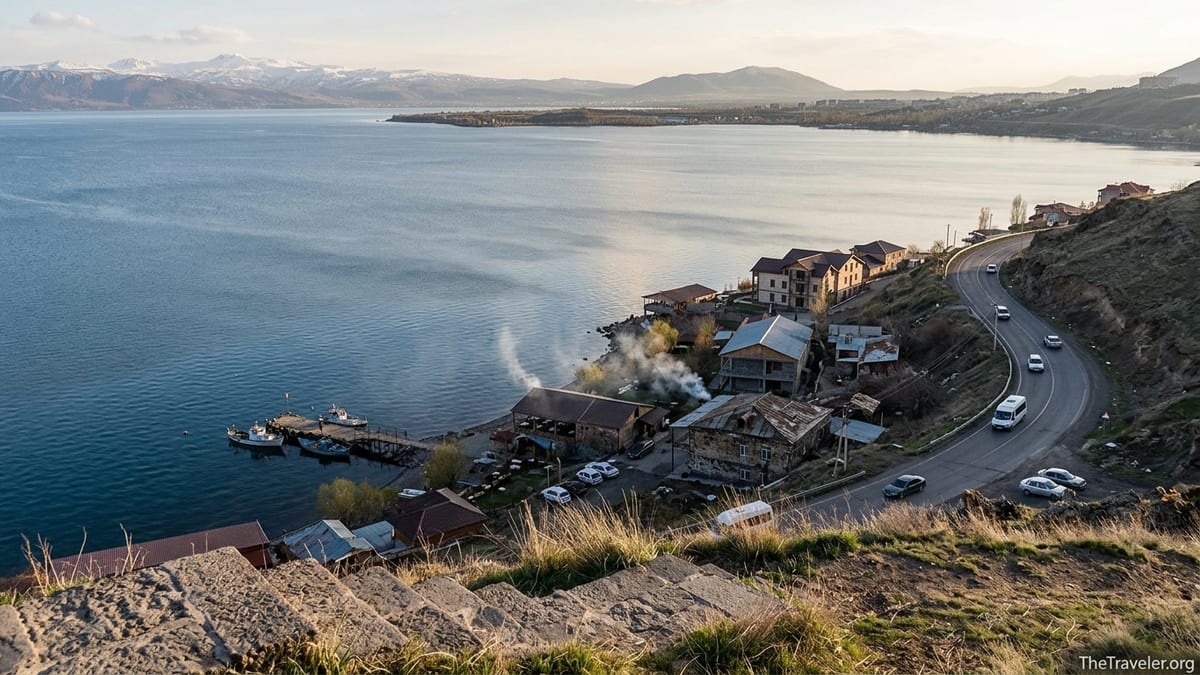
Consider Lake Sevan. Most visitors see the peninsula and Sevanavank monastery on a two or three hour stop before racing back to Yerevan. Those who spend a night in Sevan town or in a lakeside guesthouse often have a very different experience: early morning walks along empty shorelines, conversations with fishermen preparing smoked trout, and dinners of crayfish and whitefish in simple family-run restaurants. A single rushed stop misses the lake’s character and reduces it to another “photo point.”
Gyumri, Armenia’s second city, is another place often squeezed into a too-brief visit. Trains and minibuses from Yerevan make it an easy day trip, but an overnight stay allows time for wandering through the historic Kumayri district, sampling coffee in renovated old mansions, and visiting museums dedicated to the 1988 earthquake. Travelers who stay only a few hours often come away with the impression that Gyumri is still heavily damaged and sleepy. Those who give it a night or two tend to describe it as one of the most atmospheric corners of the country.
The same pattern appears in Dilijan and the surrounding forests. A standard day tour might include quick stops at Haghartsin and Goshavank monasteries, plus a lunch in town. Travelers who stay two or three nights frequently add hikes on marked trails in Dilijan National Park, daytime visits to lakes such as Parz, and slow afternoons at local craft workshops. When planning, ask yourself where you can comfortably sleep outside Yerevan at least two or three nights. Even modest adjustments, such as one night at Lake Sevan and one in Dilijan, can transform a linear sightseeing plan into a richer journey.
Misjudging Costs, Cash, and Transport Options
Armenia is still more affordable than many European destinations, but travelers sometimes misjudge what is cheap and what is not. Local transport and simple meals remain good value, while private drivers, high-end hotels, and imported goods can add up quickly. As of mid 2026, a journey on the Yerevan Metro costs the equivalent of a small fraction of a US dollar per ride, making it an efficient way to move between neighborhoods without sitting in traffic. City buses and marshrutkas within Yerevan are similarly inexpensive, though they can be crowded during rush hours.
Taxis ordered through apps such as Yandex Go or GG Taxi are widely used by locals and significantly cheaper than hailing a random car at the curb. New arrivals sometimes walk out of Zvartnots Airport and accept the first driver who approaches, paying two or three times the rate of an app-ordered ride into the city center. For example, while an app fare from the airport to Republic Square might be around the equivalent of 5 to 8 US dollars depending on traffic and demand, an unofficial driver may quote 20 or more, especially late at night. Planning to install an app and having mobile data ready on arrival helps avoid this markup.
For intercity travel, marshrutkas remain the backbone of public transport. A seat in a shared minibus from Yerevan to Tbilisi typically costs less than a third of what many private transfer companies charge for the same route. On the other hand, hiring a car with a driver for a full day to visit multiple rural monasteries or wineries can be comparatively pricey, often rivaling Western European day tour prices once fuel and hours are factored in. Travelers who assume everything in Armenia will be cheap sometimes lock themselves into multiple days of private touring, only to find their budget strained halfway through the trip.
Cash versus card is another area where outdated assumptions persist. Card payments are increasingly common in Yerevan’s mid-range restaurants, chain supermarkets, and hotels, but small guesthouses, countryside shops, and some family-run wineries still prefer cash. ATMs are widespread in cities but may be limited in smaller towns. A practical rule is to carry enough dram in cash to cover a day or two of expenses outside the capital, including meals, small admissions, and emergency taxi rides. Changing a modest amount at licensed exchange booths in Yerevan, which typically offer competitive rates, is safer than handing foreign currency to individuals near tourist sites.
Overlooking Local Safety Advice and Everyday Scams
Armenia is generally considered one of the safer countries in the region for visitors, especially in cities where violent crime against tourists is rare. That said, a few specific issues come up often. The most critical is ignoring safety advice about the border areas with Azerbaijan. Several foreign ministries currently advise against travel within a set distance of the eastern border due to the risk of sporadic military incidents. Yet some travelers, eager for “raw” experiences, still attempt to visit villages near the line of contact or follow outdated hiking blogs that stray too close. Doing so not only puts you at risk but can also cause problems for local communities.
On a more everyday level, the most common problems are small-scale money and taxi scams. In central Yerevan, especially around Republic Square and popular restaurant streets, a minority of taxi drivers still operate without meters and quote inflated prices in foreign currencies. A visitor might be told that a short hop from the Cascade to their hotel costs the equivalent of 15 euros, when a metered or app-based ride would be closer to 2 or 3. Likewise, some travelers report restaurant bills that include items they did not order, such as bread baskets, sauces, or “service fees” that were never mentioned in advance.
Fake or unlicensed tour operators have also become an issue as tourism grows. These operations often advertise heavily on social media, offering “all-inclusive” trips to well-known sites such as Tatev, Noravank, or Lake Sevan at unusually low prices. Complaints from travelers include last-minute vehicle changes, guides who do not speak the promised languages, and aggressive pressure to shop at specific souvenir stops where commissions are collected. Booking excursions through established agencies, or directly through your hotel or guesthouse, reduces the risk of these problems. If a deal looks significantly cheaper than similar offers elsewhere, there is usually a reason.
Most issues can be avoided with simple habits: use ride-hailing apps inside cities where possible, confirm prices before sitting down in restaurants that advertise in multiple languages, and pay attention to receipts. Listening to local hosts, checking recent online trip reports, and staying updated with your own government’s travel advisories will keep minor annoyances from overshadowing Armenia’s many positive impressions.
Sticking to Tourist Playlists and Missing Cultural Nuance
Another subtle but common mistake is treating Armenia as a checklist of Instagram-famous places instead of a living culture. Visitors often arrive with a “playlist” of the same few sites: Garni Temple, Geghard Monastery, Khor Virap with its view of Mount Ararat, Lake Sevan, and the Cascade in Yerevan. These are worthwhile, but when you follow only this script, encounters with locals become limited to ticket sellers and waiters, and the deeper layers of Armenian culture stay out of reach.
Language can be a barrier, but it does not have to be a wall. Many younger Armenians in Yerevan speak at least some English or Russian, and people in smaller towns are often curious and welcoming. A traveler who spends an evening in a neighborhood wine bar or a backyard barbecue restaurant might be invited to join a toast with Armenian brandy or homemade fruit vodka. Another who only eats at the same two central cafes near their hotel may leave never having tasted khorovats grilled in a family yard, jingalov hats stuffed with herbs in the south, or simple lentil soups served in workers’ canteens.
There is also a tendency to underestimate Armenia’s contemporary side. The image of the country as only monasteries and mountains obscures a lively artistic and tech scene in Yerevan, independent bookstores, fashion boutiques, and live music venues in converted industrial spaces. Travelers who plan rigidly around monastery-hopping sometimes miss these scenes entirely, spending every evening in touristic restaurants around Northern Avenue. Building in unscheduled time, such as an afternoon with no fixed plans other than wandering streets like Saryan or exploring the Vernissage market, allows for chance discoveries.
Respect for local customs completes the picture. Dressing modestly when visiting churches, accepting or gently declining multiple rounds of toasts at village tables, and asking permission before photographing people, especially in rural areas, all contribute to smoother interactions. Planning with cultural curiosity in mind, rather than just geographic coverage, turns Armenia from a series of scenic stops into a place where conversations and small encounters become trip highlights.
The Takeaway
Well-planned trips to Armenia balance ambition with realism. They acknowledge that mountain roads slow travel, that politics shape borders, and that weather at 1,900 meters is not the same as on a sun-baked Yerevan boulevard. They leave room for surprises in Gyumri alleys and Dilijan forests instead of chaining every experience to the capital. They treat local safety advice and visa rules as living documents, not fine print to be skimmed after tickets are bought.
If you avoid the most common mistakes, Armenia reveals itself as a place where a metro ride can end at a Soviet-era station beside a crowded open-air bakery, where a lakeside detour leads to smoked fish on plastic tables, and where a simple village guesthouse opens the door to homemade wine and long conversations. Plan with current information, generous time buffers, and a willingness to stay put for a night or two, and the country will repay you with depth far beyond its small footprint on the map.
FAQ
Q1. Is Armenia safe for tourists right now?
Armenia is generally safe for visitors, especially in cities and major tourist areas, but you should avoid the border zones with Azerbaijan and follow current foreign ministry advisories.
Q2. Do I need a visa to visit Armenia?
Many nationalities, including US citizens, can visit visa-free for limited periods, while others require an e-visa or invitation. Always check Armenia’s official visa policy and your own government’s guidance before booking flights.
Q3. Can I travel overland between Armenia and Azerbaijan?
No. The land border between Armenia and Azerbaijan is closed to all travelers. If you plan to visit both countries, you must route via Georgia or fly.
Q4. When is the best time of year to visit Armenia?
Late spring and early autumn are ideal, with comfortable temperatures and clear skies. Summer can be very hot in Yerevan, while winter brings snow and icy roads in the mountains.
Q5. Is it worth renting a car, or should I rely on public transport?
Renting a car offers flexibility in rural regions, but roads can be challenging in winter and in remote areas. For many travelers, a mix of Yerevan’s public transport, intercity minibuses, and occasional private drivers works well.
Q6. How expensive is Armenia compared to Western Europe?
Everyday costs like public transport and simple meals are generally lower than in Western Europe, but private tours, upscale hotels, and imported goods can approach European prices, so budget planning still matters.
Q7. Can I pay by card everywhere, or do I need cash?
Cards are widely accepted in mid-range hotels, supermarkets, and many restaurants in Yerevan, but you should carry cash for smaller shops, rural guesthouses, markets, and some taxis outside the capital.
Q8. Are English speakers common in Armenia?
English is increasingly spoken among younger people in Yerevan and tourist-facing businesses, but Russian is more widely understood overall, and in rural areas you may rely on basic phrases and gestures.
Q9. Is it possible to swim in Lake Sevan?
Yes, swimming is common in July and August when the water is warmest, but the lake sits at high altitude so it can feel cold, and outside peak summer it is often too chilly for most swimmers.
Q10. How many days do I need for a good first trip to Armenia?
A week allows time for Yerevan plus at least one or two overnight stays in places like Dilijan, Gyumri, or Lake Sevan, while 10 to 12 days offers a more relaxed pace and room for southern regions.