


Few places in the world feel as eerily alive as Pompeii. Walking its stone streets, you can step into bakeries, bars and back gardens frozen at the moment Mount Vesuvius erupted in 79 AD. For first time visitors it can also feel overwhelming: ticket types, confusing train names, vast ruins and intense summer heat. This guide brings together the latest practical information and a clear on the ground strategy so you can experience Pompeii at its best.
Get the latest updates straight to your inbox!
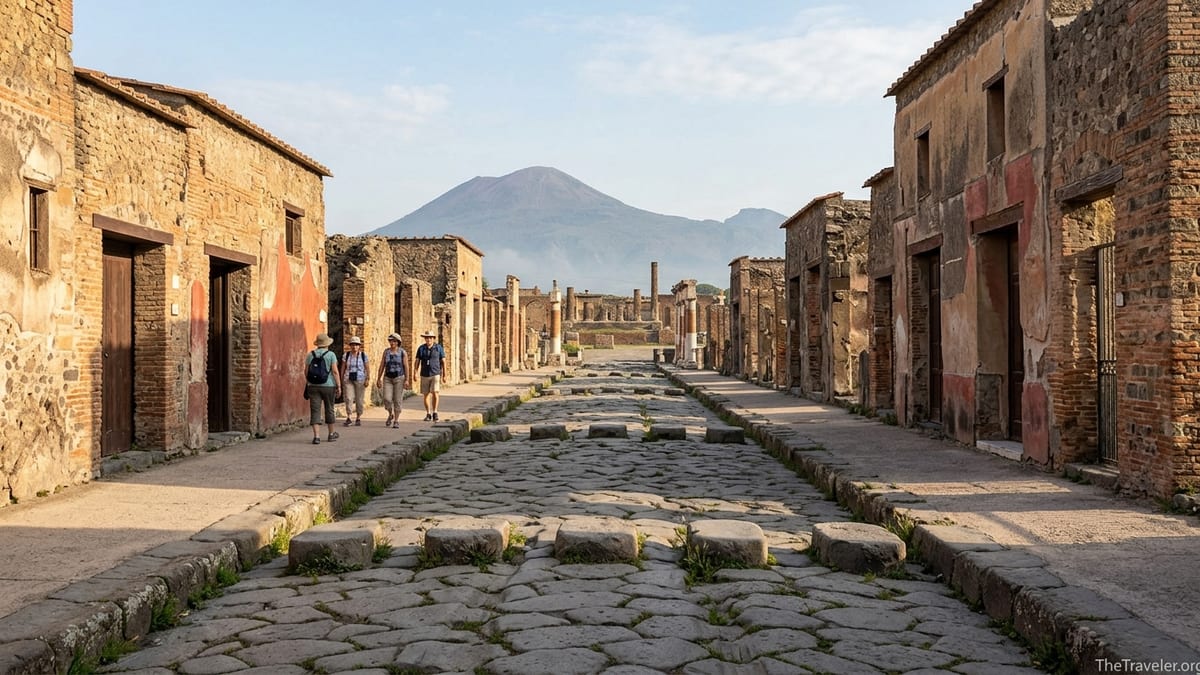
Essential Planning: When to Go and How Long to Stay
Pompeii is huge. The archaeological park covers around 66 hectares, of which more than 40 are open to visitors, which means you will not see everything in one visit. For a first time trip most travelers find that 4 to 6 hours inside the ruins is enough to see major highlights without feeling rushed. If you want to explore more thoroughly, including quieter back streets and multiple houses, an entire day from opening to late afternoon works well.
Opening hours currently follow a seasonal pattern. In roughly November to March the site typically opens around 9 am and closes shortly after sunset, often 5 pm. From April through October opening is usually 9 am with closing times extended to about 7 pm. Final entry is normally 90 minutes before closing and key houses begin to close earlier, so it is wise to check the official timetables shortly before your visit and aim to be at the gate within the first hour of opening.
In practical terms shoulder seasons are the sweet spot. Late March to early June and late September to late October balance longer daylight with milder temperatures and somewhat lighter crowds. In July and August temperatures in the ruins often climb above 32°C (90°F) by midday and there is little shade, so consider an early entry, a long lunch break in the modern town of Pompei, then a gentler wander in the late afternoon.
If you are coming from Naples, Sorrento or the Amalfi Coast, a well planned day trip works fine. From Rome it is also possible as a long day: for example an early morning high speed train that reaches Naples Centrale before 9 am, followed by a commuter train directly to the ruins, then returning to Rome on an evening high speed service.
Tickets, Passes and What They Really Include
As of 2026 Pompeii uses a simple main ticket structure built around the official Archaeological Park prices. A standard adult ticket, sometimes described as "Pompeii Express" or simply the full price ticket, is currently listed at about 18 euro. This gives one day access to the main archaeological area and the Antiquarium museum near the Porta Marina entrance. EU travelers aged 18 to 24 usually qualify for a reduced ticket of about 2 euro, while visitors under 18 from any country can enter free, although you should still collect a nominative ticket at the ticket window.
There is also a broader "Pompeii Plus" style ticket around 25 euro that includes suburban villas and extra areas accessed via the Herculaneum Gate, such as the Villa of Diomedes or Villa Regina at Boscoreale, often combined with a shuttle service. If you are a first time visitor and only have half a day, the standard ticket is usually sufficient. If you are particularly interested in villas or have a full day you may appreciate the extra sites included with the Plus option.
Combo tickets are attractive if you plan to visit Herculaneum as well. A popular option is the Pompeii plus Herculaneum ticket at about 22 euro valid over 48 hours from first use. Many travelers staying two or three nights in Naples use this: for example, visiting Pompeii on Monday and Herculaneum on Tuesday, with the same ticket covering both ruins. Be aware that these prices can change slightly year by year and special exhibitions sometimes carry a small surcharge, which is clearly indicated at the ticket office.
For longer stays in the region consider the Campania Artecard. The 3 day version typically includes public transport in the Naples area and free or discounted entry to two or more main sites, with reduced rates afterward, which can represent good value if you combine Pompeii with museums in Naples or Paestum and Herculaneum. The fine print is important: an Artecard covers basic entry to Pompeii, but certain add on routes or special villas may still require an extra fee. It is worth calculating your likely itinerary and checking example prices on the official Artecard information pages before you buy.
Getting There: Trains, Tours and Day Trips
Most first time visitors reach Pompeii by train. From Naples the most common route is the Circumvesuviana commuter line that runs between Napoli Porta Nolana or Napoli Garibaldi (the lower level of Napoli Centrale) and Sorrento. You want the station called Pompei Scavi Villa dei Misteri, which sits just across the road from the main Porta Marina entrance to the ruins. The journey takes about 35 minutes from Garibaldi and trains typically run two or three times an hour during the day. Tickets are inexpensive, usually just a few euro each way, and are bought on the day at the station ticket windows or newsstands.
Regional Trenitalia services also run from Naples to a different station called Pompei, which serves the modern town rather than the archaeological entrance. This station is roughly a 15 to 20 minute walk from the Amphitheater gate, which can suit travelers who want a quieter stroll in and perhaps lunch in town after visiting the ruins. For most day trippers, however, Circumvesuviana to Pompei Scavi is the most straightforward choice because you step out almost at the main entrance.
If you are coming from Sorrento, the same Circumvesuviana line brings you directly to Pompei Scavi in about 30 minutes. Many Amalfi Coast visitors catch a morning bus to Sorrento, connect to the train to Pompeii, visit the site, then continue on to Naples in the evening. High speed trains from Rome, Florence or Milan all converge on Naples Centrale, and you simply walk down to the Garibaldi level for the local Circumvesuviana connection. Allow at least 20 minutes between the arrival of your long distance train and your desired commuter departure, especially in high season when stations are busy.
Guided day tours can simplify logistics if you prefer a fully arranged day. Common offerings include Naples to Pompeii and Mount Vesuvius full day trips by coach, as well as Rome to Pompeii excursions using high speed rail plus a local guide. These packages usually include a reserved time slot entry ticket, transport and the services of a licensed guide for two or three hours. They cost more than self organizing your visit, but can be convenient if you are short on time or nervous about changing trains.
Making the Most of Your Time Inside the Ruins
The single best step you can take for a smooth visit is to start with a clear, realistic route. On arrival pick up the free paper map of the park, which now often highlights accessible paths and temporarily closed areas. A classic first time circuit begins at Porta Marina, walks up Via Marina into the Forum, then loops through key sites like the Basilica, the Temple of Apollo, the Stabian Baths, the House of the Faun and the Lupanar before ending near the amphitheater and exiting at Piazza Anfiteatro. This route provides a coherent sense of the city center, daily life and entertainment without too much backtracking.
Official signage around the site is improving, but many visitors still find a human guide or high quality audio guide invaluable. On site audio guide rental kiosks near the main entrances typically charge a modest fee per device, with a credit card deposit and various language options. You follow a numbered itinerary that matches plaques at major buildings. A private or small group licensed guide booked in advance costs more, often from around 40 to 60 euro per person for a two hour tour, but pays off in context. For example, a good guide will not just show you the bakery ovens but explain how carbonized loaves were found in situ and how fast the ash clouds arrived.
Plan for regular breaks. There are basic services around the park including restrooms and water fountains where you can refill bottles; some are marked on the map but a few are tucked behind buildings, so do not hesitate to ask staff if you cannot find one. The main café area near the Forum offers simple meals such as panini, salads and snacks at prices that are moderate by Italian tourist site standards, but many travelers prefer to bring a picnic from Naples or Sorrento and eat under a tree in one of the designated rest areas. Sitting down for 20 minutes with a sandwich while looking across to Vesuvius is often when the experience truly sinks in.
Photography is allowed across most of the site for personal use, including inside many houses, though tripods may be restricted or require special permission. Remember that floors and mosaics can be fragile; lean over barriers rather than stepping on any part of a decorated surface. Comfortable walking shoes with grip are essential, as Pompeii’s original stone paving blocks are uneven and can be slippery when wet. In summer many visitors also carry a small umbrella or sunshade, which doubles as protection against sudden showers.
Unmissable Highlights and Smart Routes for First Timers
Pompeii’s most famous areas are popular for a reason and are worth weaving into even a short visit. The Forum is the political and commercial heart of the city and your best starting snapshot of daily life. From here you can see the Temple of Jupiter with Vesuvius behind it, walk under the arcades of the Basilica and imagine market stalls lining the open square. Nearby, the Granaries of the Forum house rows of amphorae and the casts of some of the victims, which many visitors find deeply moving.
A short walk along Via dell’Abbondanza brings you to the Stabian Baths, one of the oldest and best preserved thermal complexes, where you can clearly see the different rooms for hot, warm and cold bathing. Head slightly south and you reach the Lupanar, the city’s brothel, whose small rooms and faded but vivid frescoes offer a blunt look at another side of Roman life. Continue toward the House of the Faun, a grand private residence famous for its elaborate mosaics, including a reconstruction of the Alexander Mosaic now preserved in the Naples Archaeological Museum.
If time allows, make the effort to reach the amphitheater at the far eastern edge of the city. It is one of the oldest surviving Roman amphitheaters and is strikingly well preserved. Nearby, the Large Palaestra offers a quiet open space shaded by trees, a welcome pause after the busy central streets. In the opposite direction, at the western edge near the Villa of the Mysteries, you can walk along the city walls and the Street of the Tombs, gaining sweeping views toward the Bay of Naples.
First timers sometimes underestimate the walking distances involved between these sites. As a concrete example, a relaxed route from Porta Marina through the Forum, Stabian Baths, Lupanar, House of the Faun and then across to the amphitheater, with short photo stops but no prolonged house visits, will typically take at least two and a half to three hours. Add another hour if you include the Villa of the Mysteries, which lies a 10 to 15 minute walk outside the Porta Marina gate along a slightly downhill path that you must also climb back up on your return.
Staying Comfortable: Weather, Clothing and Food
Pompeii’s ruins sit on an open slope with very limited shade and strong reflected light from pale stone surfaces. Even in April the midday sun can feel intense, and in high summer it can be exhausting without preparation. Wear breathable clothing, a wide brimmed hat or cap and bring high factor sunscreen. Closed toe shoes with cushioning are much better than sandals for dealing with uneven basalt blocks and gravel lanes. In cooler months a light windproof layer is sensible; winter showers can arrive quickly and some paths become muddy.
Hydration is critical. Inside the park you will find multiple public drinking fountains, many of them adapted from original Roman street fountains. Bring a refillable bottle and top up whenever you pass one, especially if you are visiting with children. If you forget, small kiosks and the main café sell bottled water, soft drinks and coffee, though at higher prices than in Naples supermarkets or Sorrento corner stores. A practical routine is to buy water and snacks near your departure station in the morning, then use the on site fountains to refill throughout the day.
Food options at Pompeii are improving but still limited. The main café near the Forum offers cafeteria style hot meals at lunchtime and lighter bites throughout the day, but queues can be long between 12.30 pm and 2 pm when large tour groups arrive. Many independent travelers choose to exit the ruins for lunch, eat in the modern town of Pompei where you can find pizzerias, bakeries and gelato bars within a 5 to 10 minute walk, then re enter using their valid same day ticket. If you opt for this, check with staff at your gate about re entry procedures on the day, as these can vary during particularly busy periods.
Weather can also shape your timing. In mid summer some travelers plan their day in two blocks: entering at 9 am, exploring until around 12.30 pm, then retreating to an air conditioned restaurant or their hotel for a long break before returning in the later afternoon. In winter, cooler temperatures make walking more pleasant but daylight hours are shorter, so it is worth arriving promptly at opening time to maximize bright conditions for photographs.
The Takeaway
A first journey through Pompeii is less about ticking off every famous house and more about building a vivid sense of a living city cut short. With realistic expectations about walking distances, heat and crowds, plus a clear route linking the Forum, baths, houses and amphitheater, you can see a coherent cross section of daily life in a half day visit. Add time at the Villa of the Mysteries or combine with Herculaneum if you have a second day in the region.
Focus on a few areas in depth rather than racing between dozens of attractions. A well chosen guided tour or audio guide will give you stories that bring blank walls and worn thresholds to life, while simple steps like buying water before arrival, wearing good shoes and aiming for an early entry will dramatically improve your day. With these basics in place, Pompeii shifts from a daunting maze of ruins to one of the most moving and accessible windows on the ancient world.
FAQ
Q1. How much does it cost to visit Pompeii in 2026?
For most adults a standard full price ticket is about 18 euro, with reduced tickets around 2 euro for many 18 to 24 year old EU citizens and free entry for under 18s. Combo tickets that include Herculaneum or suburban villas cost more, typically in the low to mid 20 euro range, and guided tours or audio guides are extra.
Q2. Do I need to book Pompeii tickets in advance?
Advance booking is strongly recommended, especially from April to October and on weekends. Official tickets for a given date usually appear a few weeks before on the authorized seller linked from the Pompeii Archaeological Park website. Booking ahead secures your time slot and avoids the ticket purchase line, although you will still pass through the usual security check at the entrance.
Q3. What is the best way to get to Pompeii from Naples?
The most convenient route for most visitors is the Circumvesuviana commuter train from Napoli Garibaldi station to Pompei Scavi Villa dei Misteri, which takes about 35 minutes and drops you across the street from the main entrance. Regional Trenitalia trains to the modern Pompei station are also possible but involve a longer walk to the ruins. Taxis and organized tours are alternatives but usually more expensive.
Q4. How much time do I need inside the ruins?
Plan on at least 4 hours inside the archaeological park to see the main highlights at a comfortable pace. This allows time for the Forum, baths, a couple of notable houses and the amphitheater. If you want to explore more thoroughly, include the Villa of the Mysteries and enjoy photo stops without rushing, a full day of 6 to 8 hours is realistic.
Q5. Are there guided tours available on site?
Yes, licensed guides offer both pre booked and walk up tours at the main entrances. Group tours typically last around two hours and focus on key areas like the Forum, Stabian Baths, House of the Faun and Lupanar. Prices vary but you can expect to pay from roughly 40 to 60 euro per person for small group experiences, with private tours costing more depending on duration and group size.
Q6. Can I visit Pompeii and Mount Vesuvius in one day?
It is possible but makes for a long and active day. Many organized tours combine a morning guided walk through Pompeii with an afternoon coach transfer to the Vesuvius parking area followed by a short but steep hike to the crater rim. Independent travelers must coordinate local buses or shuttle services and should allow generous transfer time, especially in high season when traffic can be heavy.
Q7. Are the ruins suitable for children and strollers?
Children often find Pompeii fascinating, but distances are long and there is little shade. The main streets are paved with large, uneven stones, which makes standard strollers difficult to push. Some families bring a baby carrier for younger children and a robust stroller with large wheels for toddlers. The park map highlights more accessible routes, and it is wise to plan shorter loops with frequent breaks rather than attempting to cover the entire site.
Q8. Is Pompeii accessible for visitors with limited mobility?
Pavements and original stone roads are challenging, but accessibility has improved. There is a designated accessible path called "Pompeii for All" that links several key areas using ramps and smoother surfaces. Wheelchair users and visitors with certified disabilities, along with one companion, generally qualify for free entry. It is important to check current accessible route maps at the entrance and speak with staff about any temporary closures.
Q9. What should I wear and bring for a summer visit?
In summer wear light, breathable clothes, a hat, sunglasses and sturdy closed toe shoes with good grip. Bring a refillable water bottle to use at the site’s fountains, high SPF sunscreen and perhaps a small umbrella or sunshade. A lightweight daypack with snacks, a phone power bank and a printed or downloaded map of the site will also make your visit smoother.
Q10. Is it safe to drink the water from fountains inside Pompeii?
Yes, the modern water supplied to the park’s drinking fountains is treated and considered safe to drink. Many of the fountains reuse original Roman designs but are connected to the contemporary network. You will see locals, guides and park staff using them regularly, and refilling your bottle there is a practical way to stay hydrated, especially in warm weather.