


More news on this day
Flight delays and security lines often receive the blame for stressful travel days, but for many passengers the real bottleneck now appears after the checkpoint, at crowded airport coffee bars where demand is growing faster than capacity.
Get the latest news straight to your inbox!
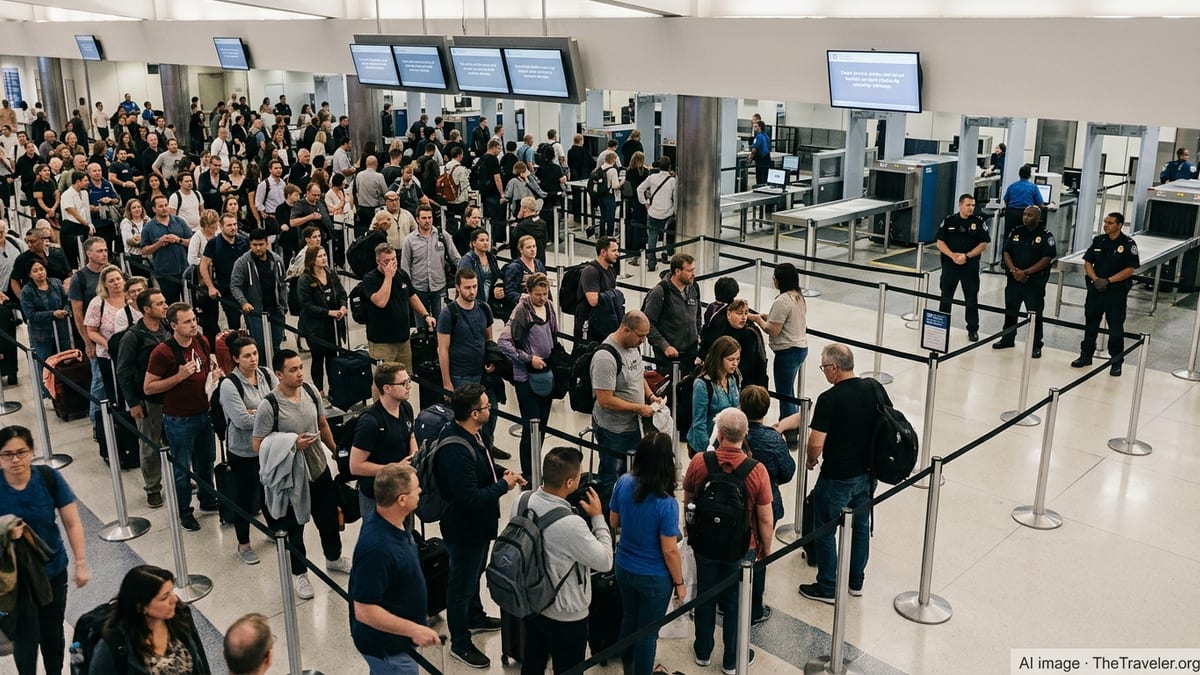
Record Passenger Volumes Strain Every Part of the Terminal
Recent data shows that U.S. air travel has surged beyond pre-pandemic levels, with the Transportation Security Administration reporting record passenger volumes in 2024 and a screening workforce at its largest size to date. Publicly available figures indicate that more than 900 million passengers were screened in 2024, an increase on earlier rebound years as leisure and business travel continued to climb.
As checkpoint operations scale up to meet this demand, the rest of the terminal must absorb the same crowds. Airports from Denver to Phoenix have reported their busiest years on record, indicating sustained, high-density traffic through concourses and gate areas. For travelers, this means more competition not just for overhead bin space and seats at the gate, but also for coffee, snacks and quick meals between flights.
Industry coverage suggests that while security throughput has drawn investment in staffing and technology, concession capacity has expanded more slowly. Terminal redevelopment projects typically take years, while travel demand in the United States has snapped back within a few seasons. That imbalance is increasingly visible in the daily lines that snake out from coffee kiosks and branded cafes in the early morning rush.
Survey findings on airport pain points still rank security queues and flight disruptions higher than food and beverage access. Yet those same surveys also highlight long lines in terminal spaces as a rising frustration, suggesting that the cumulative effect of waiting for coffee, snacks and counter service is starting to rival the stress of the checkpoint itself.
Staffing Gaps and Limited Outlets Drive Longer Coffee Queues
Airport concession operators have been contending with uneven staffing levels since the early stages of the travel rebound. Reports from several U.S. hubs describe food and beverage contractors operating with double-digit vacancy rates, even as passenger traffic has climbed. That combination leaves fewer baristas and cashiers to handle peak-hour surges that are larger than before the pandemic.
In some terminals, reduced opening hours and shuttered locations remain a legacy of the downturn, effectively funneling more travelers toward a smaller number of open coffee counters. Travel industry coverage has noted airports pressuring concessionaires to restore full operating hours and staffing, but that process lags behind the rapid return of demand. For a traveler with 40 minutes before boarding, an understaffed cafe can quickly become the critical point that determines whether they make the flight.
Another constraint is the physical layout of many terminals. Older concourses were designed for lower passenger volumes and fewer branded outlets, leaving limited space for additional coffee bars or queuing areas. As a result, lines often spill into walkways and gate seating zones, slowing circulation through already crowded corridors. Even where airports have added pop-up kiosks or carts, complex supply and staffing needs mean not every pier can be served at all times of day.
Operationally, coffee drinks also require time. The rise of customized espresso beverages, iced drinks and specialty orders increases preparation times compared with standard drip coffee. During morning peaks, when hundreds of travelers converge on a small number of locations, baristas must balance speed with accuracy, leading to inevitable slowdowns and longer waits.
Mobile Ordering and Airport Apps: Solution or New Source of Congestion?
To manage demand, some airport cafes and chains have embraced mobile ordering, while airports themselves promote terminal apps that allow travelers to order food and beverages for pickup or delivery to the gate. In theory, these tools should spread demand more evenly and reduce time spent physically standing in line.
In practice, reports from workers and travelers suggest that mobile ordering at airports can create new waves of congestion. Large digital orders arriving simultaneously, combined with in-person queues, can overwhelm small bar teams already working at capacity. Travelers may place an order shortly before boarding, expecting near-instant fulfillment, only to find that a backlog of drinks and food items extends preparation times significantly.
Where mobile and walk-up orders are combined in a single production queue, the line at the counter may appear manageable while the unseen digital queue is much longer. This disconnect adds to passenger frustration and increases the risk of missed flights when travelers underestimate how long their order will take to appear on the pickup shelf.
Some airports are experimenting with clearer communication about wait times, including digital signage and app-based estimates for certain concessions. However, the accuracy of these tools depends on real-time staffing levels and order flow, variables that change quickly during peak travel surges. Until forecasting improves, mobile ordering is likely to remain a mixed blessing for time-pressed passengers seeking a pre-flight coffee.
Airports Respond With New Concepts and Capacity Upgrades
Recognizing that long lines at food and beverage outlets reflect on the overall travel experience, airport operators are gradually incorporating coffee capacity into their planning for terminal upgrades. Industry publications describe efforts to add more grab-and-go kiosks, self-service coffee stations and compact espresso bars near high-traffic gates, particularly in early morning departure banks.
Some hubs are partnering with local roasters and regional brands to diversify options beyond a single large chain, spreading passenger demand across multiple outlets. Smaller-format counters that focus on batch-brewed coffee and limited menus can serve customers faster, complementing larger cafes that specialize in elaborate espresso-based drinks.
Technology-driven concepts are also emerging. Automated coffee machines with barista-style capabilities and cashierless payment points are being tested in select terminals as a way to shorten waits during peak times. While these installations may not fully replicate the experience of a staffed cafe, proponents argue that they can handle basic orders quickly and free human staff to focus on more complex beverages.
Airport authorities and concession companies are additionally looking at staffing strategies, including cross-training employees to shift between food counters and coffee bars and offering hiring incentives to build more resilient teams. Publicly reported initiatives highlight the challenge of aligning labor supply with highly concentrated peaks in demand that may last only a few hours each day.
For Travelers, Coffee Has Become a Critical Time Calculation
For individual passengers, the rise of the coffee line as a potential delay point reshapes how early they need to arrive and how they move through the terminal. Travel advisories increasingly emphasize building in extra buffer time not just for security or border control, but also for navigating crowded concourses and accessing concessions.
Frequent travelers often adjust their routines by seeking coffee before reaching the airport, using in-terminal apps to order while still in the security line, or heading to less obvious cafes in quieter concourses. However, these tactics depend on familiarity with specific airports and may not be practical for infrequent flyers or those making tight connections at unfamiliar hubs.
Published surveys indicate that passenger expectations around convenience and amenities have risen alongside ticket prices and packed flights. A reliable cup of coffee, once a minor comfort, now plays an outsized role in how travelers judge their journey. When a coffee run results in a sprint down the jet bridge or a missed boarding call, the experience tends to linger longer in memory than a smooth pass through security.
As airports and concessionaires work to align capacity with demand, the lines at terminal coffee bars offer a visible measure of how well the broader system is coping with record traffic. Until those lines shorten, travelers may find that the most consequential delay of their trip is not on the runway or at the checkpoint, but at the place they go for caffeine before takeoff.