


Abrams Falls in Great Smoky Mountains National Park looks like an easy win on paper: roughly 5 miles round trip, a modest 20 foot waterfall, and a well trodden path that starts right off Cades Cove Loop Road. It sounds like the kind of leg stretcher you squeeze in between wildlife stops and a picnic. Yet rangers, local guides, and seasoned Smokies hikers all tell the same story: people constantly underestimate Abrams Falls Trail, especially the hike back out. The walk to the waterfall feels friendly and mostly downhill. The real work starts the moment you turn around.
Get the latest updates straight to your inbox!
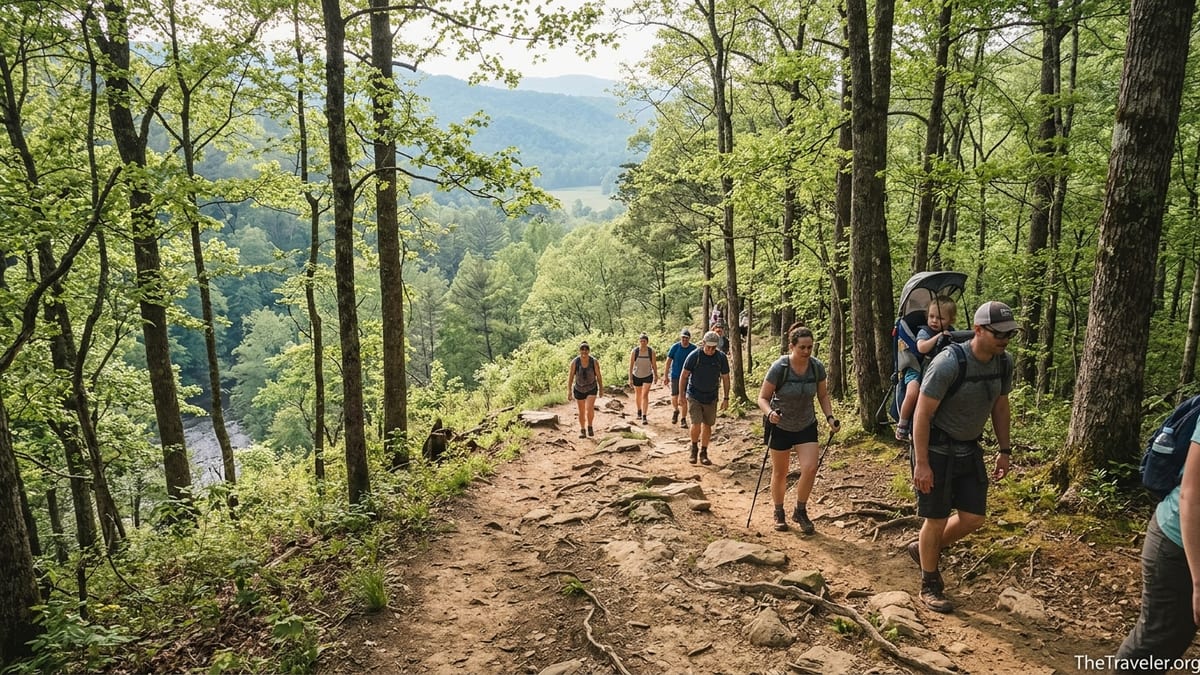
Why a “Moderate” Trail Feels Harder on the Way Back
Abrams Falls Trail is officially rated moderate and comes in at about 5 miles round trip with several hundred feet of cumulative elevation gain. The catch is how that elevation is spread out. Leaving the trailhead near the back of Cades Cove, you descend in gentle stages toward Abrams Creek, rolling over two low ridges and dropping into shaded hollows. It feels forgiving, especially in cool morning air, so many visitors are surprised by how quickly they move those first 2.5 miles to the falls.
On the return, every easy downhill becomes an uphill grind. The short but steady climbs back over Arbutus Ridge and other humps near the creek arrive just when your legs are tired and the day has turned hotter. Local outfitters in Townsend and Gatlinburg often hear the same story: families who breezed to the waterfall in under an hour now need nearly two hours to hike back, stopping at every switchback to catch their breath. The distance did not change, but the perception of effort does when the elevation gain is back loaded.
This pattern is common in the Smokies, yet it stands out on Abrams Falls because so many casual visitors select it as their “big” hike of the trip. Unlike longer climbs such as Alum Cave or Rainbow Falls, which look intimidating from the start, Abrams comes across as approachable. Hikers in sneakers, sandals, and even flip flops start up thinking “it is only 2.5 miles.” By the time they are trudging back up those final ridge crossings, that moderate rating feels misleading.
There is also a mental effect at play. The destination, a broad curtain of water pounding into a deep pool, sits exactly at the halfway mark. Once people have had their photos and snacks, energy drops. The trailhead is out of sight, the novelty has worn off, and every uphill step between the falls and Cades Cove feels like a bill coming due for the easy hike in.
The Deceptive First Half: Why the Approach Feels So Easy
Part of Abrams Falls’ charm is the way the trail sidles up to its beauty rather than charging straight at it. From the wooden bridge at the trailhead, the path enters mixed hardwood forest and almost immediately gives you soft, leaf covered tread underfoot. Sections run nearly level along Abrams Creek, where the sound of current on rocks and glimpses of trout pools create the sense of a gentle riverside stroll instead of a mountain hike. Visitors who just drove the narrow, winding Cades Cove Loop often feel instant relief stepping into that shade.
Another reason people underestimate the trail is the social atmosphere near the beginning. On peak days in May and October, you might start out in a casual parade of other hikers: kids with fishing nets, couples in white sneakers, visitors carrying to go coffees from Townsend. The wide corridor makes the trail feel like an outdoor hallway rather than a backcountry route. It is easy to ignore the subtle fact that you are gradually losing altitude all the way to the waterfall and that gravity will reverse the price tag later.
Even some of the modest climbs on the way in feel less serious because they are broken up by photogenic features. There are narrow log footbridges over side streams, rock outcrops that frame distant ridges, and patches of spring wildflowers that invite pauses. Many hikers cover the approach while they are still fresh, talking and taking photos rather than focusing on the terrain. It is only on the way back, when conversation dies down and everyone has already seen the views, that the same rises feel much steeper.
Weather timing adds another twist. A family that leaves the Cades Cove parking area at 9 a.m. in cool shade may spend an hour at the waterfall enjoying the mist and taking pictures. By the time they shoulder packs again and head uphill toward the car, midday humidity has settled into the hollows along Abrams Creek. The air turns heavy, and those easy slopes from the morning suddenly feel like a stair climber set one notch too high.
The Hike Back Out: Where Things Start to Unravel
Ask rangers patrolling Cades Cove and they will tell you that a disproportionate number of calls for assistance on Abrams Falls originate within a mile of the trailhead, and most come in the afternoon. That pattern is no mystery. The hardest work on this hike is concentrated on the way out, when tired hikers must climb back over the same ridges they came down so easily earlier in the day. It is here that underestimation shows itself in limping strides, empty water bottles, and turned ankles.
A common real world scene plays out on warm weekends. Around 3 p.m., a couple arrives back at the last major uphill before the wooden bridge. One is wearing fashion sneakers with minimal tread, the other has a small child on their shoulders. Both underestimated how uneven the trail would be, especially on the rooty, rocky sections that tilt sideways above the creek. Every step uphill now requires careful foot placement. The child’s extra weight makes balance tricky, and fatigue magnifies small slips. A hike that was meant to be a quick break between outlets in Sevierville and dinner in Gatlinburg has become a slow, sweaty slog.
The return leg also tends to expose fitness gaps that were hidden on the descent. A visitor more used to flat neighborhood walks or hotel gyms suddenly finds themselves breathing hard on 200 or 300 foot climbs, especially if they are starting at 2,000 feet of elevation and dealing with Smokies humidity. People stop “just to take a picture,” but really to catch their breath. Those frequent pauses lengthen the overall time back, which means more sun exposure, more thirst, and sometimes more risk if thunderstorms start to build over the ridges late in the day.
Navigation is not complex on Abrams Falls Trail, yet mental fatigue can still lead to small mistakes, like stepping off the main tread onto slick side paths near drop offs. The temptation to shortcut switchbacks increases when legs are tired, even though those shortcuts can be both eroded and unstable. Rangers frequently remind visitors that the most dangerous section of any hike is often the last mile, when you are close enough to the car to relax but still far enough that a misstep can cause injury.
Footwear, Water, and Timing: The Practicalities People Skip
One of the clearest signs that Abrams Falls is underestimated is the footwear you see at the trailhead. It is not unusual to spot people wearing flat soled tennis shoes, fashion boots, or even slides. On level pavement those might be fine. On Abrams’ mix of dirt, rocks, and exposed roots, with narrow tread and steep sides above the creek, that lack of traction can translate quickly into twisted ankles or skidded knees. Trail running shoes or light hiking shoes with grippy soles are usually enough, and they make a noticeable difference on the hike back out when your form deteriorates with fatigue.
Water is another frequent miscalculation. Because the trail is “only” 5 miles, visitors often carry a single half liter bottle to share or depend on canned soft drinks grabbed from a cooler just before hitting the trail. That might get you to the waterfall. It usually does not feel like enough when you are grinding back up the final climbs. A more realistic guideline for most adults on a humid Smokies day is at least one to one and a half liters per person, plus a small salty snack. Even a simple grocery store sports drink and a bag of trail mix in a daypack can dramatically reduce how drained you feel on the return.
Timing also matters, and it begins long before your first step. Reaching Abrams Falls Trail requires driving Cades Cove Loop, a narrow one way road that can take two to four hours to navigate on busy summer days and fall weekends. Visitors who underestimate that drive may not start hiking until early afternoon. They then arrive back at the car exhausted, dehydrated, and anxious about the drive out to Gatlinburg or Pigeon Forge in late day traffic. If you want the hike to feel manageable, it pays to enter the loop as close to opening as possible and start walking early, when temperatures and crowd levels are lower.
Gear wise, the trail does not demand full backpacking kits, but underestimating conditions can still sting. A compact daypack with room for water, a light rain jacket, and basic first aid is usually enough. Trekking poles can provide extra stability on the rocky climbs back from the falls, especially for older hikers or anyone with knee issues. Renting or buying an inexpensive pair in town often costs far less than an urgent care visit caused by a preventable fall.
The Waterfall Pool: Beautiful, Busy, and Riskier Than It Looks
The waterfall itself is the visual prize that draws so many people down Abrams Creek. Although it drops only around 20 feet, the volume of water funneling into the plunge pool makes it one of the more powerful falls in the park. On summer afternoons, the flat rocks along the pool can look like a crowded beach, with families picnicking, kids wading at the edge, and photographers jockeying for a clear shot of the froth. It feels festive and safe at first glance, which sometimes encourages risky behavior.
Despite prominent National Park Service warnings at the trailhead and along the route, visitors routinely swim in the pool, climb slick rocks near the base, or attempt to jump from surrounding ledges. The current beneath the surface is stronger than it appears, and submerged hazards such as logs and boulders are not always visible. In past years, there have been multiple drownings and serious injuries at Abrams Falls, many involving strong swimmers who simply underestimated the hydraulic power at the base or the sudden shock of cold mountain water on tired muscles.
There is also a subtler effect: time spent lingering at the waterfall can deepen fatigue. It is easy to spend an hour or more at the pool, especially if you unpack lunch and start taking photos from every angle. While you sit, sweat dries and your body cools. Muscles stiffen. When you finally shoulder your pack, the first uphill steps away from the falls feel heavier than expected. Add in wet shoes or clothing from wading, and small blisters can become big problems by the halfway mark back to the trailhead.
The safest approach is to treat the waterfall as a scenic endpoint rather than a waterpark. Enjoy the view from dry, stable rocks a bit back from the edge, keep children within arm’s reach, and respect the signs that urge people not to climb or swim near the falls. Packing a lightweight camp chair or sitting pad can make it comfortable to rest well away from slick ledges while you refuel for the hike back.
Who Struggles Most on Abrams Falls (And How They Can Still Enjoy It)
Not everyone finds Abrams Falls difficult. Fit hikers who regularly tackle 8 to 10 mile routes in the Smokies often describe it as a pleasant half day outing. Yet there are patterns in who tends to struggle on the way back, and recognizing them can help you plan honestly. Families with small children, for example, frequently underestimate how much harder the second half will feel with a tired five year old or a toddler who no longer wants to walk. Carrying a child on a parent’s shoulders up those final ridges can turn an already warm afternoon into an exhausting one.
Visitors coming from sea level or from less humid climates may also be surprised by how the combination of elevation and dense summer air saps their strength. A guest who runs on a treadmill in Phoenix or Boston might expect a 5 mile trail to feel easy. Add in uneven footing, roots, and temperatures in the 80s with high humidity, and that treadmill pace feels much less comfortable. Older adults or anyone managing knee or ankle issues can find the down then up nature of the trail especially taxing, as joints take repeated impact on descent and then must drive uphill again.
None of this means that these groups should avoid Abrams Falls entirely. It simply suggests a more thoughtful approach. Families often do better if they use child carriers for kids under six and set a clear turn around time at or before the falls, allowing extra breaks on the way back. Visitors new to hiking can treat Abrams as their main activity of the day rather than something squeezed between other plans, which gives space for slower pacing without stress. Older hikers or those with joint concerns may want to use trekking poles and schedule their visit for cooler months like April, early May, or late October, when the temperature and humidity are milder.
If you read local trip reports, you will also find many stories of hikers who started the day unsure about Abrams’ reputation and finished feeling proud. The same return climb that humbled them also built confidence, so long as they had realistic expectations and enough water and daylight to complete it safely.
Planning a Smart Abrams Falls Day: From Cades Cove to the Trailhead
One hidden reason people underestimate Abrams Falls is that they mentally separate the hike from the drive. In reality, the experience starts at the gate to Cades Cove Loop Road. On busy summer Saturdays or peak leaf weekends in October, the 11 mile one way loop can move at a crawl, with drivers stopping to watch deer, bears, or historic cabins. A family leaving Gatlinburg at 10 a.m. might not reach the Abrams Falls parking area until shortly before noon, already hungry and restless from the car.
To make the hike feel easier, think in terms of an early start and a single focus. Many visitors find success by entering the loop at or near opening time and driving straight to the well signed turnoff for Abrams Falls rather than stopping at every pullout. This approach allows you to begin walking in the cool of the morning, finish the hike before mid afternoon heat, and then enjoy the rest of the loop by car on the way out. If you are staying in Townsend, the drive time is generally shorter, but arriving early still pays off in easier parking and lighter trail traffic.
Parking logistics matter as well. The lot near the trailhead is not huge, and when it fills up, drivers sometimes park along the road or in the grass. If you arrive late in the morning, factor in a few extra minutes to circle and wait for a spot, and avoid squeezing into places that might block emergency access. Before you lock the car, do a last check: does each person have water, some kind of snack, and at least a light layer if clouds build unexpectedly over the ridges?
Finally, leave room in your plan for slowness on the way back. Instead of promising yourself you will be done in exactly two hours, budget three to four hours for the hike, including time at the falls. That buffer changes the mental tone of the return climb. When you know you have daylight and no urgent dinner reservation waiting in Pigeon Forge, you can take your time on the uphill sections, rest at shaded spots overlooking Abrams Creek, and treat the workout as part of the experience rather than a race against the clock.
The Takeaway
Abrams Falls Trail is one of the signature day hikes in Great Smoky Mountains National Park for good reason. The waterfall is powerful, the creekside sections are beautiful in every season, and the route feels wild without demanding technical skills. Its great strength as an accessible waterfall hike is also what causes problems. The relatively short distance, social atmosphere, and downhill approach encourage people to underestimate how taxing the hike back out will be, especially in heat and humidity.
Approach Abrams Falls with the same respect you would give any mountain trail. Wear footwear with real traction, carry more water than you think you need, and start early enough to avoid the worst of the crowds and sun. Treat the waterfall pool as a place to look, not leap, and remember that the hardest part of the day begins when you turn away from that postcard view. With realistic expectations and simple preparation, the hike that humbles so many on the way back can instead become a highlight of your Smokies trip, memorable for its beauty rather than its surprises.
FAQ
Q1. How long does it really take to hike Abrams Falls Trail?
Most visitors should plan on 3 to 4 hours total, including time at the waterfall. Many people reach the falls in about an hour but need longer for the steeper return.
Q2. Is Abrams Falls Trail suitable for young children?
It can be, but only with preparation. The distance and climbs on the way back can be tough for kids under about six, so child carriers and extra breaks are important.
Q3. Do I need hiking boots or are sneakers enough?
Sturdy trail shoes or light hiking boots with good tread are strongly recommended. Basic street sneakers often struggle on Abrams’ roots, rocks, and narrow sections above the creek.
Q4. How much water should I bring for the hike?
Plan on at least one to one and a half liters of water per adult in warm weather, plus snacks. Dehydration is one of the main reasons the hike back out feels so hard.
Q5. Is it safe to swim in the pool at Abrams Falls?
No, it is not considered safe. Strong currents, cold water, and hidden underwater hazards have contributed to drownings and serious injuries at the falls.
Q6. When is the best time of day to start the trail?
Early morning is best. Starting near loop opening time helps you avoid traffic, secure parking, hike in cooler temperatures, and finish before afternoon storms or heat.
Q7. How crowded does Abrams Falls Trail get?
On peak days in summer and fall the trail can feel very busy, especially near midday. Arriving early or visiting on weekdays usually means lighter crowds.
Q8. Is Abrams Falls harder than other popular Smokies hikes?
Many hikers find it easier than steep climbs like Alum Cave, but harder than short paved walks such as Laurel Falls. The rolling terrain and warm humidity make it more strenuous than its mileage suggests.
Q9. Do I need any permits or passes to hike Abrams Falls?
You need to comply with the park’s parking tag or access rules in place during your visit, but no separate backcountry permit is required for this day hike.
Q10. What should I do if I get too tired on the way back?
Slow your pace, rest in shaded spots, sip water regularly, and eat a small snack. If someone shows signs of heat illness or cannot continue safely, seek help as soon as you regain cell service or encounter rangers or other hikers.