


On a hot summer afternoon in Great Smoky Mountains National Park, the pool beneath Abrams Falls looks like the ultimate reward. Clear mountain water collects in a wide basin, kids skip rocks from the shore, and more than a few hikers eye the deep green pool and think about jumping in. It looks tranquil and refreshing. It is also one of the most deceptively dangerous spots in the park.
Get the latest updates straight to your inbox!
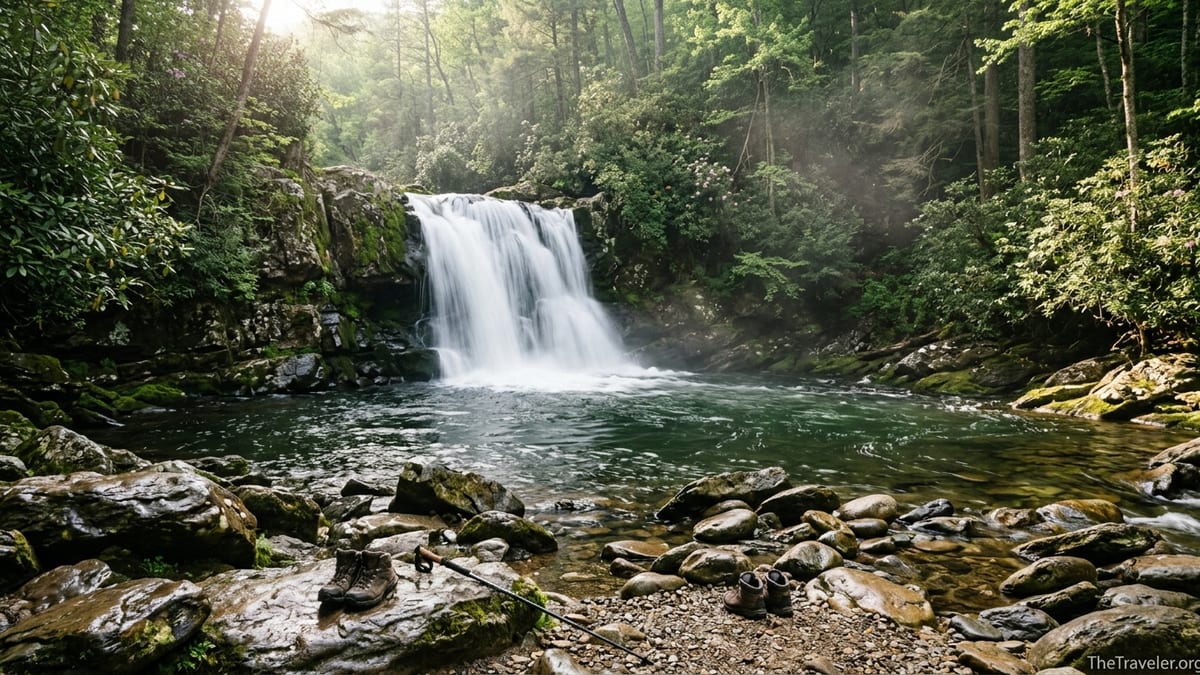
Abrams Falls: A Gorgeous but Misleading Swimming Hole
Abrams Falls is one of the most popular waterfall hikes in Great Smoky Mountains National Park. The 5 mile round trip trail starts from Cades Cove and follows Abrams Creek to a 20 to 25 foot curtain of water plunging into a deep pool. On busy weekends in June and July, hundreds of people make the trek for the classic photo of the falls framed by green hemlock and rhododendron.
The National Park Service officially describes Abrams Falls as a scenic viewpoint, not a swimming hole, and specifically notes that swimming is strongly discouraged because of an undertow and dangerous conditions in the pool. The current is more powerful than it appears from the bank, especially where the full volume of Abrams Creek slams straight into the rock bowl at the base of the falls.
Despite the warnings, visitors routinely wade, swim, and even attempt cliff jumps from the slick rocks beside the cascade. Travel businesses that promote the hike sometimes show images of people playing in the water without clearly explaining the risks. The result is a false sense of security: hikers see others in the water, assume it must be safe, and step into a pool that has been the site of multiple drownings over the years.
Part of the danger is familiarity. Abrams Falls is not a remote, technical backcountry route. Families in sneakers, visitors in flip flops, and novice hikers all reach it every day. That easy access makes the powerful hydraulics at the base of the falls even more treacherous, because the people most likely to underestimate the risks are also the ones most likely to be there.
The Hidden Forces Beneath the Surface
The water below Abrams Falls rarely looks violent from the shore. The surface can appear smooth, with gentle ripples and eddies that seem appropriate for a refreshing dip. What you cannot easily see is the circulating hydraulic where the falling water plunges down, hits the submerged rock ledge, and then curls back toward the falls, constantly pulling anything in the center of the pool toward the base and downward.
Rangers in Great Smoky Mountains National Park caution that this kind of hydraulic can hold even strong swimmers underwater. In similar incidents elsewhere in the park, people have been trapped in churning pockets of water in chest deep conditions after being knocked off their feet above a drop. Once a leg becomes wedged between rocks or you are pulled into the recirculating flow near the base, it can be extremely difficult to escape without technical rescue equipment.
This is not just a theoretical risk. Local hiking forums and long time residents of east Tennessee often refer to Abrams Falls as one of the deadliest waterfalls in the Smokies. While exact numbers vary by source, the pattern is consistent: a significant share of drownings in the park happen in scenic, seemingly calm pools below waterfalls or in narrow river gorges, not in big, obviously turbulent rapids. Abrams Falls, The Sinks on the Little River, and other roadside pullouts where visitors climb on rocks and wade are overrepresented in accident reports.
Even when water levels look low, the hydraulic at Abrams Falls continues to churn. Because the falls is relatively short but carries a high volume of water compared with many other Smokies cascades, the force is concentrated into a compact plunge pool. A hiker who slips from a rock ledge close to the torrent is immediately pushed into the strongest part of the flow, at exactly the point where swimming out is hardest.
Slippery Rocks, Cold Shock, and Sudden Surges
The visible waterfall is only one part of the hazard. The approach to the water at Abrams Falls is a minefield of slick boulders, undercut ledges, and algae covered stones. Visitors often take off their boots and step out in bare feet or sandals to cool down. It takes only one misjudged step on a slimy rock for someone to lose balance and slide into deep water, sometimes headfirst.
Several hikers have described nearly identical close calls: they eased into the edge of the pool expecting ankle deep water, only to find that the rock shelf dropped away abruptly into a deep hole. With the current stronger than expected, they were pushed toward the center of the pool or toward the base of the falls before they could regain footing. In these situations, people who thought they were just “getting their feet wet” suddenly find themselves swimming in hiking shorts, with heavy, waterlogged clothing and possibly a backpack on.
Cold shock is another underestimated risk, especially in spring and early summer. Abrams Creek is a mountain stream, fed by cooler tributaries at higher elevations. Even when the air temperature on the trail pushes into the 80s or low 90s Fahrenheit, the water can be cold enough to trigger a gasp reflex and rapid breathing. Someone who jumps in from a rock may instinctively inhale underwater or lose coordination for a few seconds, exactly when they need control the most.
On top of that, Smokies rivers can rise rapidly with upstream storms you never see. A thunderstorm that dumps rain on the high ridges in the early afternoon can send a pulse of higher, faster moving water down Abrams Creek later in the day. By the time that surge reaches the falls the sky might be blue overhead, but the current in the pool and along the banks suddenly becomes more aggressive. The National Park Service routinely warns that river levels can change quickly, and that most drownings in the park involve unexpectedly strong currents paired with slippery, uneven riverbeds.
Why “I’m a Strong Swimmer” Is Not Enough
Confident swimmers are often the first to head into the water at Abrams Falls. They have handled surf at beaches, laps in pools, or calm lakes and assume that a mountain pool is simply a cooler version of those familiar environments. The problem is that river and waterfall hydraulics behave very differently from open water.
In a typical swimming pool, the current is negligible. At a beach, the main hazards are waves, rip currents, and shallow sandbars. In a plunge pool like Abrams Falls, the risk is being pinned in a confined area by a circulating current. Strong swimmers can exhaust themselves fighting in place and still make no progress toward shore because the water they push against is constantly recycling back toward the falls.
There is also the gear factor. Most visitors who decide to swim did not hike in planning to do so. They may still have a small daypack on, a phone in a pocket, or water bottles clipped to a belt. Once soaked, that extra weight drags downward. If the pack catches on a submerged ledge, it can hold someone under. This is why river safety experts advise against wearing a backpack while crossing swift, cold streams, and recommend using chest straps and hip belts that can be released quickly if you fall.
Peer pressure plays a quieter role, too. On warm afternoons it is common to see small groups taking turns posing for photos close to the falls, inching farther out on slick rocks to capture a dramatic shot. One person might wade because others already appear to be managing, even if those people are much more comfortable in cold water or more physically fit. The decision is rarely a conscious “I will ignore the danger,” and more often a subtle nudge created by the behavior of the group.
Reading and Respecting the Warning Signs
Before you even reach the falls, you will pass clear warnings posted by Great Smoky Mountains National Park. Signs on the Abrams Falls Trail emphasize that climbing on the falls is hazardous, instruct visitors to stay on the constructed trail, and urge adults to closely control children. Other signs in the park explain that there are no lifeguarded swimming areas and that river recreation is not recommended because drowning is one of the leading causes of death in the Smokies.
These signs are not legal fine print. They are condensed versions of decades of incident reports, rescues, and tragedies. Each “No climbing on falls” or “Do not dive” placard is there because people have been seriously injured or killed doing exactly those things. Rangers and local rescue squads from Blount County and nearby volunteer fire departments have spent long hours carrying out recoveries in steep, rocky terrain.
Unfortunately, many visitors treat safety signs in national parks the way they treat overly cautious warnings on consumer products. The wording appears generic, so they assume the danger is exaggerated. Social media does not help. Photos and videos on public feeds sometimes show people standing on the lip of the falls or swimming in the pool, with no mention of the posted hazards. A traveler planning a visit who scrolls through those images may arrive primed to repeat the behavior they have seen online, even if they never consciously decide to ignore the rules.
A better approach is to assume that every park safety sign is there for a specific reason that might not be obvious on a quick glance. If you are visiting with children or less experienced hikers, make a point of reading the warnings aloud at the trailhead. Treat them as part of the experience instead of background noise. Doing so not only reduces your own risk, it also subtly shifts the tone for those around you who see you taking the guidance seriously.
Staying Safe at Abrams Falls Without Skipping the Experience
None of this means you should avoid Abrams Falls altogether. It remains one of the most rewarding moderate hikes in Great Smoky Mountains National Park. The key is to treat the waterfall and the creek as a powerful natural feature to be admired from a safe distance rather than a playground. Plan your day assuming you will enjoy the view and the sound of the falls from the dry rocks and established overlook areas, not from the center of the pool.
Wear sturdy, closed toe footwear for the entire hike, including while taking photos near the water. Swap sandals for trail shoes with good tread so that wet roots and rocks are less likely to send you sliding. Keep children well back from the water’s edge and resist the urge to let them hop from boulder to boulder near the falls, even if the water appears shallow. What looks like a simple rock hop from the bank can quickly become a fall into a deep slot between boulders where feet and ankles can wedge.
If you want to cool off, treat Abrams Creek like a wild river rather than a pool. Find a broad, shallow stretch well away from the falls where the current is slow and the water is clearly no more than calf deep. Stay near the shore, sit on a rock to let the water flow over your legs, and avoid wading into murky or darker areas that might conceal sudden drop offs. Even in calmer sections, step carefully and assume every rock is slick until proven otherwise.
Timing your hike helps as well. Starting in the morning not only avoids afternoon thunderstorms that can swell the creek, it reduces crowding around the falls, which in turn reduces subtle peer pressure. When there are fewer people clambering on rocks or edging closer to the water, it becomes much easier to choose the conservative, safer behavior without feeling like you are missing out.
Planning Your Smokies Trip With Water Safety in Mind
Visitors to Great Smoky Mountains National Park often plan multi day trips that mix waterfall hikes like Abrams Falls with auto touring in Cades Cove, drives along Little River Road, and time in nearby gateway towns like Townsend or Gatlinburg. Building water safety into that plan from the start can help you avoid spur of the moment decisions to swim where conditions are hazardous.
Before you go, check the National Park Service pages for Great Smoky Mountains for current alerts and safety messages. While there is usually no formal closure at Abrams Falls, there may be broader warnings about high water conditions after heavy rain, temporary road work affecting access to Cades Cove, or seasonal guidance about river levels. Treat those updates as seriously as you would a weather forecast for a beach vacation.
Consider where you will swim on your trip, if at all. If getting into the water is important to you or to your family, look for safer, managed options outside the park boundary. In the towns surrounding the Smokies, many cabin resorts, campgrounds, and motels have pools, and some private outfitters operate tubing or rafting trips on less technical stretches of river where guides and safety equipment are provided. While no activity is risk free, supervised commercial operations tend to have clear safety briefings, life jackets, and staff trained to respond when someone ends up in trouble in the water.
Finally, talk through expectations with your group before you reach the trailhead. Decide as a group that you will not swim at Abrams Falls, The Sinks, or other high risk water features in the park, no matter how inviting they look. When everyone is on the same page, you are far less likely to have one person suddenly decide to jump from a rock or wade out farther than planned once you are standing beside the water.
The Takeaway
Standing on the gravel bar at Abrams Falls, it is easy to understand why so many visitors feel tempted to step into the water. The pool is framed by mossy boulders, the air is cool with spray, and the turquoise green surface looks more like a mountain swimming hole from a postcard than a place of danger. Yet the very features that make the scene beautiful also make it hazardous: powerful hydraulics at the base of the falls, slick and uneven rocks, cold and fast moving water, and a long history of incidents involving visitors who underestimated all three.
You do not need to put yourself in the water to experience the magic of Abrams Falls. Treat it with the same respect you would give a steep cliff edge or an active thermal feature in another park. Admire the view from stable, dry ground, keep children close, and resist the subtle pressure to follow the example of those who wade or climb where signs clearly advise against it. In a park where drownings are among the leading causes of accidental death, a cautious approach around rivers and waterfalls is not overreacting. It is a simple, practical way to make sure your Smokies trip ends with memories, not an emergency.
FAQ
Q1. Is it illegal to swim at Abrams Falls?
It is not generally posted as illegal, but the National Park Service strongly discourages swimming because of dangerous currents, undertows, and past drownings.
Q2. How deep is the pool at Abrams Falls?
The exact depth varies with water levels, but there are abrupt drop offs and deep holes beneath the falls, which is part of what makes the pool hazardous.
Q3. Have people died at Abrams Falls?
Yes. Over the years multiple drownings and serious injuries have been reported at Abrams Falls and other popular water features in Great Smoky Mountains National Park.
Q4. Can children safely play in Abrams Creek near the falls?
Children should be kept well back from the water’s edge near the falls. If you let them wade, choose a shallow, slow moving section far from the plunge pool and supervise closely.
Q5. Are there lifeguards anywhere in Great Smoky Mountains National Park?
No. There are no lifeguarded swimming areas in the park. If you choose to enter the water anywhere, you are fully responsible for your own safety.
Q6. What should I wear if I plan to hike to Abrams Falls?
Wear sturdy, closed toe shoes with good traction, lightweight layers suitable for changing weather, and carry rain gear, water, and snacks. Avoid flip flops or smooth soled sandals.
Q7. Is it safe to visit Abrams Falls after heavy rain?
After storms, Abrams Creek can rise quickly and currents become much stronger. It is best to avoid hiking to or lingering around the falls when water levels are high.
Q8. Can I get close enough to photograph the falls without risking the water hazards?
Yes. There are stable areas on the gravel bar and larger rocks where you can frame excellent photos while staying well back from slick, sloping boulders and the pool edge.
Q9. Are there safer places to cool off in the Smokies region?
Safer options include pools at lodgings outside the park and supervised commercial tubing or rafting trips on gentler stretches of nearby rivers where life jackets are provided.
Q10. What should I do if someone falls into the water at Abrams Falls?
Do not rush in after them. Call 911 or the park’s emergency number, keep visual contact, and look for ways to reach them with a branch or throwable object from shore if it is safe to do so.