


For millions of viewers, Seaside Heights will forever be the backdrop of MTV’s “Jersey Shore”: a blur of fist pumps, late nights and drama under the neon lights. But if you arrive in town today expecting a nonstop reality-show set, you may be surprised. In the decade since the cameras moved on, Superstorm Sandy reshaped the coastline, iconic nightclubs came down, luxury townhomes went up, and local leaders made a deliberate push toward a more family-focused future. The truth about Seaside Heights in 2026 is more complicated, and more interesting, than its TV alter ego ever suggested.
Get the latest updates straight to your inbox!
From Party Punchline to Real-Life Beach Town
When “Jersey Shore” debuted in 2009, Seaside Heights went from a busy summer resort to an international pop-culture reference almost overnight. For a few years, fans lined the boardwalk outside the show’s tan-sided shore house near the corner of Ocean Terrace and Boulevard, hoping to glimpse the cast on their way to clubs like Bamboo or Karma. Local pizza joints, T-shirt shops and boardwalk bars enjoyed that spike in attention and spending, but the town’s reputation hardened around one loud image: a place for hard partying twenty-somethings, not necessarily for families with strollers and beach wagons.
Residents and officials were never entirely comfortable with that one-note identity. Longtime visitors remember Seaside Heights in the 1970s and 1980s as a mix of modest motels, family-owned arcades and a boardwalk where kids rode the carousel in the afternoon and adults grabbed a drink at night. The reality show simply magnified an already-boisterous nightlife scene and exported the rowdiest moments worldwide. Locals still joke about the old nickname “Sleazeside,” a reminder that reputation here was complicated well before the cameras arrived.
Since the show wrapped its original run in 2012, Seaside Heights has been working to reclaim a broader identity: still energetic and accessible, but not defined only by plastic cups and club lines. That effort has unfolded over more than a decade, shaped by storms, redevelopment and a changing tourism market up and down the Jersey Shore. The town that travelers encounter today is very much still Seaside Heights, but it is not the frozen-in-time set you remember from MTV reruns.
Hurricane Sandy, Nightclub Demolitions and a Clean Slate
The turning point came in October 2012, when Superstorm Sandy slammed into the New Jersey coast. In Seaside Heights, images of the Star Jet roller coaster sitting in the ocean and segments of Casino Pier torn away became symbols of the storm’s devastation. Blocks of old motels, bars and seasonal rentals were damaged or destroyed. For a community that had just ridden the wave of “Jersey Shore” fame, the destruction was both a blow and an unexpected chance to rethink what came next.
Over the following years, some of the most famous nightclubs associated with the show closed and were eventually demolished. The sites of Bamboo Bar and Karma, once central to the all-night scene along Boulevard, are now tied to redevelopment plans that envision mid-rise residential buildings, ground-floor retail and more conventional shore-town streetscapes instead of cavernous dance clubs. For visitors who last came in 2010, driving down Boulevard in 2026 feels startlingly different. The neon club signs are gone, replaced by construction fencing, new facades and, in some pockets, high-end townhouses listing for prices well into seven figures.
Local leaders have been explicit about using this reset to tilt the town toward families. Redevelopment plans from the borough emphasize walkable streets, small-scale mixed-use buildings and public spaces over giant nightlife venues. That effort is still in progress, and you can see the tension in the landscape: an older one-story pancake house next door to a sleek, glass-fronted townhouse development, or a block of aging motels waiting for their turn in the cycle.
The Boardwalk Today: Rides, Rules and A Different Kind of Energy
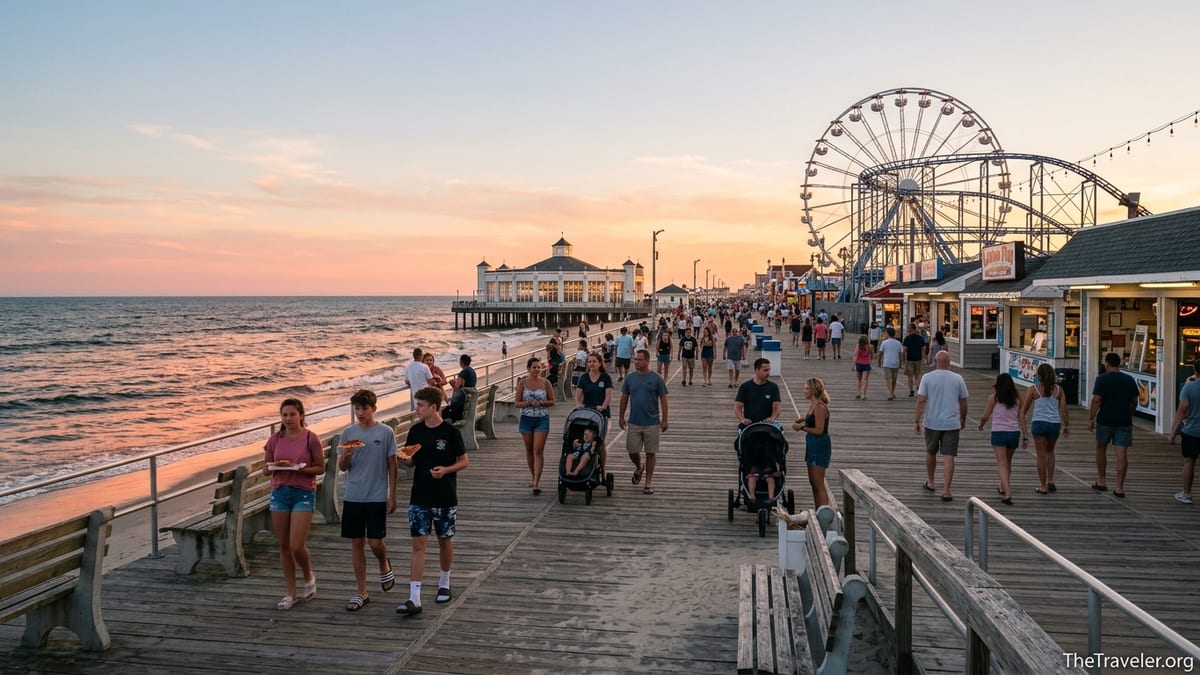
At ground level, the heart of Seaside Heights in 2026 is still the boardwalk. Casino Pier’s Ferris wheel and coaster silhouettes dominate the skyline, just as they have for generations, and the rebuilt Breakwater Beach waterpark on the bayside draws families with its slides and lazy river. Classic arcades like Lucky Leo’s still hum with ticket machines and flashing lights, offering a surprisingly nostalgic counterpoint to the ever-changing ride lineup across the planks.
The vibe, however, has shifted. Seaside Heights has imposed tighter rules in response to crowd issues and a spike in Memorial Day weekend incidents in 2025, including dozens of arrests. For summer 2026, the boardwalk is set to close in the early-morning hours and large bags and backpacks are restricted in the evenings, a clear signal that the borough wants to discourage late-night loitering and large, hard-to-monitor groups. For visitors, the practical effect is that the boardwalk feels more controlled and, in peak season, more heavily patrolled than in the early “Jersey Shore” era.
That does not mean it is dull. On a July evening, you will still find teenagers clustering outside the arcades, couples walking hand-in-hand with Kohr’s frozen custard, and kids tugging parents toward the rides. A slice of boardwalk pizza can easily run over eight dollars, so a family of four grabbing a quick dinner of slices and sodas should budget in the range of 50 to 60 dollars before games or rides. The atmosphere now is less nightclub corridor and more traditional shore boardwalk, somewhere between the quieter family focus of Ocean City to the south and the lively mix of bars and amusements in Wildwood.
Prices, Stays and Who Seaside Heights Now Attracts
One of the less glamorous truths about post-“Jersey Shore” Seaside Heights is that it has gotten more expensive, especially close to the ocean. New boardwalk-front townhomes and condos advertise prices that can reach into the 1.5 to 2 million dollar range, especially for units with unobstructed ocean views and parking. These developments are aimed less at seasonal renters and more at second-home buyers and investors who are betting on the town’s long-term transformation.
For typical travelers, the accommodation picture is more mixed. The borough still has a supply of older motels and small inns within a few blocks of the beach. In peak summer weeks, a basic, no-frills motel room within walking distance of the boardwalk can easily run in the low to mid 200-dollar range per night, with some renovated properties asking more. Budget-conscious travelers often look a few minutes inland toward Toms River or along Route 37, where chain hotels offer slightly lower nightly rates in exchange for a short drive over the bridge each day.
The type of visitor is evolving alongside the prices. Bachelor and bachelorette parties still book weekend houses, and groups of friends still pile into rentals in July and August. But you are just as likely now to see multi-generational families from North Jersey and Pennsylvania wheeling coolers across Ocean Terrace in the morning, or grandparents buying ride credits for grandkids at Casino Pier. The town’s efforts to crack down on illegal rental houses and tighten noise enforcement reflect this shift from purely party crowd to a more diverse tourist mix.
Cleaning Up the Image: Family-Friendly Moves and Lingering Edge
Ask locals about the biggest change since the “Jersey Shore” years, and many will point not only to shiny new projects but to what is missing. There are fewer late-night clubs, more sit-down restaurants oriented toward families, and a visible investment in public spaces, from refurbished playgrounds near the sand to an expanded pavilion for the historic carousel at the north end of town. Local tourism materials emphasize events like kite festivals, car shows and movie nights on the beach rather than club promotions.
The borough has backed that messaging with policy. In addition to cutting off the latest closing hours and imposing bag limits on the boardwalk, officials have talked publicly about wanting to emulate the feel of more traditional family destinations rather than return to the peak reality-TV era. Redevelopment plans along Boulevard, the main commercial spine parallel to the boardwalk, call for active ground-floor uses like cafes and small shops instead of giant single-use bars. For day-trippers with kids in tow, that means more options for casual ice cream or breakfast and fewer thumping basslines shaking the windows at 2 a.m.
Still, it would be misleading to pretend that all traces of the party-town DNA are gone. On summer weekends, the bar scene on the boardwalk and side streets is active, and crowds can feel intense after dark. Travelers who crave absolute quiet after 10 p.m. may prefer staying a bit farther down-island in Seaside Park or on a quieter stretch of the barrier island. Seaside Heights remains lively, youthful and, at times, chaotic. The difference is that the borough is trying to channel that energy into a structure that coexists more comfortably with strollers and beach umbrellas.
What Remains of the “Jersey Shore” Myth
Fans still come looking for pieces of the show. The house that served as the main filming location, with its painted Italian flag garage door, is recognizable from the outside even though it now operates as a rental and tourist curiosity rather than a TV set. Visitors pause to take photos, imagining scenes they watched unfold on screen. Around town, some T-shirt shops still sell gear riffing on catchphrases and nicknames that defined the series, a reminder that the brand has long outlived the original run.
MTV itself has revisited Seaside Heights over the years through the “Jersey Shore: Family Vacation” spinoff, occasionally filming segments back on the boardwalk. When the cast returns, local news outlets still treat it as a mini-event, but the town does not revolve around them in the way it once did. A teenager buying funnel cake in 2026 may know the show mostly from streaming clips rather than from appointment viewing, and for many current visitors, Seaside Heights is just “the shore,” not a TV landmark.
The larger myth of Seaside as a one-dimensional haven of debauchery has also softened with time. Talk to visitors in their 40s or 50s reminiscing on the boards and you will hear as much about childhood summers, first roller-coaster rides and family beach days as about big nights out. The show locked one noisy image into the culture, but it did not invent the town’s history, nor did it erase its quieter, more ordinary moments. Travelers who approach Seaside Heights now with that nuance in mind are less likely to be jarred by the gap between expectation and reality.
Practical Tips for Experiencing Today’s Seaside Heights
For anyone considering a trip, understanding the new rhythms of Seaside Heights helps set expectations. Summer weekends remain the busiest time, with parking at a premium and long lines at Casino Pier rides after dark. Arriving early in the day, especially before 10 a.m., makes it easier to find municipal lot parking closer to the beach and score a good spot on the sand. Beach badges are required in season, so factor that into your daily budget along with boardwalk food and rides.
Families who want the Seaside experience without constant crowds might target midweek stays in June or late August, when schools in some regions are back in session and the boardwalk thins out slightly. Pair a morning building sandcastles near the lifeguard stands with an afternoon at Breakwater Beach, then return to the boards early in the evening for a few rides and games before the late-night bar crowd builds. Travelers seeking more of a nightlife-focused visit might do the reverse, spending the day exploring other shore towns and timing their arrival for dinner and drinks once the boardwalk is glowing.
As with any popular destination, it pays to keep an eye on local rules each season. In 2026, bag-size restrictions and overnight boardwalk closures are in place, so pack light for evening strolls and expect more visible law enforcement presence after sunset. If you are booking a vacation rental, confirm that it complies with current borough regulations to avoid last-minute surprises. The era of unchecked “party houses” has faded, and enforcement has become a regular part of the Seaside Heights landscape.
The Takeaway
Seaside Heights is no longer the caricature bottled in the early 2010s by “Jersey Shore,” but it has not transformed into a sleepy, buttoned-up resort either. The real town that stands on this narrow barrier island in 2026 is somewhere in between: a compact beach community where a rebuilt amusement pier, historic carousel and shiny new townhomes share space with aging motels, rowdy summer weekends and generations of family memories.
If you arrive expecting a 24-hour reality-show party, you may find the new rules, family programming and redevelopment plans surprisingly restrained. If you come seeking a perfectly polished, quiet escape, the late-night energy and crowds might feel overwhelming. Travelers who will get the most out of Seaside Heights now are those who appreciate its contradictions: the way a sunset over the Atlantic can follow a day of noisy arcades, or how a child’s first Ferris wheel ride can take place in the shadow of a pop-culture phenomenon they will only ever know secondhand.
The truth is that Seaside Heights has always been more than its latest label. Long before MTV and long after, it has been a place where day-trippers from inland New Jersey dip their toes in the ocean, friends share pizza on the boards, and families roll the dice on arcade games as the lights come up. For travelers willing to look past the stereotypes, the town’s evolving story is still being written in the sand and on the planks, one season at a time.
FAQ
Q1. Is Seaside Heights still like what you see on “Jersey Shore”?
Today’s Seaside Heights is livelier than a quiet beach town but more regulated and family-oriented than the nonstop party portrayed on the MTV series.
Q2. Are the big nightclubs from the show, like Bamboo and Karma, still open?
No. The major clubs that defined the Boulevard scene during the show’s peak have closed and their sites are involved in redevelopment projects.
Q3. Can you visit the original “Jersey Shore” house?
You can see the exterior from the street and recognize it from the show, but it now operates as a private rental, not a public attraction.
Q4. Is Seaside Heights a good destination for families with kids?
Yes, especially for families who want rides, arcades and a lively boardwalk. New rules and programming aim to make the town more family-friendly.
Q5. How expensive is it to stay near the Seaside Heights boardwalk?
In peak summer, simple motels near the beach often cost a few hundred dollars per night, while new oceanfront townhomes can list for well over a million dollars.
Q6. What are the new rules visitors should know about in 2026?
The borough has set overnight boardwalk closing hours and evening bag-size limits during the main season to reduce problems and manage crowds.
Q7. Is Seaside Heights safe at night for visitors?
The boardwalk is heavily patrolled in summer, but it is still a crowded nightlife area. Standard big-crowd precautions and situational awareness are recommended.
Q8. How does Seaside Heights compare with quieter Jersey Shore towns?
Compared with places like Ocean City or Spring Lake, Seaside Heights is louder and more compact, with a stronger emphasis on rides, arcades and bar life.
Q9. When is the best time to visit to avoid the biggest crowds?
Midweek visits in June or late August usually bring fewer crowds than peak July weekends while still offering warm weather and full boardwalk operations.
Q10. Is Seaside Heights recovering well from Hurricane Sandy?
Yes. The pier and boardwalk have been rebuilt, many properties have been renovated or replaced, and ongoing redevelopment continues to reshape the town.