


More news on this day
Air passengers across Europe experienced another wave of disruption as airports in London and 15 other cities delayed 2,911 flights and cancelled 83, straining already busy summer schedules and leaving hundreds of travelers facing long waits, missed connections, and last-minute rebookings.
Get the latest news straight to your inbox!
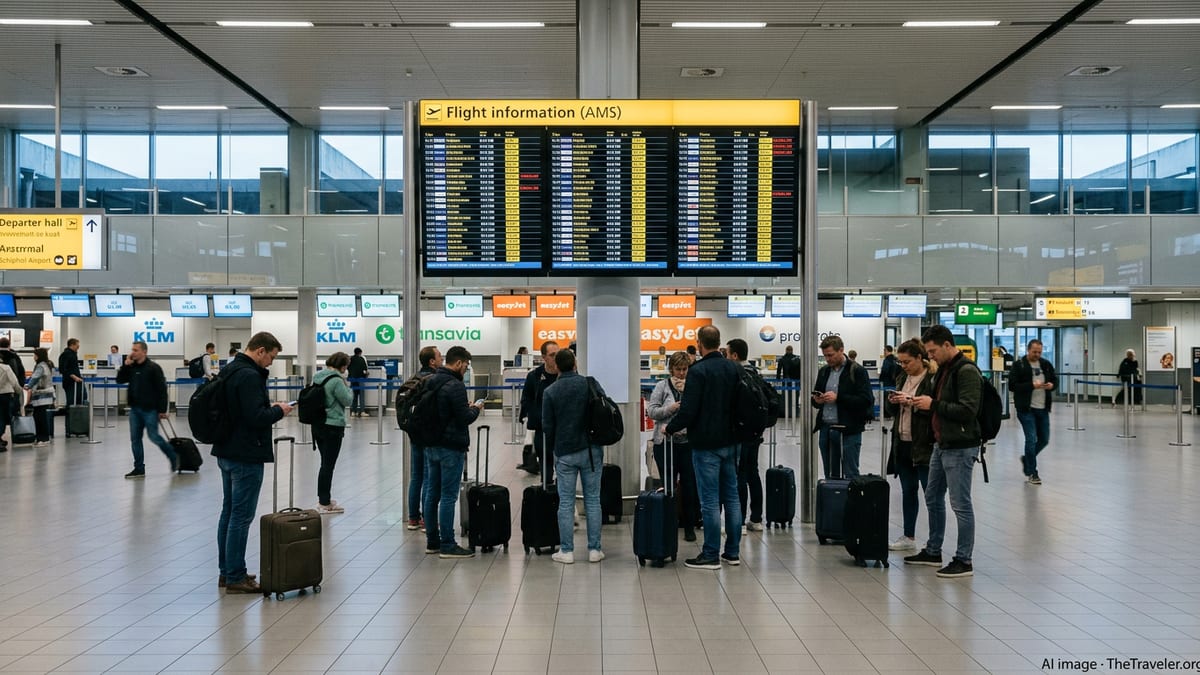
Ripple Effects Across Major European Hubs
According to live disruption data compiled by flight-tracking platforms, the latest wave of delays has been concentrated at some of Europe’s busiest hubs, including London, Paris, Amsterdam, Frankfurt, Madrid, and Barcelona. Publicly available indices that combine the number of delayed flights, average delay time, and cancellations show a marked spike in congestion across these airports, with London and 15 other large gateways collectively accounting for 2,911 delayed departures and 83 cancellations in a single day.
The pattern follows a broader trend of unstable operations this summer, where individual technical issues or weather events in one part of the network quickly translate into schedule problems across the continent. Published coverage in recent days has highlighted that even when primary causes are localized, such as a traffic control slowdown or poor weather in a particular region, the impact is quickly felt at airports that rely heavily on tight turnarounds and through-traffic.
Reports indicate that passengers traveling on multi-leg itineraries within Europe have been among the hardest hit. When an initial departure from a hub such as London, Barcelona, or Paris is delayed, aircraft are often late arriving at their next scheduled airport, triggering further delays or last-minute cancellations in cities hundreds of miles away.
London’s Role in a Wider Network Squeeze
London’s airports continue to feature prominently in European disruption statistics. Recent weeks have seen several incidents in which operations at Heathrow and Gatwick have been constrained by factors such as thunderstorms over southeast England or localized runway closures, leading to queues of aircraft, diversions, and prolonged waiting times for passengers. Coverage of these earlier events shows that hundreds of flights were delayed and dozens cancelled in a single day when convective storms swept across UK and European airspace.
Although the latest disruption figures reflect a Europe-wide picture, London’s position as a key transfer point means that problems there rapidly cascade through the system. Flights scheduled to connect London with other major hubs, including Amsterdam Schiphol, Paris Charles de Gaulle, Frankfurt, and Barcelona, feed a dense web of onward connections. When departures from London are held on the ground or forced into holding patterns, subsequent rotations are often pushed back, leaving aircraft and crews out of position.
Publicly available information on recent air traffic control constraints underscores how even minor capacity reductions can have outsized consequences in peak season. When traffic flows are restricted over southern England and northwestern Europe, airlines typically respond by imposing ground delays, consolidating services, or trimming schedules, which can show up hours later as cancellations at regional airports across the UK and mainland Europe.
Weather, Technical Constraints, and Fuel Pressures
The latest round of disruption has not been driven by a single cause, but by a combination of operational pressures. Earlier in the summer, severe thunderstorms across parts of the UK and central Europe prompted air traffic controllers to reroute aircraft and increase spacing between flights, immediately cutting capacity and forcing airlines to delay or cancel hundreds of services. Passengers reported being held on the ground for hours or stranded at airports overnight as schedules unraveled.
More recently, aviation rights and assistance platforms have pointed to the interaction between technical issues and broader supply concerns. A technical failure affecting UK air traffic control systems, combined with a tightening jet fuel market linked to geopolitical tensions and reduced kerosene flows into Europe, led to more than 2,100 flights being disrupted during another peak travel period. Analysts note that such fuel pressures can make it harder for airlines to recover after an initial disruption, particularly when aircraft need to carry contingency fuel or refuel at alternative locations.
These overlapping challenges help explain why Europe’s air traffic network has been especially vulnerable to cascading disruption this year. When airport operations are already stretched by heavy summer demand and lingering staffing gaps, even short-lived problems can ripple outward, generating the kind of multi-airport figures seen in the latest tally of 2,911 delayed flights and 83 cancellations.
Impact on Travellers and Their Options
For passengers caught in the latest round of delays, the effects have ranged from missed holidays and business meetings to overnight stays in airport hotels. Reports from earlier disruption episodes show travelers stuck on grounded aircraft for several hours, waiting in crowded terminal areas with limited information, or searching for last-minute alternative routes through other hubs as their original flights slipped further behind schedule.
Consumer advocates emphasize that travelers on flights departing from or arriving in the European Union, the United Kingdom, and several associated countries may be protected by robust air passenger rights frameworks. Publicly available guidance explains that, in many cases, airlines are required to offer rebooking or refunds when flights are cancelled, as well as meals, refreshments, and accommodation when long delays occur, regardless of whether the underlying cause relates to weather, congestion, or technical factors.
Specialist compensation and assistance services argue that many passengers remain unaware of the support they can claim after extensive delays or cancellations. These organizations advise affected travelers to keep boarding passes and booking confirmations, document the length of delays, and use airline websites or official passenger rights portals to check their eligibility for care, reimbursement, or compensation, depending on the circumstances.
Staying Ahead of a Volatile Summer Travel Season
With European air travel still in its busiest period of the year, the latest figures underline how quickly conditions can deteriorate across the network. Live disruption maps show that airports can move from relatively smooth operations to severe congestion in a matter of hours, particularly when thunderstorms, technology issues, or staffing shortfalls coincide with peak departure banks.
Travel analysts suggest that passengers transiting through London and other high-traffic hubs may wish to build extra time into connections, especially when traveling onward to smaller regional airports that have less frequent services. Monitoring airline apps, flight tracking tools, and airport information pages throughout the day can provide earlier warning of developing problems than departure boards alone, giving travelers more time to adjust plans.
As the summer season continues, operational data and recent events indicate that further disruption days are possible. Industry observers note that while airlines and airports are working to stabilize schedules, the combination of heavy demand, constrained resources, and occasional shocks to the system means that Europe’s air travel network is likely to remain vulnerable to the kind of multi airport disruption now affecting London and 15 other major gateways.
Flightradar24 Europe Airport Disruption Map
AirHelp: UK Air Traffic and Fuel Issues