


More news on this day
Thousands of air passengers have faced disruption at Madrid’s Adolfo Suárez Madrid-Barajas Airport as a combination of tighter checks on flights from Italy and intense summer traffic contributes to mounting delays across Spain’s busiest hub.
Get the latest news straight to your inbox!
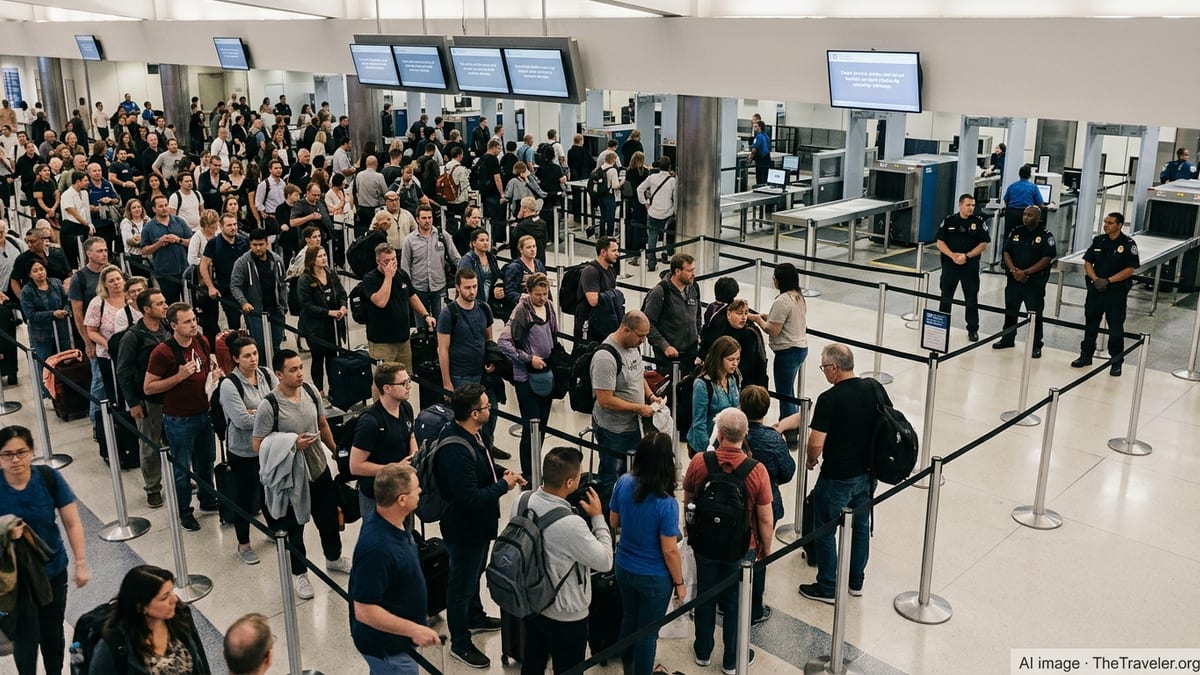
Border Checks Add Pressure During Peak Summer Travel
Madrid-Barajas is operating at some of its highest traffic levels on record, with more than six million passengers handled in June 2026 alone, according to publicly available traffic data for the airport. The hub remains the main gateway for Spain’s international and domestic air network, concentrating the largest share of passenger flows in the country.
At the same time, Spain has activated temporary border controls on arrivals from Italy following a political dispute over migration. Government notices and subsequent coverage indicate that checks began on 8 August and were rolled out at several major airports, including Madrid-Barajas, Barcelona-El Prat and others.
Reports from national outlets describe a rapid increase in the number of travellers subject to these controls. Initial figures cited a few thousand passengers checked across Spain in the first days, rising to almost 7,700 people by 22 August on flights from Italy alone, after documentation checks on hundreds of services into Spanish airports.
While these procedures are focused on a limited set of routes, Madrid’s role as a key entry point for Italian connections means even small additional checks at gates and passport control can ripple through the wider schedule, especially at already congested times of day.
Delays Build As Schedules Run Near Capacity
The delays at Madrid-Barajas are emerging during one of the busiest travel periods of the year. Network data for the Aena airport system show more than 22,000 flights planned across a single mid-August weekend, with Madrid-Barajas alone accounting for around 3,700 operations over three days. On peak days, more than 1,200 movements are scheduled at the Madrid hub.
With the airport operating close to capacity in terms of runway and terminal use, minor disruptions can quickly cascade into longer waits for passengers. Publicly accessible flight-tracking and schedule information for routes from Madrid to Spanish and European destinations in recent days shows a pattern of pushed-back departures and revised arrival times, reflecting the strain on punctuality.
Some of these issues are linked indirectly to events at other airports that feed traffic into Madrid. Earlier in August, a power supply failure at the air traffic control tower serving Barcelona-El Prat led to a temporary suspension of takeoffs and landings there. Airlines reported thousands of passengers affected by subsequent delays and knock-on disruption across their Spanish networks.
As carriers rebalanced aircraft and crews following the Barcelona incident and adjusted to fresh checks on Italy-bound and Italy-originating operations, Madrid-Barajas has had to absorb schedule changes and irregular operations, contributing to longer queues and extended turnaround times on the ground.
Passengers Report Long Queues And Missed Connections
Travellers transiting through Madrid in recent days have described crowded departure areas, long waits at security and passport control, and increased pressure on check-in and transfer desks. Accounts shared on social platforms point to passengers missing onward connections after arriving on delayed feeder flights, or struggling to obtain boarding passes while systems and staff handle high volumes.
While official statistics on missed connections are not yet available, individual testimonies and airline updates indicate that even minor schedule shifts of 30 to 60 minutes can be enough to break tight transfer windows. This is particularly sensitive at Madrid, which functions as a major hub for long-haul and European connections and relies on closely timed banked waves of arrivals and departures.
The presence of additional documentation checks for some flights from Italy appears to be adding to perceived congestion around certain arrival gates and control points. Coverage from Spanish media has noted that, although operations remain generally orderly, queues can build quickly at peak times when several flights arrive in close succession, especially where manual checks are required.
For many travellers, the result is longer total journey times and greater uncertainty. Even when flights ultimately depart, rolling delays and gate changes create challenges for families and visitors unfamiliar with the large, multi-terminal layout of Madrid-Barajas.
Madrid’s Central Role Exposes System-Wide Vulnerabilities
Industry data underline how disruption at Madrid-Barajas can extend beyond the Spanish capital. The airport is described in official traffic reports as the primary logistical hub in the Aena network, handling the majority of Spain’s international connectivity and a substantial share of its air cargo. When schedules at Barajas slip, the effects are felt on regional routes as well as on long-haul links to the Americas and other regions.
Recent traffic statistics show Madrid-Barajas surpassing previous passenger records, reflecting a strong rebound in air travel. That growth, while positive for tourism and business, has also exposed operational pinch points. Tight turnaround times, heavy reliance on connecting traffic and limited slack in prime time runway slots can limit the system’s ability to absorb additional procedures such as temporary border checks.
Observers of the sector note that this summer’s challenges follow earlier episodes of disruption in Spain’s aviation network, including industrial action affecting ground handling at Barcelona and periodic technical incidents in air traffic management. Although these events are not directly linked to the current situation in Madrid, they illustrate how swiftly issues at one part of the system can propagate.
For airlines using Madrid as a hub, maintaining regularity of service has required schedule adjustments, aircraft swaps and, in some cases, rebooking passengers onto later services. Public updates from carriers and airport operators indicate a focus on gradually recovering punctuality, but the combination of structural demand and temporary controls means some level of delay is likely to persist while the additional checks remain in force.
What Travellers Can Expect In The Coming Days
With border controls on arrivals from Italy currently set around the mid-August period and a busy late-summer travel calendar still ahead, passengers using Madrid-Barajas are being advised by airlines and travel portals to monitor their flight status carefully and allow extra time at the airport.
European consumer guidance on air passenger rights notes that travellers whose flights are significantly delayed or cancelled may be entitled to assistance such as meals, accommodation and, in some circumstances, financial compensation, depending on the cause and length of the disruption. Public information from consumer agencies stresses the importance of keeping boarding passes, booking confirmations and any written notices provided by airlines.
For those connecting through Madrid, travel experts recommend checking minimum connection times specified by airlines and considering longer layovers during peak travel days. Where feasible, travellers are also encouraged to complete online check-in as early as allowed and to verify terminal and gate assignments in advance, in case of late changes prompted by congestion.
Operational forecasts for Spain’s main airports indicate sustained high traffic through the end of August, with Madrid-Barajas continuing to handle the largest volume of movements. While reports suggest that airport operations remain broadly stable, the combination of record passenger numbers and targeted border checks means that thousands of travellers are likely to continue encountering some level of delay at Madrid in the short term.