


More news on this day
Travel across South Devon was disrupted after an early-morning fire at Paignton railway station, with three teenage boys now arrested on suspicion of arson following the incident.
Get the latest news straight to your inbox!
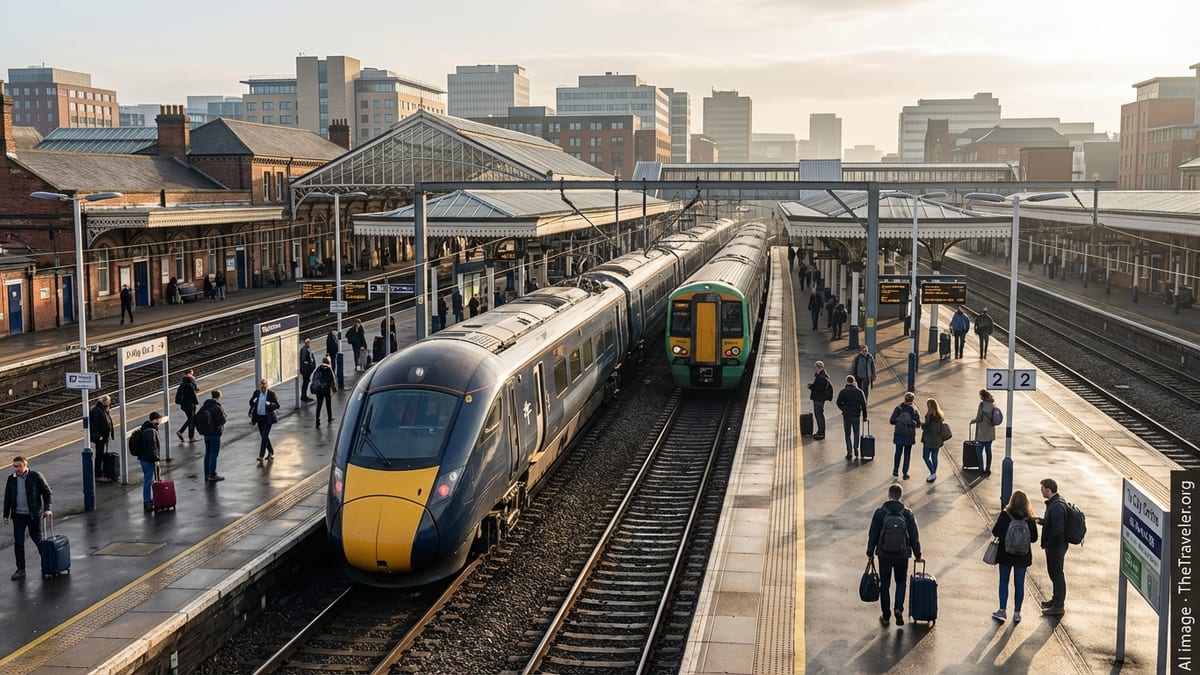
Early-morning blaze halts services on Riviera Line
According to regional coverage, emergency crews were called to Paignton station shortly before 6 a.m. on Tuesday 21 July, after reports of a fire on the station site. The incident affected part of the mainline terminus that serves as a key gateway to Torbay’s seafront resorts.
Publicly available information indicates that the blaze was brought under control without any reported injuries. Images shared in local reporting show smoke around the station buildings and platforms in the early daylight hours, with emergency vehicles positioned near the concourse.
The incident led to a temporary suspension of services on the Riviera Line between Newton Abbot and Paignton. Morning trains from Exeter St David’s were terminated at Newton Abbot, with no services calling at Torre, Torquay or Paignton during the early stages of the response. For commuters and holidaymakers, this meant cancellations and extended journey times at the height of the morning travel period.
Rail operators advised passengers to check service updates and consider alternative routes. The disruption coincided with the busy summer season in South Devon, when coastal trains are heavily used by domestic tourists heading to the English Riviera.
Three boys arrested as arson investigation continues
Subsequent reports state that three boys, aged 13, 15 and 16, were arrested in the Paignton area on suspicion of arson in connection with the station fire. They were taken into custody and questioned before being released on conditional bail while further enquiries continue.
Arson investigations at transport hubs typically focus on identifying ignition points, examining any accelerants and reviewing nearby surveillance footage. In this case, coverage suggests that investigators are working to establish the precise circumstances of how the fire started and whether any wider risks to the rail network were posed.
Publicly available information at this stage does not indicate any charges, and the teenagers’ identities have not been disclosed due to their ages. The ongoing nature of the investigation means that the legal status of those arrested could change as new evidence is assessed.
The incident has renewed attention on youth involvement in fire-related offences, particularly where rail infrastructure and stations are concerned. National statistics in recent years have pointed to a small but persistent number of deliberate fires linked to younger suspects around public transport sites.
Impact on passengers and the summer tourism corridor
Paignton sits at the southern end of a scenic coastal line that connects with long-distance services at Newton Abbot, forming a crucial part of South West England’s tourism network. The temporary loss of services between Newton Abbot and Paignton on 21 July affected both commuters and visitors staying in Torquay and Paignton.
Morning travellers reported cancellations and significant alterations to journey plans as services were held back from entering the affected stretch. Some passengers resorted to local buses or taxis to complete the last leg of their journeys to coastal hotels, guesthouses and attractions.
For tourism operators, any interruption at the height of summer can have a ripple effect on check-in times, organised excursions and day-trip bookings. While the fire did not lead to a prolonged closure, the timing close to peak holiday season underscores the vulnerability of resort communities to disruptions at single-line termini.
Rail industry planning documents often highlight the need for contingency arrangements on branch lines that feed tourist centres. Events such as the Paignton station fire can prompt operators to review replacement transport arrangements, passenger communication and coordination with local authorities during similar incidents.
Station safety, arson risks and young people
Railway stations combine historic structures, commercial units and electrical systems, which can all be vulnerable if exposed to fire. In the United Kingdom and elsewhere, campaigns have long focused on discouraging trespass and anti-social behaviour on and around railway property, with deliberate fire-setting considered a particular concern.
Published guidance from safety bodies stresses that even relatively small blazes at stations can lead to serious consequences, including smoke inhalation, damage to signalling and extended closures of track sections. Recent high-profile fires affecting station hotels and concourse buildings in Britain have reinforced the message that even localized incidents can carry substantial repair and disruption costs.
In many cases involving younger suspects, community responses include diversion schemes and educational programmes alongside any legal processes. These initiatives aim to explain the potential impact of setting fires in public places, from service interruptions for travellers to risks to emergency responders.
The Paignton incident is likely to feed into ongoing discussions about how best to engage local teenagers around rail safety, particularly in towns where stations sit close to beaches, amusement areas and other youth gathering spots.
Rail operators work to reassure travellers
After the fire was extinguished and safety checks carried out, services on the Riviera Line were gradually restored, with operators issuing updates to reassure passengers that trains could again run into Paignton. Subsequent reports describe operations returning to normal, with no long-term closure of platforms.
For rail travellers, particularly those planning summer trips to South Devon, the episode serves as a reminder of how quickly unplanned incidents can affect carefully timed connections. Travel advisors routinely recommend checking live departure boards and operator bulletins on the day of travel, especially when journeys involve coastal branch lines or smaller terminus stations.
From an infrastructure perspective, the fire highlights the importance of early detection systems, clear evacuation procedures and rapid coordination between rail staff and emergency crews. Lessons learned from even relatively contained incidents can inform upgrades to station layouts, signage and staff training.
As investigators continue to examine what happened at Paignton station and assess the role of the three arrested boys, travellers through South Devon’s rail network are once again moving through a key coastal hub that, for a few hours on a July morning, was brought to a standstill.