


More news on this day
Severe thunderstorms sweeping across southeast England on Saturday have caused major disruption at London’s Heathrow and Gatwick airports, with hundreds of flights delayed, dozens cancelled and some passengers facing waits of up to 11 hours.
Get the latest news straight to your inbox!
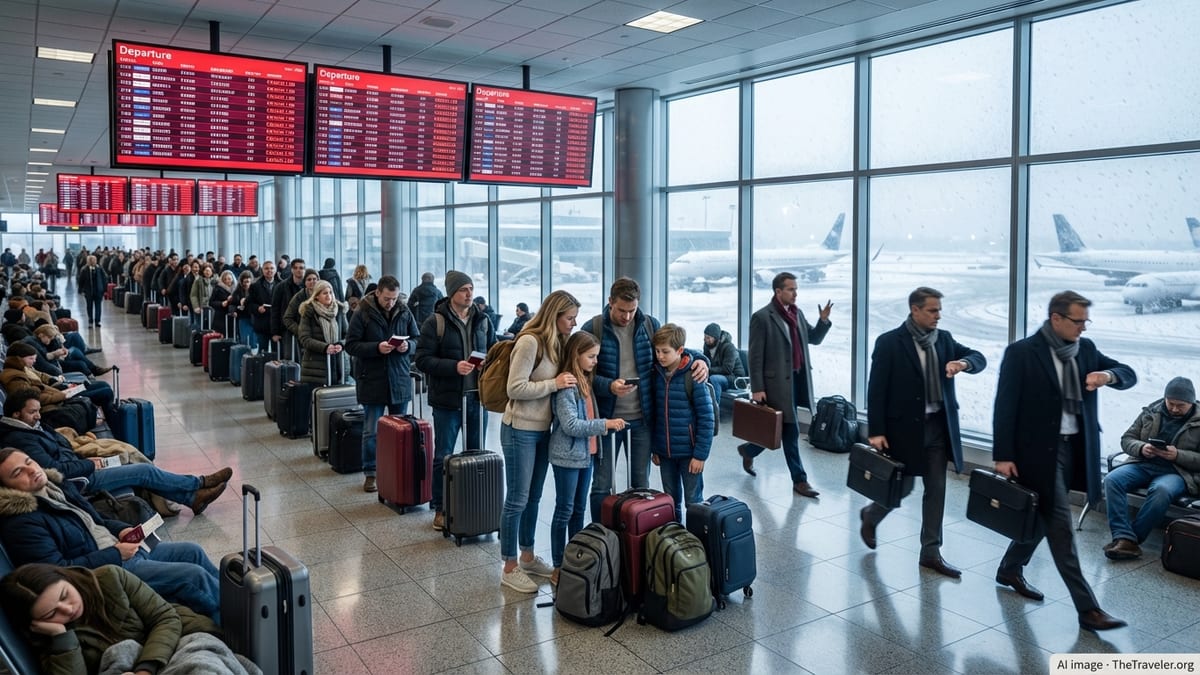
Weather Front Turns Heatwave Into Aviation Gridlock
The disruption follows a sharp turn in the weather after a prolonged hot spell across the United Kingdom. Publicly available meteorological data and media coverage indicate that a volatile storm front developed over western Europe before moving across the London area, bringing intense lightning, heavy rain and low cloud.
As the storm cells moved over key approach paths, air traffic controllers were required to slow the rate of arrivals and departures for safety reasons. Reports from aviation trackers show that holding patterns increased around both Heathrow and Gatwick, with some aircraft diverted to regional airports when gaps in the storm failed to materialise.
Travel industry coverage notes that the disruption at London’s two busiest airports is part of a wider pattern of storm-related delays across northwest Europe this summer. Earlier in June, similar thunderstorm outbreaks affected hubs in Germany and other parts of the continent, underscoring the vulnerability of tightly scheduled aviation networks to rapidly changing convective weather.
Hundreds of Flights Affected, Delays Stretch Into the Night
Data from flight-tracking services cited in multiple news reports indicate that more than 600 flights arriving at or departing from Heathrow and Gatwick were delayed on Saturday, with some tallies suggesting the figure approached or exceeded 800 when knock-on effects at other airports are included. Cancellations were more limited but still numbered in the dozens, particularly on short-haul European routes.
At Heathrow, the UK’s largest airport by passenger volume, departure boards showed widespread delays of two to six hours during the afternoon and early evening. Some long-haul services experienced even longer waits as aircraft arriving late from thunderstorm-affected regions elsewhere in Europe created additional scheduling bottlenecks.
Gatwick, traditionally more focused on leisure and low-cost carriers, saw similar operational strain. Reports from passengers and aviation enthusiasts on social media described packed departure lounges, aircraft waiting on the ground for new departure slots and late-night arrivals pushing up against the airport’s tightly regulated night-time operating limits.
The cumulative impact left thousands of travellers facing extended waits in terminals, missed connections and disrupted holiday plans at the outset of the busy summer travel period. Travel analysts point out that such large-scale delays can take many hours, and sometimes days, to fully unwind once aircraft and crew rosters fall out of sync.
Air Traffic Management and Safety Constraints
According to publicly available information from aviation regulators and meteorological agencies, severe thunderstorms pose a particular risk to aircraft during takeoff and landing. Strong updrafts and downdrafts, wind shear and frequent lightning strikes within storm cells can make precise flight-path management difficult, especially in crowded airspace around major hubs.
When convective storms form close to established arrival and departure routes, air traffic controllers typically impose flow restrictions, reducing the number of aircraft that can land or take off in a given period. This protective measure, while necessary for safety, rapidly cascades into ground delays as scheduled movements exceed the reduced capacity.
Industry briefings and airport planning documents show that London’s airports already operate near their maximum declared runway capacity during peak hours. As a result, even short-lived weather disruptions can trigger extended queues of aircraft on the ground and in the air, with limited slack available to recover lost time once conditions improve.
Recent European air traffic performance reports also highlight weather as a leading source of en-route and airport delay minutes, particularly during the summer months. Thunderstorm clusters such as those seen over southeast England can simultaneously affect multiple major hubs, further constraining options for rerouting flights around affected zones.
Passenger Impact and Travel Advice
Passengers caught up in Saturday’s disruption described long queues at check-in, security and customer service desks as airlines attempted to rebook travellers whose connections were no longer viable. Media coverage from UK and European outlets shows images of crowded terminals at both Heathrow and Gatwick, with many travellers resorting to sleeping in seating areas while awaiting updated departure times.
Consumer travel organisations note that, in cases where delays or cancellations are directly attributable to extraordinary weather conditions, passenger compensation rules may differ from those that apply when disruption is caused by technical or staffing issues. However, airlines are still generally expected to provide basic care such as refreshments and, in some circumstances, accommodation for significantly delayed departures.
Independent travel-alert platforms recommend that anyone due to fly into or out of London over the weekend monitor their airline’s notifications closely and keep a close eye on real-time departure boards. With the storm system expected to linger over parts of northwest Europe, further delays and schedule adjustments remain possible even after the most intense cells move away from the capital.
Travel planners also suggest allowing additional buffer time for airport transfers and onward rail or coach connections, as disruption in the air can spill over into crowded ground transport links around major hubs.
Stormy Start to Peak Summer Travel Season
The thunderstorms come at the start of the main summer getaway period, when Heathrow and Gatwick typically see some of their highest traffic volumes of the year. Published passenger forecasts for 2026 had anticipated robust demand following several seasons of growth, leaving limited room in schedules to absorb unexpected shocks.
Climate and aviation researchers have previously highlighted the potential for more frequent bouts of extreme weather to disrupt tightly wound aviation systems in Europe. While attributing any single storm event to broader climate trends is complex, the combination of record or near-record heat followed by intense thunderstorms has become a recurring feature of recent summers across the region.
For travellers, Saturday’s events serve as a reminder that weather-related disruption can occur even on days that begin with clear skies and high temperatures. Travel experts advise building flexibility into itineraries where possible, considering earlier flights in the day, and ensuring that airlines and booking platforms have up-to-date contact information so that schedule changes can be communicated promptly.
As operations gradually stabilise, attention is likely to focus on how quickly London’s aviation system can recover and what lessons can be drawn for handling similar convective weather episodes later in the season. The balance between maintaining safety margins and protecting the reliability of the flight network will remain a central challenge for airports, airlines and air navigation providers throughout the busy months ahead.