


More news on this day
Severe thunderstorms over Hartsfield-Jackson Atlanta International Airport on June 13 have triggered a new wave of travel chaos, with publicly available aviation data indicating at least 26 flight cancellations and 214 delays rippling across major U.S. hubs and long-haul routes to South America, Europe and Asia.
Get the latest news straight to your inbox!
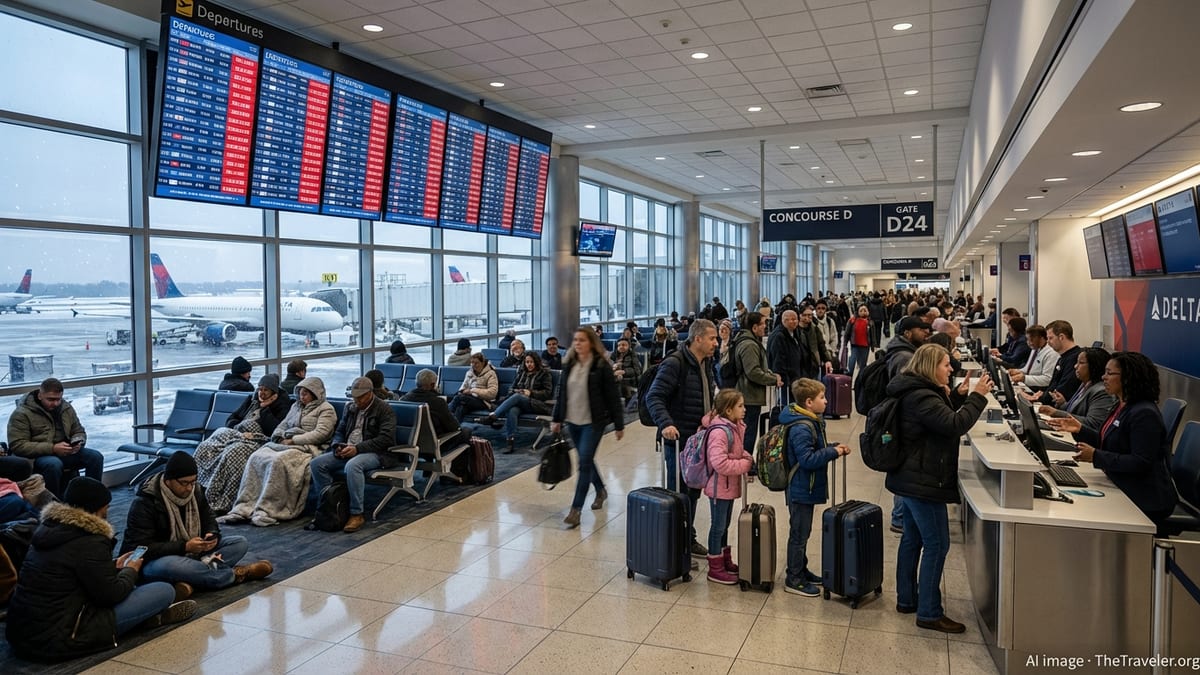
Storm System Over Atlanta Snarls Operations
Reporting from flight-tracking dashboards and aviation intelligence services on June 13 indicates that a powerful band of thunderstorms passing over the Atlanta area has forced widespread disruption at Hartsfield-Jackson, the world’s busiest passenger airport. Weather-related constraints have limited arrivals and departures, with traffic-management initiatives significantly reducing the number of planes allowed to land or take off in a given hour.
The disruption has quickly translated into operational strain across multiple carriers. Aggregated data on the day shows at least 26 cancellations and 214 delayed flights linked to the Atlanta hub, affecting both originating and connecting passengers. Delta Air Lines, which relies on Atlanta as its primary global hub, appears to be bearing the brunt of the impact, while Southwest, JetBlue, Etihad and several partner and regional operators are also listed among affected airlines.
Although Hartsfield-Jackson has managed major storm systems in the past, the current pattern is hitting at the height of early-summer travel, when schedules are already dense and reserve capacity is limited. When severe weather intersects with tightly packed departure banks and high load factors, relatively short-lived storms can cascade into all-day disruption.
Operational dashboards show delays building throughout the morning and afternoon local time, with average departure pushes in some periods stretching well beyond 60 minutes. Turnaround times on inbound aircraft have also lengthened, further tightening the window for recovery.
Delta, Southwest, JetBlue and Etihad Among Hardest Hit
Published coverage of the event indicates that Delta, as Atlanta’s anchor carrier, is facing the largest single share of disrupted flights. Multiple domestic and international departures from the hub are flagged as delayed or canceled, including services to Chicago, Dallas and Orlando, along with transatlantic routes. Real-time trackers show select Atlanta–Chicago and Atlanta–Dallas flights either canceled outright or operating with extended delays, underscoring how quickly a weather bottleneck in Georgia can affect schedules in the Midwest and Texas.
Southwest and JetBlue, which operate significant point-to-point networks feeding into Atlanta and other impacted airports, are also listed among the carriers experiencing notable delay rates. For these airlines, even a smaller number of cancellations can cause substantial knock-on effects because aircraft and crews cycle rapidly through multiple cities over the course of a single day.
On the international front, Etihad and other long-haul operators serving Atlanta are contending with schedule disruptions that can be far more complicated to resolve. When widebody aircraft are forced into late departures or diversions, there are downstream implications for subsequent rotations, crew duty limits and slot allocations at heavily regulated overseas airports.
Data compiled by aviation analysts shows that while some carriers appear to be protecting long-haul departures by sacrificing shorter regional segments, others have opted to cancel selected international flights outright when recovery within crew and curfew limits was no longer feasible.
Ripple Effects Reach Chicago, Dallas, Orlando and Beyond
Because Atlanta functions as a central connecting hub for the U.S. Southeast and a major transfer point for coast-to-coast journeys, operational problems there rarely remain local. Airport operations reports and airline status pages indicate that disruption has spread rapidly to Chicago, Dallas and Orlando, among other cities, as aircraft and crews arriving late from Atlanta fail to make their next scheduled departures on time.
At Chicago, cancellations and delays tied to Atlanta-bound or Atlanta-originating flights add to a busy summer schedule already susceptible to its own weather and traffic constraints. At Dallas-Fort Worth and Dallas Love Field, schedule adjustments and rolling delays are appearing on services linked to carriers affected in Atlanta, including both mainline and regional partners.
In Orlando, a key tourist and leisure market, the timing is particularly problematic. Peak weekend departures are intersecting with aircraft and crew arriving late from disrupted northern and southeastern gateways. This is leading to crowded gate areas and rebooking queues as airlines attempt to consolidate passengers onto remaining flights with available seats.
Industry operations specialists note that even airports not directly impacted by the Georgia storm system may experience secondary delays, as aircraft are held on the ground waiting for connecting passengers, crews time out on duty limits, or maintenance windows are compressed by off-schedule arrivals.
International Links to Argentina, Italy, Switzerland, Germany and Japan Affected
The disruption is also reverberating through long-haul networks that connect Atlanta to major international markets. Publicly available route and status data for June 13 shows schedule stress on services linking the hub to Argentina, Italy, Switzerland, Germany and Japan, along with other overseas destinations.
For Europe, multiple transatlantic departures from Atlanta, including flights to Italy and Switzerland, are listed with significant delays during the current event. Some services are flagged as operating behind schedule after late-arriving inbound aircraft, while others have been held on the ground due to air-traffic-control restrictions related to the storm system. Germany-facing routes, including links via partner hubs, also appear within the cluster of impacted services.
In South America and Asia, Argentina and Japan connections are among those bearing knock-on effects. Long-distance flights often have fewer daily frequencies, which means that a single cancellation or long delay can strand passengers for 24 hours or more if rebooking options are limited. In several cases, recovery depends on finding space on partner airlines or rerouting travelers through alternative hubs in the United States or Europe.
Travel-industry observers note that long-haul passengers are particularly vulnerable when hub operations falter, because visa rules, curfews and airport slot systems can make rapid retiming difficult. Even when aircraft are available, airlines may not be able to secure new takeoff or landing windows at short notice at congested international airports.
What Travelers Are Experiencing and How Airlines Are Responding
Across affected airports, travelers are reporting extended waits at customer-service counters and heavily used self-service channels as they seek rebooking options and updated information. Many passengers connecting through Atlanta from other U.S. cities are finding that their onward flights have already departed or been canceled by the time they land, forcing overnight stays or lengthy reroutes.
Published guidance from airlines and airport operators during similar disruption events emphasizes the importance of checking flight status frequently, as schedules can change rapidly while storm cells move through the area. Same-day and next-day rebooking options tend to be most constrained on peak summer weekends, when many flights are already close to full, so available seats are often prioritized for those whose flights have been canceled rather than delayed.
Operational data suggests that carriers are deploying standard recovery measures: consolidating lightly booked flights, upgauging selected services to larger aircraft where possible, and calling in reserve crews within duty-time regulations. At the same time, the volume of disrupted services in Atlanta on June 13 means that full normalization of schedules may take into the following day, even if weather conditions improve.
For travelers with upcoming itineraries touching Atlanta or the other affected hubs, experts recommend building in additional connection time, considering early-morning departures that are less exposed to rolling delays, and remaining flexible about routings. With 26 cancellations and 214 delays already recorded in connection with the latest storm system, the episode underscores how quickly severe weather over a single hub can distort airline networks across multiple continents.