


More news on this day
Thunderstorms moving through the Atlanta area prompted the Federal Aviation Administration to impose a temporary ground stop at Hartsfield-Jackson Atlanta International Airport on Saturday, disrupting dozens of flights at one of the world’s busiest hubs.
Get the latest news straight to your inbox!
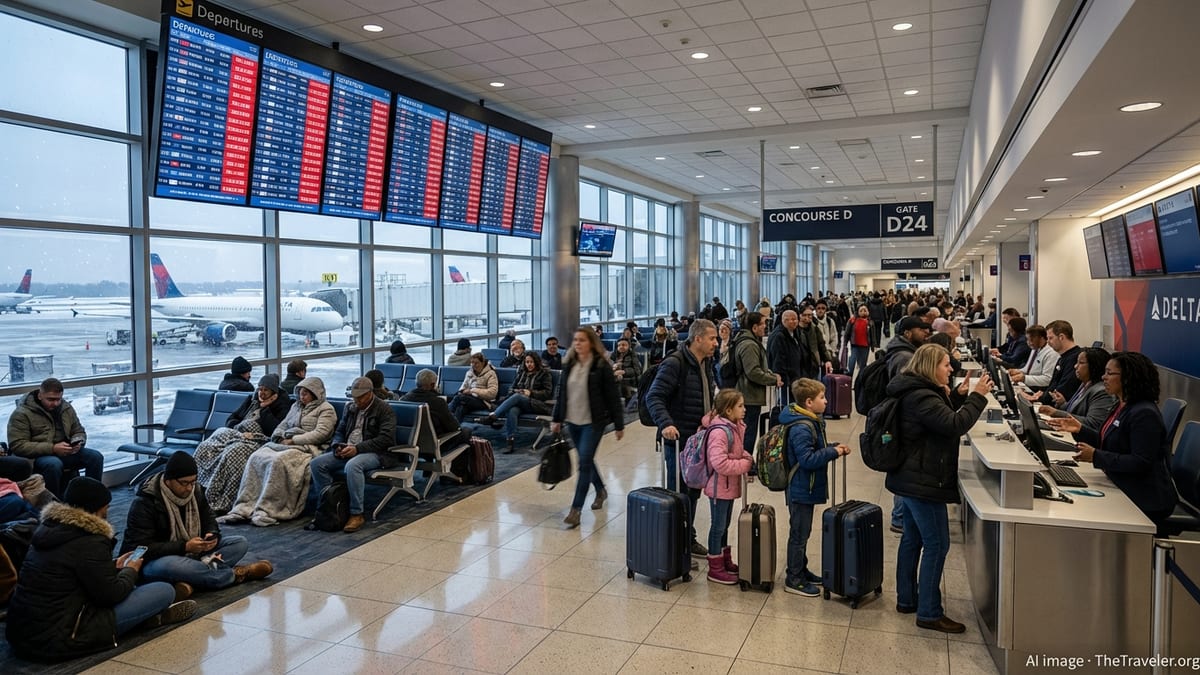
Severe Weather Halts Departures at Key U.S. Hub
According to publicly available flight-tracking data and airline status boards, departures from Hartsfield-Jackson were paused for a period on Saturday afternoon as thunderstorms developed over parts of metro Atlanta and central Georgia. The ground stop applied to flights destined for the airport, keeping some aircraft parked at their origin cities until conditions improved.
Reports indicate the measure remained in place into the late afternoon, with some outlets citing an expected end time of at least 5 p.m. Eastern. The pause coincided with a broader pattern of strong, slow-moving storms that has affected air travel across the Southeast in recent days, including disruptions at other major hubs.
Arrivals already in the air were generally allowed to continue toward Atlanta, but the halt in new departures created a backlog on the ground that rippled across airline networks. Travelers reported long waits on airport concourses and in aircraft at outlying airports as crews awaited updated clearance times.
The ground stop came at a peak summer travel weekend, intensifying its impact as aircraft, crews and passengers were already stretched by heavy seasonal demand.
How FAA Ground Stops Work During Thunderstorms
Ground stops are one of the tools the FAA uses to manage traffic when conditions at an airport or in surrounding airspace become unsafe or severely constrained. In the case of thunderstorms, the concern extends beyond the immediate airport to the narrow approach and departure corridors that funnel hundreds of daily flights into a major hub such as Atlanta.
Publicly available FAA planning documents show that when storms threaten these corridors, traffic managers can temporarily halt departures bound for the affected airport to prevent additional congestion in already saturated airspace. This reduces the risk of aircraft being forced into extended holding patterns near hazardous weather and eases pressure on controllers coordinating changing routes around storm cells.
Even when storms are not directly overhead, convective weather along key arrival and departure paths can sharply reduce the number of aircraft that can be handled safely. Sector capacity may be cut as controllers reroute flights around lightning, turbulence and rapidly changing cloud formations. Ground stops help align the flow of inbound traffic with this reduced capacity.
The measure is typically short-lived and adjusted as radar, lightning data and pilot reports show improvement. Once the storm line weakens or moves away from the critical corridors, the FAA can transition from a full ground stop to metered arrivals or a ground delay program that spaces flights more widely over time.
Ripple Effects for Airlines and Travelers
Hartsfield-Jackson serves as a central connecting hub for domestic and international traffic, so any disruption in Atlanta can quickly spread through airline networks. When a ground stop is implemented, aircraft slated to depart for Atlanta may sit at the gate for extended periods, resulting in missed connections downstream and rotations that fall hours behind schedule.
Published coverage and airline status pages on Saturday showed mounting delays and scattered cancellations on routes touching Atlanta, with some carriers rebooking passengers onto later flights or alternate routings through other hubs. Travelers reported missed connections to smaller Southeast and Midwest cities that rely on Atlanta as their primary gateway.
Once a ground stop is lifted, airlines often face a surge of demand for takeoff and landing slots as they work through a backlog of delayed flights. That surge can create congestion on taxiways and at gates, prolonging disruptions even after weather improves. Aircraft and crews out of position compound the challenge, as federal duty limits and maintenance windows constrain how quickly schedules can be realigned.
For passengers, the practical result is often a mix of long lines at customer service desks, crowded concourses and changes to itineraries that can stretch a short delay into an all-day travel disruption. Travel experts typically advise checking flight status frequently, using airline apps and considering rebooking options as soon as prolonged delays appear likely.
Stormy Pattern Continues Across the Southeast
National Weather Service forecasts for the Atlanta region in recent days have highlighted a persistent pattern of hot, humid conditions with daily chances of scattered to strong thunderstorms. This type of setup is common in mid-summer and is known for producing sudden downpours, frequent lightning and localized severe weather.
Public discussions from meteorologists note that even isolated storm cells can be highly disruptive to aviation when they intersect busy air corridors. Strong updrafts and downdrafts, wind shear and the presence of hail or lightning near flight paths can trigger reroutes and temporary suspensions of operations at major airports.
The same pattern has affected other major hubs in the eastern United States this week, with multiple airports experiencing temporary ground stops or arrival management programs as storms flare up near peak travel hours. Travelers across the region have encountered rolling disruptions as each day’s storms develop along different portions of the air traffic network.
Given the outlook for continued thunderstorm chances, aviation analysts expect that pop-up delays and periodic flow restrictions are likely to remain a feature of air travel in and out of the Southeast through the coming days.
What Travelers Through Atlanta Can Do
For those scheduled to pass through Hartsfield-Jackson during periods of unsettled weather, publicly available guidance from airlines and travel advisers highlights a few practical steps. Monitoring flight status frequently and enabling push notifications can provide early warning of a ground stop or major delay that has not yet appeared on airport displays.
Travelers with connections in Atlanta are often encouraged to build in additional buffer time during storm-prone afternoons and evenings, particularly in the summer months. When itineraries are tight, even a short ground stop can lead to missed onward flights and extended rebooking times.
When disruptions occur, many passengers find that using airline mobile apps or websites can be faster than waiting in line at customer service desks. Carriers commonly allow free same-day changes during significant weather events, and digital tools may present alternate routings through other hubs that bypass the most affected areas.
While Saturday’s ground stop in Atlanta was temporary, it served as a reminder of how quickly summer storms can reshape air travel plans. For the peak travel season ahead, flexibility, preparation and close attention to weather-driven advisories remain essential for anyone flying through the country’s busiest airport.