


More news on this day
A SkyWest Airlines regional jet operating as Flight SKW4929 from Grand Junction to Aspen diverted back to Grand Junction Regional Airport, disrupting travel plans for passengers on the short but operationally demanding route into Colorado’s high country.
Get the latest news straight to your inbox!
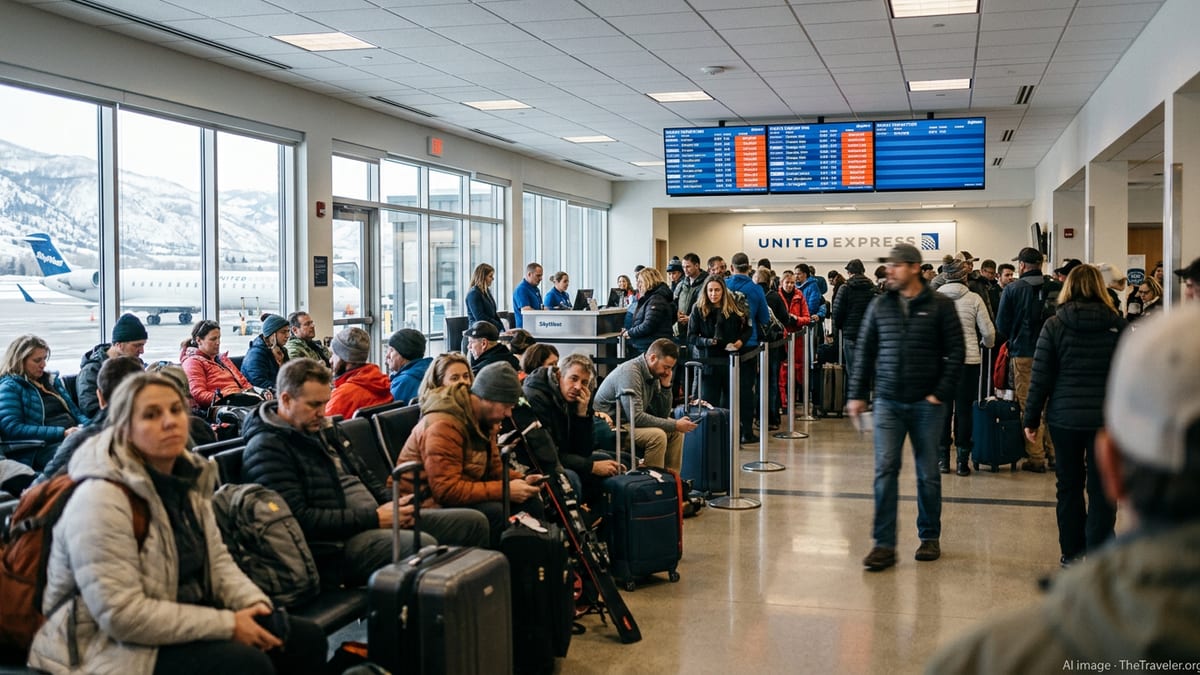
Short Hop to Aspen Ends Back Where It Started
Publicly available flight-tracking information shows that SkyWest Airlines Flight SKW4929, operated with a Canadair Regional Jet CRJ-700, departed Grand Junction Regional Airport for Aspen–Pitkin County Airport before abandoning its approach and returning to its departure point. The turnback converted what is ordinarily a brief sector across the Rockies into an unplanned loop that ended at the same airport where it began.
The diversion unfolded on a route known among pilots and frequent travelers for its demanding terrain and weather-sensitive operations. Although the two airports are separated by a relatively short distance, flights into Aspen regularly require careful management of approach paths, performance margins, and rapidly changing local conditions in the valley around the airfield.
Tracking data indicates that Flight SKW4929 initially climbed out of Grand Junction along a standard departure profile before heading toward Aspen, then leveled and reversed course instead of committing to a final approach. The aircraft landed back at Grand Junction without any publicly reported incident on the ground, with no immediate indication of a technical emergency.
No formal cause for the diversion had been published at the time of writing, leaving the event in the broad category of precautionary or operationally driven turnbacks that are increasingly visible to the public through real-time tracking platforms.
Mountain Airport Operations Under the Spotlight
Aspen–Pitkin County Airport has long been viewed as a complex destination for commercial crews because of its high elevation, single-runway layout, and surrounding mountainous terrain. Even modest changes in wind, visibility, or runway condition can influence whether a flight can safely land within the performance limits specified for regional jets such as the CRJ-700.
In this context, diversions and returns to departure airports on Aspen-bound services are not uncommon across the industry, particularly during periods of marginal weather or fluctuating winds in the valley. Flight SKW4929’s trajectory, ending in a return to Grand Junction, fits a pattern in which carriers err on the side of caution rather than press ahead with an approach that may not meet all operating requirements.
Available reference material on SkyWest’s operations shows that the airline’s regional jets, including the CRJ-700, are routinely used in high-altitude and mountainous environments as part of its role as a major feeder carrier in the United States. The aircraft type is certified for such operations but is subject to strict performance calculations that factor in runway length, temperature, weight, and obstacle clearance, all of which can tighten margins at airports like Aspen.
Observers note that what may appear to passengers as a sudden or unexpected decision to divert often reflects conservative planning and adherence to pre-established company and regulatory criteria, rather than a sign of imminent danger on board.
Passenger Disruption and Downline Impacts
The decision to return Flight SKW4929 to Grand Junction created an immediate disruption for travelers expecting to arrive in Aspen, with knock-on effects likely felt across subsequent legs and aircraft rotations. For passengers, the unplanned return typically means a combination of extended ground time, rebooking challenges, and, in some cases, the need to arrange ground transportation across Colorado’s mountain passes.
On a tightly timed regional schedule, a single diversion can ripple through the day’s operations. The aircraft and crew assigned to SKW4929 may have been scheduled for additional sectors after the Aspen leg, and any delay or reassignment can shift departure times for other flights on the same aircraft type. Regional jets like the CRJ-700 often operate multiple short segments per day, amplifying the effect of a disruption on the broader network.
Travelers on similar routes into mountain destinations increasingly turn to real-time flight-tracking tools and airport status pages to understand whether a diversion is isolated to their flight or part of a broader pattern tied to weather or operational restrictions. In the case of Flight SKW4929, publicly visible tracking data provided the first indication that the short hop to Aspen had turned into a return journey.
For visitors heading to resorts or business engagements in the Roaring Fork Valley, such disruptions can quickly translate into lost time and added expense, especially when alternative flights are limited or fully booked during peak travel periods.
Why Diversions Like SKW4929 Happen
While no single cause has been publicly identified for Flight SKW4929’s return to Grand Junction, aviation safety and operations literature points to several common factors behind similar events. Weather near the destination, including low visibility, shifting winds, or precipitation, can make it difficult to complete an approach within required safety margins, particularly at mountain airports.
Aircraft performance considerations can also drive a diversion. High elevation airports reduce engine and aerodynamic performance, which can require lower landing weights and longer runway distances. If conditions change after departure, the numbers that were acceptable at the time of takeoff may no longer support a landing under updated forecasts or runway reports by the time the aircraft arrives in the area.
Technical irregularities on board, from indications in cockpit systems to minor equipment issues, sometimes prompt crews to return to the departure airport, where maintenance support and passenger facilities are more robust. Even when these issues do not rise to the level of an emergency, standard operating procedures can favor a conservative decision to discontinue the flight.
For SkyWest and other regional carriers that frequently serve challenging destinations, diversions are built into contingency planning as part of routine risk management. Events such as the SKW4929 turnback are therefore better understood as a reflection of that planning process rather than an outlier in otherwise routine operations.
Growing Transparency Around Operational Decisions
Incidents like the diversion of SkyWest Flight SKW4929 illustrate how modern data tools make internal operational decisions visible to the traveling public in near real time. Once limited to airline control centers and air traffic services, information about route changes, holds, and diversions now appears quickly on widely used flight-tracking platforms and airport information boards.
With this transparency comes heightened curiosity about why particular flights change course, especially when there are no widely reported signs of an emergency. Travelers monitoring SKW4929’s path would have seen the aircraft begin its journey toward Aspen before reversing track and returning to Grand Junction, prompting questions about the underlying rationale even in the absence of official explanations.
Aviation analysts note that this visibility often outpaces the speed at which carriers can publish detailed explanations, particularly when a diversion stems from a confluence of weather, operational, and performance considerations that must be reviewed after the event. As a result, the initial public record consists mainly of flight data and basic status updates, with further context emerging more slowly, if at all.
For passengers and communities dependent on regional links into airports like Aspen, the SKW4929 diversion is a reminder that even short, familiar routes remain subject to a complex mix of safety, performance, and environmental variables. While inconvenient, returns such as this one demonstrate how regional airlines calibrate real-time decision-making in some of the country’s most demanding flying environments.