


Tokyo Narita International Airport is no longer the main gateway to downtown Tokyo, but it remains one of Asia’s busiest transfer hubs. If you have a long layover here, smart planning can turn what might feel like dead time into a surprisingly memorable stopover, whether you stay airside to rest and recharge or head out to discover nearby Narita town or even central Tokyo.
Get the latest updates straight to your inbox!
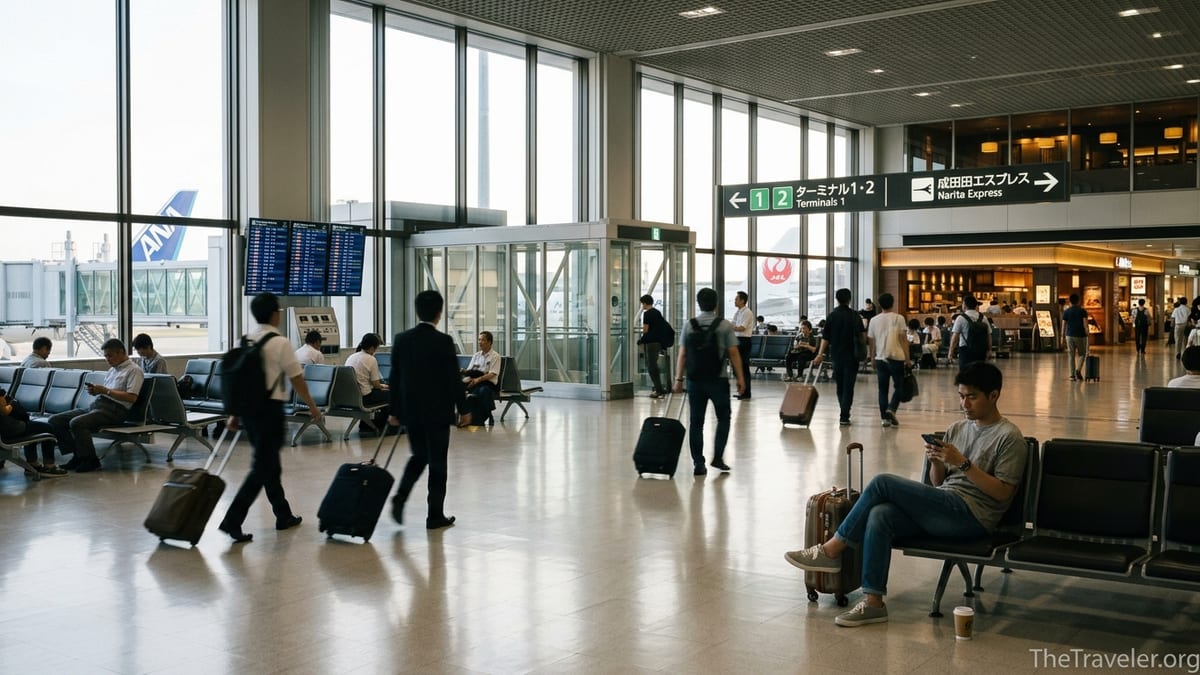
Understanding Your Narita Layover
Before deciding how to spend your layover at Narita, start by looking at three factors: your total time on the ground, whether your bags are checked through, and if you need to clear immigration. Many international to international transfers at Narita are airside, meaning you stay within the secure zone and skip Japanese immigration altogether. In that case, you should allow around 45 to 90 minutes to move between gates, depending on lineups and terminal changes, and plan the rest of your time around the airport’s facilities.
If you do need to enter Japan, for example to claim bags, switch airports, or explore outside, build in more buffer. It often takes 45 to 60 minutes from landing to exiting customs on a typical afternoon, longer in peak holiday periods. You will also want to be back at Narita at least two hours before your next international flight to clear security, or closer to three hours if you are unfamiliar with the airport or traveling during busy seasons such as Golden Week or late December.
Distance is another key consideration. Narita Airport is in Chiba Prefecture, roughly 60 kilometers from central Tokyo. Fast trains into the city such as the Narita Express and Keisei Skyliner typically take between 40 and 60 minutes one way, plus time to navigate large stations like Tokyo or Ueno. As a result, many frequent travelers only consider going into central Tokyo if their layover is at least 8 to 10 hours daytime, while a 4 to 6 hour stop is usually better spent inside the airport or in nearby Narita city.
Visa rules also matter. Many nationalities can make a short entry into Japan without a visa, but some passengers require a transit visa even if they only intend to leave the airport for a few hours. Official Japanese consular guidance emphasizes that travelers changing airports, such as arriving at Narita and departing from Haneda, usually need a visa or must qualify under a specific transit without visa scheme. Always check current rules with a Japanese consulate or immigration authority for your nationality and ticket type before planning to leave the airport.
Getting Around Narita Airport and Between Terminals
Narita has three terminals. Terminal 1 mainly handles Star Alliance and some other carriers, Terminal 2 is home to most Oneworld airlines and several large Asian airlines, and the smaller Terminal 3 primarily serves low-cost carriers. Terminal 3 is within walking distance of Terminal 2, with covered walkways and moving sidewalks that many passengers use, while a free shuttle bus connects all three terminals if you prefer not to walk or have heavy luggage.
Inside each terminal, signage is generally clear in English and Japanese, but walking distances can be significant, especially in Terminal 1’s North and South wings. If you have mobility concerns or are tight on time between flights, follow the transfer signs closely and do not be shy about asking airline staff for directions. Electronic information boards show estimated walking times to distant gates, which can easily stretch past 15 minutes in the larger concourses.
Operating hours are another practical detail. Narita is not a 24-hour airport. Most public areas and many facilities are open roughly from 6:00 to 24:00, with security screening and shops winding down late at night. If you are transiting on a very late arrival or early morning departure, check ahead whether services like shuttle buses, lounges, or train connections are running, and consider booking an in-terminal capsule hotel or a nearby airport hotel with shuttle service.
If you need to switch between international and domestic flights or different terminals, immigration and security checkpoints can create additional bottlenecks. Airlines build minimum connection times into through tickets, but those do not guarantee comfort. Travelers who have recently shared their experiences online often recommend aiming for at least a 2.5 to 3-hour connection if your itinerary involves clearing immigration, reclaiming checked bags, changing terminals, and checking in again, particularly when connecting between different airlines or alliances.
Rest, Showers and Sleeping Options Inside Narita
For many passengers, the top priority on a long layover is simply to rest and freshen up. Narita caters to this with dedicated shower rooms and nap rooms inside the terminals. Official airport facilities list shower rooms where a private shower booth with basic toiletries and towels typically costs around 1,500 yen for the first 30 minutes, with an additional charge roughly half that amount for each extra 15 minutes. These showers are popular with overnight flyers landing from Europe or North America who have a few hours before a regional connection.
Nap rooms, sometimes called dayrooms or refresh rooms, are available airside in certain parts of Terminal 1 and Terminal 2. A single nap room with a bed and shower usually starts at about 3,000 yen for the first hour and increases in set increments of 30 minutes. Travelers using these facilities often describe them as basic but quiet, with blackout curtains and a private bathroom, ideal for catching one to three hours of uninterrupted sleep between flights without leaving the secure area or booking a full hotel.
For longer breaks or overnight layovers, there are more substantial sleeping options housed in or near the terminals. One well-known choice is a capsule-style hotel concept that operates in Terminal 2, offering compact sleeping pods with shared shower facilities and lounge areas. While exact rates vary by season, an overnight stay is commonly comparable to a budget business hotel in Tokyo, and shorter “nap” packages of a few hours are often available during daytime. Another long-standing option just outside the terminals is an airport rest house that rents standard hotel rooms by the hour or overnight, with recent guides citing daytime packages starting around 3,000 to 5,500 yen for several hours of use.
Passengers on tight budgets also sometimes stretch out on the terminal seating areas, especially near quieter gates late at night, though this is less comfortable and subject to security restrictions and cleaning schedules. If you intend to sleep in public areas, keep valuables secured, use earplugs and an eye mask, and check in advance that your layover does not fall during any overnight closures or terminal maintenance windows.
Lounges, Wi-Fi and Working During a Layover
Narita provides free Wi-Fi throughout the terminals, which is sufficient for messaging, basic video calls, and remote work. Power outlets and USB charging points are dotted around the gate areas and seating zones, though they can fill up during peak hours. For travelers planning to get serious work done, it is often worth seeking out quieter corners such as upper-level food courts or dedicated work booths where available, especially on weekday mornings when business traffic is high.
Airline and independent lounges are another useful resource if you have several hours to spare. Major carriers such as Japan Airlines and All Nippon Airways operate spacious lounges in Terminals 1 and 2, with shower rooms, buffet food, drinks, and reasonably fast Wi-Fi. Access is usually available for premium cabin passengers, elite status holders, or passengers with certain lounge memberships. Some travelers without status opt for paid entry to independent lounges that sell day passes, which can make sense on a 5 to 8-hour layover when you want a quieter environment to nap, work, or shower.
If you prefer something closer to a temporary office, Narita has periodically operated paid workspaces and business corners with desks, office chairs, and reliable power. These can be particularly helpful for remote workers needing to download large files or attend scheduled meetings in a quieter space than the main departure hall. Coffee chains such as Starbucks and other cafés in the terminals also serve as informal workspaces, though they may have time limits at busy periods.
Printing, currency exchange, luggage wrapping, and travel insurance counters are clustered in the landside arrival and departure halls of Terminals 1 and 2, so consider completing any practical tasks like printing onward booking confirmations, exchanging a modest amount of yen, or picking up a prepaid SIM card or eSIM support before heading to immigration or back through security.
Shopping, Food and Relaxation Without Leaving the Airport
Even if you decide to stay inside Narita, there is enough to stay occupied for several hours. The airport hosts a wide range of Japanese and international dining options, from quick noodle counters and convenience store bento boxes to sit-down sushi and tonkatsu restaurants. Prices vary, but many mid-range meals in the terminals run in the 1,000 to 2,000 yen range for a main dish and drink. If you land early in the morning after a long-haul flight, a bowl of hot ramen or udon at one of the casual eateries in Terminal 1 or Terminal 2 can be an efficient and comforting first stop.
Duty-free shopping is extensive, with cosmetics, electronics, liquor, and luxury goods dominating the airside corridors. Japanese confectionery is a particular highlight: boxed sweets such as Tokyo Banana, regional rice crackers, and matcha-flavored chocolates are stacked high at specialty stores, making it easy to pick up gifts in under half an hour. Prices are generally similar across retailers, so if one shop is crowded, it is worth walking a few gates further for a quieter branch selling the same items.
For a more local atmosphere, look for shops that showcase regional products from Chiba and greater Japan, including ceramics, textiles, and small-batch snacks. Some boutiques sell travel-friendly items such as compact umbrellas, folding fans, and high-quality Japanese stationery that make practical souvenirs. Travelers with a long layover and limited luggage space often prefer these small, lightweight purchases over bulkier gifts.
When it comes to relaxation, Narita has added more wellness-focused options in recent years. One of the most distinctive is Narita Airport Onsen Sora no Yu, a natural hot spring facility near the airport where day-use bathing plans for adults are often around 1,000 yen on weekdays for a few hours, with separate indoor and outdoor baths, saunas, and rest areas. For travelers with at least half a day free and a desire to reset their body clock, a soak in an onsen followed by a nap can be far more restorative than hours in an ordinary waiting area.
Exploring Nearby Narita Town on a Longer Layover
Travelers with 6 to 10 hours of daytime layover time often find the best balance by leaving the airport, but staying close. Narita city, the small town around JR Narita and Keisei Narita stations, is only about a 10 to 15-minute train ride from the airport on local lines. Many recent visitors describe this as one of their favorite layover strategies, because it offers a taste of traditional Japan without the stress of racing in and out of central Tokyo.
The main draw is Naritasan Shinshoji Temple, a large Buddhist complex founded centuries ago, set on a wooded hillside about a 15-minute walk from the stations. The approach road, Omotesando, is lined with wooden shopfronts selling eel, rice crackers, and souvenirs. Spending two or three hours strolling this street, visiting the temple buildings and its landscaped park, and stopping for a simple lunch of grilled eel or soba noodles provides a gentle, atmospheric break from air travel with minimal transit time.
Because the town is so close to the airport, it is realistic to fit a Narita visit into a 7 to 9-hour daytime layover, assuming you can enter Japan without complicated visa arrangements and your luggage is checked through. A typical pattern might be: land around 7:00, clear immigration and catch a local train by 9:00, explore Narita until 13:00, and be back at the airport by 14:00 for an evening departure. Travelers who have followed similar schedules often report that the compact size of Narita town keeps logistics manageable, and the proximity to the airport reduces anxiety about missing their onward flight.
While Narita Airport has in the past promoted structured transit and stay programs with guided tours, some of these were suspended during the pandemic and reintroduced gradually. At the time of writing, guided airport tours and occasional free tours around the area may operate intermittently, often with volunteer guides and a focus on aviation history or local culture. Check current offerings at the airport information counters after landing, and be prepared to explore independently if formal programs are not running on your travel date.
When It Makes Sense to Go All the Way into Tokyo
Heading all the way into central Tokyo from Narita during a layover can be rewarding, but it is not for everyone. The key is to be honest about how much time you really have. As a rule of thumb, many experienced travelers only consider a Tokyo city visit if their layover provides at least 8 to 10 hours of usable daytime after accounting for immigration, security and transport. In practice, that often means a scheduled layover of 11 to 14 hours between flights.
If you do have that kind of time, the fastest and most straightforward options into Tokyo are the Narita Express (NEX) and Keisei Skyliner. The NEX runs from Narita Airport to major city stations such as Tokyo, Shinagawa, Shibuya, and Shinjuku in roughly one hour, with reserved seating and luggage racks, and often sells discount round-trip tickets for foreign visitors. The Skyliner connects Narita with Ueno and Nippori in about 40 minutes and pairs well with exploring the Ueno park area, Asakusa’s Sensoji Temple, or the traditional shopping arcades of Yanaka.
On a well-planned city layover, you might catch a morning Skyliner to Nippori, transfer to a short train ride to Asakusa to visit Sensoji and the Sumida River area, then head to Ueno for lunch and a stroll through the park or Ameya-Yokocho market before taking an afternoon train back to Narita. Others prefer the Narita Express straight to Tokyo Station, where they can explore the underground shopping streets, Character Street, and nearby Marunouchi office district on foot without additional subway transfers.
Time buffers are crucial. Train delays are uncommon but not unheard of, and large stations can be confusing. A conservative approach is to plan to be back at Narita at least three hours before your onward long-haul departure, and a bit less for a short regional hop if you know the airport well. Travelers who have pushed the limits on tight city layovers often recount racing back through Tokyo traffic and arriving at check-in sweating and stressed, so if you are already jet-lagged or traveling with children, a Narita town or in-airport plan may simply be the wiser choice.
Practical Tips: Luggage, Money and Connectivity
Managing luggage intelligently can make any layover feel smoother. If your bags are checked through to your final destination, you are free to move about the airport or leave for Narita town or Tokyo without extra weight. If you do need to collect bags at Narita, consider using the airport’s baggage storage and delivery services, which can hold suitcases for a daily fee or forward them to hotels in Tokyo and beyond. This can be especially attractive if your onward flight is on a different ticket and you have an overnight in Japan before continuing.
Cash versus cards is another common concern. Most shops and restaurants inside Narita Airport accept major credit cards, and contactless payments have become far more common in recent years. That said, having a small amount of yen, perhaps 2,000 to 5,000 yen, can be convenient for buying a quick snack from a vending machine, using coin lockers in train stations, or paying for a local bus. Currency exchange counters and ATMs are located in the arrival and departure halls, and many travelers simply withdraw a modest amount from an international ATM to avoid carrying large quantities of cash.
For connectivity beyond airport Wi-Fi, you can rent a pocket Wi-Fi router or purchase a prepaid SIM card from several counters in Terminals 1 and 2. If your phone supports eSIM, some providers allow you to activate a data plan within minutes of landing by scanning a QR code, which can be a time-saver when you are trying to navigate trains into Tokyo on a same-day layover. Having mobile data is particularly reassuring if you plan to explore Narita town or transfer between city subway lines before heading back to the airport.
Finally, keep an eye on time zones and jet lag. Long-haul passengers arriving from Europe or North America in the morning often hit an energy slump by early afternoon, just when they might be tempted to board a packed train into Tokyo. In those cases, a shower, a light meal, and a nap in a dayroom or onsen lounge near Narita can set you up far better for the onward flight than a rushed sightseeing dash that leaves you more exhausted.
The Takeaway
A long layover at Tokyo Narita Airport does not have to be a chore. With realistic expectations about time and distance, you can tailor your stopover to your energy level and interests, whether that means staying airside to shower, sleep and enjoy a calm meal, venturing out to the temples and streets of nearby Narita town, or, if you have enough hours and stamina, catching a fast train into the heart of Tokyo.
The key decisions are straightforward: confirm your visa status, understand how your luggage is handled, and be honest about how many usable hours you truly have once immigration, security, and transport are factored in. From there, Narita offers a wide range of practical services, from showers and capsule hotels to onsen baths and baggage storage, that can turn dead time into welcomed recovery.
Whether you are connecting between continents or beginning a longer trip through Japan, approaching your Narita layover as a mini-itinerary of its own will help you arrive at your final destination more rested, better adjusted to the time zone, and with at least a small taste of Japanese hospitality along the way.
FAQ
Q1. Is my layover at Narita long enough to leave the airport?
As a rough guide, if you have less than 5 to 6 hours total on the ground, it is usually safer and more comfortable to stay inside the airport. Between about 6 and 9 hours, a short trip to nearby Narita town is realistic for many travelers, while 8 to 10 hours or more can justify a carefully planned visit into central Tokyo, especially if your flights are on time and your luggage is checked through.
Q2. Do I need a visa to leave Narita Airport during my layover?
It depends on your nationality and travel circumstances. Citizens of many countries can enter Japan visa-free for short stays, while others require a transit or tourist visa even for a few hours outside the airport. Some travelers connecting between different Japanese airports, such as Narita and Haneda, also need to clear immigration and may require a visa. Always confirm current requirements with a Japanese consulate or official immigration source before planning to leave the airport.
Q3. How far is Narita Airport from central Tokyo and how long does it take?
Narita is about 60 kilometers from central Tokyo. Fast trains such as the Narita Express and Keisei Skyliner typically take around 40 to 60 minutes one way, depending on your destination station. You should also allow extra time to navigate large stations and transfer to local lines or subways if you plan to explore multiple neighborhoods.
Q4. What can I do at Narita Airport during a 4 to 6-hour layover?
With a 4 to 6-hour layover, focusing on in-airport options is usually best. Popular choices include taking a shower in the dedicated facilities, booking a nap room for a short sleep, spending time in an airline or independent lounge, enjoying a sit-down meal of Japanese food, and browsing duty-free shops and local gift stores. This timeframe is also suitable for a quick visit to the nearby onsen facility if your timing aligns with its opening hours.
Q5. Are there showers and places to sleep inside Narita Airport?
Yes. Narita offers paid shower rooms and nap rooms inside the terminals, with typical prices starting around 1,500 yen for a 30-minute shower and about 3,000 yen for the first hour in a nap room. There are also in-terminal capsule-style accommodation options and nearby airport hotels that rent rooms by the hour or overnight, which are useful for longer or overnight layovers.
Q6. Is it worth visiting Narita town on a layover instead of Tokyo?
For many travelers, yes. Narita town is only about 10 to 15 minutes away by local train and offers a traditional temple complex, atmospheric streets, and local food without long transit times. If your layover is in the 6 to 9-hour range or you prefer a slower pace, Narita town can be a more relaxed and practical choice than rushing into central Tokyo.
Q7. How early should I be back at Narita before my next flight?
For international departures, it is sensible to be back at the airport at least two hours before your flight, and closer to three hours during busy periods or if you are unfamiliar with the airport. If you are returning from Tokyo or Narita town, build in extra margin for possible train delays or getting turned around in large stations, and aim to arrive earlier rather than later.
Q8. Is Narita Airport open 24 hours and can I sleep in the terminal?
Narita is not fully 24-hour in the same way some major hubs are, but late-night and early-morning operations do exist. Certain areas may close overnight for cleaning, and services such as shops and security checkpoints have specific operating hours. Some travelers do sleep on benches or reclining seats in quieter zones, but if you know you will be staying overnight, booking a capsule hotel or nearby airport hotel usually offers a more comfortable and predictable experience.
Q9. What is the best way to get from Narita Airport into Tokyo on a layover?
For most visitors, the Narita Express or Keisei Skyliner provide the best combination of speed and simplicity. The Narita Express links the airport with major hubs like Tokyo Station, Shinagawa, Shibuya, and Shinjuku, while the Skyliner runs to Nippori and Ueno. Slower JR or Keisei local and rapid trains cost less but take longer and make more stops, which can eat into your limited sightseeing time.
Q10. What should I do if my Narita layover is overnight?
On an overnight layover, consider booking an in-terminal capsule-style hotel or an airport-area hotel with a free shuttle. This allows you to shower, sleep in a proper bed, and reset before your onward flight. If your arrival is late and your departure is early, trying to go into Tokyo usually makes little sense because most trains and many city attractions will be closed, and the combined travel and fatigue can outweigh any short sightseeing opportunity.