


For frequent flyers, especially those who find themselves on regular Emirates or flydubai flights, the right airline credit card can feel like an unofficial upgrade. Lounge access, priority check in and fast mileage earning can turn long travel days into something much smoother. Emirates NBD’s Skywards Infinite card is one of the flagship options in the United Arab Emirates for Emirates loyalists, but globally there are powerful alternatives like the Chase Sapphire Reserve or The Platinum Card from American Express. This comparison looks at how Skywards Infinite stands up against top rated airline and travel rewards cards, and which type of traveler each one really serves best.
Get the latest updates straight to your inbox!
What Emirates NBD Skywards Infinite Actually Offers
Emirates NBD Skywards Infinite is designed around a simple promise: turn day to day spending into Emirates Skywards Miles and add a layer of elite like benefits whenever you fly Emirates or flydubai. The card charges a substantial joining fee of around AED 3,148.95 in the first year and an ongoing annual fee of roughly AED 1,575 after that, so it is clearly targeted at higher income travelers. The minimum salary requirement sits at about AED 30,000 per month, which already narrows the audience to frequent business travelers and well paid residents who spend heavily on cards.
The hook is a very large welcome package of Skywards Miles if you are willing to pay the joining fee and hit spending targets. Emirates NBD currently advertises up to about 100,000 Skywards Miles in the first year, split across several milestones. For example, you receive a chunk of miles when you pay the joining fee, another large tranche after spending the equivalent of around USD 25,000 in the first three statements, and an extra bonus when you spend roughly USD 7,500 on Emirates tickets within the first year. For a Dubai based consultant booking frequent long haul business class trips to Europe or Asia, these targets are achievable and can easily fund a return business class upgrade.
On ongoing spending, Skywards Infinite earns miles at tiered rates. According to Emirates NBD’s own materials, cardholders earn around 2 Skywards Miles per US dollar on Emirates, Emirates Holidays, flydubai, duty free purchases, and select online food delivery or ride hailing apps, plus roughly 1.5 miles per US dollar on general international spending. Everyday domestic purchases earn at a lower rate. A family in Dubai that spends heavily on Emirates tickets, weekend stays with Emirates Holidays, and regular duty free shopping can push a six figure annual mileage tally without ever transferring points from another program.
Beyond rewards, Skywards Infinite layers on travel perks tailored to Emirates loyalists. Cardholders receive complimentary Emirates Skywards Silver status as long as the card remains active, which brings Business Class lounge access in Dubai, a 25 percent mileage bonus on Emirates flights, additional baggage allowance and Business Class check in lines. There is also Visa Infinite level travel insurance, purchase protection and concierge access, plus regional perks that matter on the ground in the UAE, such as up to four free valet parking sessions per month at selected malls and attractions like Yas Mall or Ferrari World.
Lounge Access, Status and Airport Comfort Compared
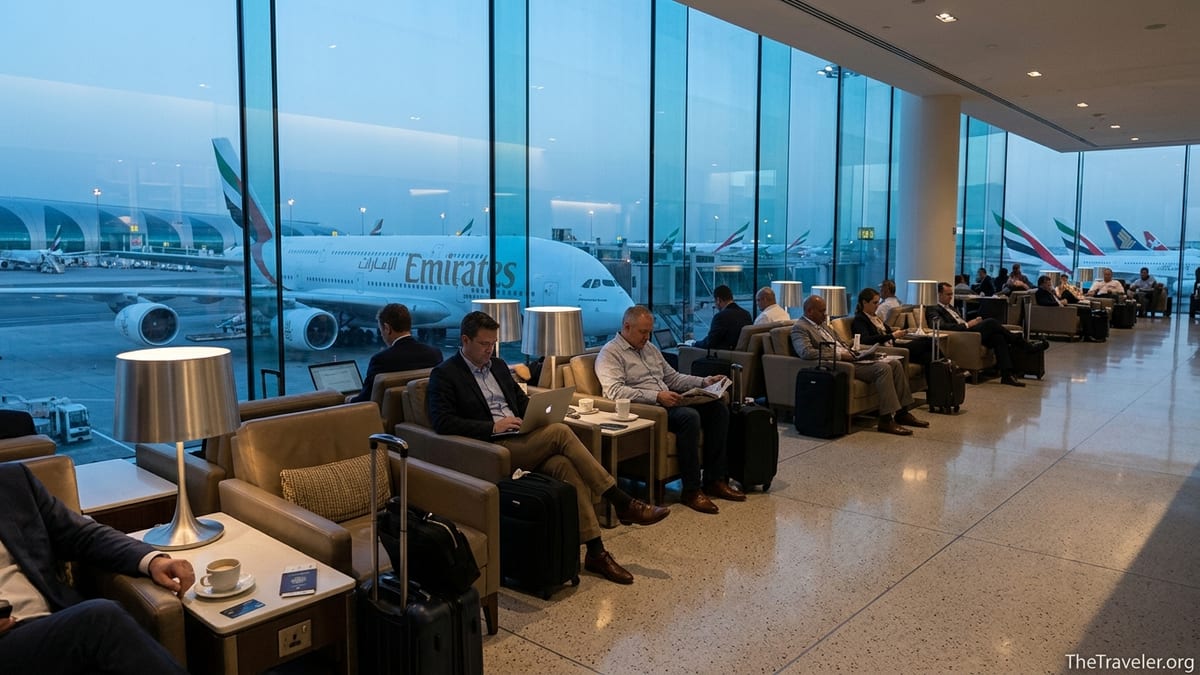
Airport lounge access is one of the perks many travelers value most, and Skywards Infinite delivers here, but in a very specific way. With complimentary Skywards Silver status, cardholders can use Emirates Business Class lounges in Dubai when flying on Emirates or flydubai in eligible cabins. That is attractive if most of your flying begins or connects through Dubai, because the Emirates lounges at Terminal 3 are extensive and directly aligned with Skywards benefits. In addition, the card taps into the Visa Infinite lounge network via an app based digital card, although recent reports from cardholders suggest that complimentary lounge visits are now capped per year rather than unlimited.
Compare that with the Chase Sapphire Reserve in the United States, one of the best regarded all purpose travel cards. Sapphire Reserve charges a high annual fee of about 795 US dollars, but offers access to more than 1,300 lounges worldwide through Priority Pass, plus entry to Chase Sapphire branded lounges opening in major hubs like New York, Boston and soon Los Angeles and Dallas. A US based traveler flying Delta to Atlanta one week and British Airways to London the next can still walk into a lounge on both trips, even with no airline status, because the access is tied to the card rather than a single carrier.
American Express Platinum takes a similar approach, pairing a premium annual fee with an even broader lounge network. Cardholders can enter Centurion Lounges in major cities, Delta Sky Clubs when flying Delta, select Lufthansa lounges in Europe, and most Priority Pass lounges. For a consultant based in New York who flies Emirates from JFK twice a year but spends most weeks on domestic US flights, an Amex Platinum or Sapphire Reserve provides more consistent lounge coverage than a carrier tied product like Skywards Infinite.
The difference comes into sharp focus in real itineraries. Consider a Dubai based executive commuting monthly to Riyadh and quarterly to London on Emirates. With Skywards Infinite, they enjoy Emirates lounge access in Dubai, priority check in and extra baggage, and they accumulate Skywards Miles at accelerated rates. A US based remote worker who flies Emirates once a year for a big vacation but otherwise hops around the United States on low cost carriers might be better off with a general travel card, using a Priority Pass lounge at Chicago or Miami regardless of airline and redeeming bank points for flexible flights, including Emirates if desired.
Annual Fees, Credits and Out of Pocket Cost
When comparing airline credit cards across regions, the annual fee structure and built in statement credits show where value really lies. Emirates NBD Skywards Infinite’s first year cost is front loaded, with a joining fee in the ballpark of AED 3,149 and a recurring annual fee of AED 1,575 from year two onward. In return, the card essentially pre pays part of that fee back in miles. For instance, the joining bonus of 35,000 Skywards Miles that posts after paying the initial fee can be worth a one way upgrade from economy to business on certain regional routes if booked at the right time, which for an Emirates regular can offset a meaningful share of that first year outlay.
Top tier US travel cards take a different approach by pairing a large annual fee with a suite of automatic credits that can be used across travel and lifestyle categories. Chase Sapphire Reserve’s annual fee, according to recent coverage from titles like Kiplinger, has risen to around 795 dollars, but it comes with a 300 dollar annual travel credit that applies broadly to airline tickets, hotels and even rideshare. Newer benefits include a biannual 250 dollar credit for stays at hotels in Chase’s curated The Edit collection, 300 dollars in credits for StubHub tickets or dining at participating restaurants, plus ongoing digital subscription credits. For a US household that travels several times a year and regularly buys concert tickets or streaming services, these statement credits can nearly erase the effective cost of holding the card.
American Express Platinum is similarly rich in credits but requires more active management. Depending on the market, cardholders can receive hundreds of dollars in annual airline incidental fee credits, hotel credits at partner brands, digital entertainment credits, ride share benefits and more. In practice, if a traveler books one or two stays each year through the Amex hotel collection and makes sure to use the airline fee credit to offset baggage or seat fees, the net cost of the card drops significantly below the sticker annual fee.
With Skywards Infinite, there are fewer line item statement credits to track. Instead, Emirates and Emirates NBD effectively ask: will you receive enough value from miles, status and lounge access to justify the fee? That works well if you already spend heavily with Emirates every year. A family of four flying Dubai to London return once a year in economy can easily earn five figures of miles from ticketed flights and card spend, then redeeming for an upgrade on one leg in peak season may feel like a tangible payback. If your flying is fragmented across multiple airlines, the same fee might be better deployed on a card whose travel credits can be used no matter which carrier you choose.
How Fast You Actually Earn Rewards
Rewards structures look abstract until you run real numbers. On Skywards Infinite, spending 10,000 US dollars per year on Emirates tickets, holidays and related partners at 2 miles per dollar would net about 20,000 Skywards Miles. Add another 20,000 dollars of international general spending at 1.5 miles per dollar and you are looking at roughly 30,000 more miles, for a total of around 50,000 miles from spend alone. Layer in the ongoing 25 percent mileage bonus that comes with Silver status on flown Emirates segments, and a frequent traveler can see a steady stream of miles flowing back into their Skywards account.
By comparison, a Chase Sapphire Reserve cardholder who spends the same 30,000 dollars in a year but splits it across 15,000 dollars in travel and dining and 15,000 in other purchases will see different numbers. Chase offers 3 points per dollar on travel and dining and 1 point elsewhere in its current structure. That yields around 45,000 points from travel and dining and 15,000 from everything else, or about 60,000 points total. Those points can then be transferred at a 1:1 ratio to airline partners like United, Air France KLM or Emirates, or redeemed toward travel bookings through the bank’s travel portal at an elevated value.
American Express Platinum, although not as strong on day to day spending categories as some competitors, can shine for airfare purchases. A traveler who books 10,000 dollars in flights directly with airlines or through Amex each year may earn 5 points per dollar on those tickets, or 50,000 Membership Rewards points, which can be transferred into airline programs such as Air Canada Aeroplan, British Airways Executive Club or Emirates Skywards. Everyday spending on the card earns at lower rates, so many cardholders pair Platinum with another rewards product for groceries and dining.
For an Emirates focused traveler based in the UAE, the key question is whether you prefer to earn miles directly in Skywards or earn bank points first, then transfer into Skywards or another airline when needed. Skywards Infinite deposits rewards straight into your Emirates account, which is simple and intuitive, but makes it harder to pivot to another airline if your routes or prices change. US bank cards like Sapphire Reserve or Amex Platinum earn flexible currencies, allowing an American traveler who once favored Emirates but now flies more with Qatar Airways or United to redirect their earning via different transfer partners.
Regional Relevance: UAE Residents vs Global Travelers
Much of the global credit card conversation is dominated by US products, yet Emirates NBD Skywards Infinite is a clearly regional solution built for UAE residents who are deeply embedded in the Emirates ecosystem. Income requirements and fees are denominated in dirhams, perks like complimentary Rotana Rewards membership are anchored in local hotel brands, and extras such as valet parking at malls in Abu Dhabi and Dubai only make sense if you live there. A long term expat family in Dubai that flies Emirates to visit relatives in Europe every year and uses Rotana properties for regional getaways will see daily value from these benefits.
By contrast, a US based digital nomad splitting time between Austin and Lisbon is unlikely to benefit from UAE centric perks. Their travel pattern might involve budget carriers in Europe, regional US hops and the occasional long haul to Asia on whichever airline has the best fare. For them, a general travel rewards card that provides solid earning on all travel purchases and broad lounge access, like Sapphire Reserve or Capital One Venture X, lines up better with their lifestyle. They can still fly Emirates and even credit miles to Skywards if they wish, but the backbone of their earning is not tied to a single airline.
There is also the matter of currency and foreign transaction fees. Skywards Infinite is denominated in dirhams, and while it can be used internationally, heavy overseas spending will introduce currency conversion considerations that a UAE based traveler must accept. A US traveler using a domestic bank card with no foreign transaction fees may find their life simpler when spending across several continents, and in some cases the effective earning rate on non US dollar purchases may be higher than what a UAE issued card provides after accounting for spreads on currency conversion.
Still, for UAE residents who are serious about Emirates and flydubai, there are few alternatives that so neatly bundle airline status, lounge access, miles and local lifestyle perks into one product. Local comparison sites often list Skywards Infinite alongside similar premium products from Emirates Islamic Bank and HSBC that also target Emirates loyalists, but Skywards Infinite remains a core benchmark because of the direct partnership with Emirates NBD and the large initial miles bonus.
Which Type of Traveler Should Choose Each Card
Choosing between Emirates NBD Skywards Infinite and global airline or travel cards comes down to honestly assessing how and where you travel. If you are a Dubai or Abu Dhabi based professional who logs several long haul Emirates flights per year, values lounge time in Terminal 3, and can comfortably meet the income and spending thresholds, Skywards Infinite is engineered for you. A regional sales director who flies Emirates economy to Frankfurt, London and Singapore across the year, plus smaller trips to Riyadh or Jeddah, will accumulate enough Skywards Miles and enjoy enough comfort benefits to offset the card’s fees.
If you live in the United States, Canada or Europe and your flying is split across carriers, a flexible travel rewards card will usually come out ahead. A Boston based family that alternates between JetBlue, American and Emirates depending on price and routes can leverage Sapphire Reserve or Amex Platinum to gather a single pool of points, then decide each year whether to redeem for a domestic trip, a transatlantic premium cabin, or transfer into Emirates Skywards for a special holiday. The same dollars that would earn exclusively Skywards Miles on a co branded card might, in a bank points ecosystem, be stretchable across multiple airlines and hotels over time.
Budget sensitivity is another axis. Skywards Infinite is a high annual fee product even by premium standards, and it assumes that cardholders will generate value primarily through miles and travel benefits. Travelers who want a simpler, lower cost experience could pair a mid tier airline card, such as a basic Skywards product or a standard United or Delta co brand, with one general no fee cashback card for domestic expenses. They would miss out on some of the luxury tier perks like comprehensive lounge networks or hotel credits, but pay far less for the privilege.
Finally, consider your appetite for benefit management. Sapphire Reserve and Amex Platinum ask cardholders to track a long list of credits, enrollment requirements and expiration dates, from digital subscriptions to ride share vouchers. Organized travelers can turn this into a hobby and squeeze every last cent of value from their cards. Others may prefer the relative simplicity of Skywards Infinite, where most of the upside is concentrated in flying Emirates as much as possible and putting major travel costs on the card without juggling half a dozen side benefits.
The Takeaway
Emirates NBD Skywards Infinite is a powerful tool for a very specific kind of traveler: a UAE based, higher income customer who is deeply loyal to Emirates and flydubai and who values lounge access, built in Skywards Silver status and rapid mileage earning on Emirates related spending. For that profile, the combination of a large welcome bonus, boosted mile earning, and tangible perks like valet parking or local hotel discounts can more than justify the joining fee and ongoing annual charges over time.
For many other travelers, particularly those based in North America or Europe whose flying patterns are more fragmented, a flexible premium travel card like Chase Sapphire Reserve or The Platinum Card from American Express often provides broader utility. These cards trade airline specific elite perks for expansive lounge networks, transferable points and large, easy to use statement credits that apply to a wide range of airlines and hotels. In a world where flight plans and loyalty can change year by year, that flexibility has real value.
Ultimately, the decision is not about which card is objectively best, but which card best matches how and where you actually travel. Mapping your annual routes, typical ticket spend and tolerance for fees against the specific perks on offer will quickly reveal whether Emirates NBD Skywards Infinite or a global all purpose travel card belongs in your wallet. For serious Emirates flyers based in the Gulf, Skywards Infinite still feels like a natural extension of elite status. For everyone else, a flexible bank points powerhouse may be the better long haul companion.
FAQ
Q1. Is Emirates NBD Skywards Infinite worth it if I only fly Emirates once or twice a year?
It can be, but usually only if those flights are expensive long haul trips and you also put significant everyday spending on the card. The joining fee and annual fee are high, so casual Emirates flyers who travel infrequently or on low cost economy tickets may be better served by a lower fee Skywards card or a flexible travel rewards card that earns well on all airlines.
Q2. How does Skywards Infinite lounge access compare with global cards like Chase Sapphire Reserve or Amex Platinum?
Skywards Infinite shines for Emirates and flydubai travelers in Dubai, offering access to Emirates Business Class lounges via Silver status and regional Visa Infinite lounges. Chase Sapphire Reserve and Amex Platinum generally offer wider international coverage through Priority Pass and proprietary lounges, which is more useful for travelers flying many different airlines from multiple home airports.
Q3. Can I transfer Skywards Miles earned with Emirates NBD Skywards Infinite to other airline programs?
No. Skywards Miles earned through the card are deposited directly into your Emirates Skywards account and cannot be transferred to other airlines. If you want the flexibility to choose among several airline partners each time you redeem, you may prefer a bank points program like Chase Ultimate Rewards or American Express Membership Rewards, which lets you move points into different airline schemes, including Emirates in some markets.
Q4. Do I need to live in the UAE to apply for Emirates NBD Skywards Infinite?
In practice, yes. The card is issued by Emirates NBD under UAE regulations and typically requires a UAE residency visa, a local bank account relationship and a minimum monthly salary denominated in dirhams. Non residents or travelers based primarily in other regions will usually not qualify and should look at local airline or travel rewards cards instead.
Q5. How do the welcome bonuses compare between Skywards Infinite and top US travel cards?
Skywards Infinite can offer up to around 100,000 Skywards Miles in the first year if you pay the joining fee and reach specific spending thresholds, including on Emirates tickets. Leading US travel cards often advertise welcome bonuses in the range of 60,000 to 125,000 points after meeting a spending requirement over three months. The exact value you receive depends on how you redeem. For Emirates loyalists, a Skywards specific bonus can be extremely valuable for upgrades or long haul awards.
Q6. What kind of travel insurance comes with Emirates NBD Skywards Infinite?
As a Visa Infinite product, Skywards Infinite typically includes multi trip travel accident coverage, medical emergency benefits, flight delay and baggage delay coverage and rental car insurance when you pay with the card. Exact limits and terms are set by Emirates NBD and Visa and can change, so travelers should read the latest benefits guide and confirm coverage details before relying on the card as their primary travel insurance.
Q7. If I mostly fly economy, can Skywards Infinite still help me experience business class?
Yes. One of the most practical uses of Skywards Miles is upgrading from economy to business class on eligible Emirates flights. A traveler who books paid economy tickets but consistently earns and collects Skywards Miles from flights and card spend can periodically use those miles to upgrade a long overnight sector, such as Dubai to London or Dubai to Singapore. That can make the card feel worthwhile even if you rarely buy premium cabin tickets outright.
Q8. How do foreign transaction fees compare between Skywards Infinite and US travel cards?
Emirates NBD Skywards Infinite is denominated in dirhams and is built for UAE residents, so foreign currency purchases will be converted into AED at bank rates and may incur small additional charges. Many premium US travel cards, including Sapphire Reserve and Amex Platinum, advertise no foreign transaction fees on purchases made outside the United States, which can make them slightly more efficient for heavy international spending when combined with competitive exchange rates.
Q9. Is it better to earn Skywards Miles directly or via bank points that can transfer to Skywards?
Earning directly through Skywards Infinite is simple and often yields higher mileage rates on Emirates and related partners, which is ideal if you are committed to Emirates long term. Earning through a bank points program is more flexible, allowing you to pivot to different airlines or hotels as your travel patterns change. Travelers who fly Emirates exclusively will tend to get more straightforward value from a dedicated Skywards card, while those who mix airlines may appreciate the optionality of transferable points.
Q10. Can I hold both Emirates NBD Skywards Infinite and a global premium travel card?
Yes, many frequent travelers pair a regional airline card with a global bank travel card. For example, a Dubai based executive might use Skywards Infinite for all Emirates spend and local perks while also holding an Amex Platinum or Sapphire Reserve for international hotel bookings, non Emirates flights and broad lounge access. This strategy maximizes benefits but also means paying multiple high annual fees, so it only makes sense if you travel often enough to extract meaningful value from both products.