


Antigua Guatemala is a small colonial city with a big presence. Cobblestone streets run between pastel facades and ruined churches, while three volcanoes rise on the horizon. Cafés, galleries and Spanish schools give it a cosmopolitan feel, yet the pace remains walkable and human. This guide focuses on the most worthwhile experiences for realistic stays of about two to seven days, helping you choose high‑value activities rather than chasing a long checklist.
Get the latest updates straight to your inbox!
Understanding Antigua: Layout, Safety and How Much Time You Need
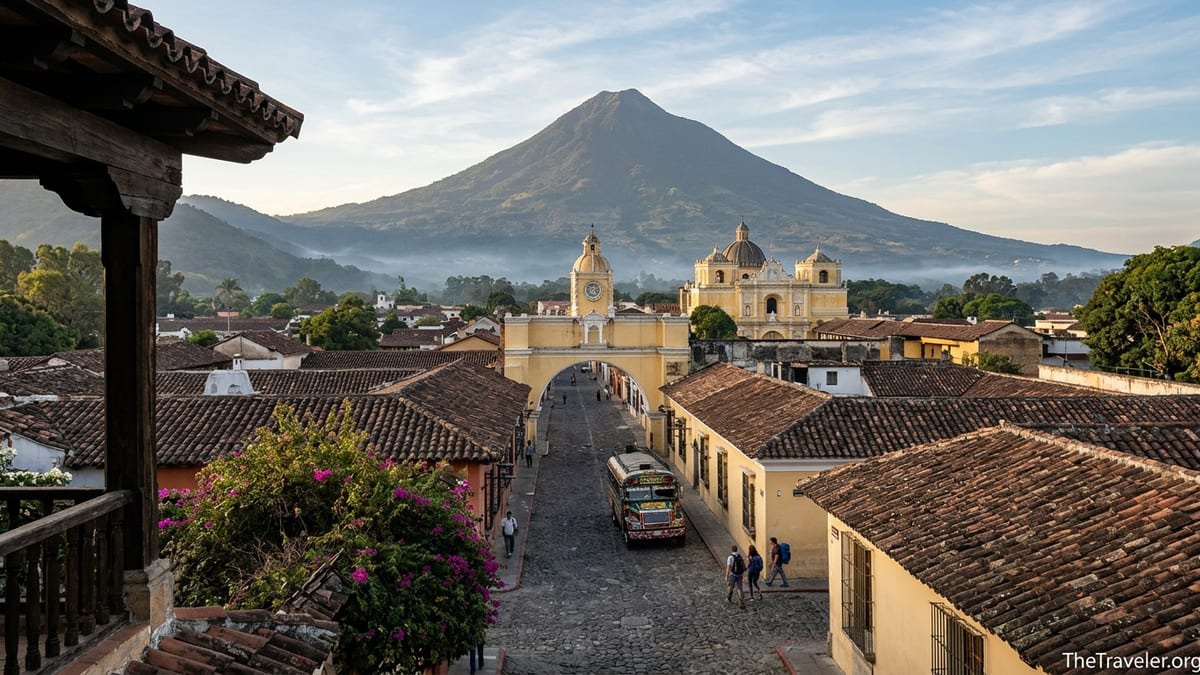
Antigua’s compact historic core follows a simple grid centered on Parque Central, the main plaza. Most key churches, ruins, cafés and tour offices sit within a 10 to 15 minute walk of this square, and the classic Santa Catalina arch stands a few blocks to the north. For a short visit of two or three days, you can comfortably explore the main historic sights and fit in one short excursion. With five to seven days, you can add a volcano hike, a coffee tour and a couple of slower afternoons in the plazas and rooftop cafés.
Security in Antigua is generally better than in many other parts of Guatemala, with a visible tourist police presence around the historic center during the day. National and foreign travel advisories still recommend standard city precautions, particularly at night and around bars, and advise using registered taxis or hotel-arranged transport after dark rather than walking long distances. Tourist police and the country’s ASISTUR assistance program operate in Antigua, which many travelers find reassuring, but they are no substitute for insurance and basic caution.
Streets in the center are narrow and cobbled, which adds to the charm but creates challenges for anyone with reduced mobility, rolling suitcases or strollers. Sidewalks are often uneven or very narrow. If accessibility is a priority, choose accommodation close to Parque Central and plan for slower walking times. Some major ruins involve steps and rough stone surfaces, so a mix of gentler parks and viewpoints may be more comfortable than attempting every site in a single day.
Historic and Cultural Sights: Plazas, Churches and Ruins
Parque Central is Antigua’s social and geographic heart, and it is where most visitors should start. The square itself is free, open at all hours and framed by the cathedral façade, the Palacio de los Capitanes Generales and the city hall. Spend at least 30 minutes here to get your bearings, watch daily life and note the surrounding arcades and cafés. Benches fill quickly in the late afternoon and early evening, when families and students gather under the jacaranda trees.
On the south side of the plaza stands the cathedral complex. The active parish church of San José faces the square and is generally free to enter during the day, though hours can vary with services. Behind and beside it lie atmospheric cathedral ruins, managed separately and entered through a side gate with a small cash ticket for foreign visitors. Recent guides report opening hours of roughly 9:00 to 17:00 daily for the ruins; exact prices for foreign adults are often in the range published by local tourism sites for 2026, but are subject to change so you should confirm at the entrance. Inside, expect uneven stone floors, some steps and low light in places, which may challenge those with mobility or vision issues.
Several convent ruins around the center are actively managed and open to visitors under a shared schedule administered by the national protection council. Official information lists Convento de las Capuchinas, Santa Clara, San Jerónimo, La Recolección, Santa Teresa de Jesús and the Semana Santa museum among the monuments that welcome tourists. Current guidance indicates standard visiting hours of 9:00 to 17:00 from Monday to Sunday for these sites, except on major public holidays such as January 1 and around Christmas, when they close. Entry for foreign adults follows a tiered fee system that local sources place around a moderate per‑site charge, with reduced rates for nationals, regional visitors and students. Because fee levels change periodically, plan for cash and check the posted tariff at the gate before committing to multiple ruins in one day.
Two of the most rewarding convents for a first visit are Capuchinas and Santa Clara. Capuchinas, a short walk northeast of the main square, is famous for its circular tower of tiny monastic cells arranged around a central chamber, plus an upstairs museum of religious art and archaeological pieces. Santa Clara, to the southeast, combines a graceful ruined church façade with a peaceful cloister courtyard. Both have internal courtyards, staircases and fragments of upper levels; surfaces are generally uneven stone and brick, and there are multiple steps, so sturdy footwear is advisable. Families often visit these sites, but young children will need supervision around drops and low walls.
Classic Views and Light Outdoor Activities
The most iconic view of Antigua, with its tight grid and Volcán de Agua rising behind, comes from Cerro de la Cruz. This hilltop cross and lookout stand on the northern edge of town above a forested slope that the municipality has designated as a protected area. The path from the northern streets to the viewpoint takes most people 15 to 25 minutes uphill each way, on a paved stair-and-ramp combination. For moderately fit visitors, it is a straightforward climb; those sensitive to altitude or heat should go slowly, carry water and pause at the benches along the way.
Local tourism authorities and recent safety advisories recommend visiting Cerro de la Cruz in daylight hours, typically in the morning or late afternoon, and avoiding isolated paths after dark. Tourist police and municipal security staff are commonly reported at or near the lookout during busy times, although staffing can vary. There is no entry ticket or fixed opening hour at the top itself, but patrol presence and other visitors are most consistent from mid-morning to late afternoon. Travelers concerned about safety or mobility can arrange a taxi or authorized vehicle to a parking area near the summit, which reduces the walk to a very short, mostly level approach.
Back in town, a self-guided walking loop around the colonial grid counts as a light outdoor activity in itself. One practical route for a half day is to start at Parque Central, stroll under the Santa Catalina arch on the north-south axis, continue to La Merced church for its ornate yellow and white façade, then meander back via quieter residential streets. The full loop, with photo stops and a coffee break, takes around two to three hours. Surfaces are cobblestones and patched sidewalks, which can be tiring for ankles or anyone using a cane; plan regular rests and avoid tight schedules if traveling with older relatives or young children.
Those looking for gentle green space can detour through small city parks and former washing basins such as Tanque La Unión, where locals still gather and tour groups pause for history talks. These stops work well as breathers between more structured visits. They are free to enter, open through most of the day and offer a chance to adjust to the altitude and climate without committing to a long hike.
Deeper Excursions and Volcano Experiences
Antigua is the main base for organized trips into the surrounding hills and volcano country. The simplest volcano outing for most visitors is a guided Pacaya day trip. Pacaya is an active volcano managed as a national park, with access concentrated on defined trails that local guides know well. Recent operator information places the driving time from Antigua to the Pacaya trailhead at roughly 1.5 hours each way, depending on traffic and the chosen route. Typical tours last a total of six to seven hours door to door, including transport, ascent, time near cooled lava fields or viewpoints, and the descent.
Pacaya hikes are usually described as moderate rather than technical. Expect a steady uphill walk of about 1.5 to 2 hours, often on dusty or rocky paths, followed by a shorter descent. Basic fitness and closed shoes are essential; walking sticks and horse rentals are often available near the trailhead for an extra fee. Operators commonly advertise morning departures around 6:00 to 8:00 or mid-day departures around 14:00 from Antigua, but exact schedules and park status change, especially with volcanic activity or road repairs. Responsible tour companies check updates from national geological and disaster agencies and the forestry institute that administers the park, and they will adjust routes or cancel if conditions are unsafe.
The Acatenango overnight hike is the more demanding classic from Antigua, popular for its tent camps facing neighboring Volcán de Fuego’s eruptions. Official bulletins in 2026 have tightened restrictions on how close hikers may approach active zones, and recent guidance has reiterated prohibitions on camping or entering certain exposed ridges near Fuego. At the same time, authorities have reopened defined Acatenango routes and base camp zones under specific conditions. Any traveler considering this hike should verify, shortly before arrival, whether overnight ascents are operating normally, which sections are off-limits, and whether their chosen operator follows the latest safety instructions. Expect two days of sustained hiking at high altitude, with four to six hours uphill on day one and several more hours for the summit and descent on day two; this is not suitable for beginners, very young children or anyone with significant heart or respiratory issues.
Beyond the volcanoes, Antigua offers non-volcanic excursions with strong views but lighter exertion. Hobbitenango, a hillside park about 20 minutes by road from Antigua, has become a popular half-day trip for families and groups of friends. The park sells a base day pass that includes access to viewpoints and on-site games, and runs scheduled shuttle vans from an office in Antigua at set hours throughout the day. The ride up is steep and winding; many visitors prefer the official shuttle rather than arranging their own vehicle on unfamiliar mountain roads. Once at the park, walking is mostly on dirt paths and stone steps, with some slopes; older travelers who are comfortable with short uneven walks tend to manage well, but those relying on wheelchairs will find access limited.
Coffee, Chocolate and Hands-On Workshops
Antigua sits at the center of a renowned coffee-growing region, and coffee experiences here range from estate tours to community-based visits. At the edge of town, large historic farms such as Finca Filadelfia run plantation tours that combine short 4x4 rides, walks among the coffee plants and explanations of processing. Recent compilations of tour details indicate that a basic farm tour often takes around an hour on site, with combined transport-and-tour packages from agencies in Antigua lasting closer to two to three hours. Prices vary by operator and inclusions; traveler reports and specialist guides point to indicative figures from around 20 to 60 US dollars per person for foreign visitors, but each provider sets its own rates and may change them seasonally.
Smaller-scale options like the De La Gente community coffee tours, based in nearby San Miguel Escobar, offer a more immersive half-day perspective. Current information describes a three and a half to four hour experience including pickup from Antigua, time in the fields with smallholder farmers and a hands-on roasting and brewing session, often priced in the mid double digits in US dollars with a minimum number of participants. These tours are widely praised for channeling income directly to farming families. Because group sizes are limited and some runs only depart once or twice daily, advance booking is strongly recommended, especially in high season from December to Easter and around major holidays.
For chocolate, several venues in Antigua run cacao and chocolate-making workshops in English and Spanish. Choco museums and specialty cafés advertise “bean to bar” sessions of about two hours, where participants roast and grind cacao, learn about Mesoamerican chocolate traditions and create their own bars to pick up later. Official workshop pages describe small-group formats, typically one to six or eight participants, and suggest booking by phone, email or online form. Published prices for these workshops usually sit in a moderate range per person, competitive with a mid-range restaurant meal in Antigua. Children old enough to follow instructions and handle warm ingredients often enjoy these activities; they are also accessible alternatives for travelers who cannot manage steep hikes.
Cooking classes and handicraft workshops round out Antigua’s hands-on offerings. Several local operators and guesthouses host Guatemalan cooking sessions that start with a walk through the central market to buy ingredients, followed by three to five hours of cooking and a shared meal. Representative listings show optional market add-ons at an extra fee and emphasize the need to reserve in advance, since instructors shop and prep for specific group sizes. Language options are commonly Spanish and English, and some hosts can adapt recipes for vegetarians or specific dietary restrictions if warned ahead of time. Textiles and craft workshops, sometimes in partnership with nearby weaving communities, give visitors insight into Mayan designs; these may last from one to several hours, and again are best arranged at least a day in advance.
Planning Your Days: How Long Things Really Take
Because Antigua is walkable, many visitors underestimate how tiring a full day of cobblestones, altitude and sun can be. A realistic planning rule is to schedule one main activity per half day, with buffer time for meals, rest and unhurried wandering. A basic loop of Parque Central, the cathedral (including ruins) and one nearby convent comfortably fills a morning or afternoon in three to four hours, including a café stop. Adding Cerro de la Cruz on the same day requires an extra one and a half to two hours including the climb, photos and the walk to and from the trailhead.
Full-day excursions such as Pacaya, Acatenango or a comprehensive coffee tour will usually dominate the day. Even if a Pacaya hike is advertised as six hours, allow eight when planning, to account for pickup, traffic, short delays at the park entrance and post-hike snacks. You are unlikely to have energy left for more than a gentle evening stroll and dinner afterward. Likewise, Hobbitenango may look like a simple viewpoint on a map, but by the time you have waited for a shuttle, done the 20-minute drive, explored the park and returned, the outing often becomes a four to six hour commitment.
Workshops lend themselves well to filling partial days. A two-hour chocolate class or mid-afternoon cooking session pairs nicely with a lighter morning of museum visits or a relaxed lunch in the plaza. When booking, ask operators for the door-to-door time frame, not just the activity length, and clarify whether transport, ingredients and tastings are included in the quoted price. This helps you avoid awkward gaps or rushed transitions across town, especially if traveling with children who may need naps or with older relatives who prefer a predictable pace.
Accessibility considerations should also shape your schedule. Travelers with limited mobility might concentrate visits in clusters close to their accommodation, minimizing long walks over rough pavements. It may be wiser to choose one or two accessible high-impact sights per day, such as Capuchinas plus a chocolate workshop, rather than attempting all major ruins in quick succession. For families, mixing active slots with clearly defined rest times, like an hour on a park bench or at a shaded café patio, helps prevent burnout.
Sample Itineraries: Gentle Culture Day and Active Adventure Day
On a gentle, culture-focused day, start after breakfast with a slow stroll to Parque Central. Spend 30 to 45 minutes absorbing the atmosphere and taking photos of the fountain and surrounding arcades. Late morning, visit the cathedral parish and then buy a ticket to the adjacent ruins, giving yourself at least an hour for the complex. Break for lunch at a nearby restaurant, then walk on to Convento de las Capuchinas for the afternoon, exploring its courtyards and museum for another hour or more. Finish with a relaxed coffee or chocolate drink near the Santa Catalina arch and an early evening sit in the main square. The walking is manageable, the steps in the ruins are moderate, and the day offers a strong sense of Antigua’s history without rushing.
For a more active day that stays realistic, especially if you have several days in town, combine a morning viewpoint with an engaging workshop. After an early light breakfast, head to the base of Cerro de la Cruz and walk up in the cooler air, allowing about 45 to 60 minutes for the round trip including photos. Stop for a mid-morning drink back in town, then keep lunch light. In the afternoon, join a two-hour bean‑to‑bar chocolate workshop or a three to four hour cooking class with a market visit. You will be on your feet for portions of both, but the physical effort is moderate compared with a volcano hike. Evening remains free for dinner, a short lap under the illuminated arch and perhaps planning a full-day excursion such as Pacaya or a coffee farm visit for the following day.
Travelers with a longer stay might string these sample days together with one or two bigger outings, always leaving a buffer “easy day” after any strenuous hike. By alternating heavier and lighter schedules, you give yourself room to adjust for weather, altitude, or last-minute changes such as temporary park closures or revised safety advisories. Antigua rewards this flexible, layered approach: rather than ticking off every church and ruin, you can blend views, stories, food and quiet moments into a stay that feels both rich and sustainable.