


Renting a car at Santiago’s Arturo Merino Benítez International Airport can transform a Chile trip from simple city break into a full central Chile road adventure. With wheels of your own, Valparaíso’s colorful hills, the Casablanca and Maipo wine valleys, and Andean viewpoints are within easy reach. Yet Santiago’s electronic toll roads, nuanced insurance options and one-way mountain routes can surprise first-time visitors. This guide walks you through how rental car pick up works at the airport, what to know about deposits and coverage, how Chile’s toll and TAG system operates, and whether hiring a car is truly worth it for your itinerary.
Get the latest updates straight to your inbox!
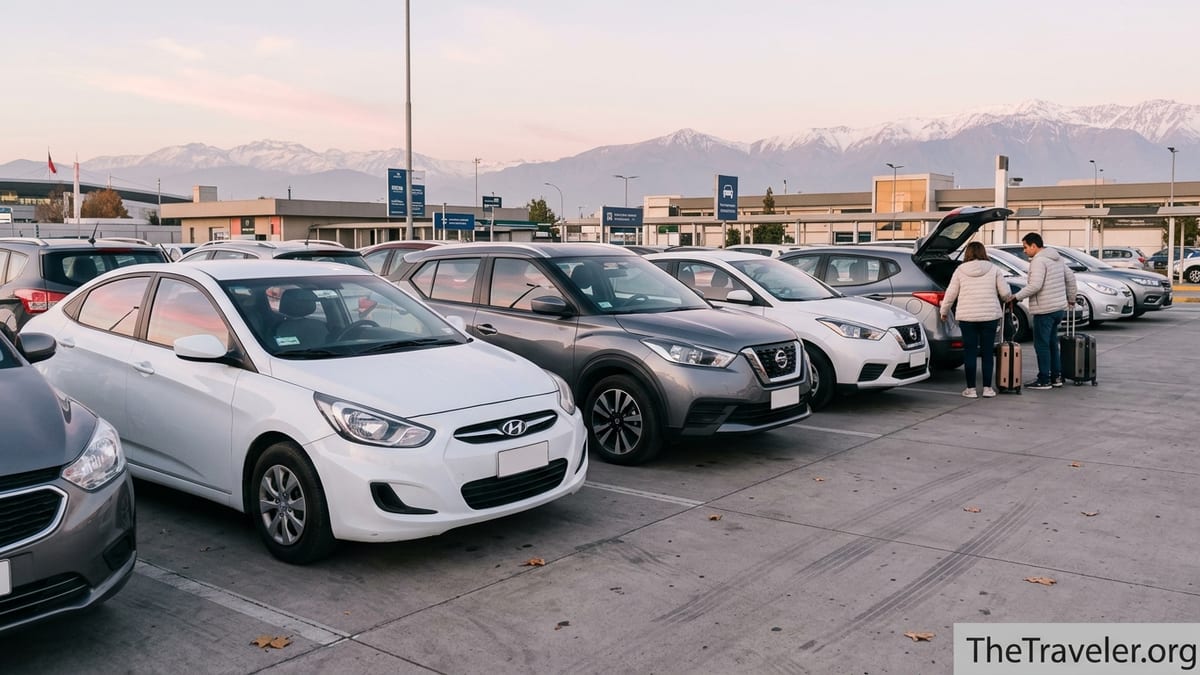
How Santiago Airport Car Rental Works
Santiago’s Arturo Merino Benítez International Airport (SCL) sits about 17 kilometers northwest of the city center and is directly linked to the toll highway network. Inside the main arrivals area of the international terminal, you will find branded desks for major agencies such as Avis, Budget, Hertz, Europcar and Chilean-owned companies like Chilean Rent a Car and Econorent. Most operate daily, typically aligning their hours with flight schedules, so late-evening pick ups are usually possible if you include your flight details when booking.
In practice, the process feels similar to major North American or European airports. After clearing customs, you approach the rental counter, complete paperwork and then walk or shuttle to the attached parking garage where vehicles are stored. Staff will usually inspect the car with you and note existing scratches or dents on a paper or digital form. Take a few photos or a short phone video around the car and of the dashboard mileage and fuel gauge as extra backup in case of later disputes.
Fleet choices at SCL skew toward compact hatchbacks and sedans, such as Hyundai Accent, Kia Rio or Chevrolet Sail, plus a growing number of small SUVs like Nissan Kicks or Hyundai Tucson. Manual transmission is still more common than automatic in Chile, though most airport agencies offer both. If you are not comfortable driving stick, you should explicitly filter for automatic when reserving and expect to pay a little more per day.
Prebooking online is strongly recommended, particularly from December to March when domestic tourism peaks and around key holidays in September and January. Walk-up renters often find only larger SUVs or premium models left, which can dramatically increase overall trip costs. Booking in advance also gives you time to check policies on toll tags, border crossings and insurance in detail rather than trying to digest them after an overnight flight.
Deposits, Credit Cards and Insurance Basics
At Santiago airport, rental agencies nearly always require a credit card in the primary driver’s name for the security deposit. Debit cards are sometimes accepted by local brands, but with stricter conditions such as higher deposits, more limited insurance and no permission to drive outside central Chile. Deposits for compact cars commonly sit in the approximate range of 400 to 800 US dollars equivalent, pre-authorized in Chilean pesos on your card and released after the rental, provided there is no damage or unpaid toll balance.
Chile requires mandatory liability coverage, often labeled “Seguro Obligatorio” or basic third-party liability. This is normally included in the base rental rate and covers damage or injury you cause to other people or their property. It does not typically cover damage to your own vehicle. To protect the rental car itself, agencies sell Collision Damage Waiver (CDW) and theft protection. CDW in Chile usually has a deductible, which for a standard compact might be roughly equivalent to 500 to 1,500 US dollars, depending on the company, vehicle category and whether glass and tires are included.
Travelers frequently arrive with a premium travel credit card that offers rental car collision coverage. Many Chilean agencies will accept this, but they may still insist you take the basic local liability plus a small “administrative” or “roadside assistance” fee. If you rely on a card’s CDW, you will usually need to decline the agency’s CDW at the counter and present a printed benefit letter in Spanish or English. Note that credit card protection rarely covers third-party liability, and may exclude unpaved roads, roof damage or trips into neighboring countries, so read the fine print carefully before banking on it.
Supplemental options offered at SCL desks can include personal accident insurance, full glass and tire coverage, and reduced-deductible packages. For trips that include mountain roads, gravel access tracks to vineyards, or long distances to coastal towns, upgrading to a lower deductible can avert large out-of-pocket surprises if you pick up a cracked windshield from flying gravel. Always ask staff to write the exact deductible amount on the rental contract in Chilean pesos so that you have a clear number in mind when weighing whether to add coverage.
Understanding Santiago’s Toll Roads, TAG and Passes
One of the most important aspects of renting a car in Santiago is understanding how electronic tolling works. The highways surrounding the city, such as Costanera Norte, Autopista Central and Vespucio Sur, use a free-flow electronic system that reads a windshield device called a TAG. There are no traditional toll booths to pay cash. When you pass under a toll gantry, the TAG is detected and the toll is charged automatically to the vehicle’s account.
Most major airport rental cars already come with an active TAG device, and the cost of tolls is either charged as a daily convenience fee plus toll usage, or as a per-toll pass-through on your final bill. Policies vary by company. For example, one firm might charge a modest flat daily fee that covers unlimited urban toll use within Santiago for the rental period, while another might itemize every gantry in detail and add a small management fee. Before leaving the airport parking structure, ask the agent to clarify whether TAG is included, whether there is a cap on daily toll charges, and when any remaining tolls will be billed after return.
If your rental contract specifies that the car does not include TAG, you cannot simply drive on these urban toll roads without consequences. Cameras record license plates, and fines or additional service charges can be billed later to the vehicle owner, which the rental firm will then pass on to you, often with an administrative surcharge. Some companies without built-in TAG may partner with day-pass systems that allow non-residents to register a plate for limited use across several concessioned highways around Santiago. If this applies, the desk agent should provide clear printed instructions at pickup, and you will generally need to buy the pass either for each day you plan to use toll roads or for a defined multiday window.
Outside the capital, many intercity highways, such as Route 68 to Valparaíso, still operate with more traditional toll plazas where you can pay in cash or by card. These plazas may coexist with electronic gantries that read TAG devices. As a visitor, the simplest arrangement is typically to accept the rental company’s TAG plan for the Santiago area and then carry some cash or a card for interurban toll booths further afield. This hybrid approach keeps you legal on city ring roads while still allowing flexibility on longer road trips.
Driving from Santiago to Valparaíso and the Coast
Valparaíso lies roughly 110 to 120 kilometers west of Santiago, connected by Route 68, a divided highway that usually takes about 1.5 hours in light traffic. Leaving the airport with a rented car, you can follow Costanera Norte west, which links directly toward Ruta 68 without detouring through downtown. This route is efficient but passes several electronic toll portals inside Santiago, so make sure your TAG or day-pass arrangements are in order before setting off.
Along Ruta 68 itself, you will encounter conventional toll plazas that charge a fee for cars and small SUVs. Exact toll amounts change over time and can rise during peak holiday weekends, but travelers can generally expect to pay the equivalent of a few US dollars per plaza in each direction between Santiago and the coast. For a return day trip from Santiago to Valparaíso and back, fuel and tolls combined often end up roughly comparable to purchasing two intercity bus tickets, with the added benefit of flexibility to stop at viewpoints and wineries.
The stretch of Route 68 that crosses the Casablanca Valley doubles as a scenic drive through one of Chile’s most famous white wine regions. Many visitors break the journey with a stop at a vineyard that offers tastings and lunch, then continue to Valparaíso in the afternoon. If you plan to drink more than a single tasting glass, however, it is safer to schedule a separate guided wine tour on another day and use public transport for the coast. Police checks for drunk driving, particularly on weekends and holidays, are taken seriously and fines are steep.
Once you reach the region of Valparaíso, prepare for narrow, steep hillside streets and occasional cobblestones, especially in the UNESCO-listed historic quarters. Car theft from the street is not uncommon. Many visitors choose to park in guarded lots or garages near the lower parts of the city and explore the hill neighborhoods on foot or by funicular. If you continue a little further along the coast to Viña del Mar, you will find broader avenues, beachside parking areas and a more car-friendly layout, making the rental more comfortable for families or beach-hopping day trips.
Andes Excursions and Wine Valley Road Trip Ideas
One of the strongest arguments for renting a car at Santiago airport is access to the Andes. Within a couple of hours, you can reach mountain landscapes that feel far removed from the city. A classic self-drive route is the Cajón del Maipo valley, southeast of Santiago. After navigating city traffic or using toll motorways to skirt the center, you follow paved roads that gradually narrow into a dramatic gorge lined with riverside picnic spots, small guesthouses and thermal baths. Sections beyond certain dams or toward remote hot springs can become rougher, and in winter there may be snow and ice, so a higher-clearance vehicle and flexible timing help.
Another popular drive is up toward the ski areas east of the city, such as Valle Nevado and La Parva. The access road winds up in tight switchbacks and climbs rapidly, which can be exhilarating for some drivers and uncomfortable for passengers prone to motion sickness. In heavy snow, chains may be required, and car rental companies sometimes restrict which vehicles can be taken to high-altitude areas during the heart of winter. If skiing is a priority, ask specifically at the desk whether your chosen car category is approved for travel to these resorts and whether extra coverage is necessary for snow-related incidents.
For wine lovers, a rental car unlocks several valleys that are cumbersome to reach on fixed-schedule tours. The Maipo Valley, directly south of Santiago, houses well-known vineyards that are relatively easy to access via Route 5 and local turnoffs. To the west, the Casablanca Valley lies along Route 68 between Santiago and Valparaíso and is especially known for cool-climate whites. Further afield, the Colchagua Valley, a couple of hours south of the capital, offers rolling vineyard landscapes and small towns where you can base yourself for a few nights and explore different wineries at your own pace.
When designing a Chile road trip, remember that some rural roads remain unpaved, particularly smaller connectors between vineyard areas or side valleys in the Andes. Using a mapping app in offline mode helps anticipate gravel stretches and estimate travel times more realistically. If your itinerary includes several backroads, it may be worth paying slightly more for a compact SUV instead of the cheapest city car, as extra clearance improves comfort and reduces the risk of underbody scrapes.
Is Renting a Car at SCL Worth It?
Deciding whether to rent at Santiago’s airport depends heavily on your plans. If you intend to spend two or three days mainly in central Santiago, then travel to Valparaíso for a night or two and return, public transport is often more efficient. Airport buses and ride-hailing services connect SCL to the city center, while frequent long-distance buses link Santiago’s terminals with Valparaíso and Viña del Mar. In that scenario, you avoid deposits, parking hassles in dense neighborhoods and the learning curve of Santiago’s toll system.
On the other hand, if your trip combines the capital with multiple side excursions, the cost-benefit equation shifts in favor of car rental. A family of four planning to visit both the Casablanca wine valley and coastal towns, then continue to Colchagua or to Andean viewpoints, can find that renting for a week ends up similar in price to a string of private tours and intercity transfers, while offering far more flexibility. The ability to stop at roadside fruit stands, explore less-touristed beaches or detour to a viewpoint on Ruta 68 often becomes a highlight of the trip rather than a logistical detail.
Comfort level with international driving plays a major role. Chilean drivers in and around Santiago can be fast and assertive, but road conditions on main highways are generally good, signage is clear, and fuel stations are modern with attendants who can help if your Spanish is limited. If you have previously driven in busy urban environments and are comfortable with roundabouts, multi-lane highways and occasional aggressive lane changes, you will likely adapt quickly.
An intermediate option is to delay car rental until after you have spent a couple of days in the city. You can use airport shuttles or taxis into Santiago, then pick up a rental from a downtown branch when you are ready to head for the coast, the Andes or the wine regions. This approach reduces days paid for parking in the city and lets you get over jet lag before tackling long drives.
Practical Tips for a Smooth Chile Road Trip
Before leaving the airport parking lot, familiarize yourself with a few key features: how to operate the headlights, hazard lights and windshield wipers, and how to open the fuel door. In Chile, fuel is sold in liters and most stations are full-service, meaning an attendant pumps for you. Keep a small amount of local currency in case a card terminal is offline, and verify which fuel type your car requires. Many small rentals are gasoline-powered, but diesel models also exist and misfueling can lead to costly repairs.
Speed limits on highways are typically around 100 to 120 kilometers per hour, with lower limits on urban stretches or in roadworks. Fixed and mobile speed cameras operate on major routes, and fines can be issued retrospectively via the rental company. When approaching toll plazas on intercity highways, stay attentive to signage that separates lanes for vehicles paying with TAG from those using cash or card. Rental cars with active TAG are usually permitted in the electronic lanes, but if you are unsure, choose a staffed booth to avoid confusion.
Parking habits vary by neighborhood. In central Santiago and in Valparaíso’s lower town, paid street parking is often overseen by attendants wearing identifiable vests, who provide a ticket or record your license plate and collect payment when you return. In shopping districts and newer wine tourism developments, gated lots are more common. When leaving the car for extended periods in touristic areas, avoid leaving bags, cameras or electronics visible to passersby, even during daytime.
Language need not be a barrier to renting, but it helps to learn or note down a few key phrases such as “bencina” for gasoline, “peaje” for toll, “llanta pinchada” for flat tire and “grúa” for tow truck. Many airport desk agents and major highway fuel station staff have at least basic English, but agreements and roadside assistance documents may be in Spanish. Taking photos of the rental contract and roadside assistance number, and saving them offline on your phone, ensures you can access them even in areas with patchy signal.
The Takeaway
Renting a car at Santiago’s Arturo Merino Benítez International Airport opens up central Chile in a way that scheduled buses and organized tours cannot quite match. With some preparation around deposits and insurance, a clear understanding of the TAG-based toll system in and around the capital, and realistic expectations for mountain and coastal driving conditions, most visitors find self-driving both manageable and rewarding.
If your Chile itinerary centers on exploring neighborhoods, museums and restaurants within Santiago itself, plus perhaps a single overnight in Valparaíso, the extra cost and logistics of a rental may not add much value. But if you are drawn to a blend of city, coast, vineyards and peaks, and you appreciate the freedom to detour on a whim, picking up a car at SCL can turn those scattered dots on the map into a coherent and memorable road trip. Weigh your comfort with urban driving, your appetite for flexibility and the total cost of alternative transport, then choose the option that best supports the Chile experience you want.
FAQ
Q1. Do I really need a rental car to visit Valparaíso from Santiago?
For a straightforward visit focused on the cities of Valparaíso and Viña del Mar, intercity buses from Santiago work very well and spare you parking hassles. A rental car becomes more useful if you want to stop in the Casablanca Valley wineries on the way or continue exploring smaller coastal towns beyond the main urban centers.
Q2. How are tolls from Santiago’s urban highways charged on a rental car?
Most airport rentals include an electronic TAG device that automatically records each toll as you pass under gantries. The rental agency either charges a daily fee that covers urban toll use or itemizes the tolls and bills them, sometimes with a small service charge, after you return the car. Ask for the exact policy at the counter before you drive away.
Q3. Can I refuse the rental company’s insurance and use my credit card coverage instead?
In many cases you can decline the agency’s collision damage waiver if your credit card offers primary rental car insurance, but you will almost always still need the mandatory local liability coverage. Bring a printed letter from your card issuer describing the benefit, and make sure it applies in Chile and to the type of vehicle you are renting.
Q4. Is it safe to drive in Santiago and on Chilean highways for foreign visitors?
Chilean highways around Santiago, Valparaíso and the main wine valleys are generally in good condition with clear signage, and many foreign visitors report feeling comfortable after a short adjustment period. Traffic in central Santiago can be dense and fast, so if you are nervous, consider planning your routes to use ring roads and avoiding rush-hour driving.
Q5. What kind of car should I rent for trips to the Andes and wine regions?
For mainly highway and paved-road driving, a compact sedan or hatchback is sufficient and economical. If your plans include gravel roads to remote vineyards or mountain viewpoints, a small SUV with higher ground clearance can provide a smoother ride and a bit more margin for uneven surfaces.
Q6. Are automatic transmission cars easy to find at Santiago airport?
Automatic cars are available at SCL but typically make up a smaller share of the fleet than manuals and often cost more per day. To secure an automatic, book well in advance, choose a well-known agency and filter your reservation specifically for automatic transmission rather than assuming one will be available at the counter.
Q7. How much should I expect to pay in tolls driving between Santiago and Valparaíso?
Toll amounts on Route 68 can change and may rise during peak weekends, but in broad terms you can expect to spend the equivalent of several US dollars in tolls in each direction. Urban tolls inside Santiago, handled electronically, will add a bit more if you use ring roads like Costanera Norte to reach the highway.
Q8. What happens if I accidentally drive on a TAG-only road without a valid TAG or pass?
If you use a TAG-controlled highway without a device or pass, cameras capture your license plate and a charge or fine is later sent to the vehicle’s owner. With rentals, that typically means the company will pay then bill you afterward, usually adding an administrative fee. It is better to clarify TAG options at pickup and, if in doubt, stick to non-toll surface streets until you are sure you are covered.
Q9. Is parking difficult in Valparaíso if I arrive with a rental car?
Parking can be challenging in Valparaíso’s hill neighborhoods due to narrow, steep streets and limited secure spaces. Many drivers prefer to park in paid, guarded lots near the lower part of town or at accommodations that offer secure parking, then explore the historic hills on foot or by funicular.
Q10. Can I take my Santiago airport rental car across the border to Argentina?
Some rental agencies allow cross-border travel to Argentina, but it must be arranged in advance and usually involves extra paperwork, fees and specific insurance documents. If a side trip to Mendoza or another Argentine destination is on your agenda, mention it when booking and confirm that your chosen car and contract explicitly permit international travel.