


Pick the wrong card for an overseas trip and you can quietly lose 3% on every tap, plus extra on cash withdrawals. Pick the right one and you keep that money for gelato in Rome or a metro pass in New York. In 2026, the Lloyds Ultra credit card has entered a crowded UK travel-card market that already includes strong options like Halifax Clarity, Barclaycard Rewards and the fee free Chase UK debit card. This guide compares Lloyds Ultra with the UK’s top rated travel cards so you can see which one actually saves you the most on your next holiday.
Get the latest updates straight to your inbox!
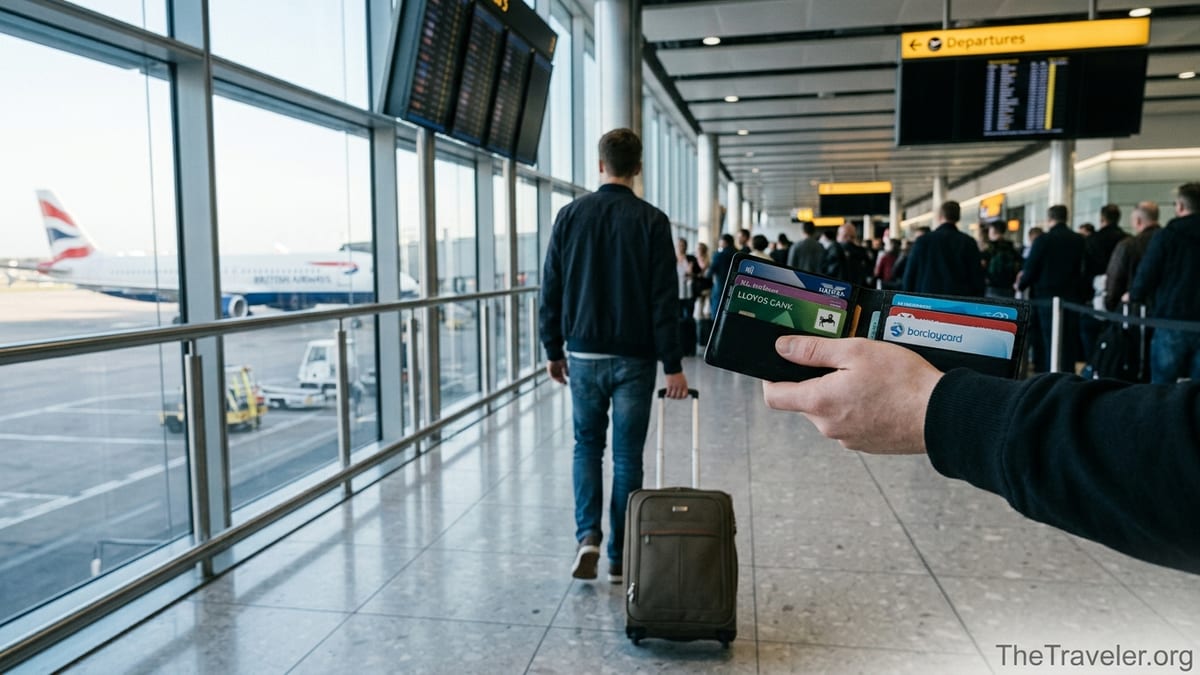
What Makes a Good UK Travel Card in 2026
Most standard UK credit cards still add roughly 2.75% to 3% in non sterling transaction fees when you pay in local currency abroad. On a family holiday where you spend £2,000 on hotels, food and attractions, that can mean £55 to £60 in fees for nothing more than the privilege of using your card. A good travel card removes these foreign usage fees, uses a fair exchange rate such as the Visa or Mastercard wholesale rate, and keeps cash withdrawal costs clear and manageable.
In practice, this means looking at three things before you travel. First, non sterling transaction fees on purchases such as restaurant bills or attraction tickets. Second, cash withdrawal fees and any interest charges on ATM usage if you like to carry some local notes. Third, extras that might matter to you, such as cashback, rewards or travel insurance. For example, someone heading to Spain for a long weekend might prioritise no fees and simple ATM access, while a frequent business traveller to the United States might be willing to accept an annual fee in exchange for airport lounge access and airline miles.
There is no single best card for every UK traveller. Some cards, such as Chase UK’s debit card, specialise in everyday fee free spending and cashback without any credit facility. Others, such as Halifax Clarity, focus on pure overseas fee savings with very little in the way of rewards. Lloyds Ultra sits somewhere in between, aiming to combine no foreign fees with ongoing cashback on both domestic and international spending.
When comparing cards, it helps to model a real trip. Imagine a week in Lisbon with £800 on hotels, £500 on food and drink, £200 on museums, taxis and public transport, and £200 taken out in cash from ATMs. With a typical non travel card, that £1,500 card spend plus £200 cash might easily incur £45 to £50 in foreign transaction and cash fees. The best UK travel cards can cut that cost close to zero, which is why getting the choice right matters.
Lloyds Ultra Travel Card: Key Features and Real World Use
Lloyds Ultra, launched in October 2025, is a Mastercard credit card designed as a simple, all rounder product. According to Lloyds Bank, the card offers cashback on everyday purchases and no foreign exchange fees from Lloyds itself on overseas spending. There are no monthly account fees, which contrasts with some premium travel cards that charge £100 or more per year in return for perks like lounge access or hotel status.
In terms of rewards, Lloyds Ultra pays 1% cashback on card purchases for the first 12 months from account opening, then 0.25% cashback afterward, with no stated cap on how much cashback you can earn. For a typical UK cardholder who puts £1,000 a month of everyday spend through the card, that could mean around £120 in cashback in year one, plus a smaller but ongoing rebate in subsequent years. Crucially for travellers, that cashback rate applies to spending both at home and abroad, so your hotel in Athens and your weekly supermarket shop in Leeds both earn rewards.
For foreign travel, Lloyds Ultra removes its own foreign exchange fee on card purchases. That means when you pay €100 for dinner in Paris and choose to pay in euros, the transaction should go through at or near the Mastercard wholesale rate without a separate non sterling transaction charge from Lloyds. Over a two week trip with £1,500 of overseas card spending, skipping a typical 2.99% fee could save you roughly £45 compared with a standard UK rewards card that does not waive foreign usage charges.
The card is also attractive for cash withdrawals. Lloyds states that there are no Lloyds cash withdrawal fees at home or abroad, which can be valuable for travellers who like to withdraw small amounts of local currency from ATMs. However, as with many credit cards, interest on cash advances can start running immediately, so in practical terms a traveller using Lloyds Ultra for cash in Thailand or Canada would want to move money to clear those cash withdrawals as quickly as possible, ideally via mobile banking the same day.
How Lloyds Ultra Compares With Halifax Clarity
Halifax Clarity is often cited in UK personal finance discussions as a benchmark travel credit card because it charges no foreign transaction fees on purchases and does not levy a separate fee for ATM withdrawals abroad. Clarity typically uses the Mastercard wholesale exchange rate, meaning if you spend €500 in Germany over a weekend you pay the same rate you would see on a multi currency benchmark site, with no extra foreign usage margin from Halifax.
Where Halifax Clarity differs from Lloyds Ultra is rewards. Clarity does not pay cashback or points on everyday purchases, so its appeal is primarily the elimination of foreign usage fees rather than ongoing perks. If you are a traveller who spends £2,000 abroad in a year and very little on the card at home, the absence of annual fees and foreign charges may be all you need. Halifax Clarity can be particularly compelling for backpackers and long term travellers who are focused on keeping costs as low as possible without juggling a complex rewards system.
Cash withdrawal behaviour is also important when comparing the two. Halifax Clarity does not charge a fee for withdrawing cash abroad, but interest on those cash transactions usually accrues from the day you take the money out, even if you pay your statement in full later. Many experienced travellers using Clarity solve this by paying off withdrawals via online banking shortly after using an ATM, effectively limiting the interest cost to a few pence. Lloyds Ultra follows a broadly similar pattern: no Lloyds fee on cash withdrawals, but interest may apply, so prompt repayment is again the smartest approach if you rely on ATMs in destinations such as Turkey or Mexico.
In a side by side scenario, imagine a couple taking a £3,000 self arranged trip to Canada. They put £2,500 of spend through their credit card and withdraw £500 in cash. With Halifax Clarity, they avoid foreign usage fees but earn no rewards. With Lloyds Ultra, they would also avoid foreign exchange fees from Lloyds and, in the first year, earn 1% cashback on that £3,000, which equates to £30 back. For travellers who put significant domestic spending on the same card, Lloyds Ultra’s cashback could add up over time, while pure fee hunters might still prefer Clarity’s simplicity.
Barclaycard Rewards, Chase Debit & Other Leading UK Travel Cards
Beyond Lloyds Ultra and Halifax Clarity, several other cards feature prominently in 2026 league tables of UK travel friendly plastic. Barclaycard Rewards Visa is one of the strongest all rounders. It generally charges no foreign transaction fee on purchases, allows cash withdrawals abroad without a separate cash fee, and offers around 0.25% cashback on most spending. For many UK holidaymakers, this looks similar to a slightly lower reward version of Lloyds Ultra but without the initial 1% cashback promotional period.
Then there is the Chase UK current account debit card, which independent reviewers often rate as one of the best fee free travel options, especially for travellers who prefer not to rely on credit. The Chase debit card offers 0% foreign transaction fees on card spending, uses a competitive exchange rate, and pays around 1% cashback on eligible everyday spending for many customers, without any annual fee. For a long weekend in Amsterdam, a traveller could comfortably use the Chase card for contactless tram fares, café bills and museum tickets without worrying about foreign fees, and still earn cashback on those transactions.
Premium credit cards like American Express Preferred Rewards Gold Credit Card or British Airways American Express Premium Plus can also work for travel, but most of them charge foreign transaction fees on purchases overseas. Travellers who prioritise Avios or Membership Rewards points often avoid using these cards abroad and instead pair them with a separate no fee travel card. For example, a frequent flyer might book BA flights and UK hotels on a British Airways Amex to earn Avios, but use Halifax Clarity or Lloyds Ultra for daily spending in the eurozone where foreign fees would otherwise erode the value of those points.
Some UK banks also offer travel focused versions of their mainstream cards with 0% foreign transaction fees for an introductory period. A card might waive non sterling fees for the first 12 months or during a promotional window, which can be useful if you have a single big trip coming up, such as a round the world sabbatical or extended stay in Australia. However, once the promotional period ends, you may revert to paying foreign usage fees, so it is important to check the long term conditions before relying on such a card as your main travel solution.
Fees, Interest and Exchange Rates: What You Really Pay
When comparing Lloyds Ultra and its competitors, it is useful to break down the cost of using a card abroad into several layers. First is the explicit non sterling transaction fee, which Lloyds Ultra, Halifax Clarity, Barclaycard Rewards and the Chase debit card all set at 0% for purchases. Second is the cash withdrawal fee, which these cards also either waive or structure so that no separate flat fee is charged at an ATM, though interest on cash advances can still apply for credit cards.
The third layer is the exchange rate itself. Even with 0% non sterling transaction fees, card issuers rely on card schemes like Visa and Mastercard, which apply their own wholesale rates. While these are usually close to the mid market rate you see quoted on financial news sites, there can be a small spread. In practice, however, that spread is often far smaller than the 3% fees added by typical non travel cards, so a 0% foreign fee card such as Lloyds Ultra or Barclaycard Rewards still represents a meaningful saving. For example, paying 100 US dollars at a New York restaurant might cost you around £78 with a 0% fee card versus £80 with a standard rewards credit card that adds a 3% fee and a slightly weaker rate.
A fourth layer many travellers overlook is dynamic currency conversion, where a foreign merchant or ATM offers to bill you in pounds rather than local currency. Even with a fee free card, these conversions can carry an inflated exchange rate equivalent to a 4% or 5% fee. Whether you are using Lloyds Ultra in a Madrid hotel or Chase debit in a Tokyo electronics store, you will nearly always be better off choosing to pay in local currency rather than pounds to avoid that hidden mark up.
Interest is the final factor. Most travel cards provide up to 56 days interest free on purchases if you pay your statement in full each month, but cash withdrawals are typically treated differently. With Lloyds Ultra, Halifax Clarity and Barclaycard Rewards, interest on cash can run from the date of withdrawal until you clear that part of the balance. In practice, that means a traveller using Lloyds Ultra to take out £300 in cash for market shopping in Marrakesh should use mobile banking to pay that £300 back as soon as possible, reducing any interest charge to a negligible amount while still enjoying fee free access to local currency.
Which Type of Traveller Is Lloyds Ultra Best For
Lloyds Ultra is designed for UK residents who want a single card that works well both at home and abroad. Its combination of no foreign exchange fee on purchases, no Lloyds cash withdrawal fees and ongoing cashback means it fits travellers who like simplicity and do not want to micromanage multiple cards. A young professional who spends £1,200 a month on groceries, petrol and online shopping, and takes two trips to Europe each year, could comfortably put most card spending on Lloyds Ultra and receive cashback on all of it, without having to remember a separate travel only card.
In contrast, Halifax Clarity suits travellers who are primarily focused on overseas savings and are less interested in rewards on domestic spending. A gap year traveller backpacking across Southeast Asia for three months might choose Clarity because they plan to use ATMs regularly and value the simple, no fee structure on foreign transactions. They may not care about earning cashback on their UK spending once they return home and instead switch back to a different rewards card.
Barclaycard Rewards and Chase UK’s debit card are strong fits for cost conscious travellers who also appreciate a minimal but steady cashback stream. A family heading to Orlando could use Barclaycard Rewards for theme park tickets, hotel bills and restaurant spending, avoiding non sterling transaction fees and earning a small cashback rebate, while using a separate, higher reward UK card for domestic direct debits and large purchases. Meanwhile, a student studying in the Netherlands for a semester might prefer Chase debit because it offers fee free purchases with clear budgeting via a current account rather than a credit limit.
For heavy travellers chasing perks like lounge access, Lloyds Ultra may be less compelling than premium cards from airlines or American Express, but many of those products charge foreign transaction fees. A common strategy among frequent flyers is to hold at least two cards: one premium rewards card for flights and UK hotel bookings, and a separate no foreign fee option such as Lloyds Ultra or Halifax Clarity for everyday overseas payments. This way they avoid giving back the value of their points in unnecessary fees when buying coffee, taxis or meals abroad.
The Takeaway
For UK travellers in 2026, the Lloyds Ultra credit card is a strong new entrant that stands up well against long established travel favourites. Its 0% foreign exchange fee on purchases, lack of Lloyds cash withdrawal fees and simple cashback structure make it a practical choice for people who want one main card to use both at home and on the road. In real terms, using Lloyds Ultra on a typical £1,500 city break can easily save £40 to £50 in foreign fees compared with a standard rewards card that adds about 3% to overseas transactions.
Halifax Clarity remains a go to recommendation for those who want a pure, fee free travel workhorse and are less bothered about rewards. Barclaycard Rewards and the Chase UK debit card offer additional flexibility, especially for travellers who prefer a small but steady cashback stream or want to avoid credit entirely. By modelling the costs of a real trip and looking carefully at your own spending habits, you can decide whether Lloyds Ultra’s mix of fee free travel and cashback justifies making it your everyday card or whether a more specialised product is a better match.
Whatever you choose, the biggest step is moving away from a standard UK card that charges non sterling transaction fees of nearly 3%. Combine a true travel friendly card with good habits, such as always paying in local currency and repaying cash withdrawals quickly, and you can keep more of your budget for the reasons you went abroad in the first place: memorable meals, unplanned detours and the occasional upgrade that turns a normal trip into something special.
FAQ
Q1. Does the Lloyds Ultra credit card charge foreign transaction fees when used abroad?
Lloyds Ultra does not charge its own foreign exchange fee on purchases abroad when you pay in the local currency, so you avoid the typical 2.75% to 3% non sterling transaction fee many standard UK cards still add.
Q2. Can I withdraw cash from ATMs overseas with Lloyds Ultra without paying extra fees?
Lloyds states that it does not charge a separate cash withdrawal fee at home or abroad, but because ATM withdrawals on credit cards usually incur interest from the date of withdrawal, it is wise to repay those amounts as soon as possible.
Q3. How does Lloyds Ultra’s cashback compare to Halifax Clarity when travelling?
Halifax Clarity focuses on fee free spending and typically offers no cashback, while Lloyds Ultra pays 1% cashback on purchases in the first year and 0.25% thereafter, including on eligible overseas transactions, which can add noticeable value if you use the card for both travel and everyday UK spending.
Q4. Is Barclaycard Rewards better than Lloyds Ultra for foreign travel?
Barclaycard Rewards and Lloyds Ultra both offer 0% foreign transaction fees and the ability to use ATMs abroad without a separate cash fee, but Barclaycard Rewards usually pays around 0.25% cashback, while Lloyds Ultra offers higher cashback in the first year. The better card for you depends on whether you want the stronger introductory cashback from Lloyds or the long term simplicity of Barclaycard Rewards.
Q5. Should I still bring a debit card if I have a travel credit card like Lloyds Ultra?
Yes, it is sensible to bring a debit card as a backup, particularly for destinations where some merchants prefer debit or for topping up local accounts. Many UK travellers pair a travel credit card such as Lloyds Ultra or Halifax Clarity with a fee free debit card like Chase UK to spread risk and manage budgets more easily.
Q6. Will using a 0% foreign fee card like Lloyds Ultra always give me the best exchange rate?
You usually get a competitive rate close to the Visa or Mastercard wholesale level, but no card guarantees the absolute best rate on every day. The bigger threat to value is dynamic currency conversion at tills and ATMs, so you should always choose to pay in the local currency rather than pounds to avoid an inflated conversion.
Q7. Is it worth getting Lloyds Ultra if I only travel once a year?
If you travel infrequently but would also use Lloyds Ultra for everyday UK spending, the combination of no foreign transaction fees on your annual trip and ongoing cashback on domestic purchases can still be worthwhile. However, if you rarely use credit and prefer to pay by debit day to day, a fee free debit option such as Chase UK may be simpler.
Q8. Can I use Lloyds Ultra to book flights and hotels in foreign currencies online from the UK?
Yes, you can use Lloyds Ultra to pay foreign currency transactions online from the UK, such as booking a hotel in euros on a European website. These should benefit from the 0% foreign exchange fee in the same way as in person purchases abroad, provided the transaction is processed in the foreign currency rather than converted to pounds by the merchant.
Q9. What credit score do I need to be approved for Lloyds Ultra?
Lloyds does not publicly guarantee an exact score requirement, but in practice travel credit cards that offer cashback and 0% foreign fees tend to favour applicants with good to excellent credit histories, stable income and responsible past use of borrowing. Checking your eligibility through Lloyds’ own tools before applying can help you gauge your chances without affecting your credit file.
Q10. Is Lloyds Ultra the best UK travel card overall in 2026?
Lloyds Ultra is among the strongest all round UK travel cards in 2026, especially for those who value simple cashback on all spending. However, Halifax Clarity may be better if you prioritise absolute fee minimisation, Barclaycard Rewards offers a straightforward low reward alternative, and the Chase UK debit card is outstanding for those who prefer to avoid credit, so the best choice depends on your personal travel patterns and spending habits.