


The Lloyds Ultra credit card has quickly attracted attention among UK travelers who are tired of paying hefty foreign transaction fees every time they tap their card overseas. With no foreign transaction charges and straightforward cashback on everyday spending, it promises to turn your normal holiday purchases into meaningful savings. Used intelligently, it can sit at the heart of a simple, low-cost travel money strategy whether you are on a weekend in Paris or backpacking across Southeast Asia.
Get the latest updates straight to your inbox!
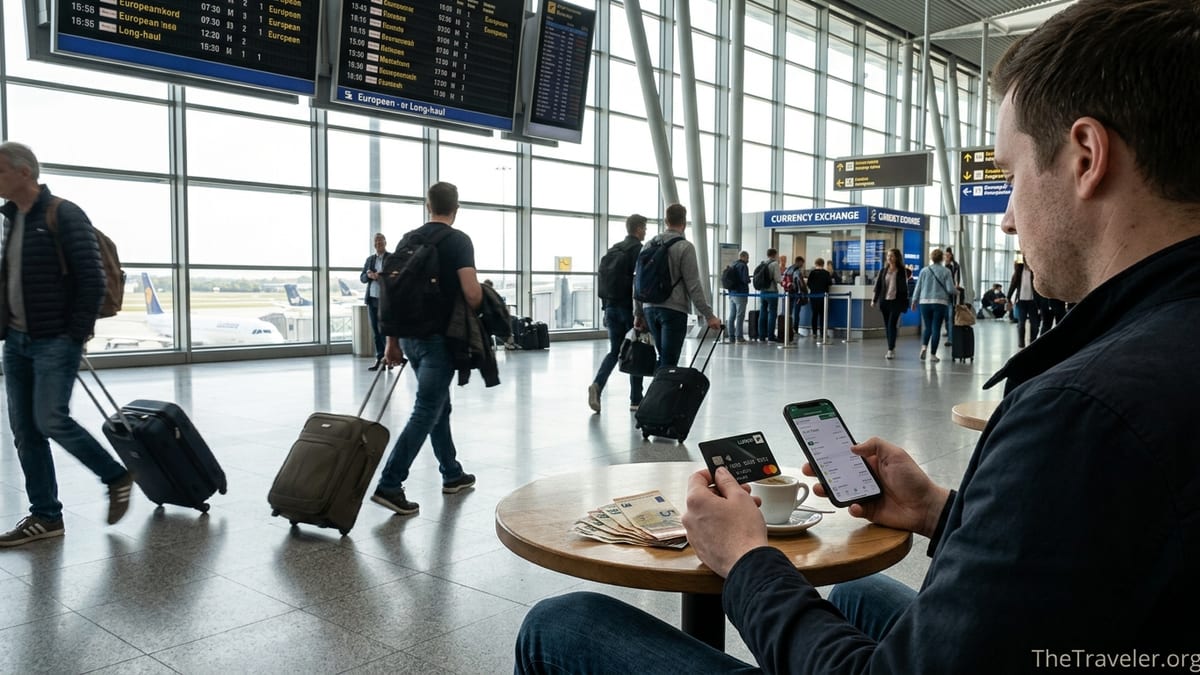
What Makes the Lloyds Ultra Card Appealing for Travelers
Lloyds Bank launched the Ultra credit card as a simple, fee-free everyday card that also works well for holidays and foreign spending. The key attraction for travelers is that Lloyds does not charge a foreign transaction fee when you pay in a non-sterling currency, whether that is euros in Spain or dollars in the United States. Traditionally, many high street cards have added around 2.75 to 2.99 percent on top of the exchange rate whenever you used the card abroad or on a foreign website, so cutting that cost can make a noticeable difference on a typical holiday budget.
The card is designed with no monthly account fee and cashback on spending, which makes it more flexible than some specialist travel cards that only make sense when you are overseas. The Ultra sits comfortably in your wallet year-round for groceries and fuel at home, then seamlessly becomes your main card in destinations from Lisbon to Los Angeles. Travelers who prefer not to juggle multiple cards for different purposes appreciate this simplicity.
Behind the scenes, the Ultra card uses the card network’s exchange rate on the day the transaction is processed, typically the Mastercard or similar scheme rate. In practice, this rate is usually close to the market rate most savvy travelers track on currency apps. That means when you buy a 5 euro coffee in Rome or a 60 dollar museum pass in New York and choose to pay in the local currency, the conversion back to pounds is generally far more competitive than the rate a tourist bureau or bureau de change kiosk would offer.
For frequent travelers, the combination of no foreign transaction fee plus decent exchange rates and ongoing cashback can add up. A family that spends the equivalent of 2,000 pounds a year on overseas hotels, restaurants and attraction tickets would have previously lost around 60 pounds or more purely in foreign transaction fees on a typical high street card. With Ultra, that leakage is removed before you even consider cashback earnings.
How the Card Actually Saves You Money Abroad
The most straightforward saving with Lloyds Ultra is the elimination of the foreign transaction fee from the bank itself. Imagine a long weekend in Barcelona where you spend 400 euros on accommodation, 250 euros on dining and 150 euros on sightseeing and local transport, for a total of 800 euros. On a typical card with a 2.99 percent non-sterling fee, you would pay nearly 24 euros worth of charges on top of the exchange rate. With Ultra, provided you pay in euros at the point of sale, the conversion to pounds happens without that extra percentage loaded on.
The second layer of savings comes from avoiding dynamic currency conversion, or DCC. This is the moment in a shop, hotel or restaurant when the payment terminal asks if you want to pay in pounds instead of the local currency. Although the screen makes it sound friendly and safe, the exchange rate baked into that pound price is usually far worse than the rate used by the card network. A traveler in Bangkok, for example, might be offered the choice of paying 1,000 Thai baht or 24 pounds for a restaurant bill. If you accept the pound price, the local terminal operator sets the rate and often adds their own margin. By choosing to pay 1,000 baht and letting Lloyds process the transaction in pounds later, an Ultra cardholder typically gets a significantly better rate and keeps the benefit of the card’s no foreign transaction fee policy.
Cashback adds a further, if modest, benefit on top of these structural savings. While exact rates can change, Ultra is built around simple uncapped cashback on everyday purchases rather than complex tiered reward schemes. That means a 60 euro dinner in Italy or a 30 dollar Uber ride in New York earns the same style of reward as your weekly supermarket shop back home. For long trips where you are channeling most of your accommodation, transport and dining through the card, this can quietly offset part of your travel budget.
Real-world experience from early adopters suggests that Ultra is most powerful when it replaces what used to be a fee-laden legacy card abroad. Someone who previously used a standard UK credit card on a two week trip to Florida might see a line of separate foreign usage fees on their statement. Switching to Ultra removes that column of charges entirely, leaving only the converted pound amount for each theme park ticket, restaurant tab and petrol stop on the drive between Orlando and Miami.
Using Lloyds Ultra Day-to-Day on Holiday
On the ground, Ultra behaves much like any modern contactless credit card. In the eurozone, you can tap for small purchases such as a 2.50 euro espresso in a Paris café or a 15 euro museum ticket in Amsterdam. For larger bills, such as hotel stays, the card will typically be inserted into the terminal with chip and PIN or verified via contactless followed by a PIN check at higher amounts. Because Ultra is a mainstream UK card, it tends to be accepted wherever major card networks are taken, which covers everything from supermarket chains in Spain to train ticket machines in Germany.
Travelers often find the card especially handy for online bookings in foreign currencies. If you are reserving a boutique riad in Marrakech priced in Moroccan dirhams or paying for domestic flights within Canada priced in dollars, Ultra can handle the transaction in the original currency without adding a foreign transaction fee from Lloyds. That removes the need to hunt for a separate “travel card” just for bookings made before departure.
One area where travelers should be cautious is ATM withdrawals. While the Ultra card does not levy a non-sterling fee on purchases, cash advances on any credit card can attract their own interest charges from the day of withdrawal, and some foreign ATMs add independent usage fees or poor exchange rates. For this reason, many experienced travelers use a separate fee-free debit card for cash and keep Ultra primarily for card payments. If you do need to withdraw cash abroad in an emergency, check the ATM screen carefully for additional fees and always select the option to be charged in the local currency rather than pounds.
It is also vital to keep security in mind. Before leaving the UK, confirm that Lloyds has your up-to-date contact details in case the bank needs to verify transactions. While most modern card systems no longer require you to formally “tell” the bank you are traveling, sudden high spending in an unfamiliar country can still trigger fraud checks. Having your Lloyds mobile app installed and notifications enabled makes it much easier to confirm genuine transactions quickly if an alert appears while you are halfway through a meal in Lisbon or checking into a hotel in Dubai.
Comparing Lloyds Ultra With Other Travel-Friendly Options
In the current UK market, Lloyds Ultra sits alongside a growing number of cards that promise 0 percent foreign transaction fees. Digital-first banks such as Monzo and app-based providers like Chase UK have popular debit cards that waive foreign usage charges and use competitive network exchange rates, which makes them strong alternatives or companions to Ultra. At the same time, long-established specialist credit cards such as Halifax Clarity remain a favourite for fee-free overseas spending, particularly for travelers focused purely on low-cost foreign use without caring about cashback on domestic purchases.
The Ultra card’s main selling point compared with those rivals is that it is a general-purpose credit card with simple cashback and no annual fee that also happens to be fee-free abroad. Where some premium travel cards bundle airport lounge access or insurance in exchange for a significant yearly fee, Ultra deliberately strips away those extras. For a city-break traveler who mainly wants a single, uncomplicated card for both home and overseas use, that focus on clarity can be more attractive than a long list of luxury benefits they may rarely use.
Of course, Ultra is not the only sensible choice. A traveler might, for instance, pair a Lloyds Ultra card with a separate fee-free debit card for cash withdrawals. In practice, that could mean using Ultra to pay for a 300 euro hotel bill in Lisbon and 80 euros worth of restaurant meals over a weekend, while relying on a specialist debit card to withdraw 100 euros in cash for taxis and market stalls. In this setup, the credit card handles the bulk of spend that can earn cashback and be easily disputed if something goes wrong, while the debit card covers the small slice of the budget that still needs cash.
When comparing Ultra to rivals, it also makes sense to consider customer service and your existing relationship with Lloyds. Some travelers value being able to see their credit card alongside their current account in one app and to speak to a familiar UK-based support line if a card problem appears during a trip. Others are more comfortable spreading their risk across multiple providers in case one bank temporarily blocks their card abroad. There is no single right answer, but understanding how Ultra fits into this wider landscape helps you decide whether it should be your primary travel card or one of several tools in your wallet.
Maximising Rewards on Foreign Spending
To get the most from Lloyds Ultra, it pays to prioritise the card for categories where your spending naturally runs high during a trip. Accommodation is an obvious example. A week’s stay at a mid-range hotel in Rome might cost 900 euros. Charging that to Ultra not only avoids foreign transaction fees but can also generate a noticeable amount of cashback, all while benefiting from the protections that come with paying for services by credit card rather than in cash.
Dining and everyday transport offer similar opportunities. A couple on a ten-day road trip around California might easily spend the equivalent of 600 to 800 pounds on meals, coffee stops and rideshares. Running that through Ultra ensures that every tap in a San Francisco café or Los Angeles restaurant contributes to your cashback pot. Over the course of several trips per year, these modest rewards accumulate into a sum that can offset part of a future flight or hotel bill.
Travelers booking in advance can also optimise their use of the card. If you pay for a 1,200 dollar safari tour in South Africa, a 400 euro ski pass package in the Alps and a 250 dollar internal flight in Japan all in the months leading up to departure, using Ultra allows you to lock in the benefit of its fee-free foreign spending without waiting until you physically arrive in each destination. Because the card treats online foreign currency transactions in the same way as in-person spending abroad, you effectively extend the card’s travel benefits across your entire trip planning cycle.
One sensible habit is to review your Lloyds statements after each trip and note how much you spent in local currencies and what that would have cost in foreign transaction fees on your old card. Even a rough calculation, such as realising that 1,500 pounds equivalent of overseas spending would once have attracted around 40 to 45 pounds in non-sterling charges, reinforces the value of using Ultra consistently when you are abroad. This simple exercise can encourage you to reach for the card more often in contexts where you might otherwise have defaulted to cash.
Practical Tips for Using Lloyds Ultra Safely and Smoothly
Although Ultra is designed to be straightforward, a few practical habits can make your experience abroad even smoother. First, always choose to pay in the local currency on the terminal, whether that is euros, dollars or something more exotic. If the receipt or screen asks you to confirm a conversion to pounds, decline it so that the card network and Lloyds handle the conversion instead. This preserves both the competitive exchange rate and the no-fee structure that make the card attractive in the first place.
Second, monitor your account regularly during your trip via the Lloyds mobile app or online banking. This allows you to spot any unfamiliar transactions quickly and to keep a running view of how much you are actually spending once amounts are converted to pounds. For instance, seeing that three dinners in Copenhagen have already added up to nearly 200 pounds equivalent might nudge you to choose a more casual restaurant for the final night.
Third, consider setting up a direct debit to automatically pay off your balance in full each month. While Ultra’s lack of foreign transaction fees is a genuine saving, that benefit can be quickly eroded if you carry a large balance at the standard interest rate, particularly after a big holiday. Treating the card as a charge card that you clear every statement period ensures that the cost of your trip reflects the real price of your purchases rather than interest accumulated over time.
Finally, carry at least one backup card from a different provider in case of technical issues or unexpected blocks. Even reliable cards can occasionally fail to authorise in certain terminals or be temporarily frozen by fraud systems. A traveler in Mexico, for example, may find that a small family-run guesthouse can only process one type of card, while a modern supermarket accepts all major networks. Keeping Lloyds Ultra as your primary option but having an alternative in your wallet provides resilience without adding much complexity.
The Takeaway
Lloyds Ultra has emerged as a practical, traveller-friendly credit card by removing foreign transaction fees and layering straightforward cashback on top of everyday purchases. For many UK holidaymakers, it represents a welcome shift away from the days when every overseas card tap quietly attracted a percentage surcharge. Instead, you can now use a familiar high street bank card in destinations worldwide and know that the bank is not taking an extra cut simply because you are paying in euros, dollars or another local currency.
Used thoughtfully, Ultra can anchor a simple travel money setup where the bulk of your accommodation, dining and transport spending flows through the card, while a separate debit card or modest cash reserve covers the rest. The key is to consistently pay in local currency, avoid unnecessary cash withdrawals and clear the balance each month so that interest does not undo the savings you have made on fees. Combined with careful budgeting and regular statement checks, this approach allows the card to do what it does best: quietly reduce the friction and cost of paying your way around the world.
For travelers who value clarity over luxury perks, Lloyds Ultra offers a refreshingly straightforward proposition. It will not grant you lounge access or hotel status, but it can keep more money in your pocket each time you buy a museum ticket in Paris or pay for dinner in New York. In a travel landscape where every percentage point matters, that simplicity is often exactly what matters most.
FAQ
Q1. Does the Lloyds Ultra card charge foreign transaction fees on purchases abroad?
Generally, Lloyds Ultra does not add a separate foreign transaction fee on purchases made in non-sterling currencies, though independent merchant or ATM fees may still apply.
Q2. Is the exchange rate competitive when I use Lloyds Ultra overseas?
The card typically uses the underlying card network’s exchange rate, which is usually close to the market rate and more competitive than rates offered by dynamic currency conversion or many cash exchange kiosks.
Q3. Should I choose to pay in pounds or in the local currency with Lloyds Ultra?
In most cases you save money by choosing to pay in the local currency and letting Lloyds and the card network convert the amount to pounds, instead of accepting a conversion to pounds at the terminal.
Q4. Can I use Lloyds Ultra for online purchases in foreign currencies before I travel?
Yes, you can use Ultra to pay foreign currency transactions online, such as hotel bookings or flights priced in euros or dollars, and benefit from the same fee-free foreign spending structure.
Q5. Is Lloyds Ultra a good option for withdrawing cash from ATMs abroad?
It can be used at foreign ATMs, but cash advances on credit cards often attract interest from the date of withdrawal and some machines charge their own fees, so many travelers prefer a separate fee-free debit card for cash.
Q6. Does Lloyds Ultra offer travel insurance or airport lounge access?
The card is focused on simple cashback and fee-free foreign spending rather than premium travel perks, so you should not expect bundled insurance or lounge membership as standard features.
Q7. Will using Lloyds Ultra abroad affect my credit score?
Normal, responsible use of the card abroad is treated much like domestic use; paying on time and keeping balances under control is more important than the country where you spend.
Q8. Do I need to notify Lloyds before I travel internationally with the Ultra card?
Most modern systems no longer require formal travel notices, but it is wise to keep your contact details updated and monitor alerts in case Lloyds needs to confirm unusual transactions while you are away.
Q9. Can I earn cashback on all my foreign spending with Lloyds Ultra?
In general, eligible overseas purchases earn cashback in the same way as domestic ones, but cash withdrawals and certain transaction types may be excluded, so it is worth checking the current card terms.
Q10. How does Lloyds Ultra compare to specialist travel cards from digital banks?
Specialist travel cards from digital banks often focus purely on fee-free overseas spending, while Ultra aims to be an all-round credit card that works well both at home and abroad, making it a good fit for travelers who prefer a single, simple solution.