


Booking an Inside Passage cruise or a glacier day trip from Juneau often means choosing between two legendary Southeast Alaska fjords: Tracy Arm and Endicott Arm. Both promise sheer cliffs, floating ice and a tidewater glacier at the head of a long, winding waterway, yet recent safety concerns and changing cruise patterns have made the choice more complex. Understanding how these fjords differ, and how cruise lines are using them in the current seasons, will help you set realistic expectations and feel at ease no matter which name appears on your itinerary.
Get the latest updates straight to your inbox!
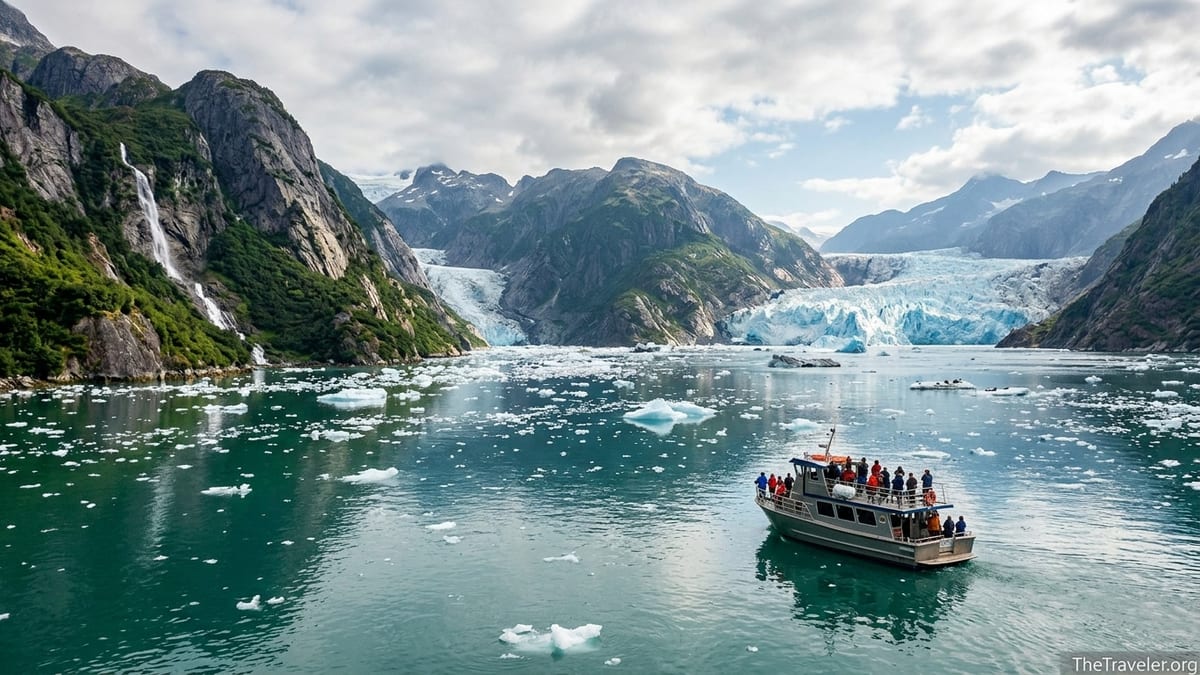
Where Tracy Arm and Endicott Arm Are, and Why They Matter
Tracy Arm and Endicott Arm are neighboring glacial fjords off Holkham Bay in Southeast Alaska, roughly 45 to 60 nautical miles south of Juneau by water. Both cut deeply into the coastal mountains as long, narrow inlets carved by ice, with steep granite walls, waterfalls and abundant floating ice during the main cruise season. At their heads sit active tidewater glaciers: North and South Sawyer Glaciers at the end of Tracy Arm, and Dawes Glacier at the end of Endicott Arm.
Because they lie along the broader route of Stephen’s Passage, these fjords are logical side trips for Inside Passage cruise ships and for smaller Juneau-based tour boats. On many itineraries you will see “Tracy Arm Fjord,” “Tracy Arm / Sawyer Glaciers,” or “Endicott Arm & Dawes Glacier” listed as a day of scenic cruising rather than a port call. In practice, this usually means your ship or a connecting expedition-style vessel detours into one of the arms before or after a call in Juneau.
The choice matters because most large ships typically commit to just one of these fjords per sailing, and operators may change their plans at short notice. After a major landslide near South Sawyer Glacier on August 10, 2025 generated a powerful local tsunami in Tracy Arm, geological and navigational concerns prompted several major cruise lines to favor Endicott Arm and Dawes Glacier for at least the 2026 season. Policies continue to evolve, so travelers should treat specific examples in this article as illustrations and always confirm current-season plans with their cruise line or tour operator before departure.
Scenery and Fjord Character: Intimate Tracy vs Open Endicott
Both fjords deliver classic Alaska drama, but the feel on the water is subtly different. Tracy Arm is often described as the more intimate and enclosed of the two. The channel narrows in places, with sheer rock faces and hanging valleys that seem to rise almost vertically from the water. In summer, snowmelt feeds lacy waterfalls that tumble hundreds of feet into an ice-dotted jade-green channel, and low clouds can cling to the cliff tops, emphasizing the sense of being deep inside a mountain corridor.
Endicott Arm shares many of these traits, yet it tends to feel slightly broader and more open. The walls are still steep, but sightlines can be a bit wider, with expansive views up-valley and out toward the coast. On some days this can mean more sweeping panoramic vistas, particularly when low ceilings or fog would make Tracy Arm feel closed-in. Travelers who enjoy larger-scale landscapes and big-sky photography often appreciate Endicott’s broader frames.
From a traveler’s perspective, the difference is less about one fjord being “better” and more about the kind of atmosphere you prefer. If you imagine yourself gliding through a tight rock hallway lined with waterfalls and icebergs, Tracy Arm matches that image in the most dramatic way when conditions allow deep penetration. If you lean toward long views, big compositions, and perhaps a slightly calmer feel, Endicott Arm often provides that experience while still feeling remote and wild.
Glaciers at the Head: Sawyer Glaciers vs Dawes Glacier
At the head of Tracy Arm, the channel forks around two distinct tidewater glaciers: North Sawyer and South Sawyer. These twin faces give small-boat passengers the sense of entering a “glacier amphitheater,” and in the past, when ice and safety conditions allowed, both cruise-ship tenders and dedicated tour boats sometimes maneuvered close enough for passengers to watch house-sized chunks of ice calve into the water. Since the 2025 landslide and tsunami near South Sawyer, access deeper into Tracy Arm has been more tightly constrained for larger vessels, and approaches to the glacier faces are now highly dependent on evolving hazard assessments and ice conditions.
Endicott Arm culminates in a single glacier, Dawes Glacier, an actively calving tidewater glacier known for its vivid blue ice. Scenic-cruising ships often position at a safe distance in the wider basin below the glacier, while smaller expedition-style vessels can weave further among the bergy bits when ice and regulations allow. Many tour descriptions highlight the chance to linger for some time watching the glacier front, listening for the crack and roar of calving events, though the actual viewing distance varies from day to day based on ice and safety guidance.
Across both fjords, how close you get to the ice is never guaranteed. Early-season sailings may encounter heavier brash ice that keeps large ships well back from the glacier faces; late-season visits can be clearer or, in some years, still quite choked with ice. Cruise lines and licensed captains follow regulatory guidance and their own safety protocols to determine how far they can proceed. When comparing brochures, treat any stated distance to the glacier as a goal under ideal conditions rather than a promise.
Wildlife Viewing: Seals, Whales and Bears
Tracy Arm and Endicott Arm share broadly similar wildlife potential. Both fjords often host harbor seals that haul out on floating ice, especially during pupping season, when mothers nurse young on stable floes. Regulations and voluntary guidelines usually require vessels to maintain buffer distances around active seal haul-outs, which helps protect the animals but can limit how closely tour boats can approach specific ice pans.
Some local naturalists and operators report that Endicott Arm can at times show particularly dense seal concentrations on the ice near Dawes Glacier, though these observations are anecdotal and vary year to year. In both fjords, passengers may also spot mountain goats on the cliffs, bald eagles on ice chunks or treetops, and occasionally black bears foraging along the shoreline when the tides and timing line up.
Whales are possible but not guaranteed. Humpback whales regularly feed in Stephen’s Passage and adjacent waters, and on some days they wander into the lower reaches of either fjord. Porpoises and orcas may also appear. However, wildlife is inherently unpredictable, and no reputable operator can promise specific species or behaviors. The most reliable way to think about these fjords is as scenic and glacial experiences first, with wildlife encounters as a valued bonus rather than the main selling point.
Access, Logistics and Current Cruise Patterns
Before the 2025 event, Tracy Arm was one of the marquee scenic-cruising destinations on Inside Passage itineraries, with several major lines offering either ship-based scenic viewing or add-on small-boat excursions branded around Tracy Arm and the Sawyer Glaciers. Following the landslide-generated tsunami near South Sawyer, multiple large cruise brands publicly signaled that they would avoid Tracy Arm for at least the subsequent season or two, citing safety and navigational concerns. Statements from lines such as Royal Caribbean noted that itineraries would instead feature Endicott Arm and Dawes Glacier as the primary fjord experience.
As of late 2026, Endicott Arm has become the more commonly listed option for big-ship scenic cruising on many mainstream Inside Passage routes. For example, promotional materials from several lines now highlight “Endicott Arm & Dawes Glacier” days, and some long-standing “Tracy Arm Fjord & Glacier Explorer” excursions booked through cruise lines explicitly state that if ice or conditions prevent access to Tracy Arm, the tour will be redirected to Endicott Arm for a comparable experience. Travelers frequently report receiving pre-cruise emails or onboard notices explaining substitutions of Endicott for Tracy, especially in the wake of updated hazard assessments.
From Juneau itself, independent and small-boat operators historically marketed distinct trips to Tracy Arm or Endicott Arm, often as full-day excursions that involve several hours of travel each way. In the current environment, many of these businesses advertise flexible itineraries that target the fjord with the most favorable combination of ice, weather and safety guidance on the day of your tour. When you read “Tracy Arm or Endicott Arm depending on conditions” in a description, it usually reflects the operator’s intent to maximize your chances of reaching a glacier face safely, not indecision about the product they are offering.
Because policies can change quickly as scientific understanding and monitoring improve, it is wise to check what your specific line is doing for the coming season. Look at the day-by-day itinerary text and any scenic cruising notes, then read the fine print of ship-sponsored and independent excursions from Juneau. Treat recent examples of cruise lines switching from Tracy Arm to Endicott Arm as helpful context, not as permanent rules that will necessarily apply to your sailing a year or two from now.
Safety and Environmental Considerations
The 2025 landslide and tsunami in Tracy Arm highlighted a broader reality of glacial fjords worldwide: steep, glacier-carved slopes above deep water can fail with little warning, sending massive volumes of rock and debris into the fjord and generating powerful local waves. Researchers with agencies such as the U.S. Geological Survey and National Oceanic and Atmospheric Administration have documented how the retreat of tidewater glaciers can destabilize valley walls, increasing the potential for future landslides and waves in similar settings throughout Southeast Alaska.
For travelers, the key takeaway is not to attempt to assess these hazards personally, but to rely on official advisories and professional judgment. The U.S. Forest Service, which manages much of the surrounding wilderness, works with scientific agencies to evaluate conditions, while the U.S. Coast Guard and other authorities may issue guidance that influences where and how vessels operate. Responsible cruise lines and tour operators incorporate this information into route planning, speed limits, standoff distances from glacier faces, and decisions about whether to enter a particular fjord on a given day.
Ice is another important safety and environmental factor. Brash ice, bergy bits and larger icebergs can clog the channels leading to any tidewater glacier, particularly in spring and early summer. Captains must find a safe path through or decide to turn around if the risk to hulls, propellers and rudders becomes too high. In some seasons, Tracy Arm has been more frequently limited by heavy ice and, recently, by landslide-related concerns; Endicott Arm, with slightly different topography and ice dynamics, has sometimes provided more reliable access to a glacier face, which helps explain why operators increasingly favor Dawes Glacier when they need predictability.
Environmental regulations and voluntary guidelines, especially around marine mammals and shoreline habitats, also shape how close vessels can approach wildlife, how long they can linger in sensitive zones, and how many boats can occupy a given area. These measures are designed to balance visitor access with the health of the ecosystems that make these fjords special. When your captain or guide explains why the boat is holding back or turning around earlier than you expected, it is almost always a sign that they are prioritizing safety and stewardship over maximizing mileage.
How Small-Boat Excursions Work in Practice
Many travelers encounter Tracy Arm or Endicott Arm not from their main cruise ship, but via a smaller expedition-style vessel that connects with the ship en route. A common pattern on big-ship itineraries involves passengers boarding a dedicated fjord explorer boat early in the morning directly from the cruise ship near the entrance to one of the arms. The small vessel then spends several hours traveling up-fjord toward the glacier, weaving through ice, stopping at waterfalls and watching for wildlife, before meeting the cruise ship again later in the day or continuing on to the port of Juneau where guests rejoin their ship.
These tours are typically marketed as six-hour or longer adventures that replace some or all of your shipboard scenic cruising with a closer-to-the-water experience. They are often sold under names that reference Tracy Arm, Endicott Arm or Dawes Glacier specifically, but the fine print increasingly notes that the exact fjord may be adjusted to follow the best available conditions. Because capacity is limited and these excursions are highly prized by glacier enthusiasts, they often sell out months before sailing; booking early and monitoring your cruise planner for updates is advisable.
Independent Juneau-based operators also offer day trips by catamaran or smaller vessels that depart from Juneau’s harbors and spend the day in either Tracy Arm or Endicott Arm before returning to town. These tours can be attractive if your cruise ship does not include a deep fjord visit, or if your scenic cruising time feels too short. The trade-off is that they typically consume most of your Juneau port day and may leave less time for popular in-town activities such as visiting Mendenhall Glacier, whale watching in Auke Bay or exploring downtown.
Making the Choice: Experiences and Trade-offs
When deciding between Tracy Arm and Endicott Arm, it helps to think in terms of experience profiles rather than absolute rankings. Tracy Arm has long been celebrated as one of the most dramatic fjords in Southeast Alaska when conditions allow deep penetration toward the Sawyer Glaciers. The towering, close-in walls and multiple arms at the head create a cinematic sense of immersion. However, that same steep, enclosed topography, combined with recent landslide activity and variable ice, can mean more frequent operational limits and a higher likelihood that big ships will either stay farther out or avoid the fjord altogether in some seasons.
Endicott Arm, by contrast, has emerged as the fjord many operators now consider their more consistent bet. The approach to Dawes Glacier often remains navigable by large ships and small boats on a greater proportion of days, allowing them to deliver a more predictable glacier-viewing experience. While some long-time Alaska guides still regard Tracy Arm as slightly more visually intense in perfect conditions, most agree that Endicott Arm offers equally compelling scenery and a very satisfying glacier encounter when approached with realistic expectations.
If your cruise line offers a flexible “Tracy Arm or Endicott Arm depending on ice and conditions” excursion, that flexibility is usually a benefit rather than a drawback. It signals that the operator intends to choose the safer and more rewarding fjord on the actual day of your tour, rather than forcing a rigid plan that could leave you staring at a wall of ice miles from any glacier face. For travelers, the best strategy is often to book the type of experience you want, such as a close-up small-boat fjord tour, and then trust the professionals to decide which arm will deliver it most safely.
How Fjord Days Fit with Glacier Bay and Other Highlights
Many Inside Passage itineraries already include world-famous Glacier Bay National Park, where ships may spend a full day visiting multiple tidewater glaciers from a relatively wide, open bay setting. If your route already features Glacier Bay, you might reasonably ask whether adding a Tracy Arm or Endicott Arm excursion is still worthwhile. For most glacier enthusiasts, the answer is yes, provided your time and budget allow it, because the experience of traveling deep into a narrower, more intimate fjord contrasts strongly with the broader amphitheaters of Glacier Bay.
If your cruise does not include Glacier Bay, a day in either Tracy Arm or Endicott Arm may be your primary close-up tidewater glacier experience. In that case, prioritizing a fjord excursion over some in-port activities in Juneau can make sense, especially if seeing a calving glacier from the water is a high priority. On the other hand, travelers who are more interested in cultural experiences, flightseeing to icefields, or land-based glacier visits such as Mendenhall may reasonably decide that a shorter period of ship-based scenic cruising into Endicott Arm, without an additional paid excursion, is sufficient.
Ultimately, the goal is to align your choices with your expectations. If you dream of spending hours at the face of a glacier, listening to ice crack and watching harbor seals drift past on blue floes, then dedicating a full day and the associated cost to a fjord explorer trip is likely worthwhile, regardless of which arm you enter. If you simply want to glide past cliffs and ice from the comfort of your balcony while preserving more time and money for other adventures, relying on your ship’s scenic cruising through Endicott Arm may be the better fit.
Conclusion: Feeling Confident Whatever Your Itinerary Says
Choosing between Tracy Arm and Endicott Arm is less about identifying a single “best” fjord and more about understanding how evolving safety research, ice conditions and cruise-line policies shape what is practical in a given season. Tracy Arm remains a legendary, intensely scenic fjord whose twin Sawyer Glaciers have long drawn photographers and adventurers. Endicott Arm, with Dawes Glacier at its head, has increasingly become the go-to option for large ships and tour boats seeking a reliable, high-quality glacier experience within the same general region south of Juneau.
For travelers, the most productive mindset is to focus on the type of experience you value, ask informed questions of your cruise line or tour operator, and then embrace the fjord that conditions make available. Whether your confirmation ultimately reads Tracy Arm or Endicott Arm, you will be traveling through one of Southeast Alaska’s signature landscapes, shaped by ice and time, and guided by professionals who balance awe with safety. With realistic expectations and a bit of flexibility, you can step onto your ship confident that whichever arm you enter, you will come away with a powerful sense of Alaska’s glacial coast.