


More news on this day
A freight train derailment in northeast El Paso has closed a neighborhood road and disrupted local traffic, as crews work to clear damaged railcars and inspect nearby infrastructure.
Get the latest news straight to your inbox!
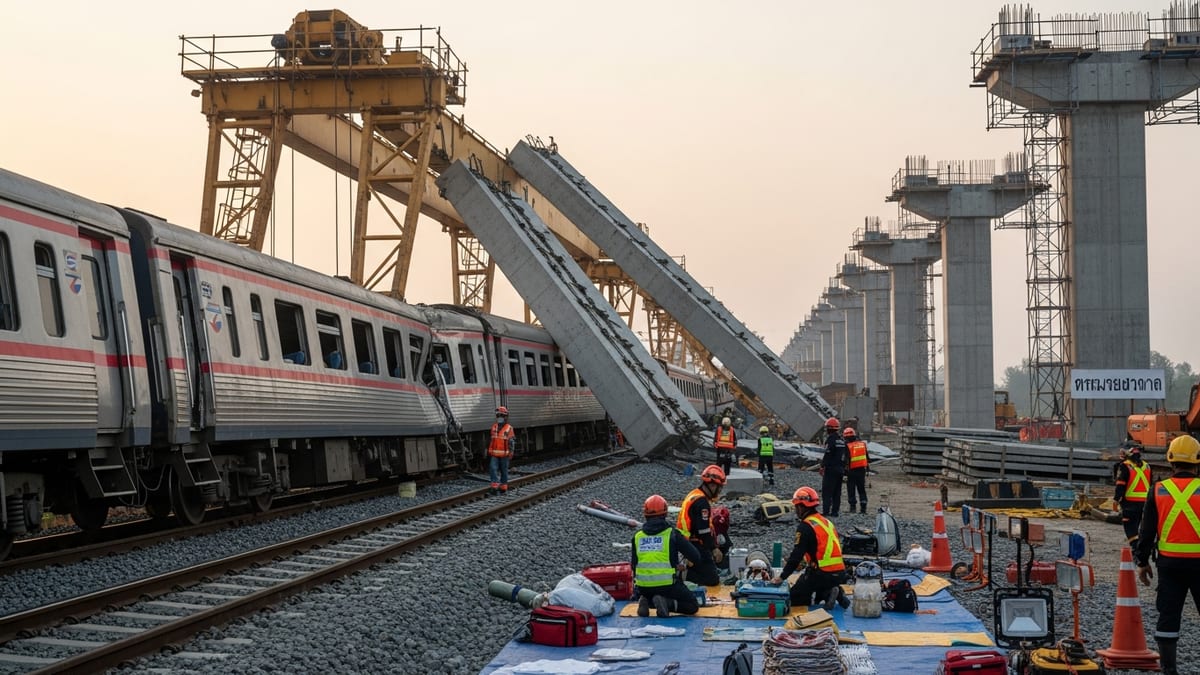
Derailment Halts Traffic in Residential Corridor
Reports from local outlets and transportation monitoring services indicate that a freight consist derailed on a line that runs close to residential areas in northeast El Paso, forcing the closure of at least one adjacent roadway. Early information suggests several cars left the tracks near a grade crossing commonly used by neighborhood drivers, cutting off through traffic while rail and road crews respond.
Publicly available photos and video from the scene show freight cars tilted off the rails and blocking part of the crossing area. Initial coverage does not indicate any serious injuries, but responders have restricted access to the immediate vicinity while rail inspectors evaluate the condition of the track and the affected cars.
The derailment occurred along a corridor that local residents use to connect with major north–south routes toward central El Paso and the Fort Bliss area. With the road blocked, drivers are being redirected to nearby arterials, adding travel time in a part of the city that already experiences congestion during commuting hours.
Rail activity is a familiar backdrop in this section of El Paso, where multiple lines serve industrial customers and long-distance freight traffic. Even so, a full closure at a key crossing is relatively rare and can have an outsized impact on daily routines in nearby neighborhoods.
Investigations Focus on Track, Equipment and Crossing Conditions
According to published coverage, investigators are concentrating on the condition of the track, the configuration of the train and any potential issues at the crossing itself. In recent derailments elsewhere in Texas, federal and railroad inquiries have typically examined whether track defects, equipment failures, train handling or obstructions in the crossing area contributed to cars leaving the rails.
Rail incident reports maintained by federal transportation agencies show that grade crossings in the El Paso region carry a mix of long-haul freight and local switching moves, sometimes in close proximity to residential streets. Safety specialists reviewing previous cases note that even low-speed derailments at crossings can scatter debris, damage pavement and force extended closures while damaged cars are re-railed or removed.
In this case, available information indicates that hazardous materials were not prominently involved, reducing the likelihood of large-scale evacuations or air-quality monitoring. Nonetheless, standard protocol calls for a careful inspection of each affected car and the surrounding ground, particularly if any tank or hopper cars show signs of impact damage or leakage.
The investigation is expected to review data from the locomotive event recorder, track inspection records and any camera footage from nearby security systems or passing motorists. Findings from similar derailments often lead to targeted maintenance work or operating changes on the affected segment of track.
Cleanup Operations and Road Reopening Timeline
Railroad contractors and maintenance crews typically use specialized equipment to lift derailed cars back onto the tracks or onto replacement trucks for removal. Reports from the northeast El Paso site describe heavy machinery staged near the blocked crossing, along with work vehicles positioned to clear debris from the roadway once rail operations finish.
Cleanup timelines vary widely depending on the number of cars involved and the condition of the railbed. Comparable incidents in other Texas cities have ranged from several hours to more than a day of disruption before roads were fully reopened to traffic. In those cases, crews first stabilized the railcars, repaired damaged ties and rails, and then repaved or swept the affected driving surface.
Local coverage indicates that transportation agencies are coordinating with the railroad to determine when at least one lane can safely reopen. Even after the immediate blockage is removed, temporary speed restrictions for both trains and vehicles are common until permanent repairs are completed and inspected.
Residents in the surrounding neighborhoods are being advised through traffic updates and local media to avoid the crossing and plan alternate routes until confirmation of a full reopening is issued. For many drivers in northeast El Paso, that can mean using longer detours that loop around the rail corridor and add several miles to routine trips.
Impact on Commuters and Nearby Neighborhoods
Northeast El Paso relies on a limited set of through streets that cross the rail lines serving the region, so a single closure can disproportionately affect local mobility. Commuters who typically cut across the affected corridor to reach major highways or employment centers face added delays, particularly during morning and late afternoon peaks.
Parents transporting children to schools and childcare centers near the rail line are among those most likely to adjust their schedules. Experiences from previous disruptions in the city suggest that some drivers may seek residential side streets as informal detours, raising concerns about increased traffic volumes on roads that are not designed for heavy cut-through use.
Publicly available mapping and traffic tools show congestion building around alternative crossings whenever a key route is closed. That pattern appears to be playing out again in northeast El Paso, where nearby intersections are absorbing the redirected flow of vehicles as the derailment response continues.
For pedestrians and cyclists, the closure can temporarily limit access between neighborhoods on opposite sides of the tracks. While some residents can re-route to more distant overpasses or underpasses, those without access to a car may find the longer detours particularly challenging.
Rail Safety in a Growing Border City
The derailment comes at a time when El Paso continues to balance its role as a freight gateway with the needs of a growing urban population. Past planning studies of the city’s freight network have identified the northeast sector as an area where busy rail lines intersect with expanding residential development, making grade crossing safety a long-term concern.
Transportation analysts note that derailments like the one in northeast El Paso, even when limited in scale, highlight how closely rail operations intersect with daily life in the region. Each incident can prompt renewed discussion about investments in grade separations, upgraded warning systems and better coordination between railroads and local agencies.
Publicly available information on recent rail projects in West Texas shows a gradual shift toward separating road and rail where traffic volumes justify the cost. However, many neighborhood crossings remain at grade, meaning that events such as low-speed derailments, stalled vehicles or equipment failures can still shut down key links for extended periods.
As cleanup continues and the blocked road in northeast El Paso moves toward reopening, residents and travelers are watching for updates on both the cause of the derailment and any changes it may bring to the way rail and road traffic interact in this part of the city.