


For many travelers, the cheapest price in a flight search is no longer a ticket sold by an airline but an offer from an online travel agency such as eDreams, Opodo, GO Voyages or Travellink, all part of the eDreams ODIGEO group. These intermediaries promise lower fares, bundles and subscription savings, while airlines and hotels argue that booking direct gives you more control when things go wrong. Deciding which path to choose can have real consequences for your wallet and your trip when delays, cancellations or hidden fees appear.
Get the latest updates straight to your inbox!
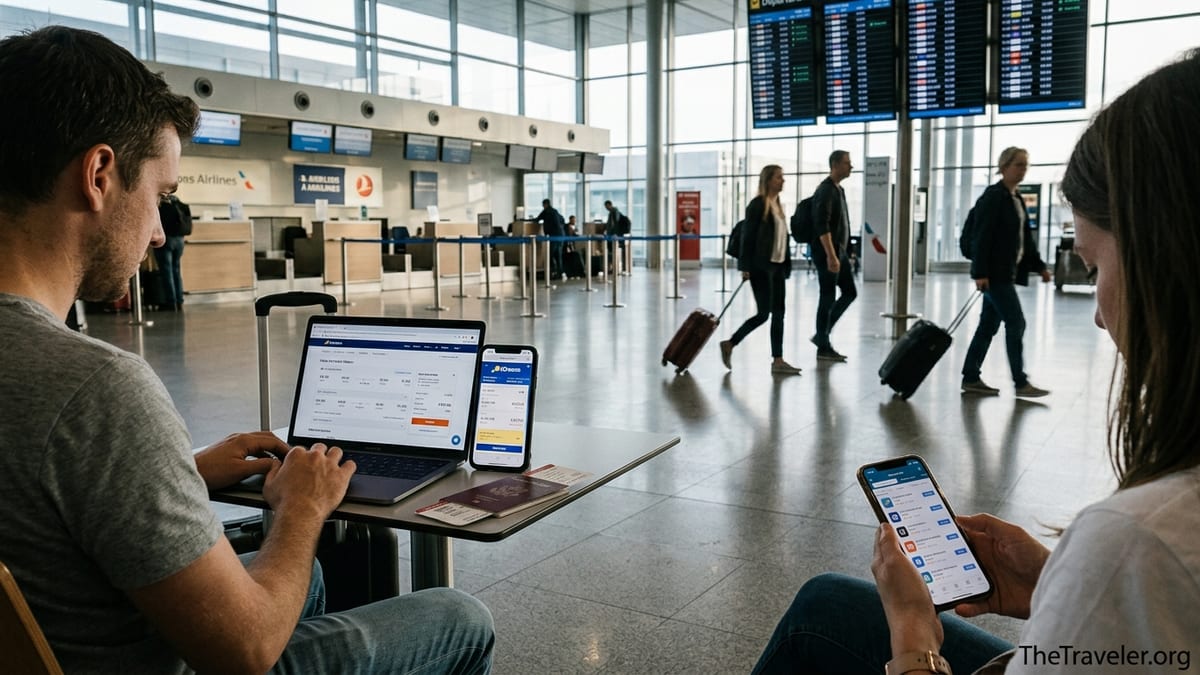
Who Are eDreams ODIGEO and Its Brands?
eDreams ODIGEO is a large European online travel company headquartered in Barcelona. Through brands including eDreams, Opodo, GO Voyages, Travellink and the metasearch engine Liligo, the group sells flights, hotels, car rentals and dynamic packages in more than forty markets. In practical terms, when you see a low fare on a metasearch site labeled "Opodo" or "eDreams" next to offers from airlines like Lufthansa or American Airlines, you are usually looking at one of these ODIGEO brands acting as an intermediary between you and the travel provider.
The company has built much of its recent growth on Prime, a subscription product that offers members discounted prices on flights and other services for an annual fee. Company filings in 2026 indicate that Prime has attracted close to eight million members worldwide, highlighting how many travelers are now engaging with ODIGEO brands through a subscription rather than simple one-off bookings. The group presents this model as a way to deliver consistent savings and loyalty-style benefits without tying you to a single airline or hotel chain.
At the same time, ODIGEO brands have drawn scrutiny from regulators and consumer groups over transparency, pricing and marketing practices in several European markets. Airlines such as Ryanair have publicly clashed with eDreams and Opodo over how fares and ancillary fees are displayed. While courts in Spain have recently ordered at least one airline to stop making disparaging claims about eDreams ODIGEO, ongoing complaints and investigations serve as a reminder that the relationship between airlines and third-party sellers is often tense, and travelers are sometimes caught in the middle.
Understanding this landscape matters because when you book through any eDreams ODIGEO brand, your legal and practical relationship shifts: instead of dealing only with the airline or hotel, you now have an intermediary whose systems and policies sit between you and the provider. That can be a blessing when everything runs smoothly and prices are lower, but it can also create extra complexity when plans change.
How ODIGEO Prices Compare to Booking Direct
Travelers are often drawn to eDreams or Opodo because the price shown in search results is lower than the fare on the airline’s own website. For example, you might see a New York to Paris round trip at around 620 US dollars on an airline site while an ODIGEO brand displays a fare about 40 to 60 dollars cheaper for a similar itinerary. These price gaps typically come from a combination of negotiated agency commissions, promotional discounts tied to Prime membership and how service fees are displayed during the booking flow.
On a simple one-way flight within Europe, such as Madrid to Rome, an ODIGEO site might initially show a base fare that undercuts the airline by the equivalent of 15 to 25 dollars. However, during checkout you may be offered the option to join Prime in order to access that lower fare. Without Prime, the total often rises closer to or slightly above the airline’s own price once booking fees are included. In many cases, the biggest headline savings only exist for Prime members or during a free trial, which later converts into a paid subscription if not canceled in time.
When you factor in the subscription fee, the real value depends heavily on how often you travel. A frequent traveler who takes four or more international trips per year and regularly books packages that combine flights and hotels may genuinely save hundreds of dollars across a year by stacking Prime discounts. For instance, some European users report combining a discounted transatlantic flight with a hotel package through eDreams and finding that the package undercuts booking the same flight and hotel separately by a clear margin. A traveler who flies once a year, by contrast, may find that the annual fee erases most of the one-off saving compared with buying the same ticket directly from the airline.
There is also the issue of what the initial price actually includes. Airline websites increasingly bundle flexibility, seat selection and cabin baggage into branded fares such as "Standard" or "Flex," while third-party sites sometimes surface the very lowest, most restrictive fare available. That means a fare on an ODIGEO brand may be cheaper because it includes less flexibility or fewer services. Unless you check the fare rules carefully and compare like with like, you run the risk of assuming you have found a bargain when you have simply clicked on a more restrictive product.
What Happens When Something Goes Wrong
The clearest difference between booking with an eDreams ODIGEO brand and booking direct becomes visible when travel plans are disrupted. If an airline cancels a flight or significantly changes the schedule, passengers who booked directly can usually deal with the airline through its app, call center or social media channels. When you have booked through an intermediary such as eDreams or Opodo, the airline will often instruct you to contact the agency instead, because the travel agency controls the reservation in its system.
Real-world accounts illustrate how this can play out. Some travelers report smooth experiences when airlines change flights, receiving automated emails from an ODIGEO brand with new options and being rebooked on alternative services at no extra cost. Others describe long call-center waits and confusion about who is responsible for issuing refunds. For example, a traveler with a low-cost carrier ticket booked through an online agency may see the new itinerary in the airline’s app but be unable to change it directly because the ticket technically belongs to the agency. When they call the airline, they are redirected to the agency, and when they call the agency they might face delays or additional service fees for handling the change.
The same applies when you need to make a voluntary change or cancel a trip. Airlines may charge a published change fee or fare difference and handle the process online in a few clicks for direct customers. ODIGEO brands, by contrast, can add their own handling charges for processing voluntary changes or cancellations, which are sometimes only visible deep in the terms and conditions. In practice, that means the saving you made on the original ticket can evaporate if you later need flexibility, because you are paying two sets of fees: those imposed by the airline and those charged by the intermediary.
Prime members are often promised priority or "VIP" customer service and, in some markets, cash-advance support if an airline is slow to process a refund for a canceled flight. For a traveler whose schedule is disrupted at short notice, having an agency step in to front the money while the airline’s own refund process drags on can be valuable. But these benefits depend heavily on the specific terms of your subscription, the market you booked in and the type of ticket you purchased. Reading the small print before relying on these protections is essential, especially for complex itineraries such as multi-stop trips or combinations of low-cost carriers.
Subscription Pitfalls and Customer Complaints
ODIGEO’s subscription model is central to its strategy, but it is also a frequent source of consumer complaints online. A recurring scenario involves travelers who booked a flight on an ODIGEO brand, saw a reference to a free Prime trial during checkout and later discovered that an annual subscription fee equivalent to around 70 to 100 euros had been charged to their card. Several of these travelers report that they did not realize they were enrolling in a recurring subscription because the trial and renewal terms were not sufficiently prominent during the booking process.
On travel forums and social platforms, some users describe being enrolled in Prime when they believed they were simply accepting booking terms, not joining a membership program. Others say they attempted to cancel within the advertised trial period only to find that the cancellation process required calling a phone line, led to long waits, or resulted in renewal charges despite confirmation emails. While individual experiences vary and many Prime members are satisfied, the pattern of complaints highlights the importance of carefully reviewing any pre-checked boxes, pop-ups or summary pages before confirming payment.
Regulatory action has also shaped how ODIGEO brands communicate pricing and subscription terms. In the United Kingdom, for example, authorities previously pushed eDreams and Opodo to improve transparency around how fares and fees are displayed, and in parts of continental Europe consumer regulators have examined whether subscription marketing could confuse travelers. eDreams ODIGEO publicly states that it works with regulators and continues to adjust its websites and terms, and the company points to rising customer satisfaction scores in some markets as evidence that it is improving. Even so, travelers should assume that any subscription product, regardless of provider, demands careful attention to renewal dates and cancellation conditions.
The most practical lesson is that if you choose to use a Prime trial to unlock a lower fare, you should set a reminder to revisit your subscription well before the trial ends. Log in, confirm your next billing date and use the cancellation channels stipulated in the terms if you do not intend to keep the membership. Keep email confirmations of any cancellation and monitor your card statements for several months, intervening quickly through customer support or your bank if any unexpected charges appear.
When Booking With an ODIGEO Brand Can Make Sense
Despite the controversies, there are scenarios where booking through eDreams, Opodo or other ODIGEO brands can be genuinely advantageous. One clear example is multi-airline itineraries that combine carriers which do not normally cooperate on a single ticket. A traveler flying from Chicago to a smaller city in southern Italy might find that an ODIGEO brand offers a combined ticket on a major US carrier plus a European low-cost airline, with through-checked baggage and coordinated connections, at a price and convenience level that would be difficult to replicate by booking every segment separately.
Another area where ODIGEO brands can perform well is dynamic packaging. A traveler planning a long weekend in Lisbon, for instance, might search for flights and hotels separately and find a total around 480 US dollars. The same traveler could then see a package deal on eDreams that bundles a mid-range city-center hotel with convenient flight times for roughly 410 dollars, particularly if a Prime discount is applied. In this case, the package benefits from negotiated rates and the ability of the intermediary to combine airline and hotel inventory in ways that individual consumers cannot easily reproduce.
For frequent travelers based in Europe who regularly book flight-plus-hotel combinations, a Prime subscription can become cost-effective over the course of a year. If each trip saves 40 to 60 dollars on flights and another similar amount on hotels, three or four trips may more than cover the subscription cost, with any further savings effectively "free." These users often value having a single log-in where they can manage bookings with multiple airlines and hotel chains instead of dealing separately with each provider.
Finally, some travelers appreciate the additional services that ODIGEO brands wrap around the core booking, such as optional rebooking assistance, cancellation protection products, or cash advances when airlines are slow to refund after cancellations. For a traveler who prioritizes convenience over handling every detail personally, paying a modest service fee for an agency to manage changes and interactions with providers can be worth it, especially if they are not comfortable navigating airline fare rules and legal rights.
When You Are Safer Booking Directly With Providers
There are also many situations where booking flights or accommodation directly is likely to be the safer or less stressful choice, even if the initial ticket price is a little higher. A common example is long-haul travel with tight connections or travel during seasons prone to weather disruptions, such as winter flights through northern hubs. If your New York to Tokyo journey includes a connection on a European carrier and a snowstorm causes widespread cancellations, being a direct customer of the operating airline makes rebooking generally faster and simpler.
Direct bookings also tend to be better when you expect to make changes. Travelers on flexible work assignments, digital nomads and families coordinating complex schedules often benefit from being able to modify tickets quickly through the airline or hotel’s app or website. If you book through an ODIGEO brand, every change request typically has to move through the agency’s systems, which can mean additional fees and another layer of communication in situations where time and clarity are crucial.
Direct channels are usually the most transparent place to see what your fare includes. Airlines and hotels are now under pressure in many jurisdictions to display total prices, including mandatory charges, from the start of the booking process. While reputable online agencies have also improved, indirect channels may still be more prone to optional extras, service fees or subscription offers appearing late in the transaction. If you are wary of complexity, a slightly higher but clearer price on an airline or hotel website can offer peace of mind and make comparing options easier.
Finally, loyalty and after-sales support often weigh in favor of direct bookings. If you hold elite status with an airline or hotel chain, benefits such as upgrades, free checked bags or flexible check-in are more consistently recognized and easier to claim when the booking was made directly. While some ODIGEO bookings do credit miles and nights, there is more room for mismatches in data or fare types that do not earn full benefits. For travelers who depend heavily on loyalty programs, sticking with direct channels usually aligns better with their long-term strategy.
Practical Tips for Deciding How to Book
The decision between an ODIGEO brand and a direct provider does not need to be ideological. Many savvy travelers use both, switching depending on the trip. A practical approach starts with comparing total prices for the exact same itinerary, including bags and seat selection where relevant, on at least one ODIGEO brand and on the airline or hotel website. Look carefully at whether any discount on the agency side is dependent on a subscription or free trial, and calculate how much that subscription will cost over the period you are likely to use it.
Next, consider how sensitive this particular trip is to disruption or change. If you are booking a short, low-cost leisure hop where you could absorb a cancellation or simply buy a new ticket if needed, the absolute cheapest fare through an ODIGEO brand might be acceptable. If you are flying to an important event such as a wedding, a once-in-a-lifetime safari or a crucial business meeting, the reduced friction of dealing directly with the airline or hotel is often worth paying for.
It is also wise to test how easy it is to get support before you commit. For example, you can try calling or chatting with customer service from an ODIGEO app before you buy, just to see typical wait times and how clearly agents explain fees. Do the same with the airline or hotel if you are considering a complex trip. The quality of the interaction you experience before booking is often a good predictor of how issues will be handled later.
Finally, keep records. Regardless of whether you book through eDreams, Opodo or directly with a provider, save confirmation emails, screenshots of prices and any chat transcripts related to changes or refunds. In the event of a dispute about fees, subscription renewals or refunds, having a clear paper trail can make it easier to argue your case with customer service or, if necessary, with your bank.
The Takeaway
eDreams ODIGEO and its brands occupy an increasingly important space in the travel ecosystem, offering competitive prices, subscription-based discounts and convenient packaging of flights, hotels and cars. For travelers who understand the trade-offs, embrace subscription models and are comfortable with an intermediary managing their bookings, these services can deliver real financial and practical benefits, especially on multi-airline itineraries and flight-plus-hotel packages.
At the same time, booking through an ODIGEO brand introduces an extra layer between you and the airline or hotel, which can complicate changes, disruptions and refunds. Subscription products like Prime, while potentially valuable for frequent travelers, require careful attention to trial terms, renewal dates and cancellation procedures. Complaints about unexpected charges or difficult cancellations underline the need for vigilance whenever a booking path involves recurring fees.
There is no universal rule that one channel is always better than the other. The smartest strategy is to treat each trip individually: compare total costs, weigh the likelihood of disruption, factor in loyalty benefits and consider how much you value direct control over your reservation. For routine, price-sensitive trips, an ODIGEO brand might be the right tool; for high-stakes or complex journeys, booking directly with providers usually offers clearer responsibilities and smoother problem solving.
By approaching each booking with a clear understanding of who you are paying, what you are signing up for and how support will work if things go wrong, you can leverage both eDreams ODIGEO brands and direct providers to build trips that are not only affordable but also resilient when travel plans inevitably change.
FAQ
Q1. Are eDreams, Opodo and other eDreams ODIGEO brands legitimate companies?
Yes. eDreams ODIGEO is a large, long-established online travel group based in Europe, and its brands are widely used. However, like many online agencies, it has received complaints about customer service, subscription marketing and fees, so understanding the terms before booking is important.
Q2. Is it cheaper to book flights through an ODIGEO brand than directly with an airline?
Sometimes, but not always. ODIGEO brands can show lower headline prices, especially when Prime discounts apply, yet fees and subscription costs may narrow or erase the saving. Always compare the final price, including bags and any membership charges, with the airline’s own fare.
Q3. What is eDreams Prime and do I need it to get good deals?
eDreams Prime is a paid subscription that offers members discounted fares and some customer service perks. It can pay off for frequent travelers who book multiple trips a year, particularly packages, but it is less likely to be worthwhile for occasional travelers who only need a single ticket.
Q4. How can I avoid being unexpectedly charged for a Prime subscription?
Carefully read each step of the booking flow and look for any mention of free trials or recurring subscriptions. If you accept a trial, note the renewal date, follow the prescribed cancellation method before that date and keep written confirmation of cancellation so you can dispute any later charges if necessary.
Q5. Who is responsible if my flight is canceled when I booked through eDreams or Opodo?
The airline is responsible for operating the flight and any statutory rights such as refunds or compensation, but in practice your first point of contact will often be the ODIGEO brand that sold the ticket. You may need to work through the agency for rebooking and refunds, which can add time and complexity compared with dealing directly with the airline.
Q6. Will I still earn frequent flyer miles or hotel points if I book through an ODIGEO brand?
In many cases you can add your loyalty number and earn at least some miles or points, but not all third-party fares qualify for full credit or elite benefits. If loyalty status and upgrades are a priority, booking directly with the airline or hotel usually gives more reliable recognition of your benefits.
Q7. Are refunds slower when I book via an ODIGEO brand instead of directly?
They can be. When you book through an intermediary, refund money typically flows from the airline to the agency and then to you, which introduces an extra step. Some Prime products offer cash advances while airline refunds are pending, but you should still expect that complex cases may take longer than direct bookings.
Q8. Is customer service better with eDreams ODIGEO brands or with airlines and hotels?
Experiences vary widely. Some travelers praise ODIGEO brands for helpful agents and quick problem resolution, while others report long waits and difficulty reaching support. Airlines and hotels also vary, but they have more direct control over reservations. For high-risk trips, many travelers prefer dealing directly with the provider.
Q9. When is it clearly better to book directly rather than through an ODIGEO brand?
Booking directly is usually wiser for complex or high-value trips, tight connections, travel during disruption-prone seasons or when you expect to make changes. Direct channels provide clearer responsibilities, faster rebooking options and more consistent application of loyalty benefits.
Q10. Can I safely use eDreams or Opodo if I follow best practices?
Yes, many travelers use these brands without major issues, especially for simple point-to-point trips and value-focused packages. The key is to compare total prices, understand any subscription terms, verify what your fare includes and keep thorough records so you can respond quickly if anything unexpected occurs.