


More news on this day
A train driver has died and 89 people have been injured after two passenger trains collided near Bedford on Friday evening, in one of the most serious rail incidents in Britain in recent years.
Get the latest news straight to your inbox!
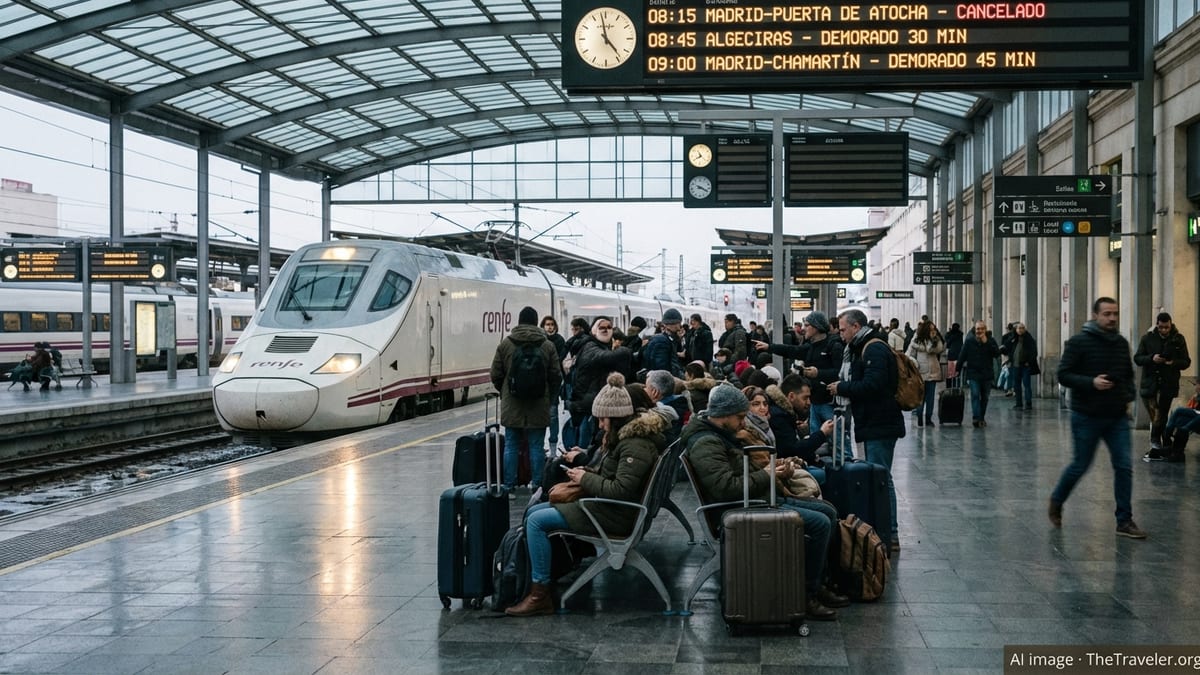
Evening collision on key route to London
Published reports indicate that the collision took place at around 5:15 p.m. local time on Friday 19 June, on the busy Midland Main Line that carries services into London St Pancras. Both trains were travelling south when they made contact near the Bedford area, north of the English capital.
Initial information shared by regional news outlets and rail tracking data suggests the incident involved intercity passenger services operating between the East Midlands and London. The impact was strong enough to cause significant damage to at least one train cab and to scatter debris along the track, according to images circulating on social media and in online forums.
Rail operators and infrastructure managers responded by halting traffic on the affected section, with services diverted or cancelled while emergency teams worked at the scene. The line through Bedford is a core artery for business and leisure travellers, so the disruption quickly spread to services across the network.
Emergency response teams, including paramedics and specialist rescue crews, were deployed in large numbers, with staging points set up close to the track to treat casualties and coordinate evacuations from the trains.
One fatality and dozens with serious injuries
Publicly available information from regional ambulance services indicates that 89 people were injured in the collision. Of those, 11 sustained what are being described as very serious injuries, 22 were seriously injured and 56 suffered minor injuries.
The driver of one of the trains died at the scene, according to multiple media reports, underscoring the severity of the impact at the front of the train. Images widely shared online show a crushed and distorted cab area on one set of carriages, consistent with the fatality being in the leading driving compartment.
Passengers posting on social media shortly after the crash described being thrown forward on impact, with many reporting cuts, suspected fractures and head injuries. Others recounted walking along the track to reach a safe evacuation point under the guidance of rail staff and emergency workers.
Medical teams established triage zones near the line to prioritise treatment, with the most seriously injured transferred to nearby hospitals for further care. Additional support was made available for those with minor injuries and for passengers experiencing shock and distress.
Major incident declared and line closed
Local policing bodies and emergency services declared the crash a major incident, reflecting the number of casualties and the complexity of the response. That designation allows for additional resources to be mobilised quickly and for regional coordination between emergency, health and transport agencies.
According to rail operating information, all services between London St Pancras and key Midlands cities were initially suspended through the Bedford corridor, with some trains terminating short of their destination or being re-routed where infrastructure allowed. Travellers were advised to delay journeys or use alternative routes.
The closure of the line also had knock-on effects for freight and regional commuter services that share sections of track, affecting passengers far beyond the immediate crash site. Rail operators signalled that disruption could continue into the weekend while investigators examined the scene and engineering teams assessed the damage.
As the evening progressed, passenger reports suggested that rail replacement buses were being organised for stranded travellers, although capacity and journey times were significantly affected compared with the usual fast services into London.
Early focus on low-speed impact and signalling
While it is too early for definitive answers about the cause, much of the early discussion among rail specialists and enthusiasts has focused on the nature of the collision. Several commentators noted that the crash appeared to be a relatively low-speed rear-end impact, with both trains reported to have been heading in the same direction towards London.
Online analysis of publicly accessible rail data and photographs has prompted questions about whether one train may have passed a signal at danger or encountered a signalling or braking problem approaching a stationary or slow-moving service ahead. Some contributors have also speculated about the possible role of driver incapacitation, though there is no official confirmation of any of these factors.
According to published coverage of past rail accidents in Europe, low-speed but highly concentrated impacts at the cab can be particularly dangerous for drivers, even when passenger carriages remain upright. In previous cases, investigators have examined the effectiveness of automatic warning systems, cab design and the availability of crumple zones intended to absorb the force of a collision.
A formal investigation is expected to look at signal aspects, train data recorders, communication logs and maintenance records for both the rolling stock and the infrastructure. Findings from that process typically inform safety recommendations for the wider rail network.
Travel disruption and safety questions for passengers
The Bedford crash is the latest in a series of rail incidents internationally that have raised questions about how to further reduce risk on already heavily regulated networks. For many passengers, seeing images of damaged carriages and large emergency responses is unsettling, particularly on routes they use regularly for commuting or leisure travel.
However, transport safety analysts frequently point out that serious rail collisions in the United Kingdom remain relatively rare compared with road accidents, and that most journeys are completed without incident. Even so, high-profile crashes often lead to renewed scrutiny of procedures for train separation, driver monitoring and emergency evacuation.
For travellers heading to and from London in the coming days, the collision near Bedford is likely to mean longer journeys, bus substitutions and crowded alternative routes. Those with time-sensitive trips, including international connections or events, are being encouraged through operator announcements and journey planners to check live service updates before setting out.
As investigators work to piece together what happened on the line north of Bedford, the focus for many passengers and rail workers remains on the driver who lost his life and on the dozens of people now recovering from their injuries after an ordinary Friday journey turned into a traumatic event.