


More news on this day
Crews in Valencia County, New Mexico, are responding to a freight train fire that disrupted rail operations and stirred safety concerns along a key transportation corridor, according to early regional media and social reports.
Get the latest news straight to your inbox!
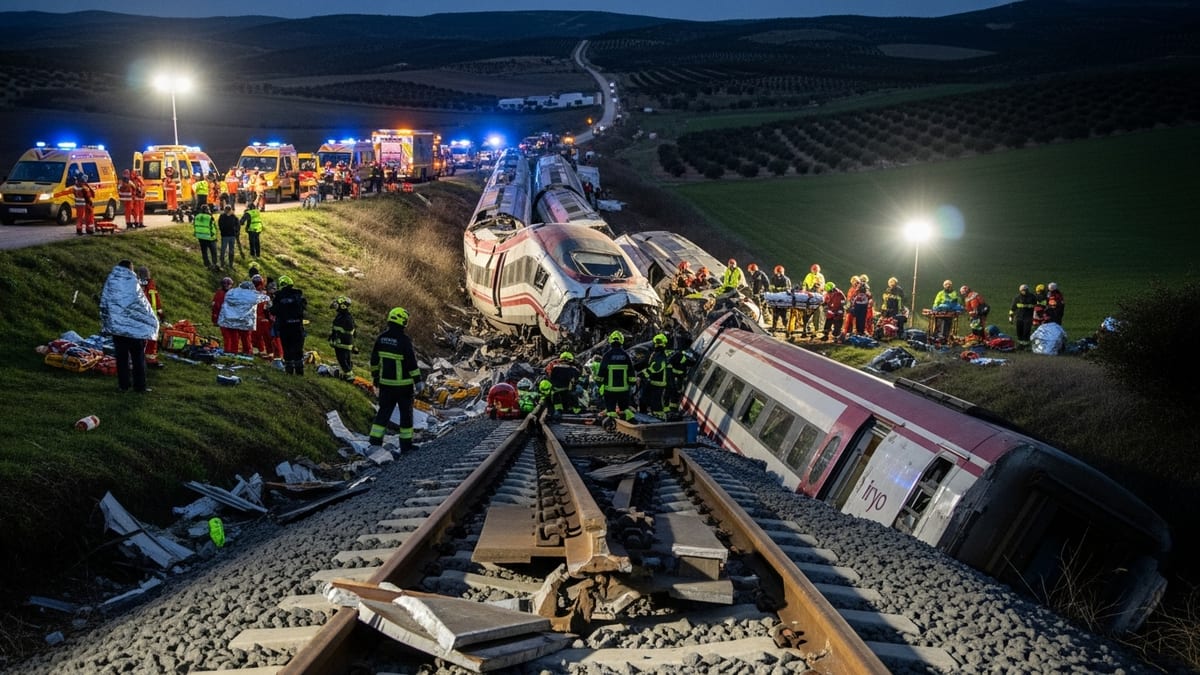
Freight Train Ignites Along Busy Rail Corridor
Initial reports indicate that the fire involved multiple cars of a freight consist moving through Valencia County, a central New Mexico hub that hosts both interstate freight traffic and local commuter rail. Publicly available information suggests the incident occurred near a stretch of track commonly used for through freight, with images circulating on social platforms showing flames and a column of smoke visible from nearby roads.
Details on the exact number and type of railcars affected remain limited, and information compiled from local coverage and transportation monitoring sites points to an ongoing response rather than a fully resolved event. Early descriptions reference a train halted on the line, with fire visible in at least part of the consist and emergency vehicles staged along adjacent access roads.
Rail traffic through central New Mexico plays a significant role in moving fuel, consumer goods, and agricultural products between the Southwest and wider national markets. Even a localized fire can ripple through schedules, causing delays to both freight movements and passenger services that depend on shared infrastructure in the region.
Reports from the scene describe crews focusing first on containing visible flames and assessing whether hazardous materials are involved. The presence or absence of such cargo typically shapes response tactics, evacuation decisions, and how quickly normal operations can resume.
Emergency Crews Prioritize Containment and Public Safety
Response to the Valencia County train fire appears to involve a coordinated effort among local fire services, county emergency management, and railroad incident teams. Publicly available information shows resources being positioned to secure the perimeter, protect nearby structures, and keep the fire from spreading into adjacent vegetation during New Mexico’s dry late-summer conditions.
Regional planning documents highlight the county’s emphasis on multi-agency coordination for transportation and wildfire incidents, which often require access to rail rights of way, communication with rail operators, and traffic control on parallel highways. In a train fire scenario, responders typically establish safety zones around the affected cars and monitor air quality downwind of the site.
Hazardous materials protocols are a central concern in rail incidents. While specific cargo details for the Valencia County train have not been fully outlined in initial public reporting, standard practice involves cross‑checking train manifests, visually identifying placards on cars, and using that information to determine cooling strategies, foam use, and whether additional specialized units should be requested.
Early indications suggest that crews are working methodically to bring the fire under control while limiting disruption to nearby communities. Road closures around grade crossings, temporary detours, and requests for the public to avoid the area are typical measures in similar incidents across the Southwest.
Travel Disruptions for Drivers and Rail Passengers
The train fire is affecting travel patterns in Valencia County, particularly for drivers who rely on local crossings and for rail passengers using services that share or intersect the affected corridor. Published coverage and rail tracking data suggest trains operating through the county are experiencing delays while the line is partially or fully blocked.
For motorists, extended closures at crossings or adjacent frontage roads can add time to commutes between communities such as Los Lunas, Belen, and smaller unincorporated areas. In previous rail incidents elsewhere in New Mexico, traffic has been rerouted to parallel highways or overpasses while crews remain on scene, a pattern likely to repeat here until firefighters and rail personnel determine the area is safe.
Passenger rail operations in central New Mexico, including commuter services that link the Albuquerque area with Valencia County, can be especially sensitive to freight disruptions. Even when a fire is confined to a few cars, inspection of tracks, signals, and overhead structures is often required before passenger trains are allowed to pass, potentially causing cancellations or schedule changes.
Travelers planning to move through the corridor by rail may encounter updated timetables, substitute bus services, or advisories recommending alternative travel times. Those using the county’s main north–south roadways should be prepared for congestion near rail-adjacent communities until the incident is fully cleared.
Rail Safety and Wildfire Risks in a Dry Season
The Valencia County train fire is unfolding against the backdrop of an elevated wildfire outlook for parts of New Mexico, where hot, dry conditions can turn even small ignition sources into fast‑moving blazes. Community wildfire protection plans for the county emphasize that transportation corridors, including rail lines, are potential ignition points when sparks, hot brakes, or malfunctioning equipment interact with dry vegetation along rights of way.
Rail-related fires do not always involve cargo; in some cases, burning brush along embankments can threaten wooden ties, signaling equipment, and nearby infrastructure. Early imagery and descriptions from this event suggest responders are attentive to the risk of flames spreading beyond the train itself, with engines and brush trucks positioned to guard the surrounding landscape.
The incident also highlights how closely clustered hazards can be in the central Rio Grande Valley, where railways, highways, neighborhoods, and farmland often sit within a narrow corridor. Publicly available planning materials note that even minor rail fires can prompt concerns over smoke exposure, access for emergency vehicles, and continuity of essential services if key arteries are disrupted.
Regional conversations about resilience and climate adaptation have increasingly focused on hardening both transportation assets and nearby communities to withstand more frequent heat and fire events. Episodes such as the Valencia County train fire are likely to sharpen those discussions among residents, planners, and transportation operators.
Investigation and Infrastructure Review to Follow
Once the Valencia County train fire is fully contained, attention is expected to shift toward determining how the blaze started and what, if any, long‑term impacts it may have on rail infrastructure in the area. Investigations of similar incidents in the United States typically examine mechanical records, crew reports, track conditions, and recent maintenance history.
Publicly available information on rail incidents in the Southwest shows that reviews often look at whether equipment failure, human error, extreme weather, or other external factors were involved. Findings can lead to changes in inspection routines, speed limits through certain sections, or investment in upgraded safety systems along busy stretches of track.
Valencia County has been the focus of broader transportation planning in recent years, including discussions of corridor upgrades, emergency access routes, and communications systems for first responders. An event involving a burning train is likely to be factored into future risk assessments, potentially influencing where new infrastructure is sited and how rail corridors interface with nearby development.
For travelers and residents, the immediate priority remains the safe resolution of the fire and restoration of normal traffic patterns. Over the longer term, the episode may contribute to ongoing debates about rail safety, cargo oversight, and the role of resilient infrastructure in a region that serves as a crossroads for both local commuters and long‑haul freight.