


More news on this day
Emergency crews in Valencia County, New Mexico, are responding to a freight train fire that prompted rail shutdowns, visible smoke plumes and renewed concern over safety along a key transportation corridor south of Albuquerque.
Get the latest news straight to your inbox!
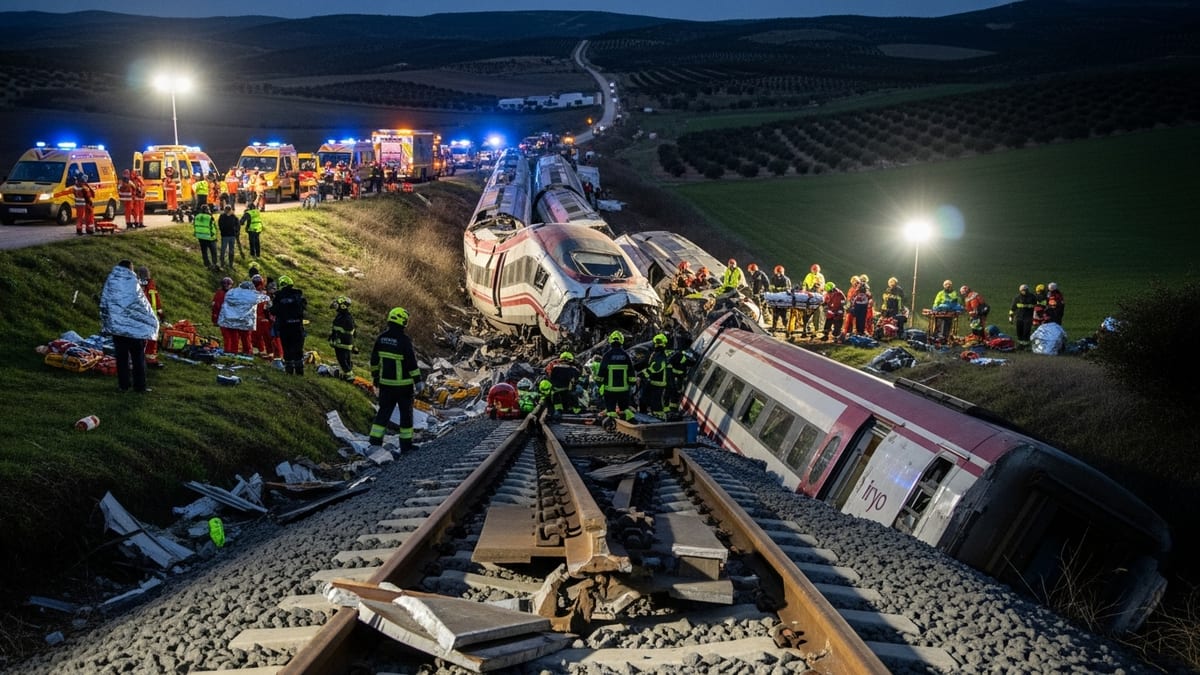
Fire response under way along busy New Mexico rail line
Initial information from local and regional coverage indicates that the incident involves a freight train operating on a main line through Valencia County, a heavily used corridor for rail traffic in central New Mexico. Reports describe a fire affecting part of the train consist, with crews dispatched to contain flames and assess any risk to nearby communities.
Publicly available information shows that fire services in Valencia County rely on a mix of career and volunteer personnel, which can present challenges when large incidents occur along transportation routes. The county’s Community Wildfire Protection Plan notes that long travel distances, high overall call volumes and the need to cover both structural and wildland incidents can stretch response capacity, especially in rural stretches of track.
Early accounts suggest that firefighting teams have focused on securing the immediate rail corridor, monitoring any burning railcars and protecting adjacent property. There were no immediate indications from published reports of major injuries, though formal damage assessments and any investigation into the cause typically take place after crews finish active suppression and cooling work.
Smoke from the scene has drawn attention from nearby communities, with images on social and local media highlighting columns visible from surrounding highways and residential areas. Rail operations in the immediate area have been curtailed while teams work to make the site safe.
Valencia County’s role in New Mexico’s freight network
The incident underscores the strategic importance of Valencia County in New Mexico’s freight system. The corridor south of Albuquerque carries a high volume of interstate rail traffic, linking the state with major hubs in the Southwest and beyond. Disruptions along this line can have ripple effects on freight schedules and local industry that depend on timely shipments.
Planning documents for Valencia County describe a growing mix of industrial, agricultural and residential land uses intersecting with rail and highway infrastructure. As development has expanded around existing lines, more people live and work close to train routes, increasing the potential impact of any fire, spill or derailment.
Observers note that recent industrial incidents in the county, including smaller-scale explosions and fires at commercial facilities reported earlier this summer, have already elevated public sensitivity around smoke, hazardous materials and access for emergency responders. A visible train fire adds to that sense of vulnerability, even when early reports indicate that the primary impacts are limited to the rail corridor itself.
Rail traffic management decisions taken in response to the fire, such as temporary holds or re-routing of freight trains, can also affect regional distribution centers and trucking flows. While such disruptions are usually short term, they highlight how closely linked Valencia County is to wider supply chains.
Complex conditions for firefighting in a semi-arid landscape
The train fire is occurring in a region that regularly contends with hot, dry conditions during the warm season. National reporting on the 2026 wildfire outlook notes that New Mexico often enters peak fire danger in late summer when vegetation dries and winds can increase, creating a challenging environment for any outdoor fire suppression.
The Valencia County Community Wildfire Protection Plan emphasizes that fires in riparian bosque and grassland areas near the Rio Grande can spread quickly due to dense understory fuels. While the current incident is centered on rail infrastructure, any embers carried by wind into nearby vegetation can complicate operations and require additional resources to patrol for spot fires.
Fire managers in the county have invested in training and safety refreshers for wildland and structural crews, according to state and county training schedules. These programs focus on rapid size-up, coordinated communication and safe positioning around burning vehicles and industrial equipment, all of which are directly applicable to a train fire where fuel loads, pressurized components or hazardous cargo may be present.
Given the semi-arid climate, cooling and fully extinguishing burning railcars can take considerable time, even after visible flames are knocked down. Crews typically continue to monitor the scene for flare-ups and residual heat before allowing rail traffic to fully resume.
Community impacts, air quality and evacuation considerations
Published accounts and social media posts describe noticeable smoke plumes from the Valencia County train fire, raising questions about local air quality. Depending on what is burning on the train, smoke can contain particulates and other pollutants that irritate eyes and lungs, particularly for people with asthma or other respiratory conditions.
Public guidance in similar New Mexico incidents generally encourages residents to stay indoors, close windows and make use of air conditioning or filtration when heavy smoke is present. In previous fires in the greater Albuquerque and Valencia County area, some voters and commuters have reported difficulty with visibility and discomfort from drifting smoke, illustrating how even localized incidents can affect daily life.
At this stage, publicly available information does not indicate large scale evacuations linked to the train fire, though law enforcement and emergency management typically restrict access around the immediate incident area. Decisions about evacuations or shelter-in-place alerts are usually influenced by wind direction, the type of cargo involved, and proximity to homes, schools or workplaces.
Local emergency communication systems, including the regional dispatch center that serves Valencia County municipalities, are structured to provide updates as conditions change. Residents often supplement official alerts with information shared through community pages and neighborhood networks.
Rail safety scrutiny and next steps
The Valencia County train fire adds to a series of high profile rail and industrial incidents across North America in recent years that have increased public scrutiny of freight safety and emergency preparedness. National coverage of train derailments and hazardous material spills has drawn attention to inspection regimes, staffing levels and maintenance practices across the rail industry.
According to transportation and safety analysts cited in broader rail coverage, fires involving trains can stem from a range of causes, including mechanical failures, braking system issues, defects in individual cars or external factors along the track. Investigations typically examine event recorders, maintenance records and crew reports to reconstruct what happened and determine whether any regulatory or operational changes are warranted.
In Valencia County, the findings from this incident are likely to feed into ongoing conversations about land use near rail corridors, access routes for fire equipment and the balance between economic benefits of freight traffic and the risks posed by high volume rail operations. Existing county plans already highlight the need for clear evacuation routes, coordinated communication and consistent training for responders in mixed urban and rural environments.
Once the current fire is fully controlled and rail operations normalize, attention is expected to shift toward assessing damage to track and equipment, evaluating how quickly service was restored and reviewing how effectively information flowed to nearby communities. For residents along the line, the image of a burning freight train cutting across the desert landscape is likely to reinforce calls for continued investment in safety, planning and resilience along one of New Mexico’s key transportation corridors.