


More news on this day
The residential cruise ship Villa Vie Odyssey has slipped its moorings in Sihanoukville and headed out to sea without a single paying passenger on board, capping a turbulent week that saw an ambitious “endless” world voyage unravel and more than 200 long-term residents abruptly left ashore in Cambodia.
Get the latest news straight to your inbox!
A Silent Departure From Sihanoukville
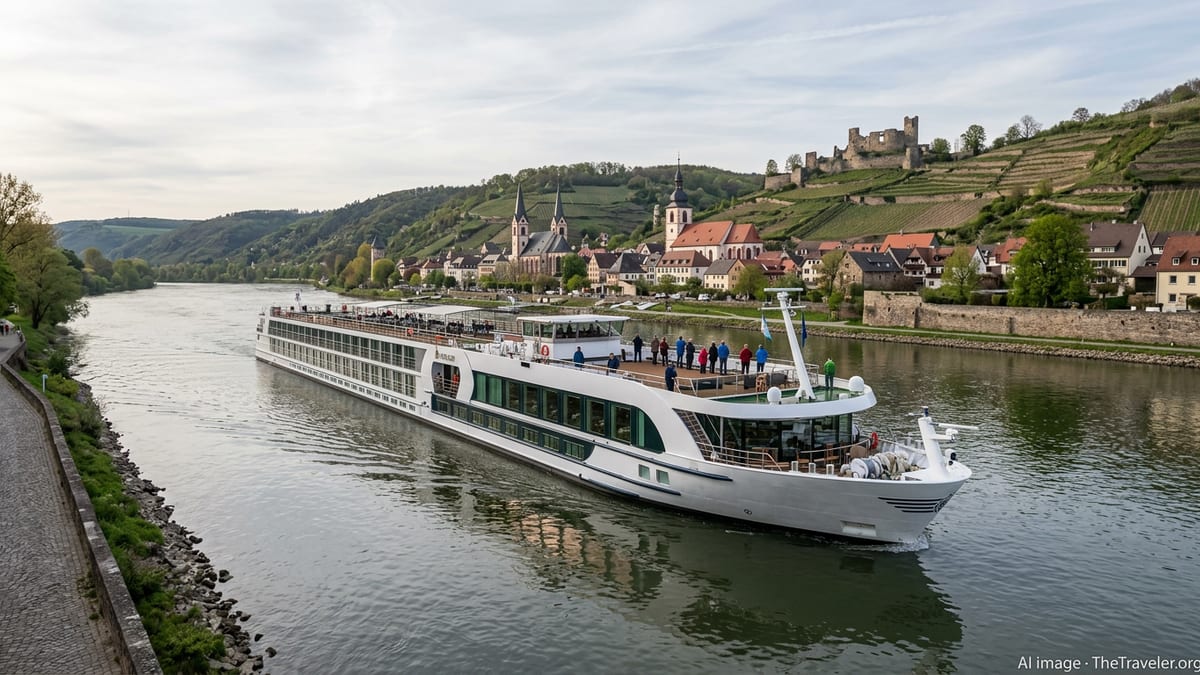
Drone images and regional news coverage on November 4 show the Villa Vie Odyssey easing away from Sihanoukville Autonomous Port in Cambodia with no passengers lining its balconies, a stark contrast to the lifestyle-at-sea concept it had promoted for years. Only crew remained on board as the ship departed, following days of uncertainty over the future of the voyage and the company behind it.
Reports indicate that the vessel left shortly after sunrise, ending its layover in Preah Sihanouk province, where it had been docked since operations were suspended in late October. Port-side photographs show crew preparing mooring lines and decks while passenger gangways stood empty, underscoring that residents who once called the ship home had already disembarked.
According to international coverage drawing on port officials and agency dispatches, the ship’s departure came roughly a week after Villa Vie Residences halted the cruise, citing spiraling fuel costs in Asia and an unsustainable business model. The company has not publicly detailed the vessel’s next port of call, adding another layer of uncertainty for former residents watching from shore.
From “Endless” World Voyage to Abrupt Suspension
The Villa Vie Odyssey set out in 2024 with a bold promise: a multi-year, almost continuous world voyage marketed as an affordable way to live at sea. Prospective residents could buy or lease cabins, with promotional materials describing the ship as a floating residential community visiting dozens of countries on a rolling itinerary.
Publicly available information on the ship’s history shows that the 1993-built vessel, previously operated by traditional cruise lines, was refitted for long-term living before departing on its extended journey. The operator positioned the Odyssey as part of a niche but growing “residential cruise” segment, alongside higher-end concepts where owners purchase apartments on board.
That vision began to unravel in October 2026, when Villa Vie Residences announced it was suspending the Odyssey’s three-and-a-half-year voyage while in Cambodia. News agencies report that the company pointed to “extraordinary” rises in fuel prices linked to geopolitical conflict affecting supply routes and costs in parts of Asia. Fuel outlays that had historically averaged around 1,800 dollars per cabin per month were described in statements and coverage as having surged to an estimated 6,000 to 8,000 dollars.
The sharp increase pushed the operation into what the company characterized as an unsustainable position, prompting a halt to the voyage and an instruction that residents disembark in Sihanoukville while the operator sought restructuring and new financing options.
More Than 200 Long-Term Residents Left Ashore
News reports from Cambodia, regional outlets and wire services indicate that more than 200 passengers, many of them long-term or even “lifetime” residents, were asked to leave the ship with their belongings when operations were suspended. Several had sold homes or downsized their land-based lives to move aboard, betting on years of continuous travel.
Public accounts gathered by international media describe passengers being given limited notice to vacate their cabins once the suspension decision was announced. While there have been no reports of physical danger, many residents were suddenly confronted with the logistical challenge of securing accommodation, onward transport and, in some cases, visa extensions in a country they had only expected to visit briefly.
Coverage from Cambodian and international newsrooms notes that some former residents remained in Sihanoukville and other parts of Cambodia as they assessed their options, while others quickly arranged flights to neighboring countries or back to their home nations. Local tour operators and hotels in Sihanoukville and Phnom Penh have reported increased inquiries, as stranded travelers tried to piece together new plans on short notice.
The incident has drawn wider attention to the risks embedded in newer travel-lifestyle products that blend real estate, cruising and long-term commitments. For many affected passengers, the sudden end of the voyage has turned a once-in-a-lifetime adventure into a complex relocation exercise.
Financial Pressures and Industry Repercussions
The Odyssey’s empty departure from Cambodia is being widely interpreted in the travel and maritime sectors as a cautionary moment for residential cruising. Analysts quoted in international coverage have highlighted how a business model built on relatively tight cost assumptions can be quickly destabilized by swings in fuel prices, especially for a ship that positions itself in far-flung regions where bunkering can be more expensive.
Public filings, press releases and news reports collectively suggest that Villa Vie Residences is exploring restructuring options, though concrete details on any rescue plan have not been disclosed. The company has indicated in earlier communications that it aimed to secure additional investment or financing to adapt the project, but the timing and feasibility of any restart for the Odyssey remain unclear.
For the wider cruise industry, the episode underlines both the appeal and the vulnerability of residential-at-sea concepts. Traditional cruise lines have experimented with long world voyages and extended back-to-back itineraries, but fully residential ships selling multi-year or lifetime stays operate on a narrower financial margin and rely heavily on consistent operating costs.
Travel observers note that the Odyssey’s predicament may influence how future residential cruise projects are structured, including stronger financial safeguards, clearer contingency plans and more detailed disclosures about risks related to fuel, geopolitics and itinerary changes. Prospective residents may also scrutinize contract terms more closely, particularly around refunds, relocation support and what happens if a voyage is curtailed early.
What Comes Next for Stranded Travelers and the Ship
As of November 4, the Villa Vie Odyssey’s immediate destination had not been publicly confirmed, and tracking data cited in maritime-focused outlets suggested only that the vessel had left Cambodian waters without passengers. Whether the ship heads to a regional anchorage, a shipyard, or a new operating base will likely shape the next phase of the story.
For former residents, attention has largely shifted to practical matters: arranging long-haul flights at relatively short notice, securing temporary housing and managing insurance or financial claims connected to their interrupted voyage. Some have reportedly opted to continue traveling independently in Southeast Asia, using Cambodia as an unplanned but opportunistic base to visit nearby destinations while waiting for clarity on refunds or credits.
Travel advisers following the situation suggest that anyone caught up in similar disruptions should keep careful records of payments, correspondence and any additional costs incurred, such as emergency accommodation or rebooked flights. While specific policies and legal remedies vary by jurisdiction, thorough documentation tends to be important in later discussions with operators, insurers or credit-card providers.
For now, the sight of the Villa Vie Odyssey sailing away from Sihanoukville with empty decks stands as a powerful image of a bold travel experiment brought to an abrupt halt, and a reminder of how quickly global shocks can reshape even the most carefully plotted journeys at sea.